9 Best Context-Aware Customer Support Software in 2026
This guide evaluates the 9 best context-aware customer support software platforms for 2026, comparing tools that go beyond basic ticket routing to deliver personalized support using real-time signals like browsing behavior, CRM data, product usage, and conversation history. Platforms are ranked on contextual depth, AI capabilities, integrations, and pricing to help teams choose the right solution.
 Matt PattoliFounder13 min read
Most support software knows a customer's name. Context-aware support software knows their name, the page they're stuck on, the last three tickets they submitted, their subscription tier, and the fact that they've been hovering over the cancel button for the past two minutes. That's a fundamentally different starting point for a conversation.
Generic ticket routing and keyword-matching chatbots frustrate customers because they treat every interaction as if it's the first. Context-aware platforms pull from real-time signals: the URL a user is viewing, CRM records, product usage data, conversation history, and sentiment indicators. The result is support that feels personal and intelligent from the very first message, not after three rounds of "can you describe your issue in more detail?"
To build this list, we evaluated platforms on depth of contextual understanding, AI capabilities, integration breadth, ease of deployment, and pricing transparency. Whether you're a lean B2B SaaS team or a large enterprise operation, there's a tool here that fits your context. Here are the top context-aware customer support platforms worth your attention in 2026.
1. Halo AI
Best for: B2B SaaS teams that want AI-first, page-aware support with autonomous ticket resolution
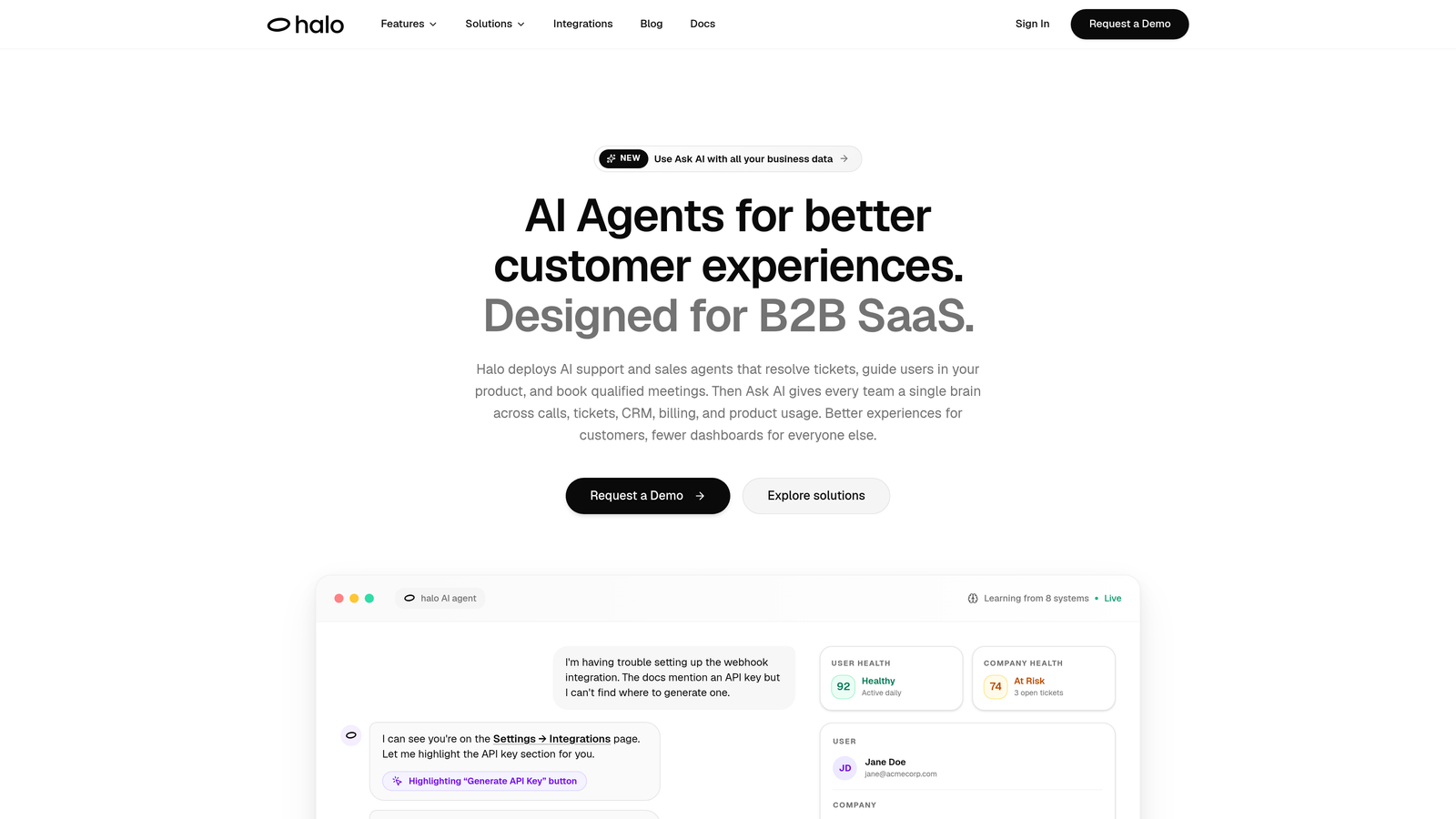
Halo AI is an AI-first customer support platform built around the idea that context isn't a feature — it's the foundation.
Where This Tool Shines
What separates Halo from most support tools is its page-aware architecture. The chat widget doesn't just sit on your site waiting for a user to type something. It actively understands what screen the user is on, which means AI agents can offer visual UI guidance relevant to that exact moment rather than serving up generic help center links.
Beyond the chat layer, Halo's smart inbox goes further than ticket management. It surfaces customer health signals, flags anomalies, and generates business intelligence that helps teams understand what's actually driving support volume. Support stops being a cost center and starts becoming a signal generator for the rest of the business.
Key Features
Page-Aware Chat Widget: Sees the user's current screen and delivers contextually relevant UI guidance without requiring the user to explain where they are.
Autonomous AI Agents: Resolve tickets end-to-end and continuously learn from every interaction, improving accuracy over time without manual retraining.
Auto Bug Ticket Creation: Automatically generates bug reports in tools like Linear when recurring issues are detected, closing the loop between support and engineering.
Smart Inbox with Business Intelligence: Combines ticket management with customer health signals, revenue intelligence, and anomaly detection in a single view.
Deep Integration Stack: Connects natively with Slack, HubSpot, Intercom, Stripe, Zoom, PandaDoc, Fathom, and more, pulling context from across your entire business stack.
Best For
B2B SaaS companies that are scaling support without wanting to scale headcount proportionally. Particularly well-suited for product teams that want their support layer to feed intelligence back into engineering and customer success, not just close tickets.
Pricing
Contact for pricing. Designed for B2B SaaS teams with a focus on scalable, autonomous support operations.
2. Intercom
Best for: Product-led growth companies that want proactive, in-app contextual messaging
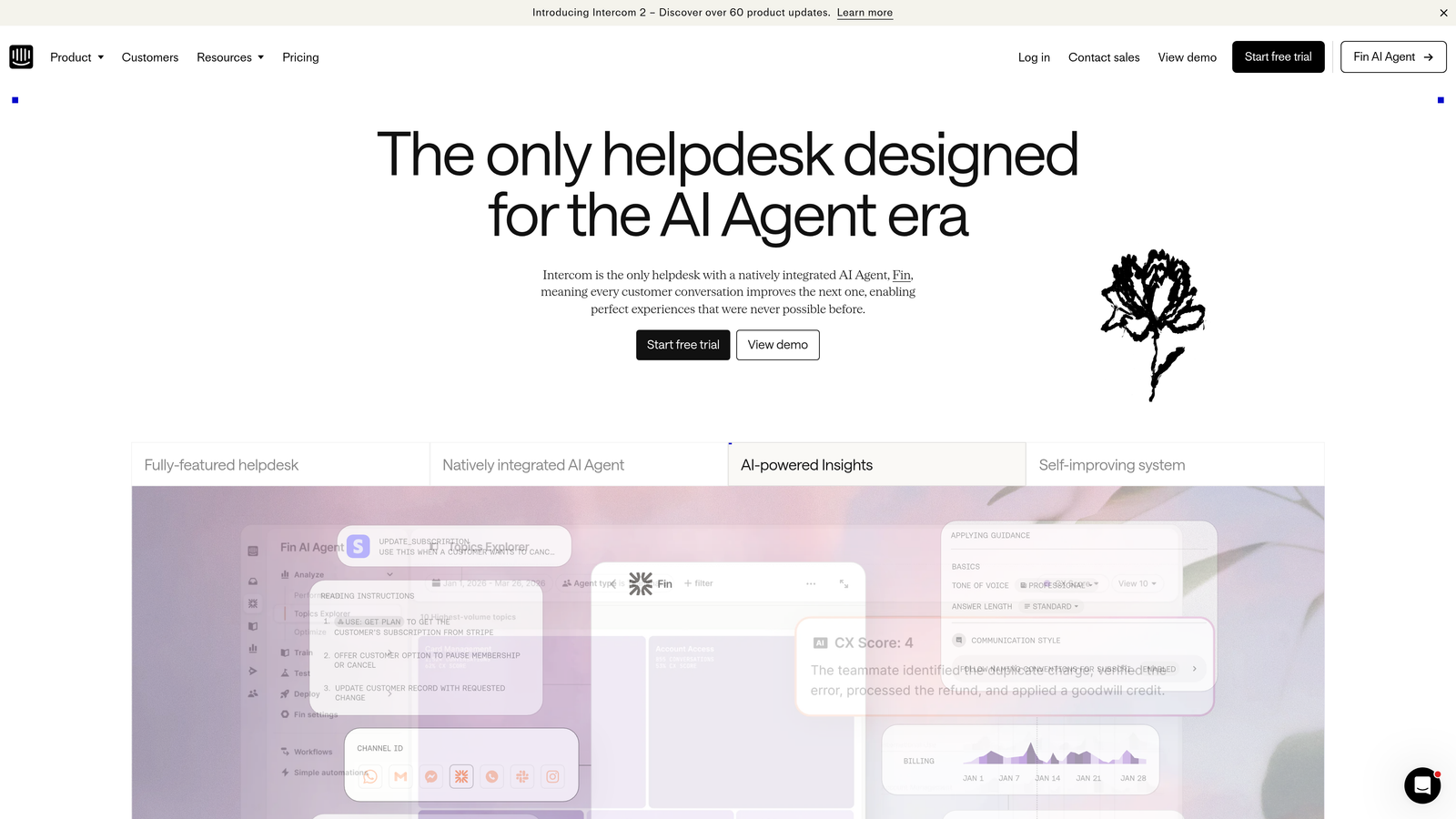
Intercom is a conversational customer platform combining its Fin AI agent, in-app messaging, and product tours into one connected experience.
Where This Tool Shines
Intercom has spent years building a rich first-party data layer. Every conversation, product event, and user attribute feeds into how the platform decides when to reach out, what to say, and how to route. This makes it genuinely proactive rather than just reactive.
Fin, Intercom's AI agent, is trained on your help center content and conversation history, which means it arrives at a conversation with real knowledge rather than a generic script. For teams already invested in the Intercom ecosystem, the contextual depth is hard to replicate elsewhere.
Key Features
Fin AI Agent: Trained on help center content and historical conversations to handle queries with relevant, accurate responses.
Custom Answers: Lets teams curate precise responses for high-priority or sensitive queries where AI improvisation isn't appropriate.
In-App Messaging and Product Tours: Deliver proactive contextual guidance based on user behavior and lifecycle stage.
Unified Inbox with Customer Data Sidebar: Agents see full customer context alongside every conversation without switching tools.
Robust API and Marketplace: Extensive integration options for connecting Intercom to your existing tech stack.
Best For
Growth-stage SaaS companies and product teams that want a single platform for support, onboarding, and proactive engagement. Less ideal for teams with complex back-end data needs that go beyond what Intercom natively ingests.
Pricing
Starts at $39/seat/month. Fin AI usage is billed per resolution, so costs scale with volume.
3. Zendesk (with AI Add-Ons)
Best for: Enterprise teams needing omnichannel support with AI layered across every channel
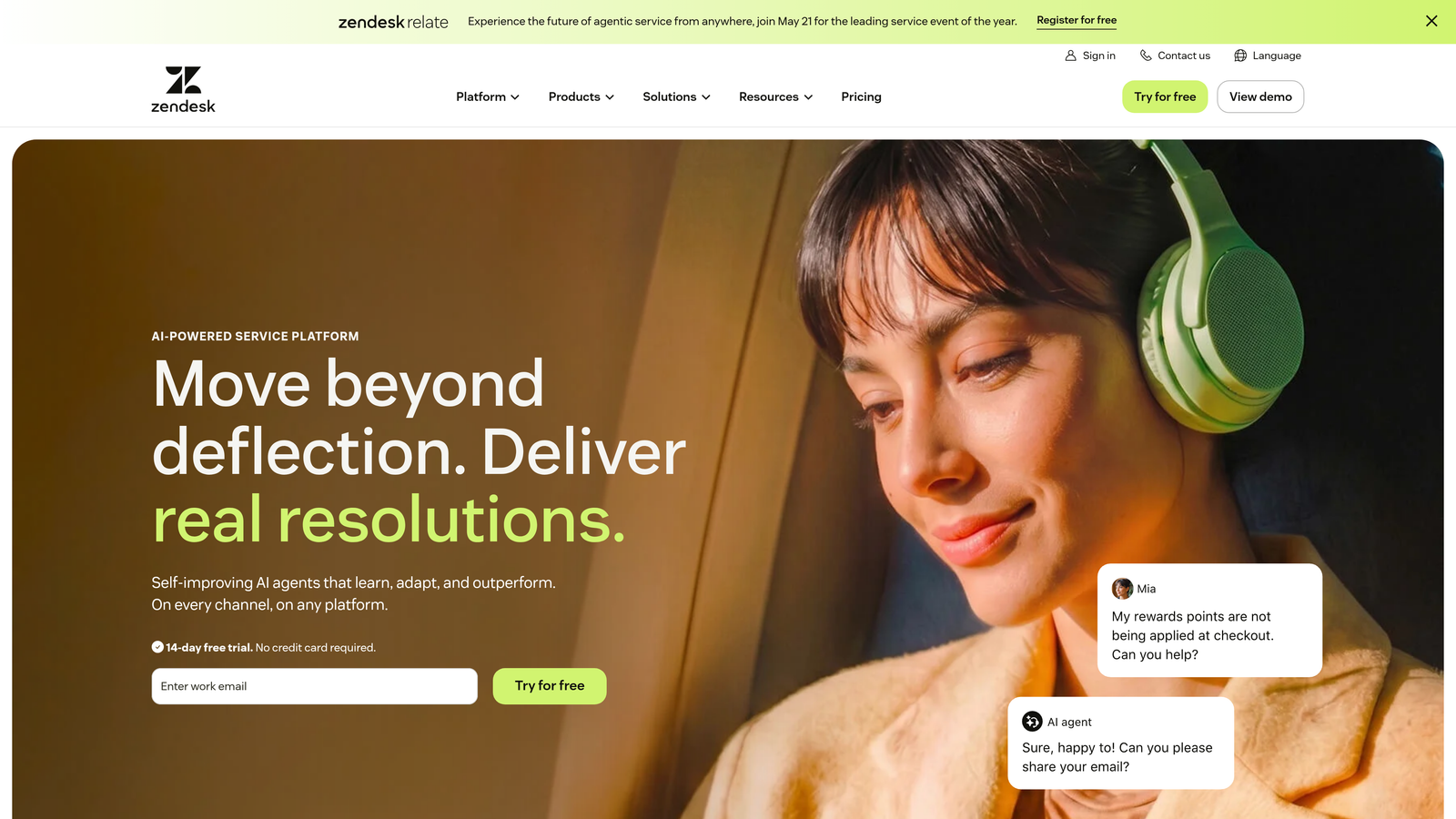
Zendesk is a mature enterprise helpdesk platform that has added AI agents, intent detection, and sentiment analysis across its omnichannel support suite.
Where This Tool Shines
Zendesk's strength is breadth. It handles email, chat, phone, social, and messaging channels in a unified workspace, and its AI add-ons bring intent detection and sentiment analysis to triage across all of them. For large teams managing high ticket volumes across multiple channels, that consistency matters.
The Agent Workspace is particularly well-designed for context delivery. Agents see a customer's full history, previous interactions, and AI-generated suggestions in a single view, reducing the time spent hunting for information before responding.
Key Features
AI Agents with Intent and Sentiment Detection: Automatically triage and route tickets based on what customers actually mean, not just the words they use.
Omnichannel Context: Maintains conversation continuity across email, chat, phone, and social in a single thread.
Agent Workspace: Surfaces full customer history and contextual reply suggestions alongside every ticket.
Advanced Analytics: Custom reporting dashboards for tracking resolution rates, CSAT, and team performance.
App Marketplace: Over 1,500 integrations available for connecting Zendesk to virtually any business system.
Best For
Mid-market and enterprise companies with complex, high-volume support operations across multiple channels. Teams with simpler needs may find the platform over-engineered and the AI add-on costs significant.
Pricing
Starts at $55/agent/month (Suite Team plan). AI add-ons are priced separately, so total costs can climb quickly at scale.
4. Freshdesk (Freddy AI)
Best for: Budget-conscious teams that want AI-powered triage and intent detection without enterprise price tags
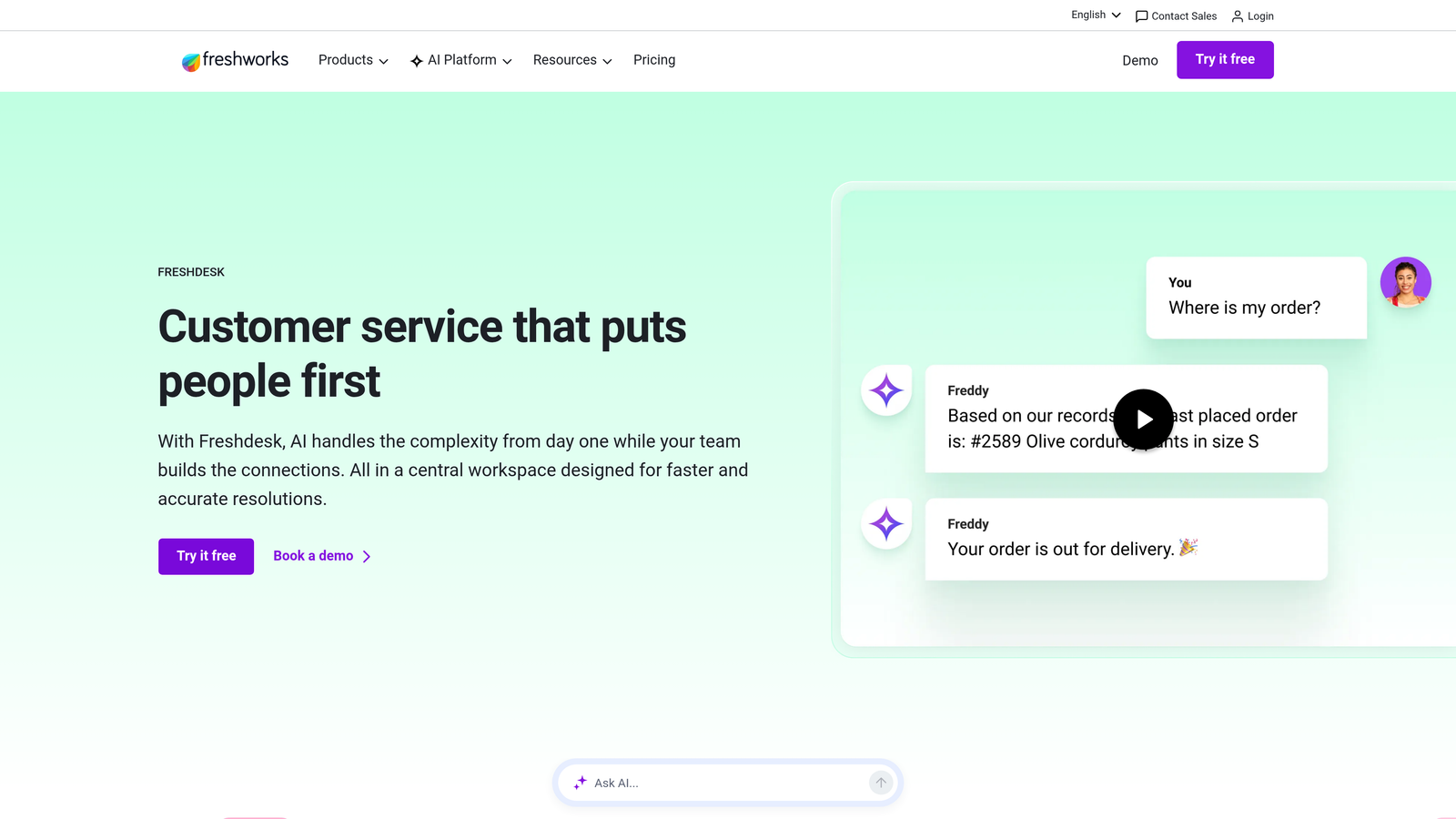
Freshdesk is an accessible helpdesk platform with Freddy AI handling intent detection, smart routing, and sentiment analysis across support channels.
Where This Tool Shines
Freshdesk punches above its price point when it comes to AI-assisted triage. Freddy AI reads incoming tickets, detects intent and sentiment, suggests canned responses, and routes conversations to the right team without requiring significant configuration. For teams moving off manual processes, the onboarding curve is gentle.
The free tier is a genuine differentiator for small teams. It's not a stripped-down trial — it provides functional support tooling that growing teams can use before committing to a paid plan.
Key Features
Freddy AI Auto-Triage: Detects intent and sentiment on incoming tickets and routes them appropriately without manual rules.
Canned Response Suggestions: AI surfaces relevant response templates based on ticket content, speeding up agent handling time.
Omnichannel Support: Handles email, chat, phone, and social from a single inbox.
Built-In Knowledge Base: AI suggests relevant articles to agents during ticket handling, reducing research time.
Free Tier: A functional free plan makes Freshdesk accessible for small teams and early-stage companies.
Best For
Small to mid-sized teams that need solid AI-assisted support without the enterprise price tag. Also a strong choice for teams that want to start free and scale into paid features as they grow.
Pricing
Free plan available. Paid plans start at $15/agent/month, making it one of the more affordable options on this list.
5. Ada
Best for: Enterprise brands that need autonomous resolution powered by real-time back-end data
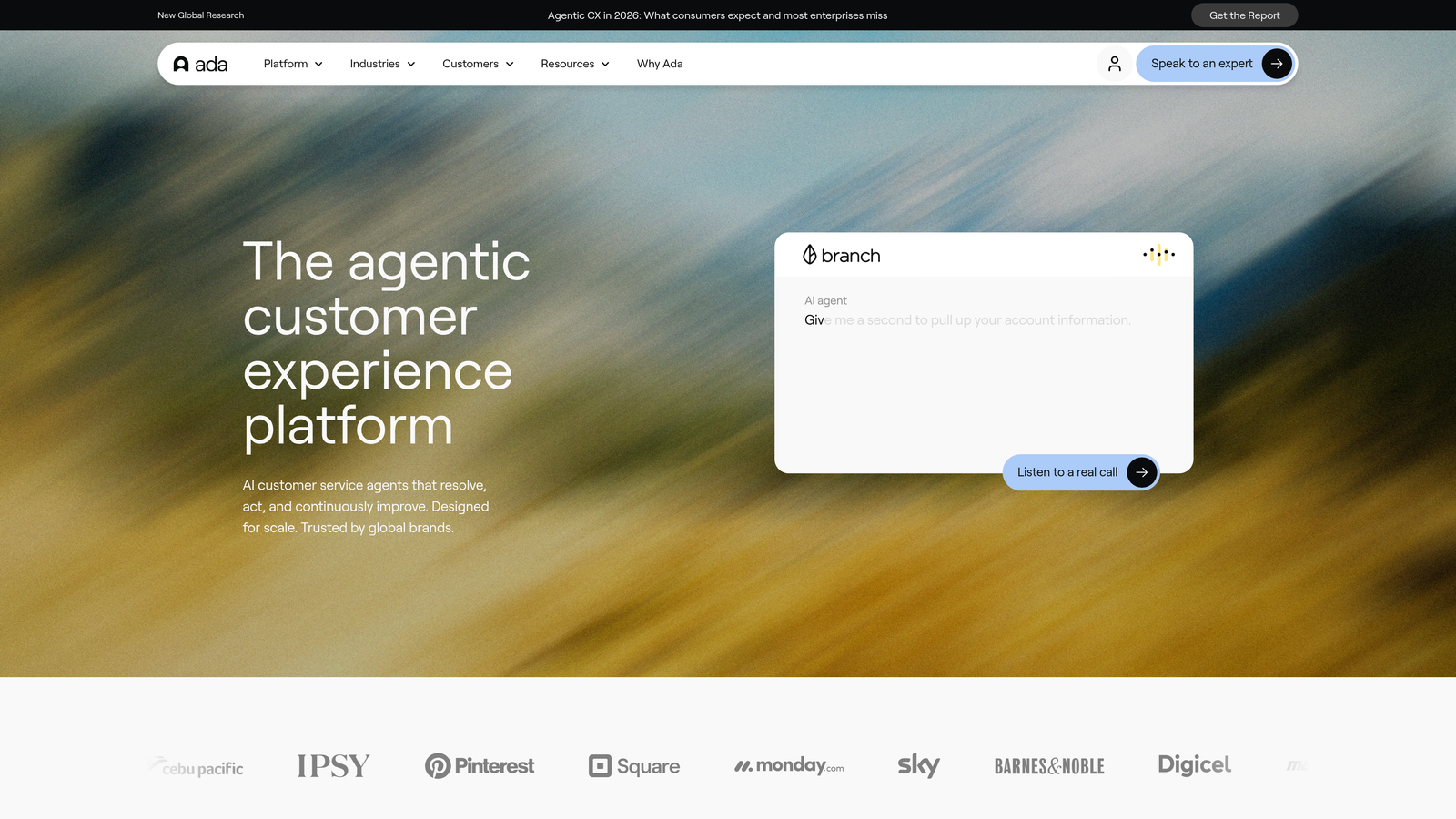
Ada is a no-code AI agent platform built for enterprises that want autonomous query resolution through deep integrations with back-end systems.
Where This Tool Shines
Ada's differentiation is its ability to pull live data from back-end systems during a conversation. An AI agent can check order status, verify account details, or retrieve billing information in real time, without handing off to a human. That's genuine autonomous resolution, not just FAQ deflection.
The no-code builder means business teams can design and update conversational flows without waiting on engineering. For enterprises managing large, complex support operations, this flexibility is valuable.
Key Features
Back-End Data Integrations: AI agents pull real-time data from CRMs, order management systems, and billing platforms during conversations.
No-Code Flow Builder: Design and modify conversational flows without engineering involvement.
Multilingual Support: Handles conversations in 50+ languages for global customer bases.
Analytics Dashboard: Tracks resolution rates, containment metrics, and conversation quality over time.
Enterprise Integrations: Connects with major CRM, e-commerce, and billing platforms for rich contextual data.
Best For
Large enterprise brands in e-commerce, fintech, and telecommunications that handle high volumes of transactional queries where real-time data access is critical to resolution.
Pricing
Custom enterprise pricing. Contact Ada directly for a quote based on volume and integration requirements.
6. Kustomer
Best for: Relationship-centric support teams that want a full customer timeline without a separate CRM
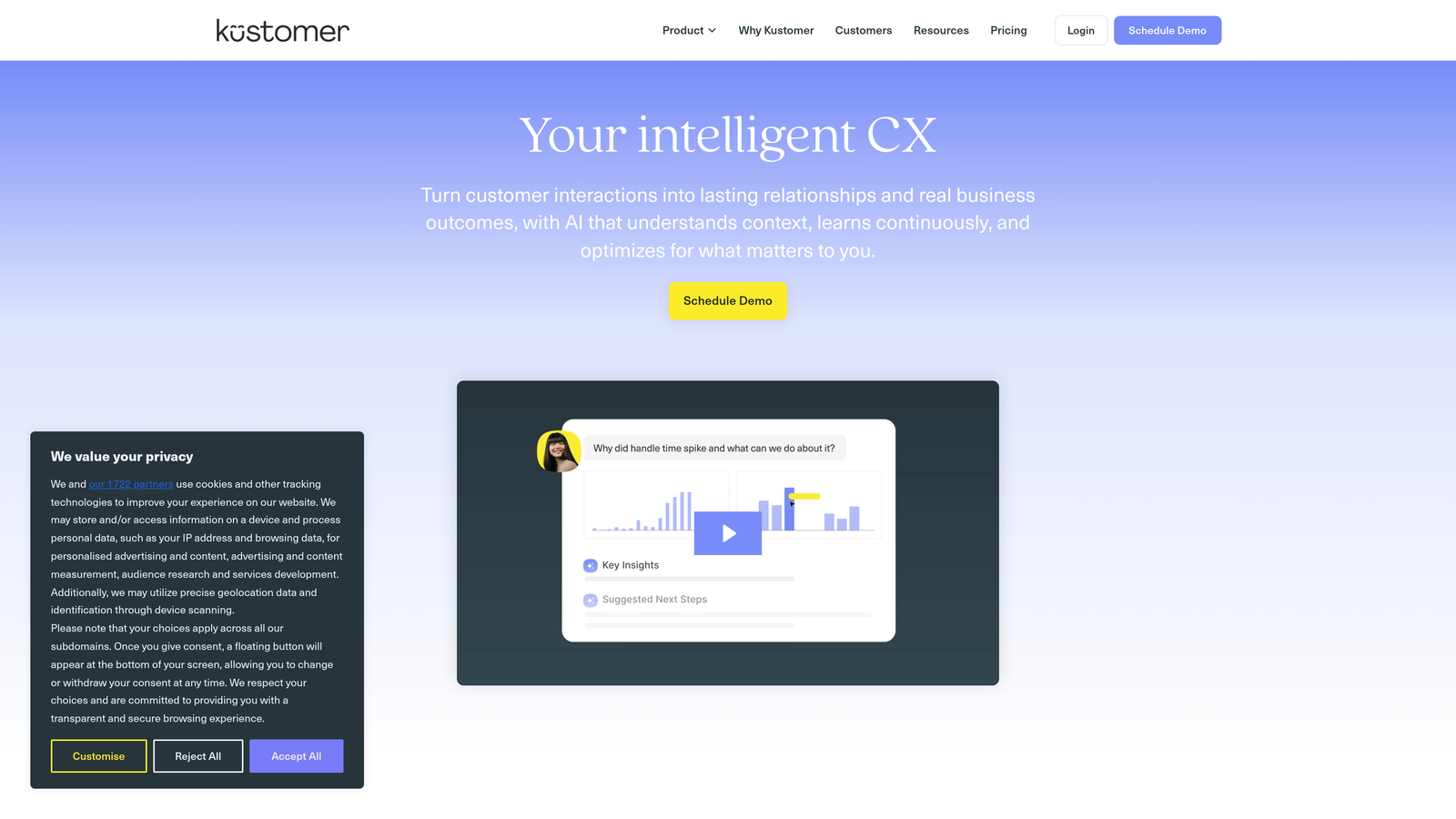
Kustomer is a CRM-native customer service platform that unifies conversations, orders, and customer events in a single chronological timeline.
Where This Tool Shines
Kustomer's core insight is that support context isn't just conversation history — it's the full customer relationship. By building CRM functionality directly into the support platform, agents see purchases, refunds, previous tickets, and behavioral events in one view rather than toggling between systems.
The AI layer sits on top of this rich data foundation, handling classification, routing, and response suggestions with more customer context than most standalone support tools can access. Proactive outreach based on lifecycle events is a standout capability for teams focused on retention.
Key Features
Unified Customer Timeline: Combines conversations, orders, product events, and support history in a single chronological view.
AI Classification and Routing: Automatically categorizes and routes tickets based on intent and customer data.
Proactive Outreach: Triggers outreach based on customer behavior and lifecycle events before issues escalate.
Native CRM Functionality: Eliminates the need for a separate CRM integration by building customer data management into the platform.
Omnichannel Support: Handles email, chat, SMS, and social from a single workspace.
Best For
Mid-market and enterprise teams in retail, e-commerce, and subscription businesses where the full customer relationship context is essential to delivering good support.
Pricing
Starts at $89/user/month on the Enterprise plan. Positioned as a premium option with pricing reflecting the CRM-plus-support value proposition.
7. Tidio (Lyro AI)
Best for: Small businesses and e-commerce stores that want AI chat with visitor behavior triggers
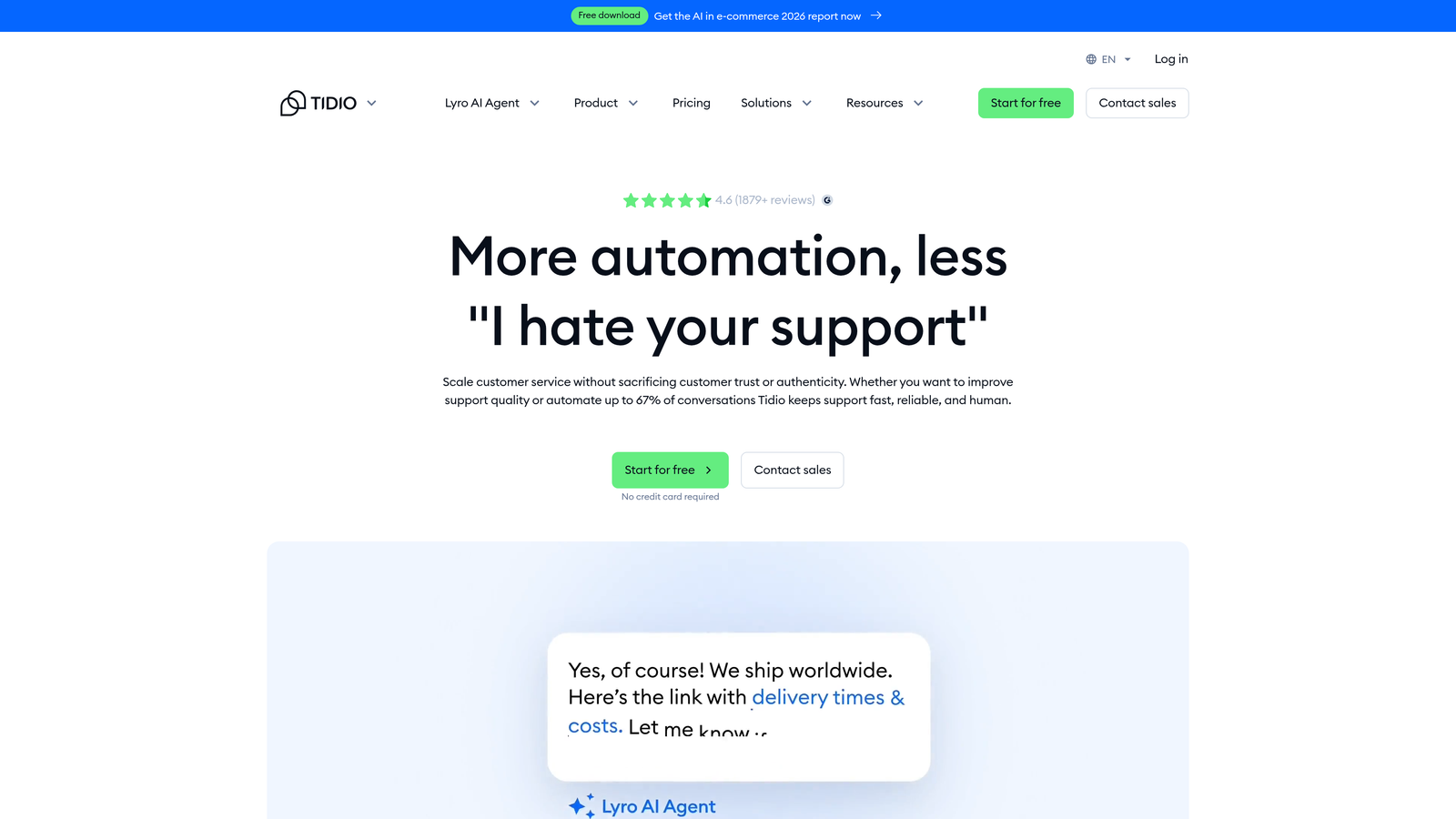
Tidio is a small-business-friendly chat platform with Lyro AI, which learns from FAQ content and uses visitor behavior signals to deliver contextual responses.
Where This Tool Shines
Tidio makes AI-powered chat accessible to teams that don't have dedicated support engineers or large budgets. Lyro learns from your existing FAQ and knowledge base content, meaning setup is straightforward rather than requiring weeks of training data curation.
The visitor behavior tracking is where context enters the picture. Tidio can trigger conversations based on what pages visitors are browsing, how long they've been on a page, or what they've added to a cart, making it particularly effective for e-commerce support and pre-purchase engagement.
Key Features
Lyro AI Chatbot: Learns from FAQ and knowledge base content to handle common queries without manual scripting.
Visitor Behavior Triggers: Initiates contextual conversations based on browsing behavior, time on page, and cart activity.
E-Commerce Integrations: Native integrations with Shopify, WooCommerce, and WordPress out of the box.
Visual Chatbot Builder: Drag-and-drop flow builder for creating custom conversation paths without code.
AI-Suggested Replies for Agents: Live chat interface surfaces AI-generated reply suggestions to speed up human agent responses.
Best For
Small businesses, e-commerce stores, and content sites that want accessible AI chat without enterprise complexity or pricing. Not designed for complex B2B support workflows or deep back-end data integrations.
Pricing
Free plan available. Lyro AI starts at $39/month, making it one of the most accessible AI chat options on this list.
8. Salesforce Service Cloud (Einstein AI)
Best for: Enterprises already in the Salesforce ecosystem that want support powered by full CRM context
Salesforce Service Cloud is an enterprise support platform where Einstein AI draws context from the entire Salesforce data ecosystem, including sales, marketing, and service records.
Where This Tool Shines
If your business runs on Salesforce, Service Cloud's contextual depth is unmatched. Einstein AI has access to a customer's complete relationship history: every sales interaction, marketing email, previous case, and account attribute. Next-best-action recommendations and reply suggestions are informed by this full picture rather than just the current ticket.
For organizations with complex support workflows, Salesforce Flow and Apex customization allow teams to build highly specific routing logic and automation that most out-of-the-box platforms can't replicate.
Key Features
Einstein AI: Handles case classification, next-best-action recommendations, and reply suggestions informed by full Salesforce CRM data.
Full CRM Context: Sales history, marketing touches, and service cases visible in a single agent view.
Omnichannel Routing: Skill-based and context-based assignment across all support channels.
Knowledge Management: AI surfaces relevant knowledge articles during case handling to speed up resolution.
Extensive Customization: Salesforce Flow and Apex enable highly tailored automation and workflow logic.
Best For
Large enterprises already invested in the Salesforce platform where unified data across sales, marketing, and support is a strategic priority. The complexity and cost make it less suitable for teams without existing Salesforce infrastructure.
Pricing
Starts at $25/user/month (Starter). Enterprise plans are significantly higher, and full Einstein AI capabilities require additional licensing.
9. Help Scout
Best for: Small to mid-sized teams that want human-first support with AI assistance and page-aware help suggestions
Help Scout is a human-first support platform combining AI drafts, customer profiles, and a Beacon widget that offers page-aware article suggestions.
Where This Tool Shines
Help Scout's philosophy is that AI should assist humans rather than replace them, and the product reflects this consistently. AI Drafts generate reply suggestions based on conversation context, while AI Summaries help agents quickly understand long threads without reading every message. The result is faster human responses rather than fully autonomous resolution.
The Beacon widget is a notable contextual feature: it surfaces relevant help articles based on the page a user is viewing, reducing the friction of searching a knowledge base manually. It's not as deeply integrated as Halo AI's page-aware guidance, but it's a meaningful step toward context-aware self-service.
Key Features
AI Drafts: Generate reply suggestions based on conversation context, giving agents a strong starting point rather than a blank page.
AI Summaries: Condense long conversation threads so agents can get up to speed quickly without reading every message.
Beacon Widget: Surfaces page-aware article suggestions and contact options based on the user's current location in your product or website.
Customer Profiles: Activity history and custom properties give agents relevant background before they respond.
Clean, Simple UX: Designed for teams that want powerful support tooling without a steep learning curve.
Best For
Small to mid-sized teams that prioritize human connection in support and want AI to accelerate agents rather than replace them. An excellent fit for companies where support quality and tone are closely tied to brand identity.
Pricing
Starts at $50/month on the Standard plan, which includes 25 contacts. Straightforward pricing with no per-seat complexity at the entry level.
Which Tool Is Right for Your Team?
The right context-aware support platform depends on what kind of context matters most to your customers and your business. Not every team needs the same depth of signal, and the tools above reflect a wide spectrum of approaches.
For teams that need the deepest contextual layer available, Halo AI stands out for its page-aware architecture, autonomous ticket resolution, and continuous learning model. It's built for B2B SaaS companies that want support to function as a business intelligence layer, not just a ticket queue. If you're scaling and don't want your support headcount to scale with you, it's worth a close look.
Intercom is the natural choice for product-led growth companies that want proactive, behavior-triggered engagement alongside reactive support. Zendesk and Salesforce Service Cloud serve enterprise teams with complex omnichannel needs, particularly when deep CRM integration is a requirement. Kustomer is the strongest option for relationship-centric businesses that want a unified customer timeline without managing a separate CRM.
For teams with tighter budgets, Freshdesk and Tidio offer genuinely useful AI capabilities at accessible price points, with free tiers that let you start without a financial commitment. Help Scout is the right call for teams that want AI assistance without fully automated resolution, keeping humans at the center of every conversation.
The common thread across all of these platforms is a shift away from keyword matching toward genuine understanding of who a customer is and what they actually need. That shift is what separates support that frustrates from support that builds loyalty.
Your support team shouldn't scale linearly with your customer base. Let AI agents handle routine tickets, guide users through your product, and surface business intelligence while your team focuses on complex issues that need a human touch. See Halo in action and discover how continuous learning transforms every interaction into smarter, faster support.