9 Best Contextual Customer Support Tools in 2026
Contextual customer support tools eliminate repetitive questions and generic responses by automatically surfacing customer data, product usage history, and conversation context directly within support workflows. This guide evaluates the top 9 platforms in 2026 that integrate with your existing tech stack to give agents complete customer context instantly, reducing resolution times and improving support experiences without forcing customers to repeat themselves.
 Matt PattoliFounder13 min read
Generic support responses frustrate customers and waste everyone's time. When an agent asks "Can you describe your issue?" to someone who's already explained it twice, or suggests troubleshooting steps for the wrong product tier, everyone loses. Contextual customer support tools change this by understanding who your customers are, what they're trying to do, and what's happening on their screen—delivering relevant help without the back-and-forth.
These platforms pull data from your CRM, product analytics, and conversation history to give agents (human or AI) the full picture instantly. No more tab-switching between five different systems to piece together context. No more asking customers to repeat themselves.
We evaluated dozens of tools based on their ability to surface relevant context, integrate with existing tech stacks, and actually improve resolution times. Here are the top contextual support tools worth your attention in 2026.
1. Halo AI
Best for: Teams wanting AI-native contextual intelligence with page-aware capabilities that see what users see
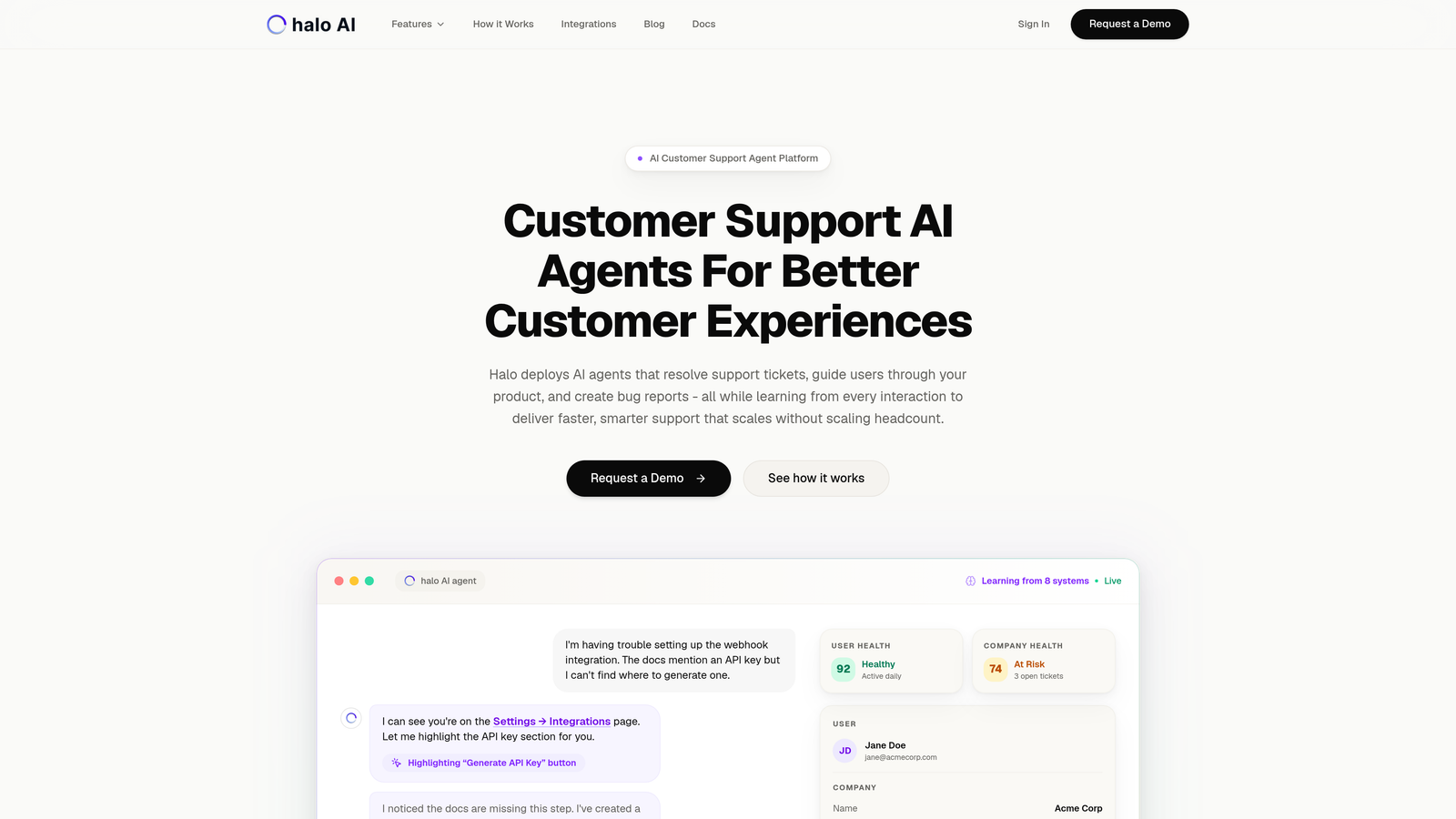
Halo AI represents a different approach to contextual support—it's built AI-first rather than bolting AI onto an existing helpdesk. The platform's page-aware capabilities mean it understands not just who your customer is, but exactly what they're looking at on their screen right now.
Where This Tool Shines
The page-aware chat widget changes the support dynamic entirely. When a customer asks for help, Halo already knows which feature they're using, what data they're viewing, and where they might be stuck. This eliminates the "Can you send a screenshot?" back-and-forth that eats up resolution time.
What sets Halo apart is its continuous learning architecture. Every resolved ticket, every successful interaction, every piece of feedback trains the AI agents to handle similar situations better next time. The system doesn't just store context—it learns from it.
Key Features
Page-Aware Context: The chat widget sees what users see, understanding their current screen state and UI context automatically.
AI Agents with Full Context: Autonomous agents resolve tickets using complete customer history, product usage data, and business system information.
Smart Inbox Intelligence: Goes beyond support metrics to surface customer health signals, revenue intelligence, and anomaly detection.
Auto Bug Ticket Creation: Automatically generates detailed bug reports from support conversations and routes them to your engineering workflow.
Multi-System Integration: Connects to Linear, Slack, HubSpot, Intercom, Stripe, Zoom, PandaDoc, and Fathom for complete business context.
Best For
B2B SaaS companies and product teams who want support that scales without scaling headcount. Particularly valuable for teams already using helpdesk systems like Zendesk or Freshdesk but wanting more intelligent, autonomous support capabilities. Works best when you need AI that understands your product interface, not just your documentation.
Pricing
Contact for pricing. The platform focuses on teams ready to move beyond traditional per-seat helpdesk models toward AI-augmented support operations.
2. Intercom
Best for: Product-led companies wanting behavioral data and unified customer profiles for contextual conversations
Intercom pioneered the shift from generic support tickets to contextual customer messaging, and it remains a strong choice for teams who want rich behavioral data.
Where This Tool Shines
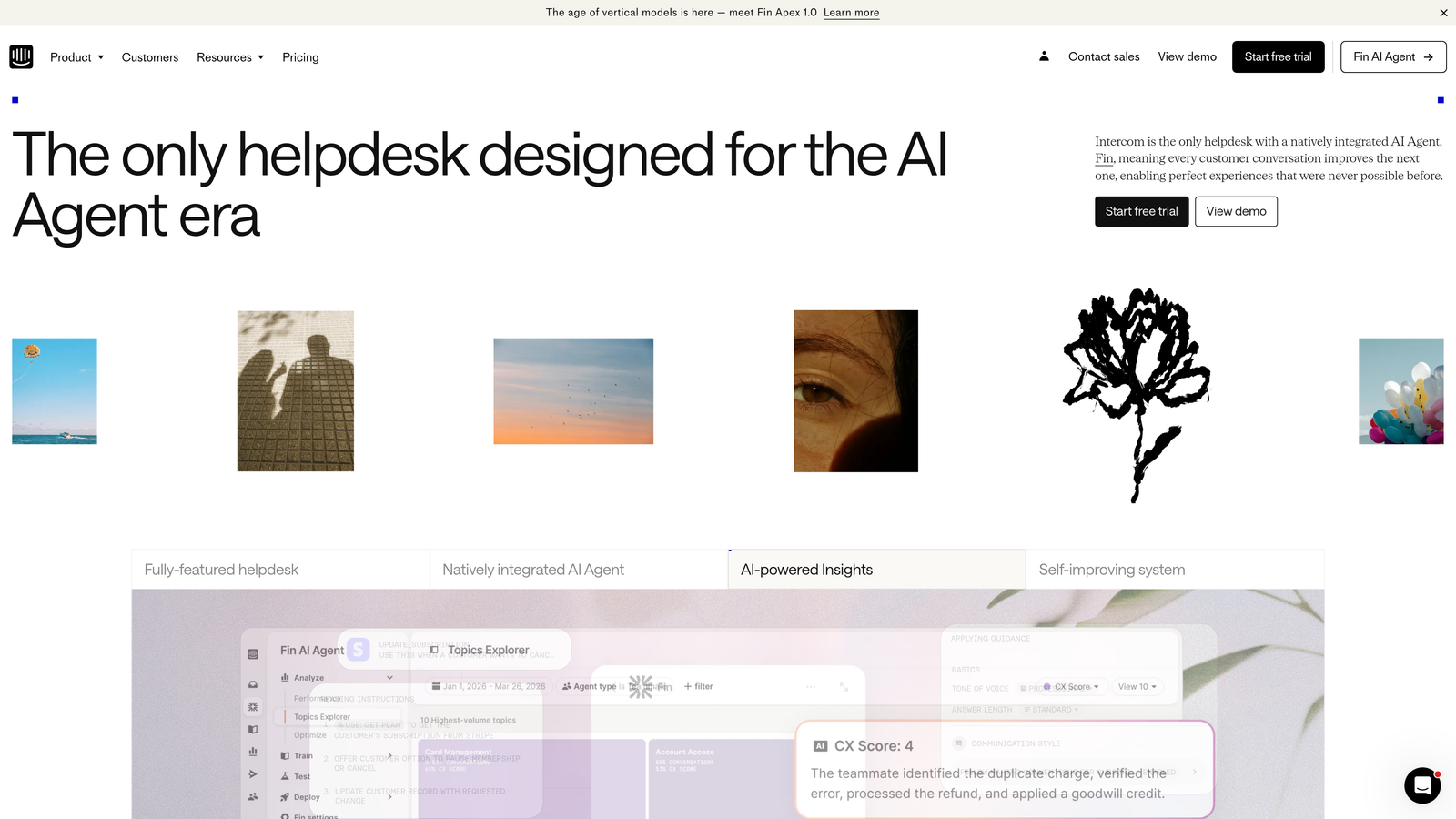
Intercom's unified customer profiles bring together conversation history, product usage, and behavioral data in one place. When a customer reaches out, agents see their entire journey—which features they use, when they last logged in, what emails they've received.
The Fin AI agent leverages this context to provide intelligent responses that feel personalized rather than robotic. It can reference past conversations, acknowledge known issues, and tailor suggestions based on the customer's product tier and usage patterns.
Key Features
Unified Customer Profiles: Complete view of each customer including conversation history, product events, and custom attributes.
Fin AI Agent: Contextual AI responses that understand customer history and current situation for more relevant assistance.
Product Tours and Messaging: In-app guidance that triggers based on user context and behavior patterns.
Custom Attributes and Events: Track any data point from your product to enable deep personalization and contextual routing.
Behavioral Triggers: Proactive messages based on what users do (or don't do) in your product.
Best For
SaaS companies with strong product-led growth strategies who want to blend support with in-app messaging and proactive engagement. Works particularly well for teams who view support as part of the product experience rather than a separate function.
Pricing
Starts at $39/seat/month for the Essential plan. Advanced features including Fin AI and automation require higher-tier plans.
3. Zendesk
Best for: Enterprise teams needing extensive integration capabilities and a unified agent workspace
Zendesk built its reputation on flexibility and integration depth, making it a go-to choice for companies with complex tech stacks.
Where This Tool Shines
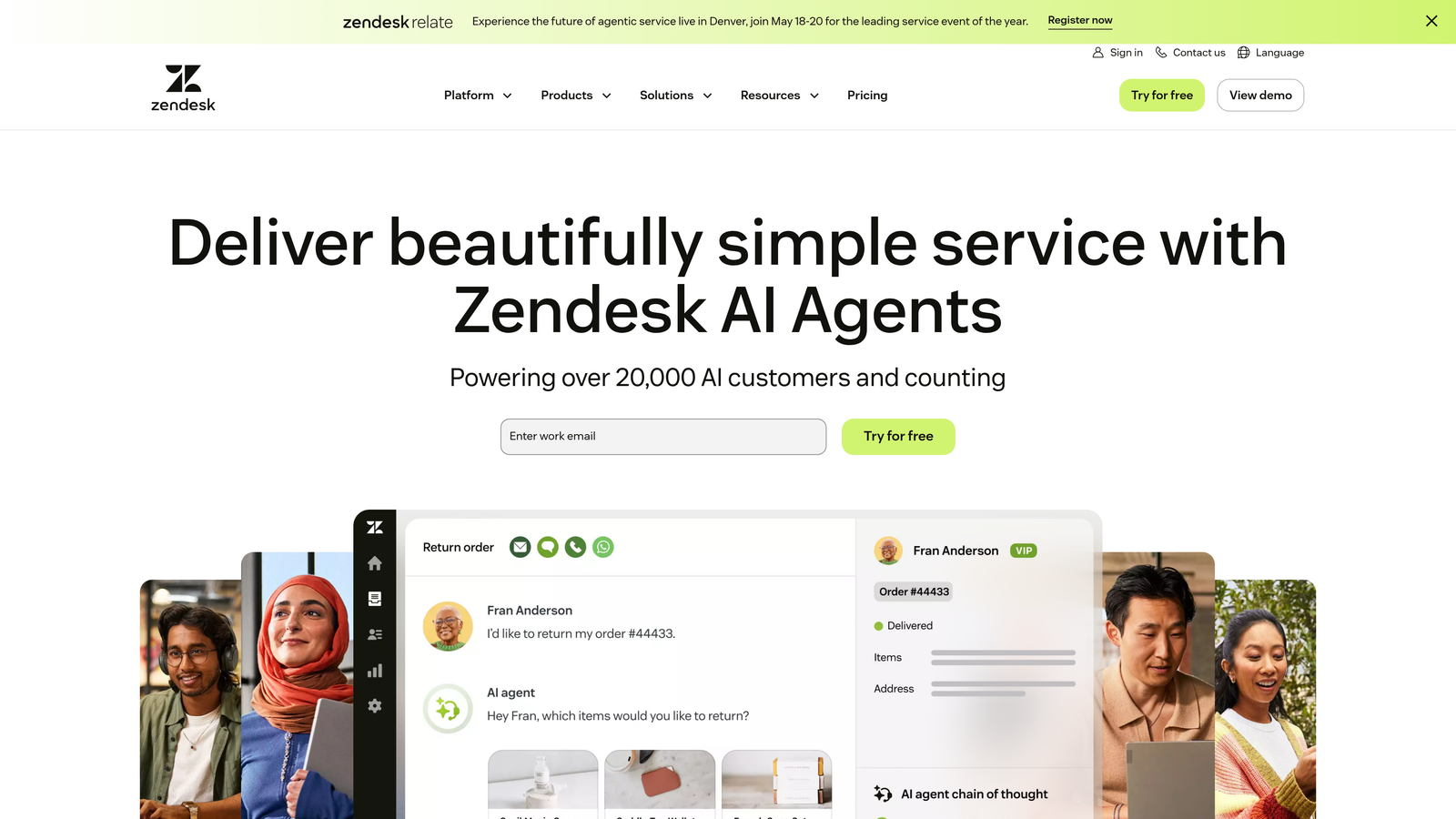
The agent workspace brings context from multiple sources into a single interface. Agents don't need to leave Zendesk to check your CRM, billing system, or product analytics—everything surfaces in the sidebar. This unified view means faster resolutions because agents spend less time hunting for information.
With over 1,000 pre-built integrations, Zendesk can pull context from virtually any business system you use. The platform's maturity shows in how smoothly these integrations work together to create a complete customer picture.
Key Features
Agent Workspace: Unified interface showing customer context from all connected systems alongside the current conversation.
Integration Marketplace: 1,000+ pre-built integrations for connecting CRM, analytics, billing, and business tools.
Advanced AI: Intelligent routing, agent suggestions, and automated responses based on ticket context and history.
Custom Objects: Define your own data structures to track context specific to your business model.
Omnichannel Support: Maintain context across email, chat, phone, social media, and messaging apps.
Best For
Established companies with complex support operations and diverse tool ecosystems. Best suited for teams who need enterprise-grade features, extensive customization options, and the ability to support customers across many channels while maintaining context.
Pricing
Starts at $55/agent/month for the Suite Team plan. Enterprise features including advanced AI and custom objects require higher tiers starting around $115/agent/month.
4. Freshdesk
Best for: Growing teams wanting AI-powered contextual support without enterprise pricing
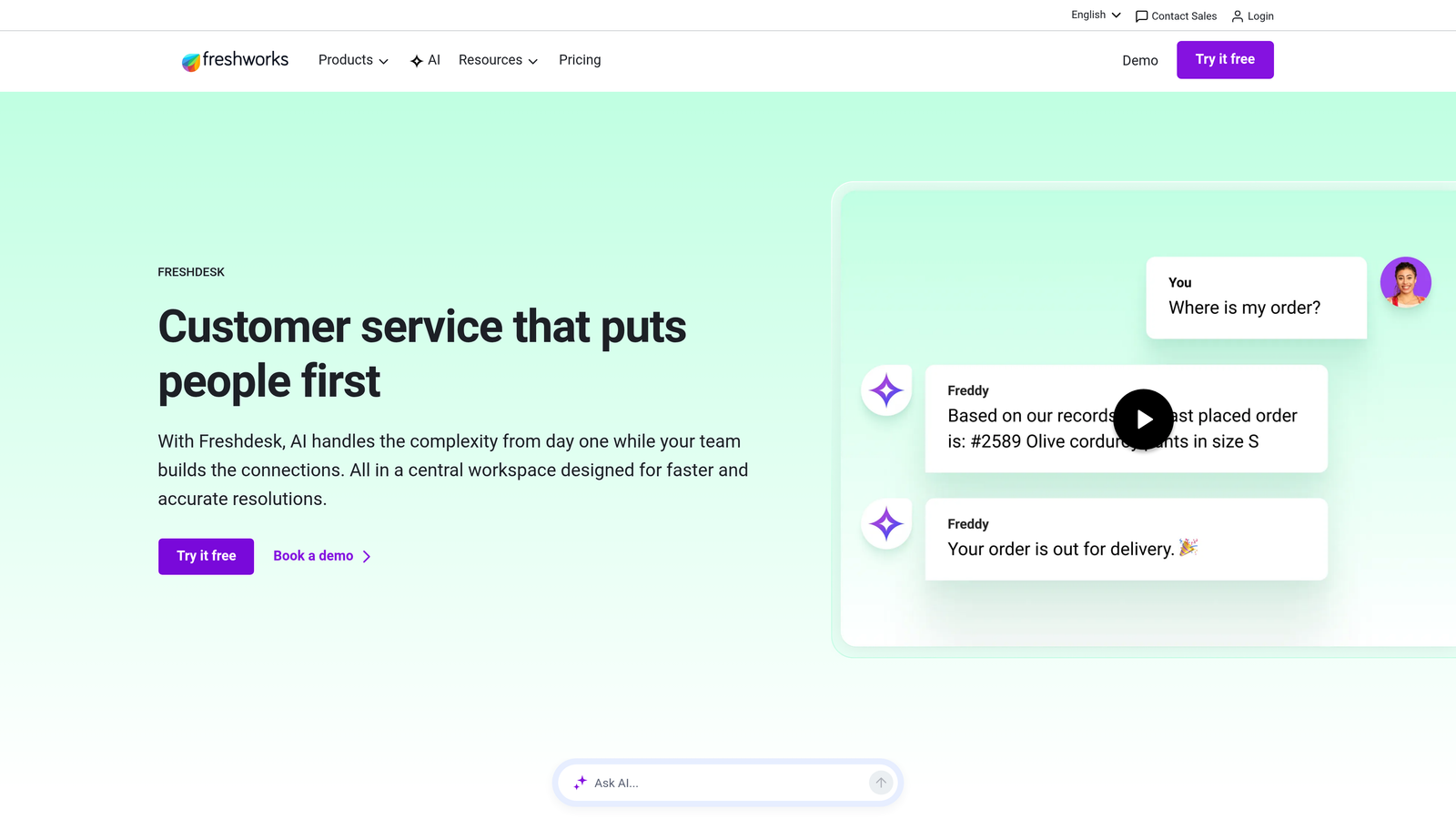
Freshdesk brings sophisticated contextual capabilities to teams who aren't ready for enterprise price tags. The Freddy AI features punch above the platform's weight class.
Where This Tool Shines
Freddy AI analyzes ticket context and surfaces relevant suggestions to agents in real-time. It learns from your team's best responses and suggests similar solutions when comparable tickets arrive. This means newer agents get the benefit of your team's collective knowledge automatically.
The omnichannel approach maintains customer context whether they reach out via email, chat, phone, or social media. Agents see the full conversation history regardless of which channel the customer used previously.
Key Features
Freddy AI Suggestions: Context-aware agent assistance that recommends responses based on ticket content and historical resolutions.
Unified Customer View: Complete conversation history and customer data across all communication channels.
Custom Apps Marketplace: Build or install apps that surface additional context from your business systems.
Scenario Automations: Trigger actions based on contextual conditions like customer segment, ticket type, or product usage.
Collaboration Tools: Share context with team members through internal notes and ticket assignments.
Best For
Mid-sized companies and growing startups who need contextual support capabilities without paying enterprise prices. Particularly good for teams transitioning from basic helpdesk tools to more sophisticated contextual platforms.
Pricing
Free tier available for up to 10 agents with basic features. Paid plans start at $15/agent/month with AI capabilities available on higher tiers starting at $49/agent/month.
5. Help Scout
Best for: Teams prioritizing human connection with contextual support for personalized service
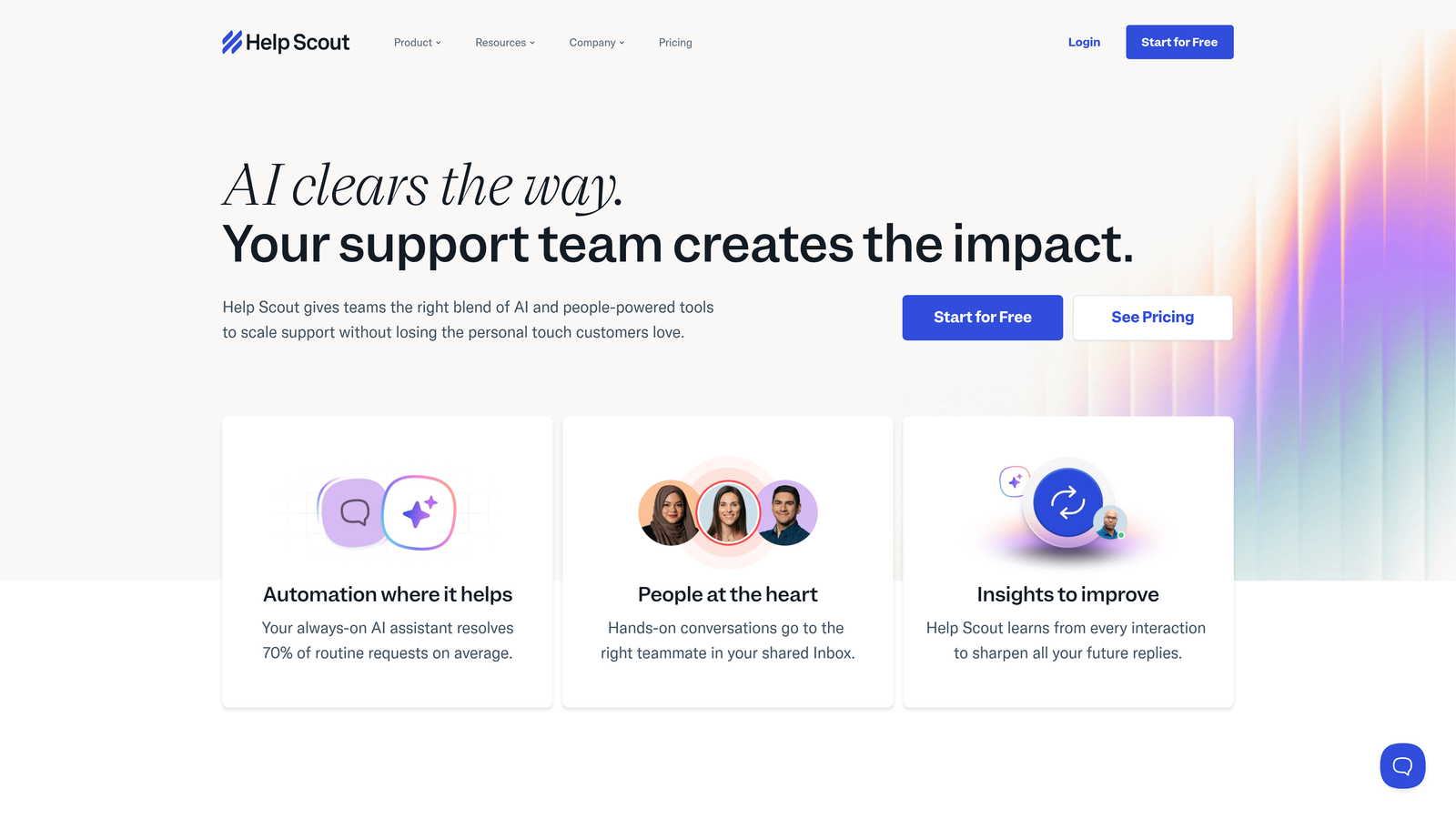
Help Scout takes a deliberately human-centered approach to contextual support. The interface feels more like email than a traditional ticketing system, which many teams find more natural.
Where This Tool Shines
The customer sidebar is Help Scout's secret weapon. Every conversation shows complete customer history, custom data from integrations, and relevant notes from previous interactions. Agents get full context without the interface feeling cluttered or overwhelming.
Saved replies with dynamic variables let agents personalize responses using customer data. Instead of generic templates, agents can reference specific account details, usage patterns, or past conversations naturally within their responses.
Key Features
Customer Sidebar: Clean interface showing full customer history, custom properties, and integration data alongside conversations.
Beacon Widget: Contextual help that surfaces relevant articles based on what page the customer is viewing.
Saved Replies with Variables: Personalize template responses with dynamic customer data for efficient yet human interactions.
Integration Ecosystem: 50+ integrations including Salesforce, HubSpot, Slack, and popular SaaS tools for context enrichment.
Collision Detection: Prevents multiple agents from responding to the same ticket by showing who's currently viewing each conversation.
Best For
Customer-focused companies who want to maintain a personal touch while scaling support operations. Works particularly well for teams who value writing quality and believe support should feel like a conversation, not a transaction.
Pricing
Starts at $20/user/month for the Standard plan. AI features and advanced reporting available on Plus plan at $40/user/month.
6. Kustomer
Best for: Companies wanting CRM-powered support with complete customer journey visibility
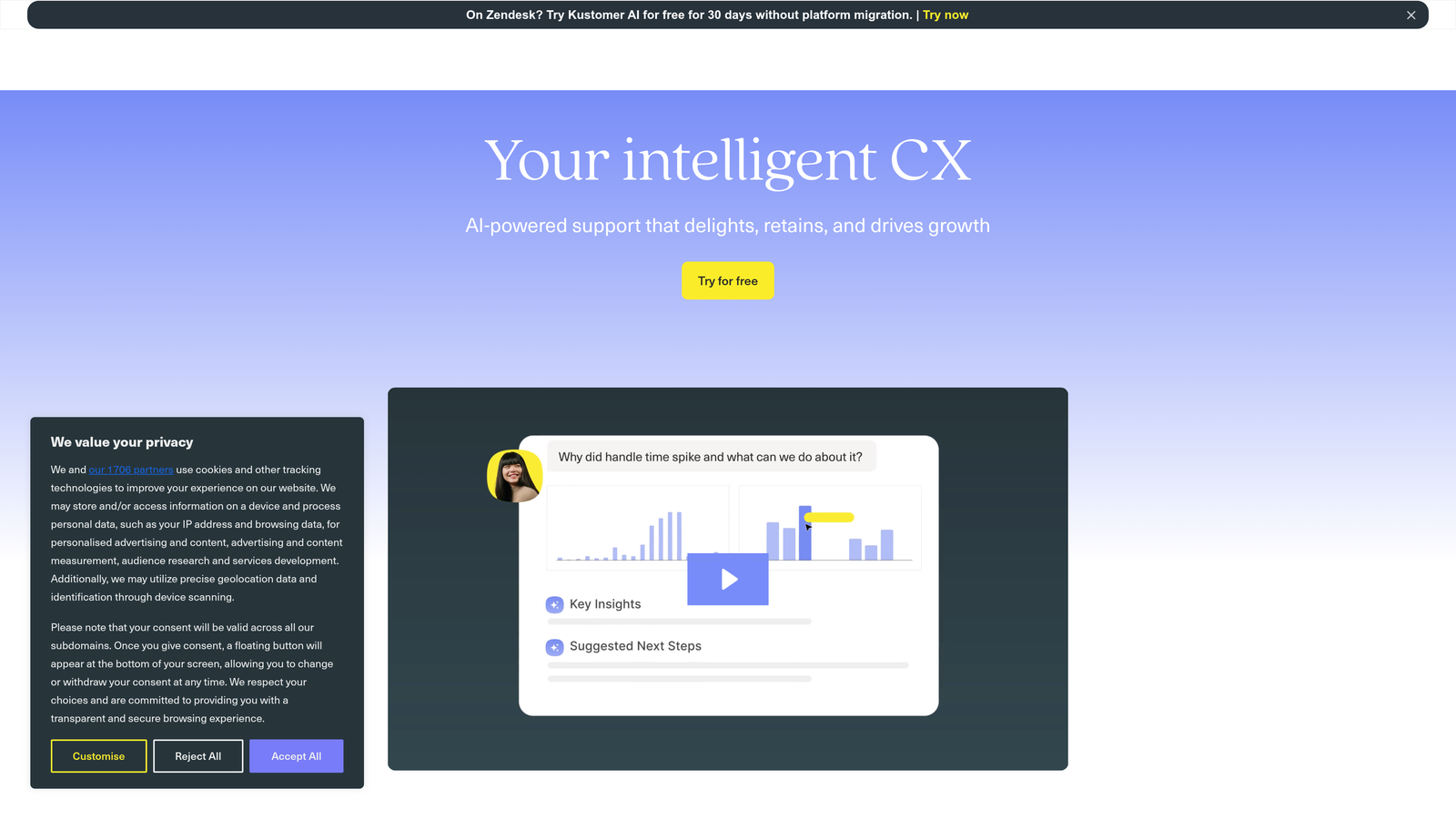
Kustomer built its platform around the idea that customer service software should work like a CRM, not a ticket queue. The timeline view reflects this philosophy perfectly.
Where This Tool Shines
The timeline view shows every customer interaction chronologically—support conversations, purchases, website visits, email opens, subscription changes. This complete journey view helps agents understand not just the current issue, but the customer's entire relationship with your company.
For e-commerce businesses, Kustomer's deep integrations with Shopify, Magento, and BigCommerce surface order details, shipping status, and purchase history directly in the support interface. Agents can process refunds, update orders, or check inventory without leaving the conversation.
Key Features
Timeline View: Chronological display of every customer interaction across all touchpoints and channels.
Native CRM Capabilities: Custom objects and attributes let you structure customer data to match your business model.
E-commerce Integrations: Deep connections to Shopify, Magento, and BigCommerce for complete order context and management.
AI-Powered Routing: Intelligent ticket assignment based on context, sentiment analysis, and agent expertise.
Omnichannel Conversations: Unified threads that maintain context across email, chat, SMS, voice, and social media.
Best For
E-commerce companies and subscription businesses who need support that understands the full customer lifecycle. Particularly valuable for teams where support agents need to take actions beyond just answering questions—processing returns, updating subscriptions, or managing accounts.
Pricing
Starts at $89/user/month for the Enterprise plan. The platform targets mid-market and enterprise customers rather than small teams.
7. Front
Best for: Collaborative teams wanting shared context and transparent customer communication
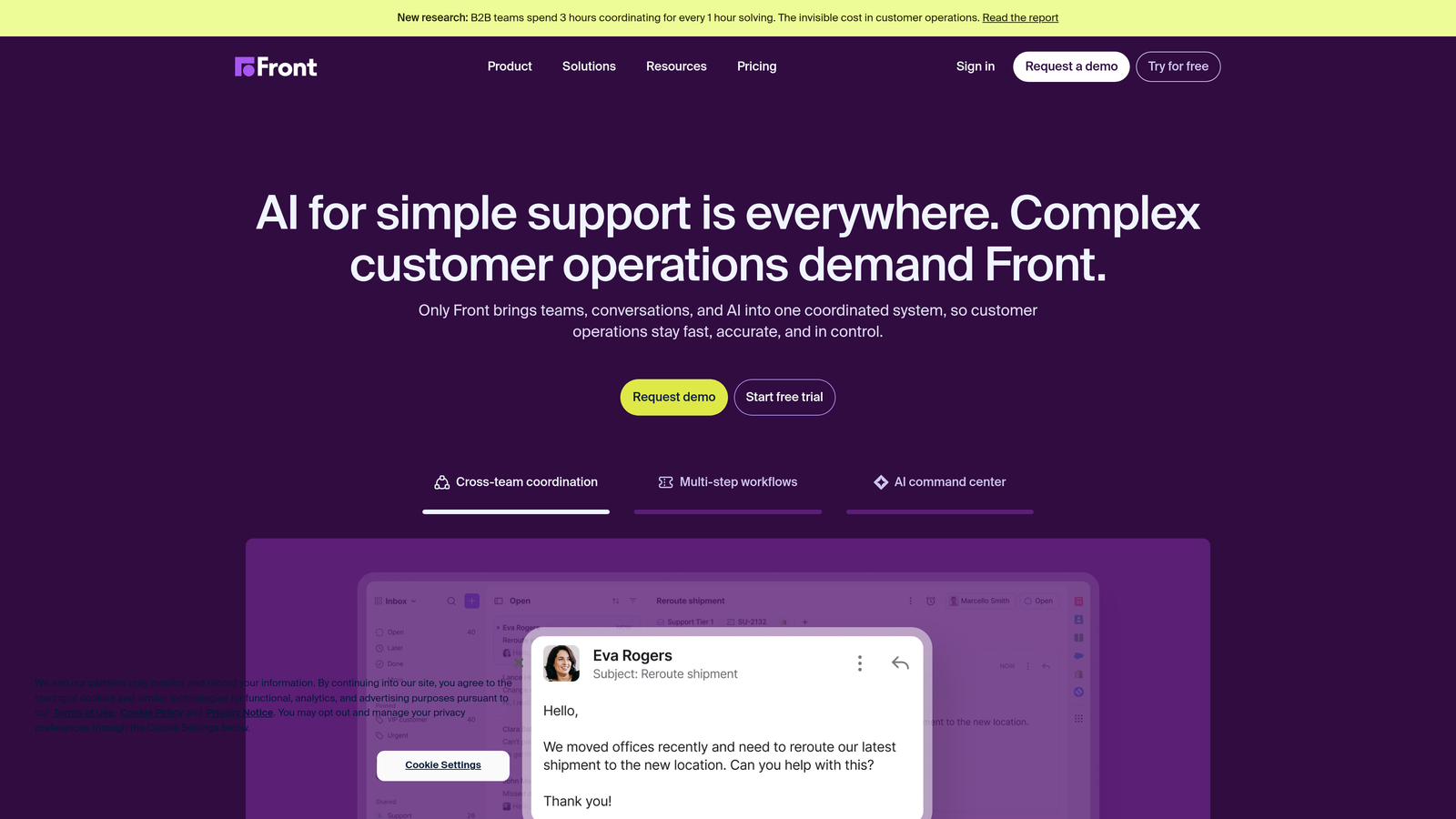
Front reimagines the inbox as a collaborative workspace where teams can share context and work together on customer communications seamlessly.
Where This Tool Shines
Internal comments transform how teams share context. When an agent needs input from sales, product, or another team member, they can loop them into the conversation with full context visible. Everyone sees the customer history, previous responses, and current situation without forwarding emails or explaining background.
The customer context panel pulls data from connected apps—CRM records, support history, billing information—and displays it alongside every conversation. Teams can customize which data appears based on what's most relevant to their workflow.
Key Features
Shared Inboxes: Team-based email management with internal comments for sharing context and collaborating on responses.
Customer Context Panel: Sidebar showing CRM data, app information, and custom properties from integrated systems.
Rules and Workflows: Automate routing and actions based on message content, sender attributes, or contextual triggers.
Analytics Dashboard: Track team collaboration patterns, response quality, and how effectively context improves resolution times.
App Integrations: Connect Salesforce, HubSpot, Asana, and 100+ other tools to enrich customer context.
Best For
Teams where customer communication involves multiple departments and requires collaboration. Works particularly well for sales teams, account management, and customer success operations where context needs to flow between different functions.
Pricing
Starts at $19/seat/month for the Growth plan. Advanced features including analytics and automation require the Scale plan at $59/seat/month.
8. Gorgias
Best for: E-commerce brands needing deep Shopify integration and order management context
Gorgias built its platform specifically for e-commerce support, and that focus shows in how seamlessly it handles order-related context.
Where This Tool Shines
The Shopify integration goes far beyond basic data display. Agents can view order details, process refunds, edit orders, update shipping addresses, and manage subscriptions directly within the support interface. Every action updates both Gorgias and Shopify automatically, eliminating the risk of mismatched data.
Revenue statistics tied to support interactions help teams understand which support efforts actually drive business results. You can see which agents are best at converting support conversations into sales, or which product issues are costing you revenue.
Key Features
Deep E-commerce Integration: Native connections to Shopify, BigCommerce, and Magento with full order management capabilities.
Order Actions in Interface: Process refunds, edit orders, update shipping, and manage subscriptions without leaving the conversation.
Automated Responses: Use order status, customer purchase history, and product data to trigger relevant automated messages.
Revenue Attribution: Track which support interactions lead to sales and understand the business impact of support efforts.
Social Media Integration: Manage Instagram and Facebook comments and messages with full customer order context.
Best For
E-commerce brands, particularly those on Shopify, who need support agents to handle order issues efficiently. Best suited for companies where most support tickets relate to orders, shipping, returns, or product questions that benefit from purchase history context.
Pricing
Starts at $10/month for 50 tickets. Scales based on ticket volume with the Basic plan at $60/month for 300 tickets and Pro plan at $360/month for 2,000 tickets.
9. Gladly
Best for: Customer-centric brands wanting lifelong conversation history across all channels
Gladly takes a radically different approach to contextual support by organizing everything around people rather than tickets. Each customer has one continuous conversation thread that spans their entire relationship with your company.
Where This Tool Shines
The single conversation thread means customers never have to repeat themselves. Whether they contacted you via email last week, chat yesterday, or phone today, it's all part of one continuous conversation. Agents see everything without searching through multiple ticket systems or asking customers to explain previous interactions.
People Match routing connects customers with agents who've helped them before whenever possible. This continuity builds relationships and reduces the time agents spend getting up to speed on customer context.
Key Features
Lifelong Conversation Threads: Single continuous conversation per customer across all channels and all time.
People Match Routing: Intelligently routes customers to agents who've helped them previously for better continuity.
Native Voice Integration: Phone support maintains full conversation context alongside digital channels.
Customer Timeline: Complete interaction history showing every touchpoint organized chronologically by customer.
Omnichannel Consistency: Context flows seamlessly between email, chat, SMS, phone, and social media.
Best For
Brands where customer relationships matter more than ticket volume metrics. Works particularly well for companies with high customer lifetime value, subscription models, or luxury goods where personalized service is a competitive differentiator.
Pricing
Contact for pricing. Gladly targets mid-market and enterprise customers focused on customer experience quality over cost per ticket.
Making the Right Choice
Choosing the right contextual support tool depends on your specific needs and existing infrastructure. For AI-native contextual intelligence with page-aware capabilities that see what users see, Halo AI leads the pack with its continuous learning architecture and business intelligence features that go beyond traditional support metrics.
Intercom and Zendesk remain strong choices for teams wanting proven platforms with extensive ecosystems. Intercom excels for product-led companies who blend support with in-app engagement, while Zendesk's integration depth serves enterprise teams with complex tech stacks. Both offer sophisticated AI capabilities, though they approach context differently than Halo's page-aware model.
E-commerce brands should look closely at Kustomer or Gorgias for their deep order context and management capabilities. Kustomer provides more comprehensive CRM functionality, while Gorgias offers tighter Shopify integration at a more accessible price point. Both understand that e-commerce support needs transaction context, not just conversation history.
Teams prioritizing simplicity and human connection will appreciate Help Scout or Gladly. Help Scout maintains a clean, email-like interface while surfacing relevant context in the sidebar. Gladly takes the people-first approach further with lifelong conversation threads that eliminate the ticket mentality entirely.
Front stands out for collaborative teams where customer communication involves multiple departments. The shared inbox model with internal comments makes it easy to loop in colleagues while maintaining full context visibility.
Whatever you choose, the key is ensuring your tool actually surfaces relevant context at the right moment—not just stores data in another silo. The best contextual support platform is one that reduces the questions agents need to ask, speeds up resolution times, and makes customers feel understood from the first interaction.
Your support team shouldn't scale linearly with your customer base. Let AI agents handle routine tickets, guide users through your product, and surface business intelligence while your team focuses on complex issues that need a human touch. See Halo in action and discover how continuous learning transforms every interaction into smarter, faster support.