9 Best Customer Engagement Platforms for B2B Teams in 2026
Modern B2B teams need more than basic ticketing systems—they need a customer engagement platform that unifies support, sales, and product interactions while delivering AI-powered insights and personalized experiences at scale. This guide evaluates the top 9 platforms for 2026 based on AI capabilities, integration depth, analytics quality, and real-world usability to help you choose the solution that drives retention and expansion revenue.
 Matt PattoliFounder11 min read
Customer engagement has evolved beyond basic ticketing and email sequences. Today's B2B teams need platforms that unify support, sales, and product interactions into cohesive experiences that actually drive retention and expansion revenue. The right customer engagement platform doesn't just manage conversations—it learns from them, surfaces actionable insights, and helps your team deliver personalized experiences at scale.
We evaluated dozens of platforms based on AI capabilities, integration depth, analytics quality, and real-world usability for B2B teams. Here are the top platforms worth your attention in 2026.
1. Halo AI
Best for: B2B teams seeking autonomous AI support that learns continuously from every interaction
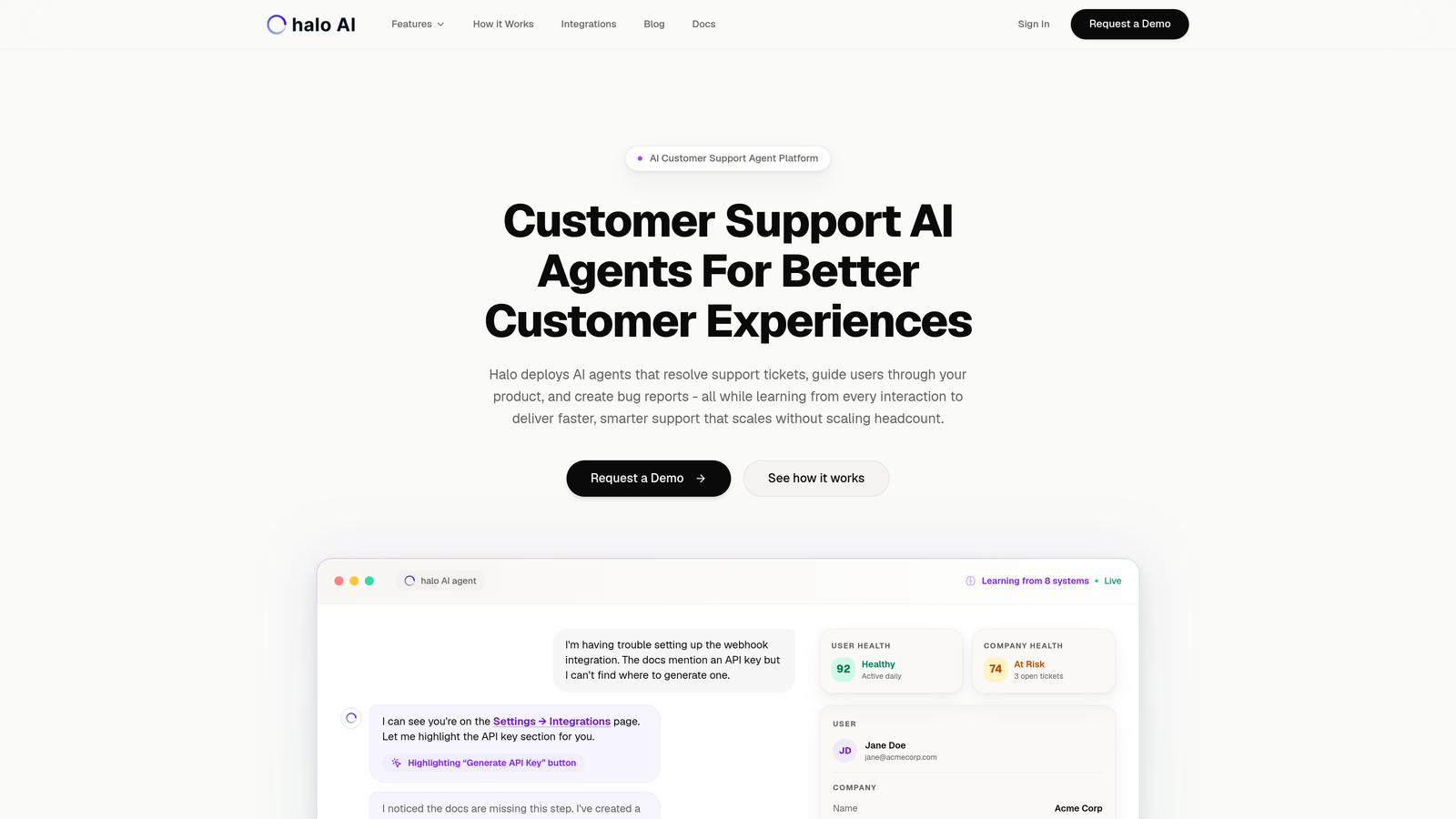
Halo AI represents a fundamentally different approach to customer engagement—built AI-first rather than retrofitting automation onto legacy helpdesk architecture.
Where This Tool Shines
What sets Halo apart is its page-aware intelligence. The platform sees exactly what your users see in your product, enabling it to provide visual guidance that goes beyond generic support responses. When a customer struggles with a specific workflow, Halo's AI agents can walk them through the exact UI elements they're looking at.
The platform's continuous learning architecture means it gets smarter with every resolved ticket. Unlike traditional helpdesks where knowledge bases require manual updates, Halo absorbs patterns from successful resolutions and applies them automatically to similar future issues.
Key Features
Autonomous AI Agents: Resolve support tickets end-to-end without human intervention for routine issues while escalating complex cases intelligently.
Page-Aware Chat Widget: Provides contextual guidance based on what users are actually viewing in your product interface.
Smart Inbox with Business Intelligence: Surfaces customer health signals, revenue intelligence, and anomaly detection beyond basic support metrics.
Auto Bug Ticket Creation: Automatically generates bug reports in Linear with full context when product issues are detected.
Live Agent Handoff: Seamlessly transitions complex issues to human agents with complete conversation history and context.
Best For
B2B SaaS companies and product teams that want support to scale without scaling headcount. Particularly valuable for teams already using Zendesk, Freshdesk, or Intercom who need deeper AI capabilities and better integration with their development workflow through tools like Linear and Slack.
Pricing
Contact for pricing. Halo's model focuses on value delivered through autonomous resolution rather than traditional per-seat licensing.
2. Intercom
Best for: Teams wanting unified messaging across support, marketing, and product onboarding
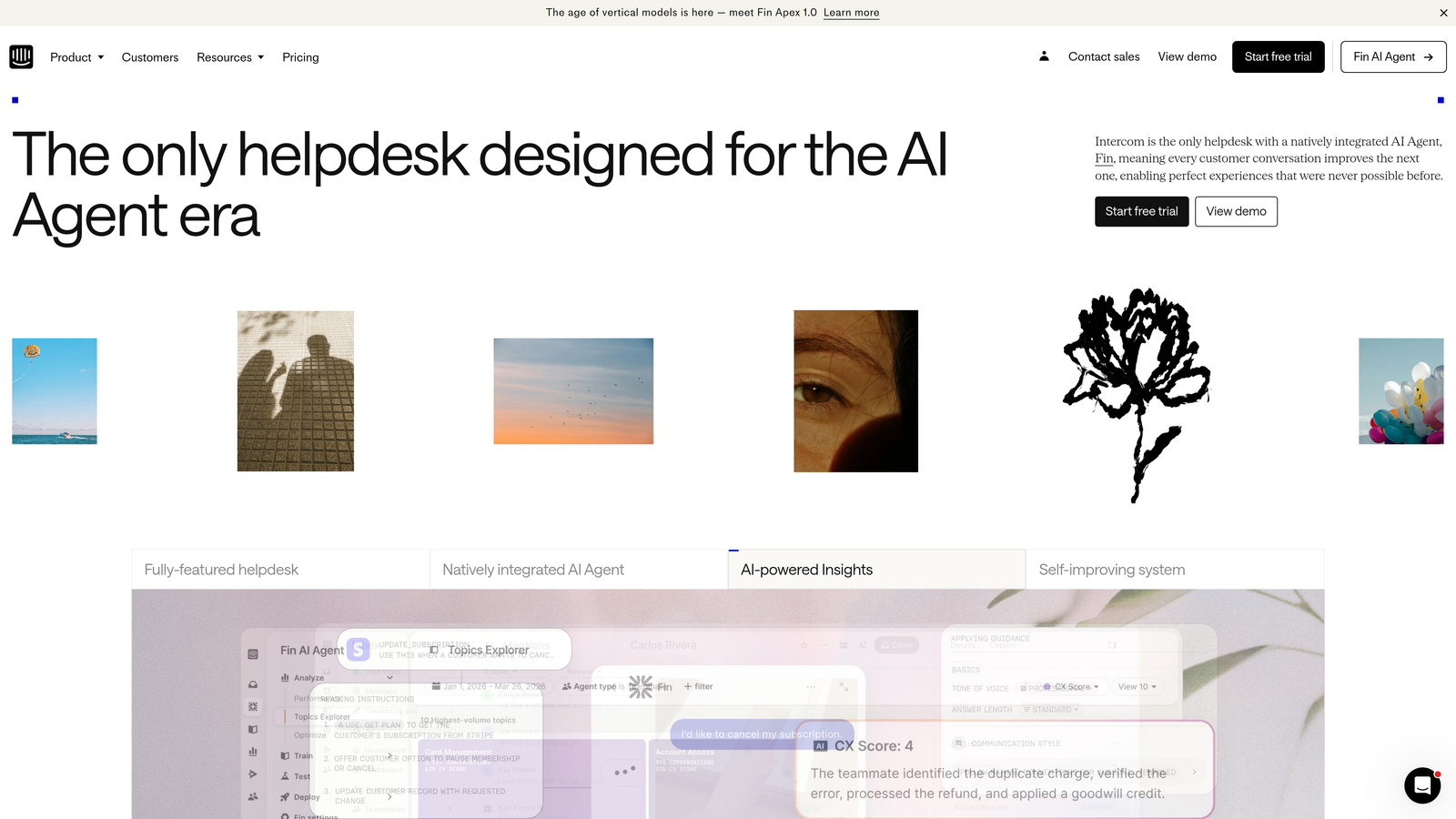
Intercom pioneered conversational customer engagement and continues evolving with strong AI capabilities through its Fin agent.
Where This Tool Shines
Intercom excels at breaking down silos between support, sales, and product teams. A single conversation thread can move from marketing qualification to product onboarding to support resolution without losing context. The platform's product tours let you guide users through new features directly in your application.
Fin, Intercom's AI agent, handles straightforward questions by pulling from your knowledge base and past conversations. The handoff to human agents feels natural, and the unified inbox gives your team complete visibility across all customer touchpoints.
Key Features
Fin AI Agent: Automated responses powered by your knowledge base with continuous improvement from human agent feedback.
Product Tours: In-app onboarding flows and feature announcements that guide users through your product.
Unified Inbox: Single view of all customer conversations across chat, email, and social channels.
Custom Bots and Workflows: Build automated conversation flows for qualification, routing, and self-service.
App Marketplace: Extensive integrations with CRMs, analytics tools, and business systems.
Best For
Mid-market to enterprise B2B companies that need a single platform for customer-facing teams. Works especially well for product-led growth companies where support, sales, and product experience need tight coordination.
Pricing
Starts at $39 per seat per month for the Starter plan. Advanced AI features and product tours require higher-tier plans.
3. Zendesk
Best for: Enterprise teams requiring extensive customization and multi-brand support capabilities
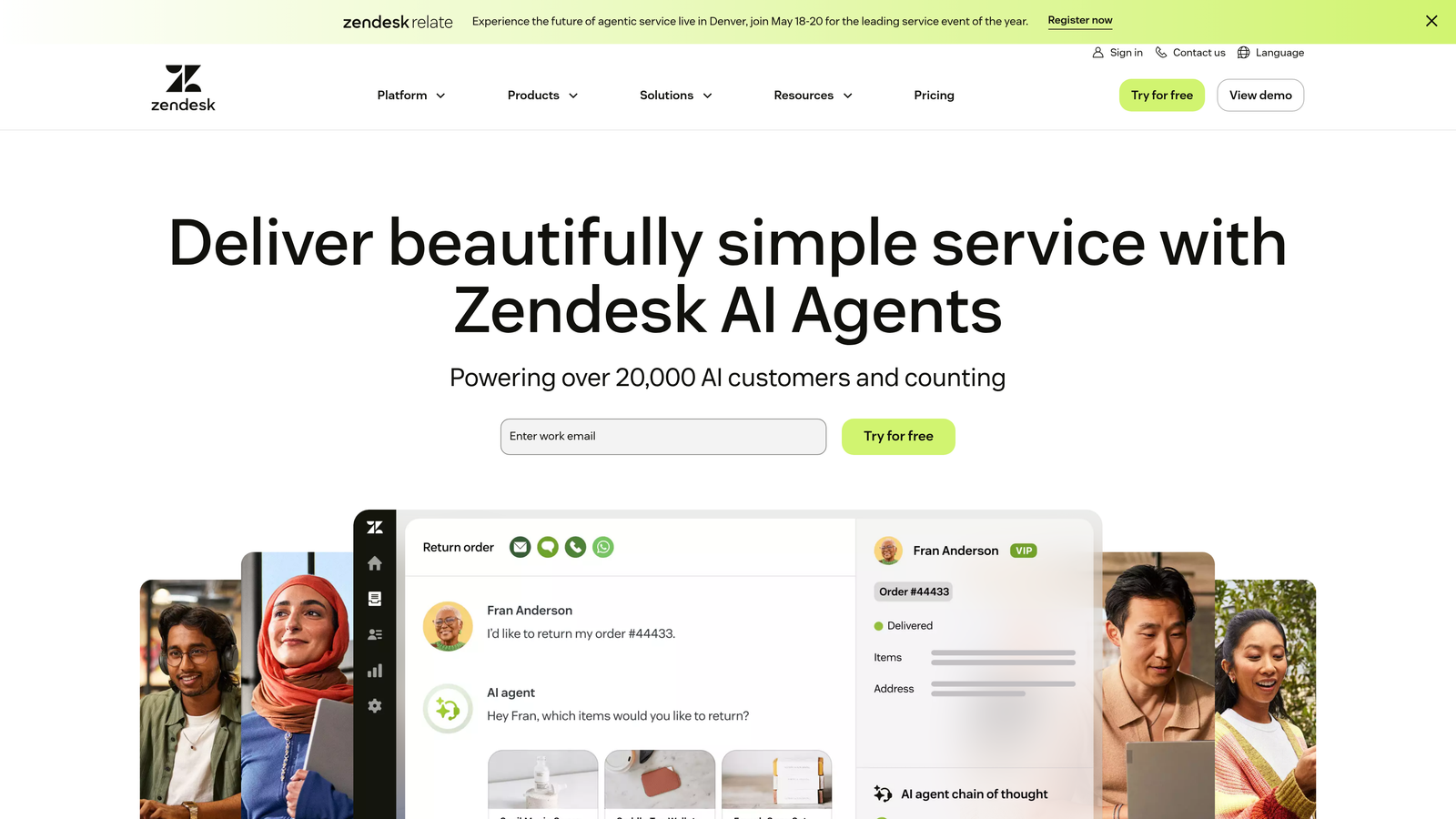
Zendesk remains the heavyweight in customer service platforms, offering comprehensive ticketing with enterprise-grade reliability.
Where This Tool Shines
Zendesk's strength lies in its maturity and depth. The platform handles complex routing scenarios, supports multiple brands from a single instance, and offers customization options that let you tailor virtually every aspect of the experience. For large teams with intricate workflows, this flexibility matters.
The reporting and analytics capabilities go deep, giving you visibility into team performance, ticket trends, and customer satisfaction at granular levels. Zendesk AI adds agent assistance features, though it functions more as augmentation than autonomous resolution.
Key Features
Advanced Ticketing and Routing: Sophisticated rules for assigning, escalating, and prioritizing tickets across complex team structures.
Zendesk AI: Agent assist features including suggested responses, sentiment analysis, and intent detection.
Extensive Customization: Modify fields, workflows, and interfaces to match your exact processes.
Multi-Brand Support: Manage multiple product lines or brands from a single platform instance.
Robust Reporting: Detailed analytics on team performance, customer satisfaction, and operational metrics.
Best For
Large enterprises with complex support operations, multiple product lines, or global teams requiring sophisticated routing and customization. Best suited for organizations with dedicated Zendesk administrators.
Pricing
Starts at $55 per agent per month for Suite Team. Enterprise features require higher-tier plans with significant price increases.
4. HubSpot Service Hub
Best for: Companies already using HubSpot CRM who want native integration across sales and service
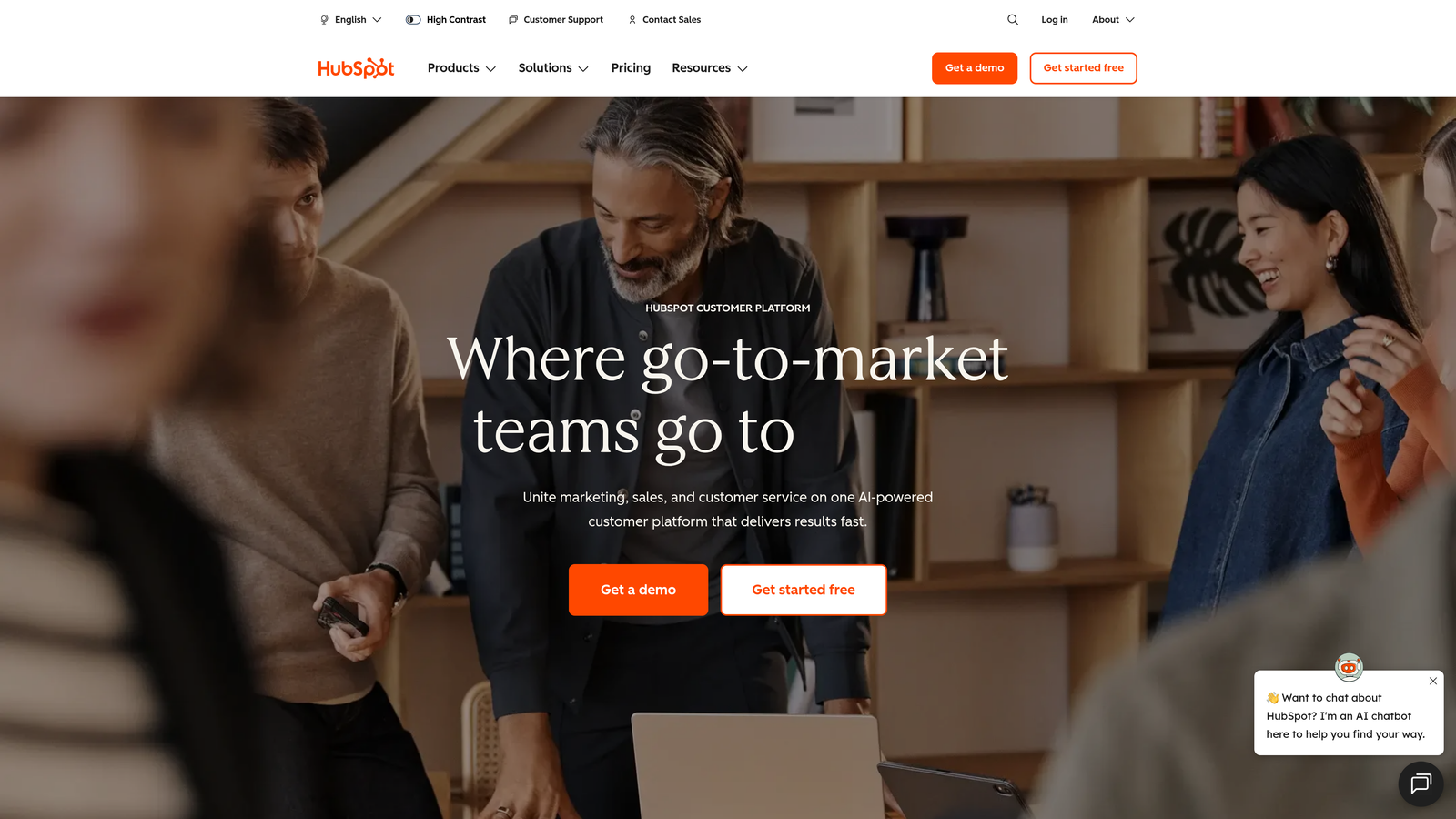
HubSpot Service Hub brings customer service into HubSpot's unified CRM ecosystem, eliminating data silos between teams.
Where This Tool Shines
The killer feature here is context. When a support agent opens a ticket, they see the customer's complete history—every marketing touch, sales conversation, and previous support interaction—without switching systems. This unified view enables personalized service that acknowledges the full customer relationship.
Service Hub's playbooks guide agents through consistent resolution processes, while conversation intelligence captures insights from support interactions that feed back into sales and marketing strategies. The feedback surveys integrate directly with customer records for closed-loop improvement.
Key Features
Native CRM Integration: Complete customer context from marketing, sales, and service in a single unified database.
Knowledge Base with AI Search: Self-service portal with intelligent search that learns from usage patterns.
Customer Feedback Surveys: NPS, CSAT, and custom surveys that automatically update customer records.
Conversation Intelligence: Analyze support conversations for trends, sentiment, and improvement opportunities.
Playbooks: Guided workflows that ensure consistent service delivery across your team.
Best For
B2B companies already invested in HubSpot's ecosystem or teams that want tight alignment between sales, marketing, and service. The value increases significantly if you're using other HubSpot hubs.
Pricing
Free tier available with basic features. Professional tier starts at $450 per month for the entire platform, not per seat.
5. Freshdesk
Best for: Growing teams seeking intuitive helpdesk software with strong automation at accessible pricing
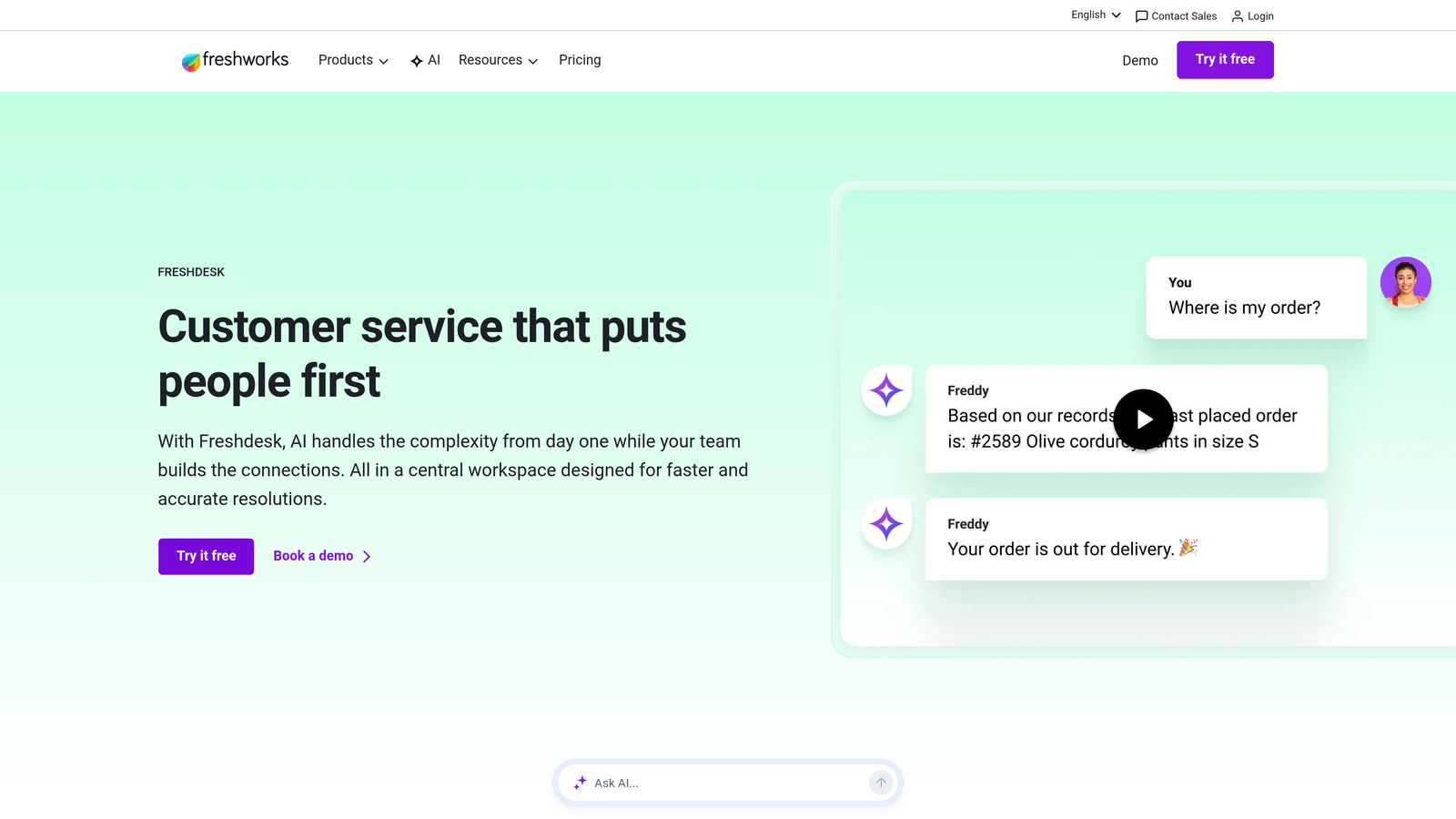
Freshdesk delivers solid helpdesk fundamentals with Freddy AI automation at price points that work for scaling companies.
Where This Tool Shines
Freshdesk's interface feels immediately familiar—your team can get productive quickly without extensive training. The scenario automations let you build sophisticated workflows without coding, handling common patterns like escalations, SLA management, and cross-team collaboration automatically.
Freddy AI handles ticket categorization, agent suggestions, and basic resolution for straightforward issues. The self-service portal reduces ticket volume by letting customers find answers independently, while the collaboration features keep your team aligned on complex issues.
Key Features
Freddy AI: Automated ticket categorization, agent assist, and basic resolution for common questions.
Scenario Automations: Build complex workflows triggered by ticket properties, customer actions, or time-based rules.
Team Collaboration: Internal notes, shared ownership, and cross-functional coordination on tickets.
Self-Service Portal: Customer-facing knowledge base with community forums and ticket submission.
Field Service Management: Dispatch and track field technicians for companies with on-site service needs.
Best For
Small to mid-sized B2B companies that need reliable helpdesk functionality without enterprise complexity or pricing. Works well for teams transitioning from basic email support to structured ticketing.
Pricing
Free tier available for up to 10 agents. Growth plan starts at $15 per agent per month with more advanced features.
6. Drift
Best for: Revenue-focused teams using conversational marketing to accelerate pipeline and deals
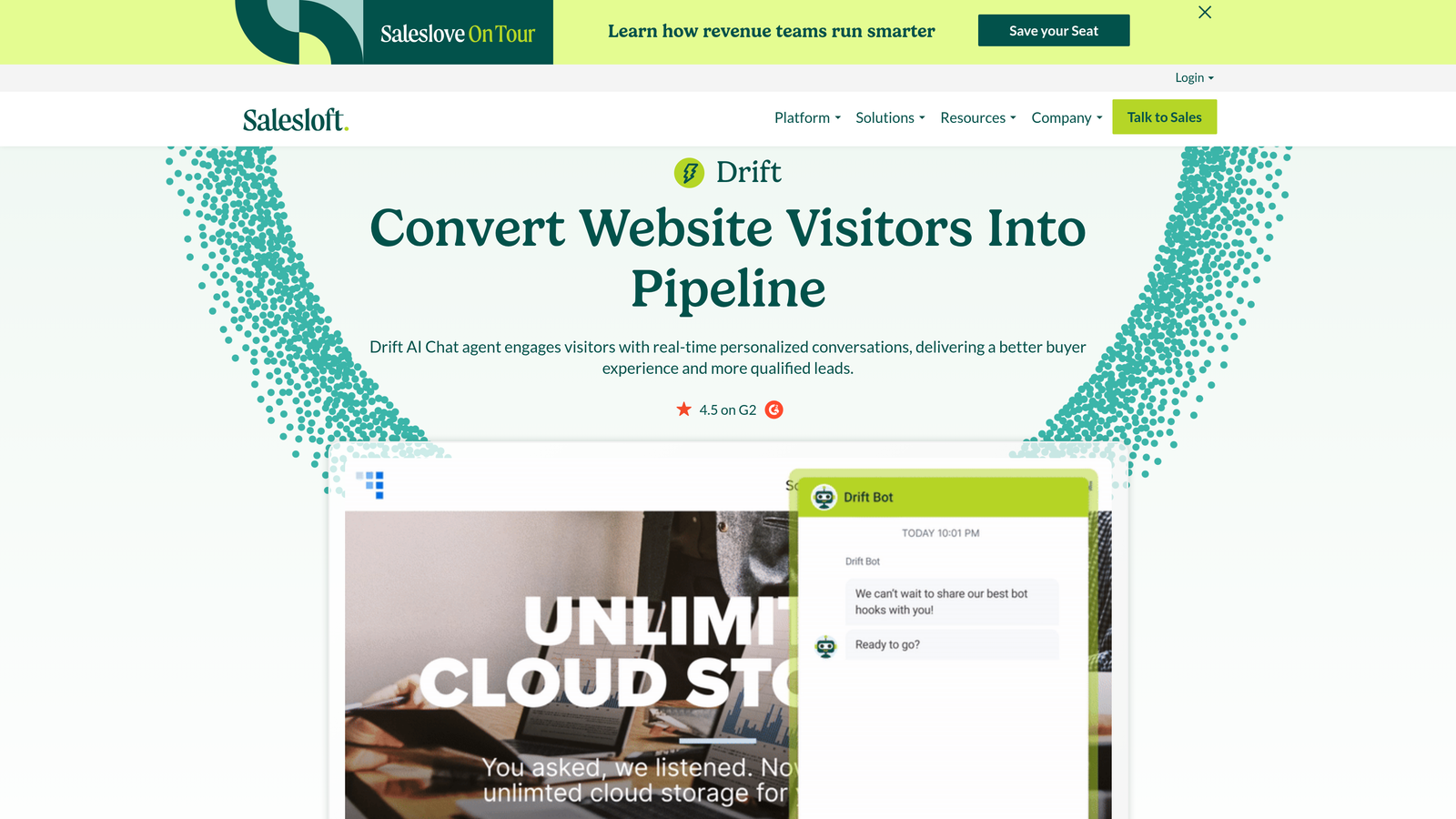
Drift approaches customer engagement from a revenue acceleration angle, focusing on converting conversations into pipeline.
Where This Tool Shines
Drift excels when your primary goal is revenue growth rather than support efficiency. The platform's AI chatbots qualify leads in real-time, routing high-intent prospects directly to sales reps while handling lower-priority inquiries automatically. Buyer intent signals help your team prioritize outreach to accounts showing active interest.
The meeting scheduling automation eliminates the back-and-forth of booking calls—prospects can book directly with the right rep based on territory, product expertise, or account ownership. For account-based strategies, Drift's targeting lets you deliver personalized experiences to specific companies or roles.
Key Features
AI-Powered Chatbots: Qualify leads through conversational flows and route to appropriate team members.
Buyer Intent Signals: Track which accounts are actively engaging and surface them to sales teams.
Meeting Scheduling Automation: Let prospects book meetings directly with the right rep based on routing rules.
Revenue Orchestration: Coordinate marketing, sales, and customer success touchpoints around revenue goals.
Account-Based Targeting: Deliver personalized chat experiences to specific companies or segments.
Best For
B2B sales organizations with high-value deals where speed-to-lead matters. Most valuable for companies with dedicated sales development teams and account-based go-to-market strategies.
Pricing
Contact for pricing. Premium tier required for advanced features like video chat and custom chatbots.
7. Gainsight
Best for: Enterprise customer success teams managing complex account relationships and expansion revenue
Gainsight specializes in customer success management, helping teams prevent churn and drive expansion through data-driven engagement.

Where This Tool Shines
Gainsight's health scoring brings science to customer success. The platform aggregates product usage, support interactions, survey responses, and business metrics into composite scores that predict churn risk and expansion opportunity. Your CS team can prioritize outreach based on actual signals rather than gut feeling.
Journey orchestration automates touchpoints throughout the customer lifecycle—onboarding sequences, quarterly business reviews, renewal campaigns—while giving CSMs flexibility to personalize when needed. Success plan management keeps everyone aligned on customer goals and tracks progress against defined outcomes.
Key Features
Customer Health Scores: Composite metrics combining product usage, engagement, and business data to predict outcomes.
Churn Prediction Models: Machine learning identifies at-risk accounts before they reach the cancellation point.
Journey Orchestration: Automated lifecycle touchpoints with personalization and human intervention points.
Success Plan Management: Track customer goals, milestones, and outcomes in structured plans.
Product Engagement Analytics: Understand how customers use your product and identify adoption gaps.
Best For
Enterprise B2B companies with dedicated customer success teams managing high-value accounts. Most valuable when you have complex products with measurable usage patterns and multi-year contracts.
Pricing
Contact for pricing. Gainsight targets enterprise customers with pricing that reflects the platform's comprehensive capabilities.
8. Pendo
Best for: Product teams combining analytics with in-app engagement to drive feature adoption
Pendo bridges product analytics and customer engagement, letting you understand usage patterns and guide users directly within your application.
Where This Tool Shines
Pendo gives you visibility into exactly how customers use your product—which features they adopt, where they struggle, and what workflows they follow. This usage data informs targeted in-app guides that appear at the right moment to help users discover features or complete important actions.
The feedback collection tools let you gather input directly from users about roadmap priorities, then track sentiment over time. Session replay shows you exactly what users experienced during problematic interactions, making it easier to diagnose issues and improve experiences.
Key Features
Product Analytics: Track feature usage, user paths, and adoption metrics across your application.
In-App Guides: Create walkthroughs, tooltips, and announcements that appear contextually within your product.
Feedback Collection: Gather feature requests and sentiment directly from users with voting and prioritization.
Session Replay: Watch recordings of actual user sessions to understand behavior and diagnose issues.
NPS and Sentiment Tracking: Measure satisfaction and track changes over time and across segments.
Best For
Product-led B2B companies where feature adoption drives retention and expansion. Particularly valuable for SaaS products with complex interfaces where guided onboarding improves outcomes.
Pricing
Free tier available for basic analytics. Growth and Portfolio plans require contact for pricing based on usage volume.
9. Braze
Best for: Enterprise teams orchestrating personalized campaigns across web, mobile, email, and push channels
Braze powers cross-channel customer engagement with real-time personalization at scale, particularly strong for mobile-first products.
Where This Tool Shines
Braze's real-time data streaming means you can trigger personalized messages based on what customers are doing right now—not hours later after batch processing. The Canvas journey builder lets you design sophisticated multi-step campaigns that adapt based on customer behavior and responses.
The platform's AI-powered personalization optimizes send times, message content, and channel selection for each individual user. For mobile products, Braze's push notification and in-app messaging capabilities are particularly robust, supporting rich media and deep linking.
Key Features
Real-Time Data Streaming: Trigger campaigns instantly based on customer actions and behavioral signals.
Cross-Channel Orchestration: Coordinate messaging across email, push, SMS, in-app, and web channels.
AI-Powered Personalization: Optimize timing, content, and channel selection using machine learning.
Mobile Push and In-App Messaging: Rich notifications and messages with deep linking and media support.
Canvas Journey Builder: Visual workflow designer for complex multi-step campaigns with branching logic.
Best For
Enterprise B2B companies with mobile applications or high-volume messaging needs. Most valuable when you need sophisticated personalization across multiple channels and have the technical resources to leverage the platform fully.
Pricing
Contact for pricing. Braze uses a usage-based model tied to monthly active users and message volume.
Finding Your Best Fit
The right customer engagement platform depends on what you're optimizing for. If autonomous AI support that learns continuously is your priority, Halo AI's intelligence-first architecture delivers resolution without scaling headcount. For teams already invested in HubSpot's ecosystem, Service Hub's native CRM integration eliminates data silos that slow down personalized service.
Revenue-focused organizations might lean toward Drift's conversational marketing approach, while enterprise customer success teams managing complex accounts will appreciate Gainsight's health scoring and journey orchestration. Product-led companies often find Pendo's combination of analytics and in-app guidance most valuable for driving feature adoption.
Consider these questions: Does your current platform require constant human intervention for routine issues? Are your support, sales, and product teams working from different data sources? Can you surface business intelligence from customer interactions beyond basic ticket metrics? The answers reveal where you'll find the most value.
Your support team shouldn't scale linearly with your customer base. Let AI agents handle routine tickets, guide users through your product, and surface business intelligence while your team focuses on complex issues that need a human touch. See Halo in action and discover how continuous learning transforms every interaction into smarter, faster support.