9 Best Customer Messaging Software Solutions for 2026
Customer messaging software unifies conversations across live chat, email, social media, and in-app channels, enabling support and sales teams to deliver instant, personalized responses while maintaining full context. This comprehensive guide evaluates nine leading platforms for 2026 based on AI capabilities, multi-channel support, integration options, and scalability—focusing on solutions that intelligently resolve issues rather than simply routing them.
 Grant CooperFounder11 min read
Modern customers expect instant, personalized communication across every channel they use. Whether they're reaching out via live chat, email, social media, or in-app messaging, they want seamless experiences without repeating themselves. Customer messaging software unifies these conversations, helping support and sales teams respond faster while maintaining context.
This guide evaluates leading platforms based on AI capabilities, multi-channel support, integration depth, and scalability. We've prioritized tools that go beyond basic chat widgets to deliver intelligent, context-aware communication that actually resolves issues—not just routes them.
1. Halo AI
Best for: B2B SaaS teams seeking autonomous AI support that learns continuously
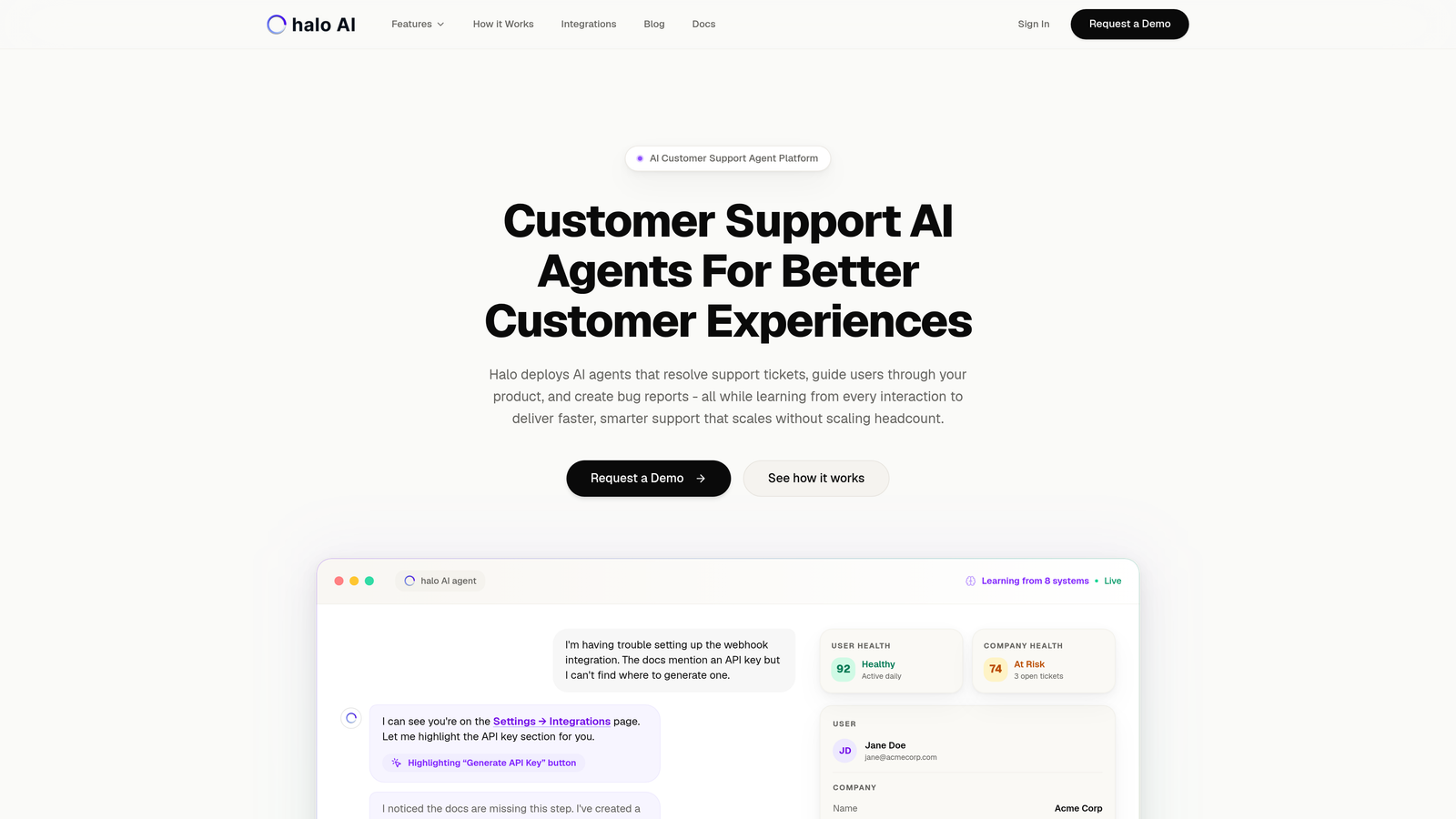
Halo AI is an AI-first customer support platform designed to autonomously resolve tickets and guide users through products.
Where This Tool Shines
Unlike platforms that bolt AI onto existing helpdesk systems, Halo's architecture is built from the ground up for autonomous operation. Its AI agents don't just deflect tickets—they actually resolve them by understanding page-level context and seeing what users see in real-time.
The platform's continuous learning model means every interaction makes the system smarter. It connects across your entire business stack, surfacing insights that go beyond support metrics to reveal customer health signals and revenue intelligence that traditional messaging platforms miss entirely.
Key Features
Autonomous AI Agents: Resolve support tickets without human intervention, escalating only when complexity requires it.
Page-Aware Chat Widget: Provides visual UI guidance by understanding exactly what users see on screen.
Smart Inbox with Business Intelligence: Delivers analytics beyond support metrics, including customer health and anomaly detection.
Auto Bug Ticket Creation: Automatically generates detailed bug reports in Linear when issues are identified.
Multi-System Integrations: Connects with Slack, HubSpot, Intercom, Stripe, Zoom, PandaDoc, and Fathom for complete business context.
Best For
B2B companies and product teams currently using helpdesk systems like Zendesk, Freshdesk, or Intercom who want to move beyond routing tickets to actually resolving them. Particularly valuable for teams where support volume is scaling faster than headcount.
Pricing
Contact for pricing. Designed specifically for B2B SaaS teams looking to scale support without scaling headcount proportionally.
2. Intercom
Best for: Companies needing comprehensive messaging with AI automation and product tours
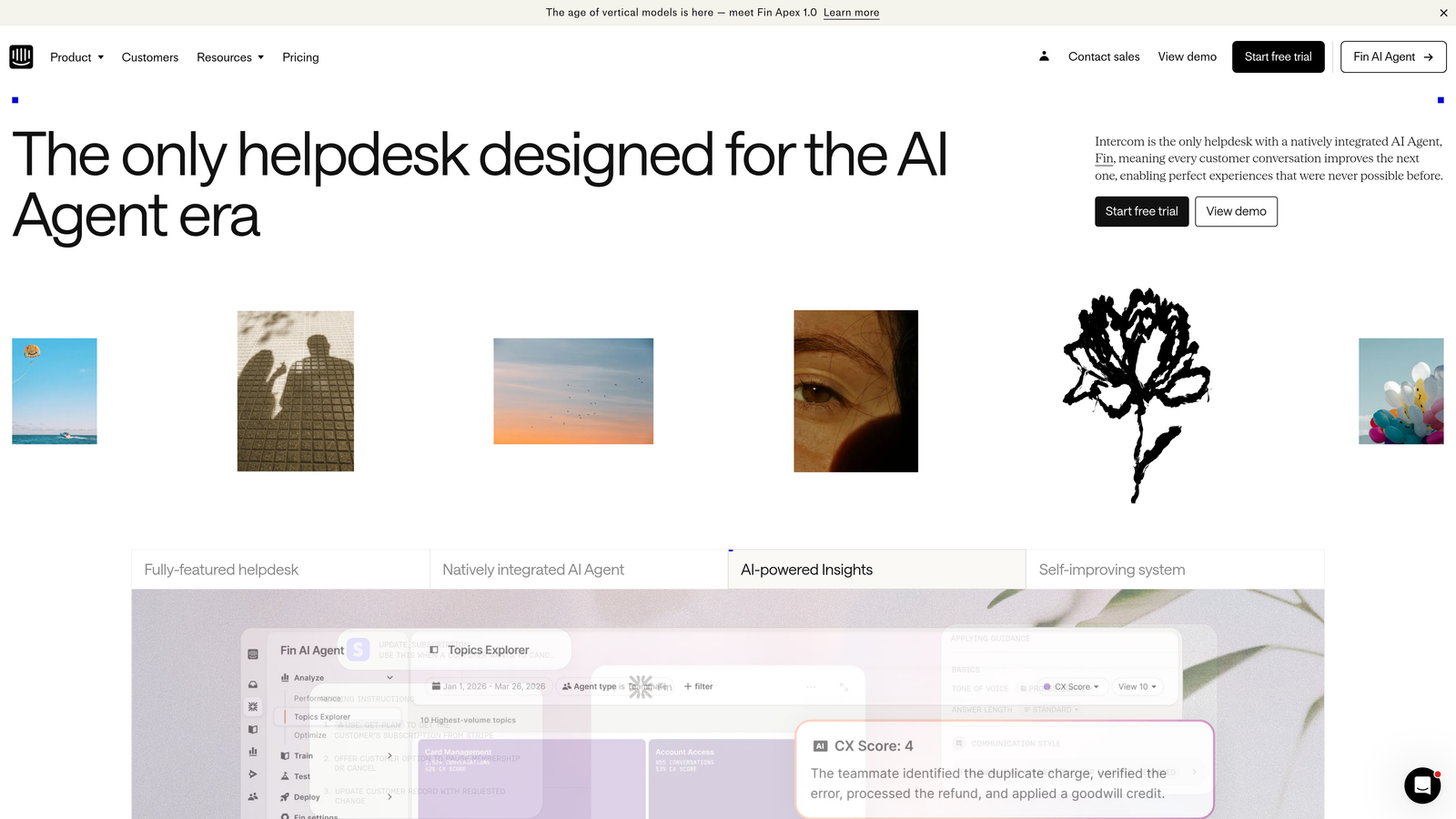
Intercom is a unified customer communication platform combining messaging, automation, and the Fin AI agent.
Where This Tool Shines
Intercom excels at blending proactive and reactive communication. Its product tours and onboarding flows help reduce support volume before issues arise, while Fin AI handles incoming questions with impressive accuracy for common queries.
The platform's strength lies in its maturity—years of development have created a robust ecosystem of integrations and workflows. Teams appreciate the unified inbox that brings together chat, email, and social conversations without forcing users to jump between tools.
Key Features
Fin AI Agent: Automated customer responses powered by GPT-4, priced per resolution rather than per seat.
Product Tours: Interactive onboarding flows that guide users through features and reduce support tickets.
Multi-Channel Inbox: Unified workspace for chat, email, and social media conversations.
Custom Bots and Workflows: Visual builder for creating automated conversation paths and routing rules.
Extensive Integrations: Connects with hundreds of third-party tools through native integrations and API.
Best For
Mid-market to enterprise companies that want a comprehensive platform combining support, marketing, and product engagement. Works especially well for SaaS companies focused on user onboarding and lifecycle communication.
Pricing
Starts at $39 per seat monthly for the Essential plan. Fin AI is priced separately based on resolution volume, which can add significant cost at scale.
3. Zendesk
Best for: Enterprise organizations requiring omnichannel support with advanced customization
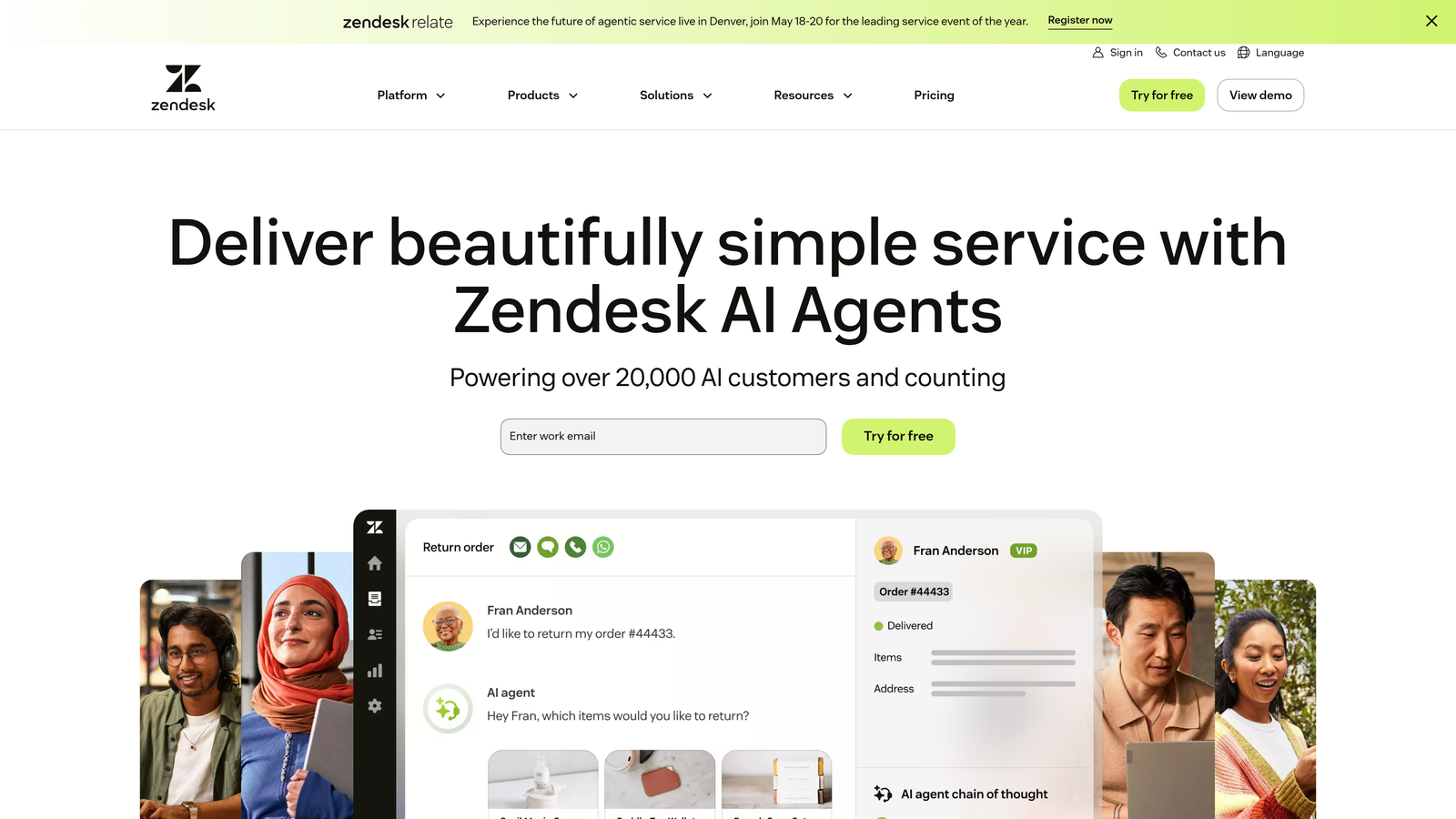
Zendesk is an enterprise-grade customer service platform offering comprehensive ticketing and messaging capabilities.
Where This Tool Shines
Zendesk's enterprise focus shows in its depth. The platform handles massive ticket volumes without breaking a sweat, and its marketplace of over 1,000 apps means virtually any integration need can be met. Large support teams appreciate the granular permissions and workflow customization.
The unified agent workspace brings together conversations from every channel—chat, email, phone, social media, SMS—into a single interface. For organizations with complex compliance requirements or multi-brand operations, Zendesk's enterprise features justify the premium pricing.
Key Features
Unified Agent Workspace: Single interface for managing conversations across all communication channels.
Advanced AI and Automation: Intelligent routing, intent detection, and automated responses for common queries.
Extensive Marketplace: Over 1,000 pre-built integrations and apps for extending functionality.
Enterprise Security: SOC 2, HIPAA, and GDPR compliance with advanced security controls.
Customizable Workflows: Powerful automation engine with triggers, macros, and business rules.
Best For
Large enterprises with complex support operations, multiple brands, or strict compliance requirements. Companies that need extensive customization and have dedicated admin resources to manage the platform.
Pricing
Suite Team starts at $55 per agent monthly. Enterprise tiers with advanced features can exceed $150 per agent monthly, plus implementation costs.
4. Freshdesk
Best for: Growing teams wanting intuitive helpdesk features without enterprise pricing
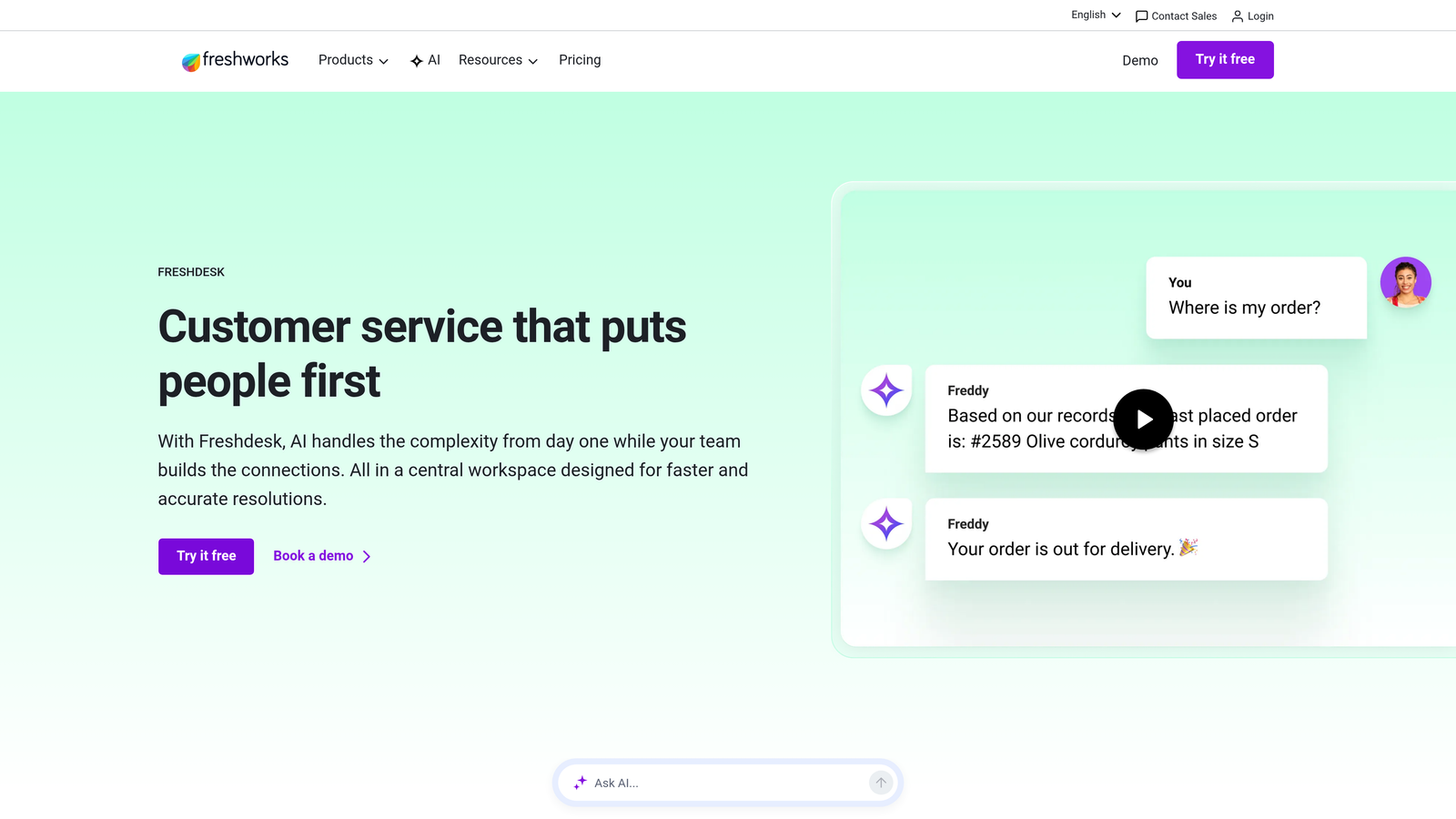
Freshdesk is an intuitive helpdesk platform with messaging capabilities and Freddy AI automation.
Where This Tool Shines
Freshdesk strikes a compelling balance between capability and simplicity. The interface feels modern and uncluttered compared to legacy platforms, making onboarding new agents significantly faster. Freddy AI provides surprisingly capable automation for the price point.
The robust free tier makes Freshdesk particularly attractive for startups and small teams. Even paid tiers remain affordable while delivering features like omnichannel support, including WhatsApp integration that many competitors charge premium prices for.
Key Features
Freddy AI: Automated ticket routing, suggested responses, and predictive support for common issues.
Omnichannel Support: Email, chat, phone, social media, and WhatsApp in a unified inbox.
Generous Free Tier: Core helpdesk features for up to 10 agents at no cost.
Team Collaboration: Internal notes, ticket assignments, and shared ownership for complex issues.
SLA Management: Automated escalations and reporting to maintain service level agreements.
Best For
Growing companies that have outgrown basic chat tools but aren't ready for enterprise complexity or pricing. Teams that value ease of use and quick setup over extensive customization.
Pricing
Free tier available for up to 10 agents. Growth plan starts at $15 per agent monthly, with Pro at $49 and Enterprise at $79 per agent monthly.
5. Drift
Best for: B2B sales teams focused on conversational marketing and pipeline acceleration
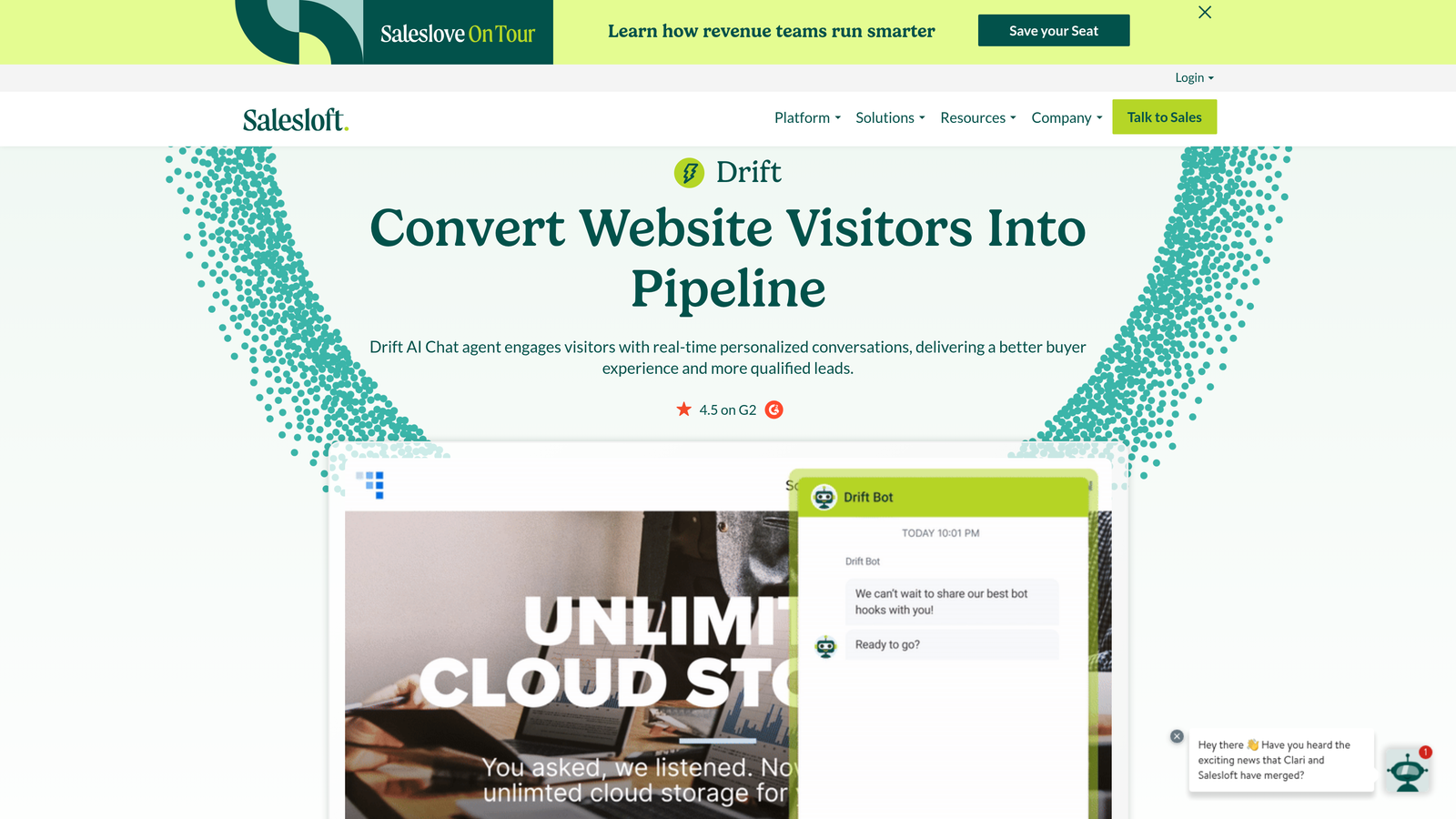
Drift is a conversational marketing and sales platform designed for B2B revenue acceleration.
Where This Tool Shines
Drift takes a fundamentally different approach than support-focused platforms. It's built for sales teams who want to convert website visitors into qualified meetings. The AI-powered chatbots qualify leads in real-time, routing high-value prospects directly to sales reps.
Account-based targeting capabilities let you customize conversations based on company data, showing different messaging to enterprise prospects versus SMB visitors. The platform's revenue attribution reporting connects conversations directly to closed deals, making ROI measurement straightforward.
Key Features
AI-Powered Lead Qualification: Chatbots that ask qualifying questions and route prospects based on fit.
Account-Based Targeting: Personalized messaging and routing rules based on company and visitor data.
Meeting Scheduling: Instant calendar integration that books meetings without email back-and-forth.
Revenue Attribution: Reporting that connects conversations to pipeline and closed revenue.
CRM Integrations: Native connections with Salesforce and HubSpot for seamless data flow.
Best For
B2B companies with sales-led growth models and high-value deals where immediate sales engagement creates competitive advantage. Works best for organizations with dedicated sales development teams.
Pricing
Premium tier starts at $2,500 monthly. Enterprise pricing varies significantly based on conversation volume and features, often exceeding $5,000 monthly.
6. HubSpot Service Hub
Best for: Companies already using HubSpot CRM who want native service integration
HubSpot Service Hub is a CRM-integrated customer service platform with messaging and conversation intelligence.
Where This Tool Shines
The native CRM integration gives Service Hub an unfair advantage if you're already in the HubSpot ecosystem. Every customer conversation automatically includes full context—past purchases, marketing interactions, support history—without manual lookup or integration setup.
Conversation intelligence features transcribe calls and surface key moments, helping managers coach teams effectively. The unified inbox brings together tickets, live chat, and email while maintaining the complete customer journey in one place.
Key Features
Native CRM Integration: Automatic customer context from marketing, sales, and service interactions.
Conversation Intelligence: Call recording, transcription, and automated coaching insights.
Knowledge Base: Self-service portal with article analytics and search optimization.
Ticket Automation: Workflow automation for routing, prioritization, and status updates.
Unified Inbox: Email, chat, and social messages in a single team workspace.
Best For
Companies already using HubSpot for marketing or sales who want to unify their entire customer lifecycle. Teams that value tight integration over best-of-breed specialized tools.
Pricing
Free tools available with limited features. Starter tier at $20 monthly for basic ticketing. Professional at $100 monthly per seat adds automation and reporting.
7. Front
Best for: Teams managing high email volumes who need collaborative inbox features
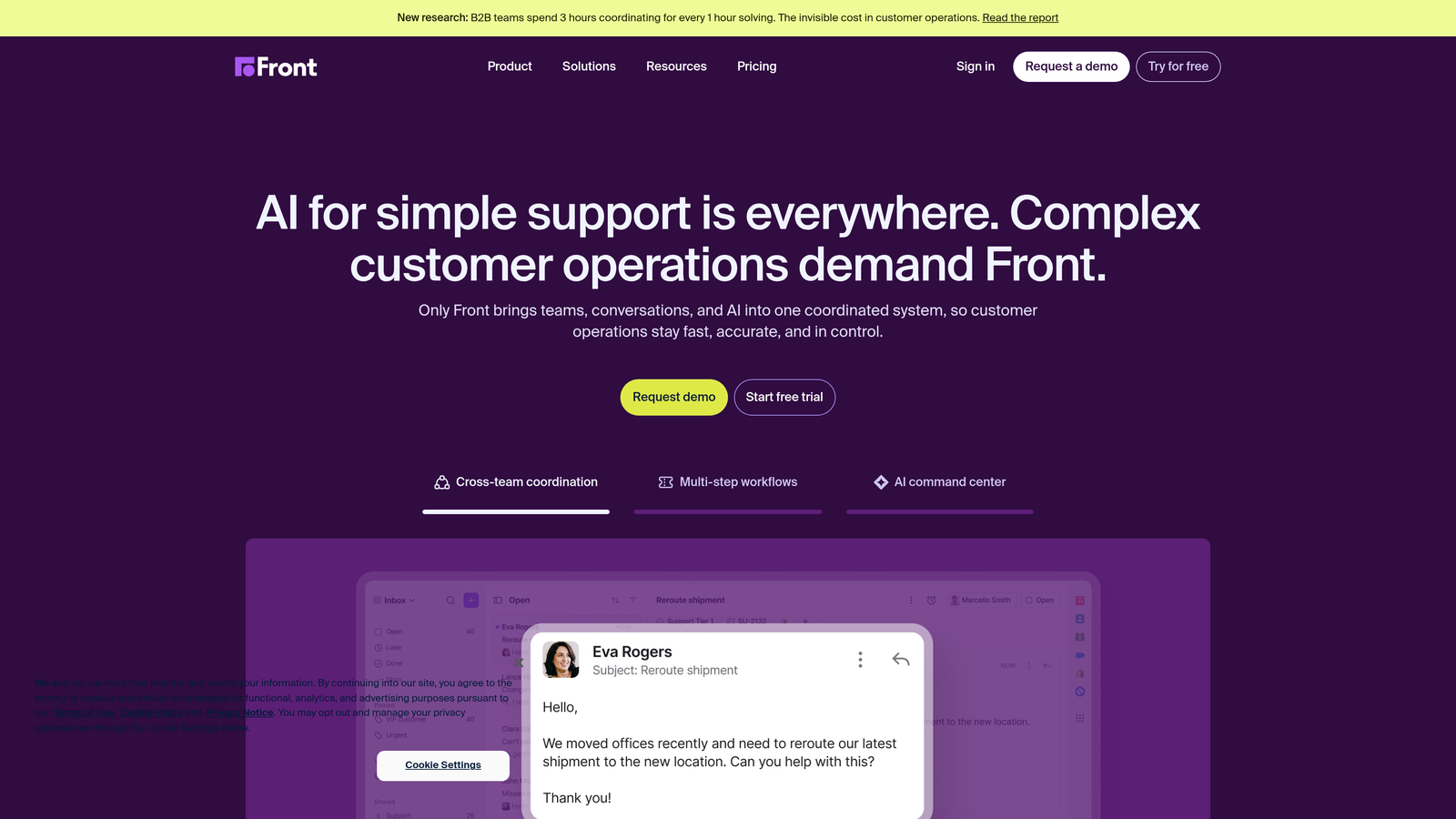
Front is a collaborative inbox platform that combines email efficiency with team communication.
Where This Tool Shines
Front reimagines email as a team sport. Shared inboxes maintain individual email addresses, so customers never know they're emailing a team inbox rather than a person. Internal comments and @mentions let teams collaborate on responses without forwarding chains or losing context.
The platform excels for teams where email remains the primary customer communication channel. Automated workflows handle routing and tagging, while analytics reveal response time patterns and volume trends that help managers optimize team performance.
Key Features
Shared Inboxes: Team collaboration on emails while maintaining individual sender addresses.
Internal Comments: Team discussions and @mentions directly within email threads.
Automated Workflows: Rules for routing, tagging, and assigning based on content and sender.
Response Analytics: Detailed reporting on response times, volume, and team performance.
CRM and Project Integrations: Connections with Salesforce, HubSpot, Asana, and other business tools.
Best For
Customer-facing teams that primarily use email but need better collaboration than Gmail or Outlook provides. Companies transitioning from shared Gmail accounts to professional team inbox solutions.
Pricing
Starter tier at $19 per seat monthly for basic shared inbox features. Growth tier at $59 per seat monthly adds automation and analytics.
8. Crisp
Best for: Startups and small businesses wanting comprehensive features at accessible pricing
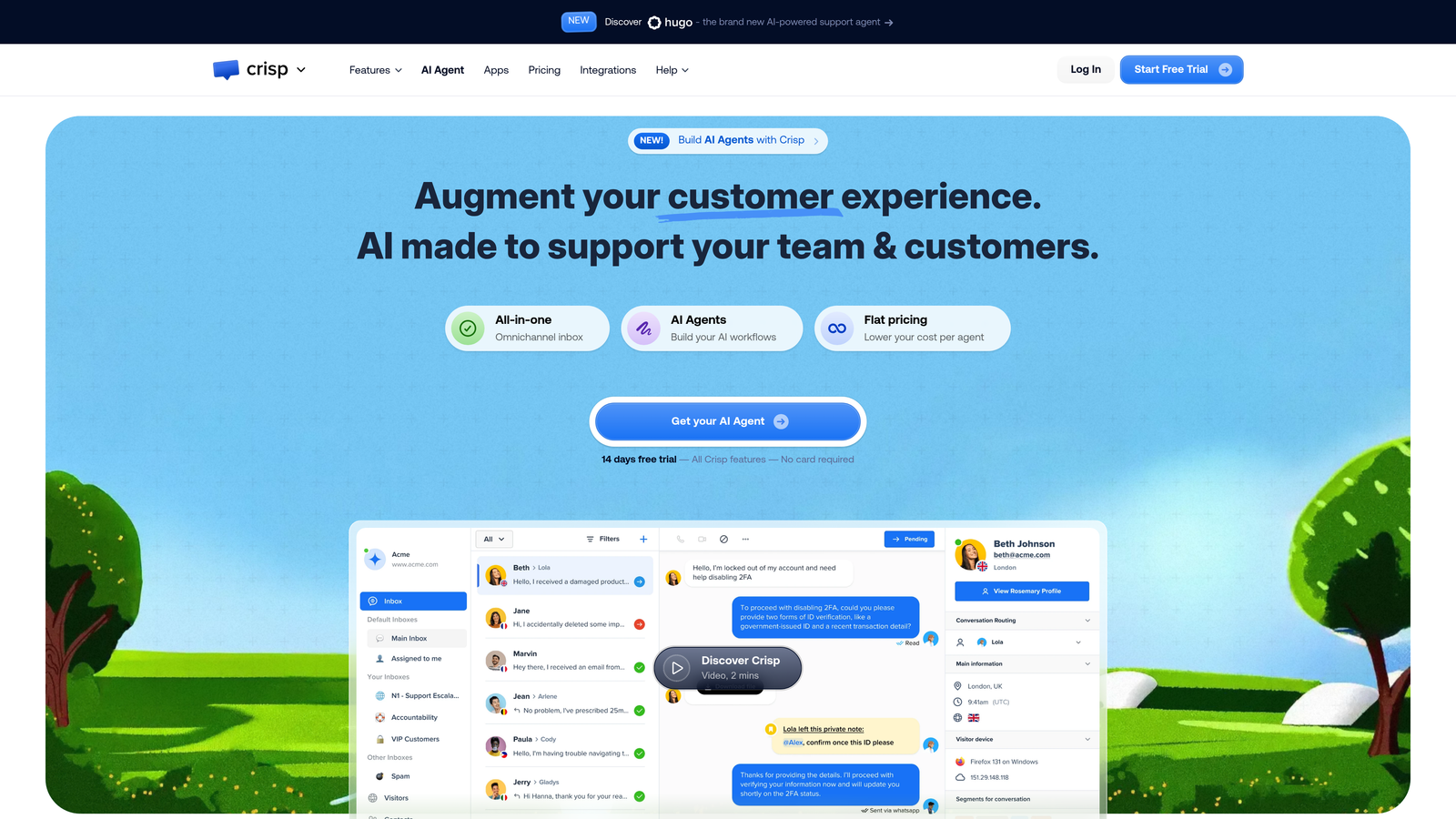
Crisp is an all-in-one business messaging platform with live chat, chatbots, and co-browsing capabilities.
Where This Tool Shines
Crisp packs surprising depth into startup-friendly pricing. The co-browsing capability lets agents see exactly what customers see and even take control to solve complex issues—a feature typically reserved for enterprise platforms. Video chat adds another dimension for technical support scenarios.
The shared inbox brings together conversations from multiple channels while keeping the interface clean and navigable. The chatbot builder includes templates that get teams started quickly, and the knowledge base helps deflect common questions before they reach the inbox.
Key Features
Co-Browsing Capability: See customer screens and take control to guide them through complex issues.
Video Chat: Face-to-face support for situations requiring visual demonstration or explanation.
Chatbot Builder: Visual builder with pre-made templates for common support scenarios.
Shared Inbox: Team collaboration on conversations from chat, email, and social channels.
Knowledge Base: Self-service articles with search functionality and usage analytics.
Best For
Early-stage startups and small businesses that need professional messaging capabilities without enterprise budgets. Teams providing technical support where screen sharing creates value.
Pricing
Free tier for up to 2 seats with basic features. Pro tier at $25 monthly per workspace (unlimited seats) includes advanced features.
9. Tidio
Best for: E-commerce businesses needing live chat with native shopping platform integrations
Tidio is an e-commerce focused live chat and chatbot platform with a visual builder.
Where This Tool Shines
Tidio understands e-commerce workflows deeply. Native integrations with Shopify and WooCommerce mean you can see customer cart contents, order history, and browsing behavior directly in the chat interface. This context helps agents provide relevant product recommendations and resolve order issues faster.
The visual chatbot builder makes it easy to create automated flows for common e-commerce scenarios like order tracking, return policies, and product recommendations. Lyro AI handles routine questions automatically, freeing your team to focus on complex customer issues and sales opportunities.
Key Features
Visual Chatbot Builder: Drag-and-drop interface with pre-built templates for e-commerce scenarios.
Native E-commerce Integrations: Deep connections with Shopify, WooCommerce, and other shopping platforms.
Lyro AI: Automated responses for common customer questions based on your knowledge base.
Visitor Tracking: See what pages customers are viewing and their browsing behavior in real-time.
Multi-Channel Messaging: Connect email, live chat, and Messenger in a unified inbox.
Best For
Online retailers and e-commerce businesses where product questions and order support dominate customer conversations. Stores wanting to increase conversion rates through proactive chat engagement.
Pricing
Free tier available with basic live chat. Starter tier at $29 monthly adds chatbots and email integration. Growth tier at $59 monthly includes Lyro AI.
Making the Right Choice
Choosing the right customer messaging software depends on your team's priorities and existing infrastructure. For AI-first autonomous support that learns continuously and resolves tickets without scaling headcount, Halo AI delivers intelligent resolution with page-aware context that traditional platforms can't match. See Halo in action and discover how continuous learning transforms every interaction into smarter, faster support.
Intercom and Zendesk suit enterprises needing comprehensive omnichannel platforms with mature ecosystems, though their pricing reflects enterprise positioning. Growing teams often find Freshdesk's value proposition compelling—robust features without the complexity or cost of enterprise solutions.
B2B sales teams gravitate toward Drift's revenue focus, while HubSpot Service Hub makes sense if you're already invested in their CRM ecosystem. Front excels for email-heavy collaborative teams who need better tools than Gmail but don't require full helpdesk functionality.
Crisp offers startup-friendly pricing with surprising depth, including co-browsing and video chat that typically cost significantly more elsewhere. Tidio serves e-commerce businesses exceptionally well with native shopping platform integrations and conversion-focused features.
Start with a trial of your top two choices. Most platforms offer free periods to test real workflows before committing. Pay attention to actual resolution rates rather than just deflection metrics, implementation time required, and total cost including necessary integrations. Your support team shouldn't scale linearly with your customer base—the right platform helps you deliver better experiences while maintaining efficiency as you grow.