9 Best Customer Service Automation Platforms Reviewed for 2026
This customer service automation platforms review evaluates nine leading tools for 2026, assessing each on automation depth, integration ecosystem, ease of deployment, and scalability. Whether you're adopting your first automation platform or replacing a legacy system, this breakdown helps support teams find the right fit for resolving tickets faster without sacrificing the human touch.
 Matt PattoliFounder14 min read
Customer service teams are under more pressure than ever: resolve tickets faster, scale without adding headcount, and still deliver experiences that feel human. The good news is that modern automation platforms have matured well beyond simple rule-based chatbots. Today's leading tools deploy AI agents capable of resolving complex issues end-to-end, detecting patterns across your ticket queue, and handing off intelligently to live agents when it matters most.
This review covers platforms across the full spectrum, from AI-first solutions built specifically for B2B SaaS teams to established helpdesk giants with automation layers added on top. Whether you're evaluating your first automation tool or looking to replace a legacy system that's become more maintenance than value, this breakdown will help you find the right fit.
Each platform is assessed on automation depth, integration ecosystem, ease of deployment, and how well it scales with your support operation. Here are the top customer service automation platforms worth your attention in 2026.
1. Halo AI
Best for: B2B SaaS teams that need genuine ticket resolution, not just deflection
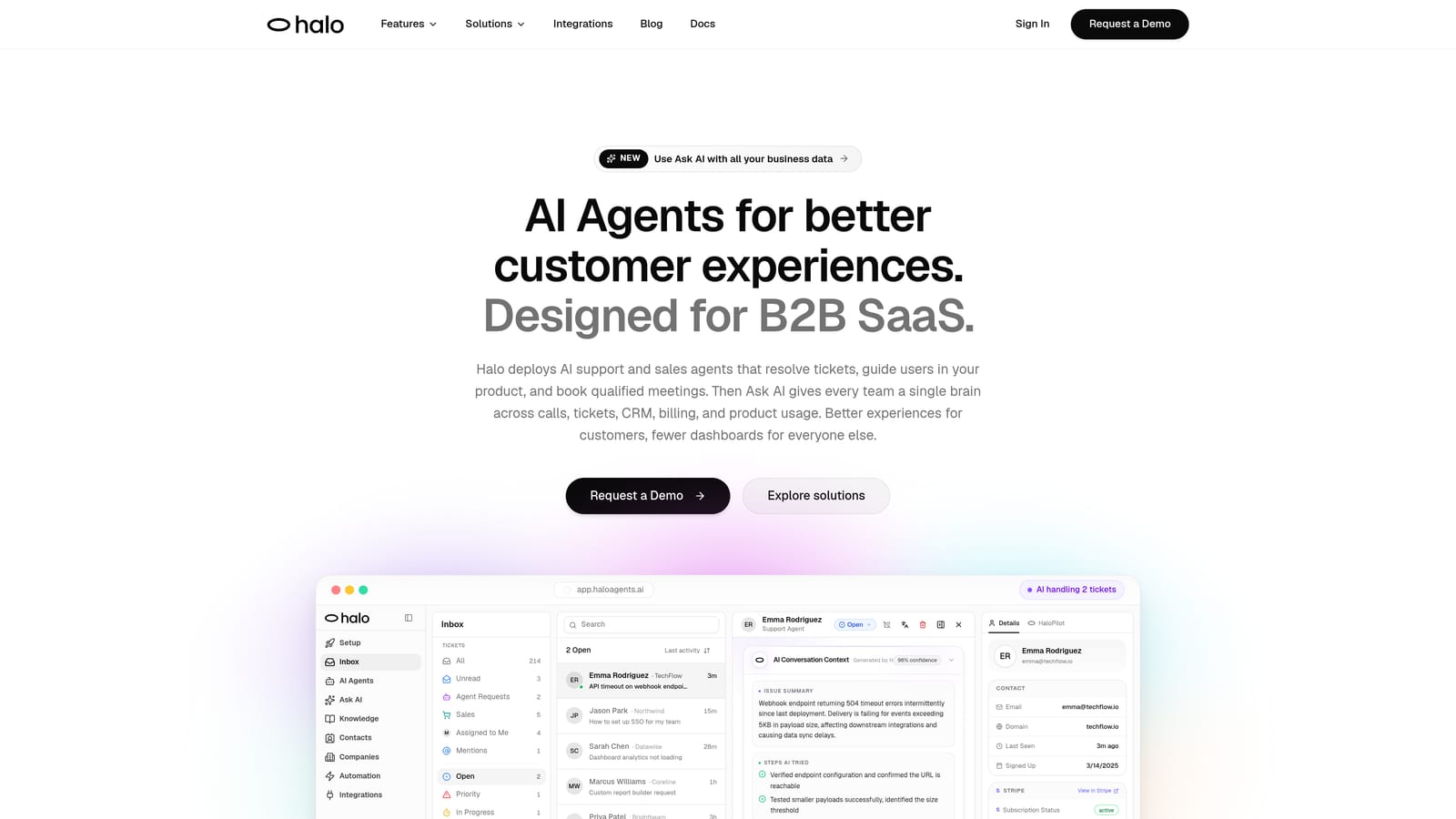
Halo AI is an AI-first customer support platform that deploys intelligent agents to resolve tickets end-to-end, guide users through your product with page-aware context, and surface business intelligence across your support operation.
Where This Tool Shines
What separates Halo from most platforms on this list is architecture. It wasn't built as a chatbot layer on top of a ticketing system. The AI is the system. That means every interaction, every resolved ticket, every escalation feeds back into a continuous learning loop that makes the agents smarter over time.
The page-aware chat widget is a particularly compelling differentiator. Rather than responding only to what a user types, Halo's widget understands what page the user is on and what they're looking at, allowing it to provide visual UI guidance that actually matches their current context. For SaaS products with complex interfaces, this changes the support experience meaningfully.
Key Features
End-to-End Ticket Resolution: AI agents resolve support tickets autonomously rather than simply deflecting or suggesting articles, with full conversation context preserved throughout.
Page-Aware Chat Widget: The widget sees what the user sees, enabling contextual guidance tied to their exact location in your product rather than generic help responses.
Smart Inbox with Business Intelligence: Beyond support metrics, the inbox surfaces customer health signals, revenue anomalies, and trend detection that give product and success teams actionable insight.
Auto Bug Ticket Creation: Detected issues are automatically routed to Linear or your preferred project management tool, closing the loop between support and engineering without manual handoffs.
Live Agent Handoff: Complex issues escalate to human agents with full conversation context intact, so customers never have to repeat themselves.
Broad Integration Stack: Connects natively with Slack, HubSpot, Intercom, Stripe, Zoom, PandaDoc, and Fathom, so it fits into your existing business stack rather than replacing it.
Best For
Halo is purpose-built for B2B SaaS companies and product teams that need their support operation to do more than manage tickets. If you want your support layer to contribute business intelligence, catch bugs before they escalate, and scale without proportionally growing headcount, Halo is worth a close look.
Pricing
Contact for pricing. Visit haloagents.ai to book a demo and discuss plans based on your team's scale and requirements.
2. Intercom
Best for: Teams that want to combine proactive customer engagement with automated support
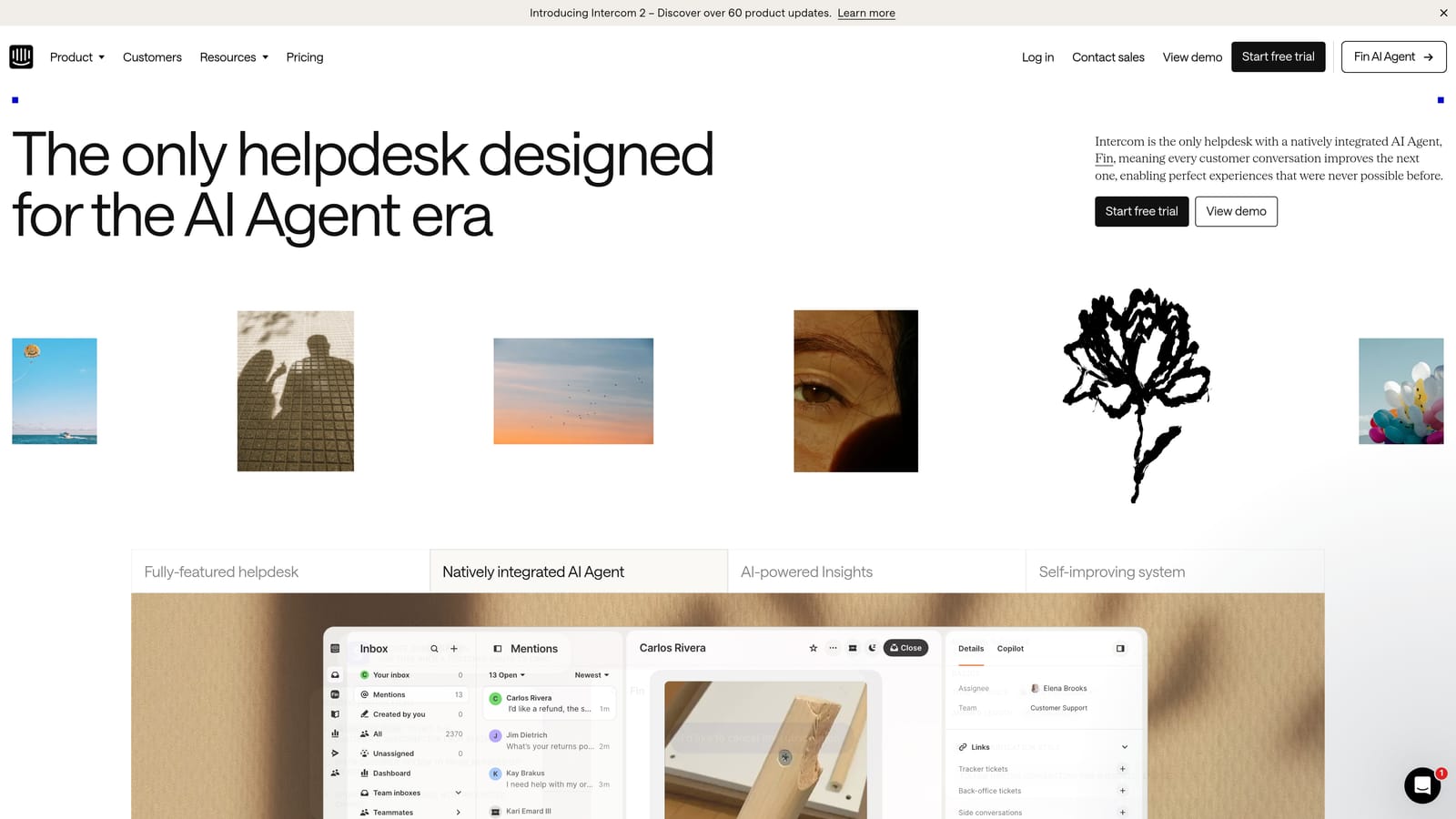
Intercom is a mature conversational support platform featuring Fin, its AI agent built on large language models, layered on top of a unified inbox for support and proactive messaging.
Where This Tool Shines
Intercom's strength has always been the combination of reactive support and proactive engagement. Where most helpdesks wait for customers to come to them, Intercom lets you reach out first with product tours, onboarding flows, and targeted messages based on user behavior.
Fin AI adds genuine automation capability on top of that foundation. It draws from your existing help content to resolve incoming queries, and its resolution rates have improved considerably as the model has matured. For teams that already have a strong knowledge base, Fin can deflect a meaningful portion of incoming volume without much setup overhead.
Key Features
Fin AI Agent: Automated ticket resolution using your existing help center content, with handoff to human agents when confidence is low.
Unified Inbox: Combines support, sales, and proactive messaging channels in a single interface for cross-functional teams.
Product Tours and In-App Messaging: Onboarding automation that guides users through your product without requiring support intervention.
Workflow Automation Builder: Visual builder for routing rules, escalation logic, and automated responses across channels.
Reporting and CSAT Tracking: Dashboards covering team performance, resolution rates, and customer satisfaction scores.
Best For
Intercom suits growth-stage SaaS companies that want a single platform for both support and customer engagement. Teams that already invest in proactive messaging and onboarding will get the most out of the platform's broader feature set.
Pricing
Plans start at approximately $39/month; Fin AI usage is billed per resolution. Check intercom.com for current pricing as tiers change frequently.
3. Zendesk
Best for: Enterprise support operations that need scale, compliance, and deep configurability
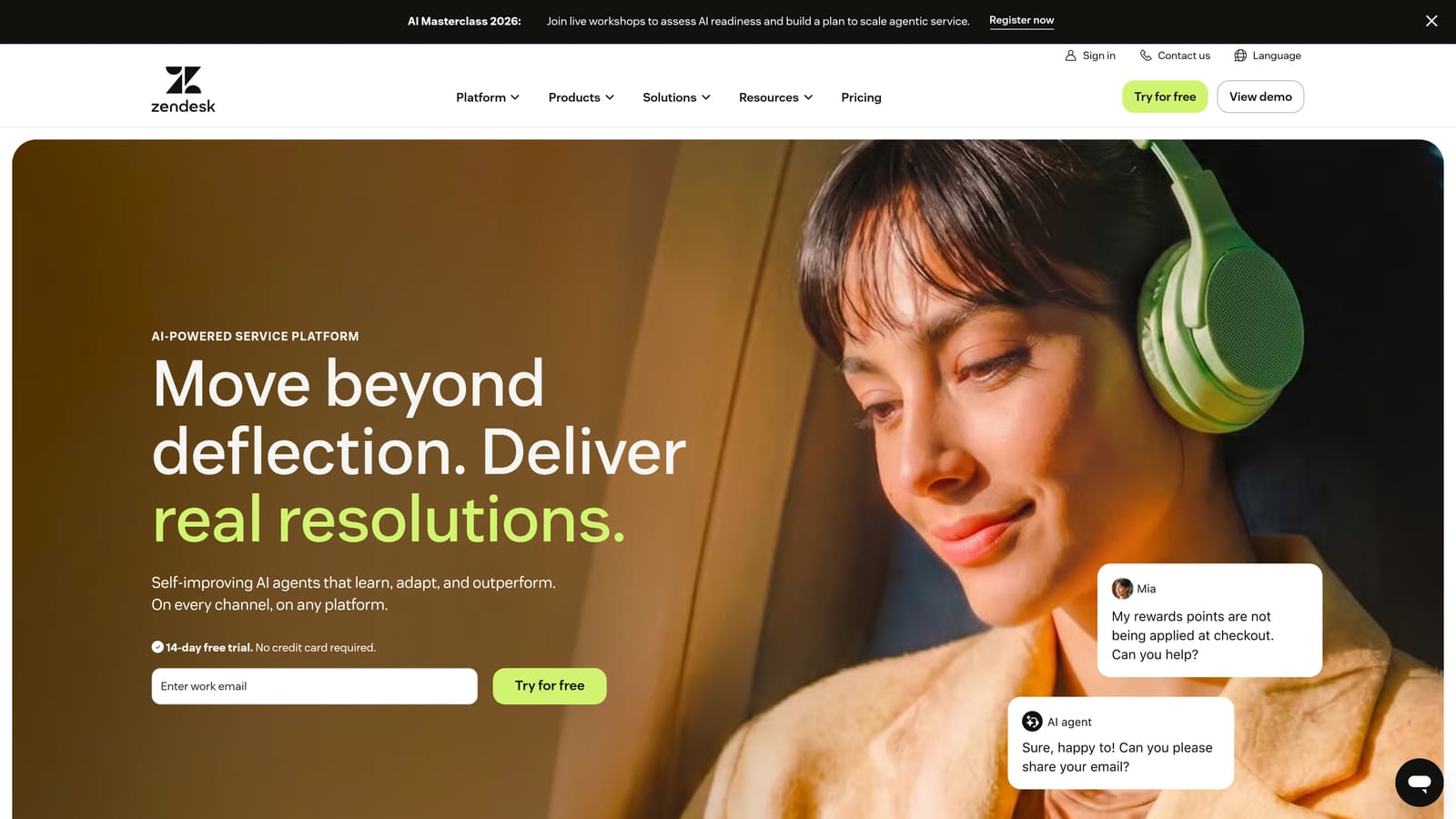
Zendesk is one of the most widely deployed helpdesk platforms globally, offering enterprise-grade ticket management with an AI and automation layer built into Zendesk Suite.
Where This Tool Shines
Zendesk's maturity is both its greatest strength and its most common criticism. The platform can handle virtually any support workflow you throw at it: complex SLA management, multi-brand setups, sophisticated routing logic, and enterprise compliance requirements. The app marketplace with over a thousand integrations means you can connect it to almost anything.
The AI layer has improved substantially in recent iterations, with AI-powered triage, suggested responses, and Answer Bot handling self-service deflection. That said, Zendesk's AI capabilities feel more like additions to an existing system than a ground-up rethink, which can affect how seamlessly they integrate into the overall workflow.
Key Features
AI-Powered Triage and Routing: Automatically classifies, prioritizes, and routes incoming tickets based on content and context.
Workflow Triggers and Macros: Rule-based automation for high-volume ticket handling, escalation, and standardized agent responses.
Answer Bot: Self-service deflection that surfaces relevant help articles before a ticket is created.
Advanced Reporting and SLA Management: Comprehensive dashboards with SLA tracking, breach alerts, and performance analytics.
App Marketplace: Over a thousand integrations covering CRM, billing, e-commerce, project management, and more.
Best For
Zendesk is best suited for mid-market and enterprise teams with dedicated support operations and the resources to configure and maintain the platform. Smaller teams may find the setup complexity and per-agent pricing harder to justify.
Pricing
Suite plans start at approximately $55/agent/month. Check zendesk.com for current plan details and enterprise pricing.
4. Freshdesk
Best for: Mid-market teams that want accessible AI-assisted automation without enterprise complexity
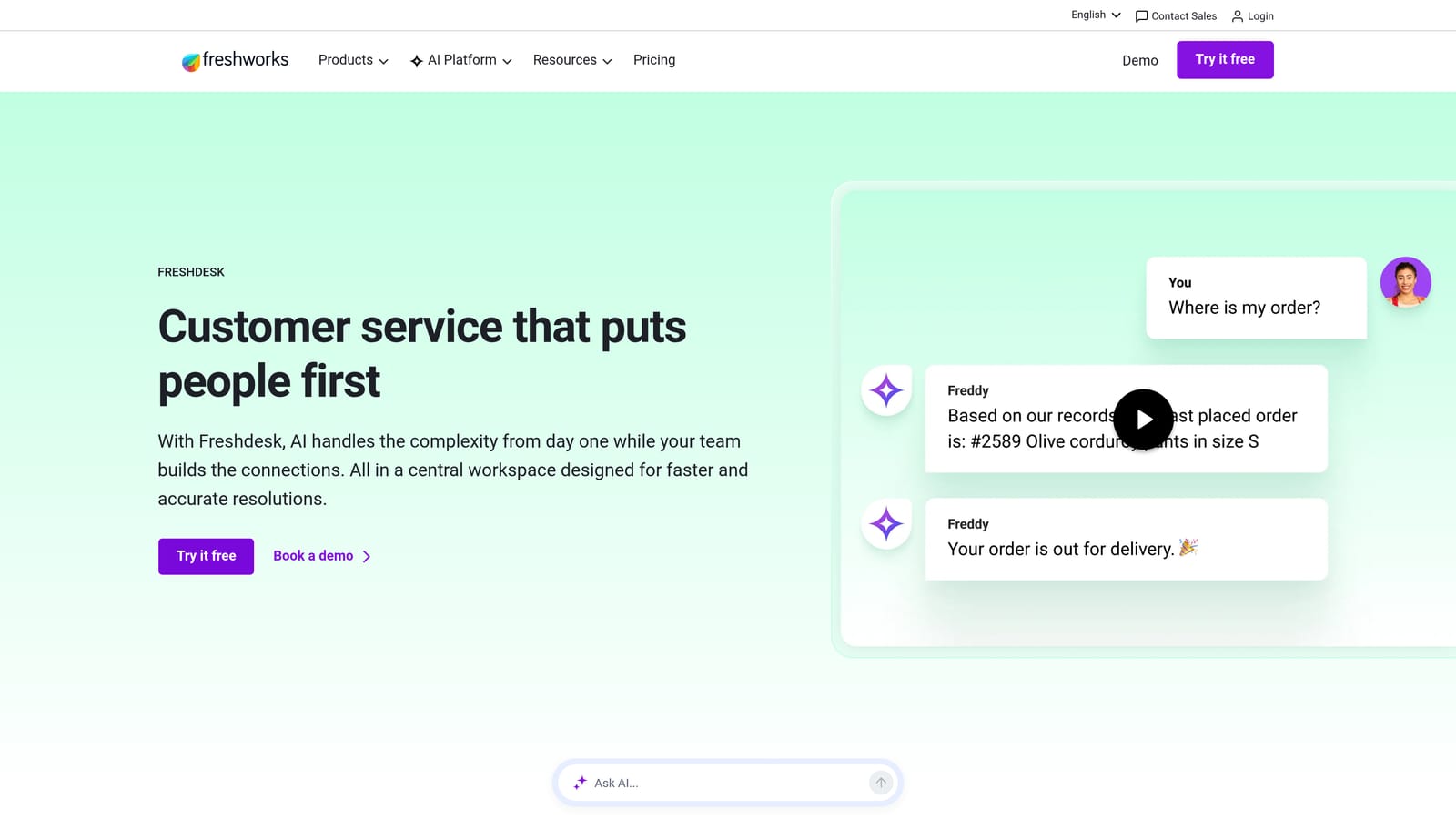
Freshdesk is a mid-market helpdesk from Freshworks with Freddy AI built in, offering solid automation capability at a price point that's generally more accessible than enterprise alternatives.
Where This Tool Shines
Freshdesk hits a sweet spot for growing support teams that need more than basic ticketing but aren't ready for the configuration overhead of a platform like Zendesk. Freddy AI handles ticket summarization, suggests responses based on historical tickets, and detects customer sentiment, giving agents useful context without requiring them to dig through conversation history.
The broader Freshworks ecosystem is worth noting for teams that also need CRM or ITSM capability. Keeping customer data, support tickets, and internal IT requests in one vendor relationship simplifies both billing and integration maintenance.
Key Features
Freddy AI: Ticket summarization, suggested responses, and sentiment detection that helps agents respond faster with better context.
Freddy Self Service Bot: Automated chat deflection for common queries before they reach the agent queue.
Scenario Automations: Multi-step automation rules that trigger based on ticket properties, customer data, or time conditions.
Collision Detection: Prevents multiple agents from working the same ticket simultaneously, reducing duplicated effort.
Freshworks Ecosystem: Native connections to Freshsales (CRM), Freshservice (ITSM), and other Freshworks products for teams that want a unified vendor.
Best For
Freshdesk works well for mid-market B2B and B2C teams that want AI-assisted support without a steep implementation curve. It's particularly strong for teams already using or considering other Freshworks products.
Pricing
A free plan is available for small teams; paid plans start at approximately $15/agent/month. Check freshdesk.com for current tier details.
5. Tidio
Best for: E-commerce and small business teams that want fast AI chatbot deployment
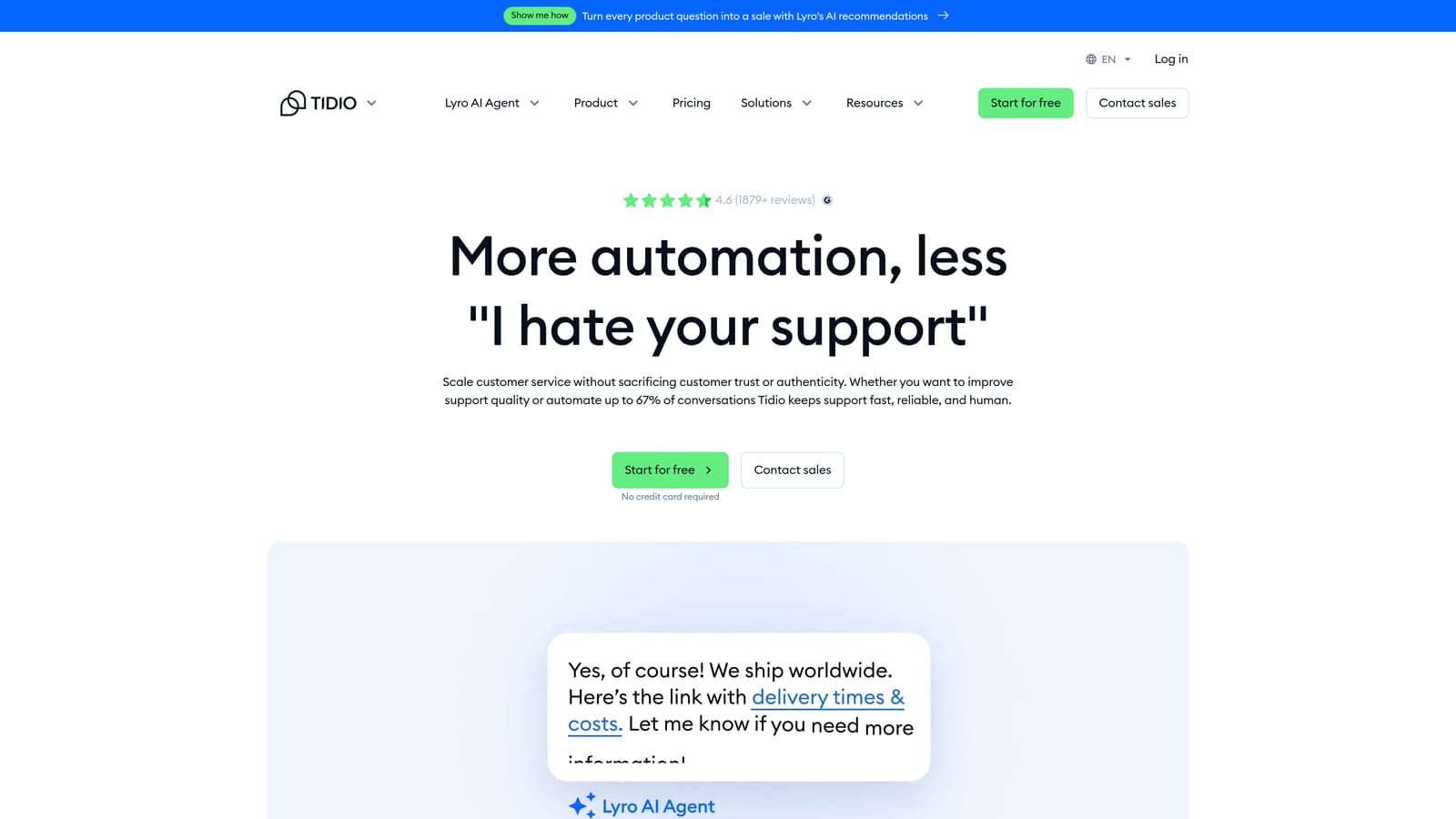
Tidio is a live chat and AI chatbot platform featuring Lyro AI for automated query resolution, with strong e-commerce integrations and a no-code setup experience that gets teams running quickly.
Where This Tool Shines
Tidio's primary appeal is accessibility. The visual chatbot flow builder requires no coding knowledge, and Lyro AI can start handling common customer queries almost immediately after connecting to your existing content. For e-commerce brands dealing with high volumes of repetitive questions around orders, shipping, and returns, this is a meaningful time saver.
The native Shopify and WooCommerce integrations are tighter than what you'd find in most general-purpose helpdesks, allowing the chatbot to pull order data and respond to status inquiries without custom development work. For teams outside e-commerce, the platform's strengths become less pronounced.
Key Features
Lyro AI Chatbot: Automated resolution of common customer queries using your existing help content and product data.
Visual Flow Builder: No-code chatbot design for custom conversation paths and escalation logic.
E-Commerce Integrations: Native connections to Shopify, WooCommerce, and other platforms for order-aware automated responses.
Live Chat with Agent Handoff: Smooth transition from automated to human support when queries exceed the bot's capability.
Multi-Channel Support: Handles email, live chat, and social messaging from a single interface.
Best For
Tidio is well-suited for small to mid-sized e-commerce businesses and direct-to-consumer brands. Teams running complex B2B SaaS support workflows will likely find the platform's automation depth insufficient for their needs.
Pricing
A free plan is available; Lyro AI plans start at approximately $29/month. Check tidio.com for current pricing and usage limits.
6. Kustomer
Best for: DTC and e-commerce brands that need full customer history context in every support interaction
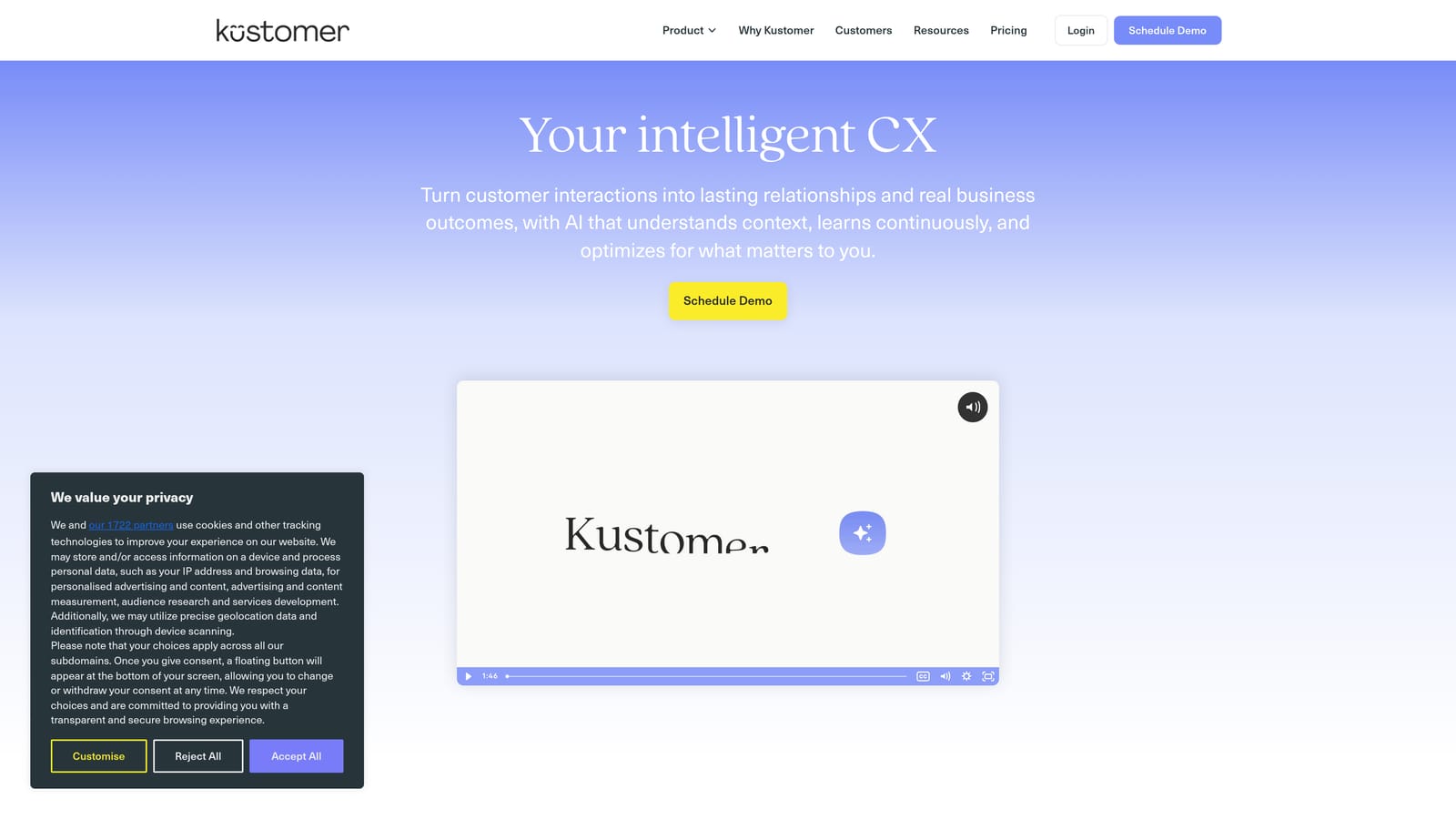
Kustomer is a CRM-native support platform owned by Meta that combines complete customer timeline views with helpdesk automation, giving agents full context on every interaction from day one.
Where This Tool Shines
Most helpdesks show you the ticket. Kustomer shows you the customer. The unified timeline view pulls together every purchase, every past interaction, every touchpoint across channels so that agents and AI alike can respond with complete context rather than treating each ticket as an isolated event.
This approach pays particular dividends for brands where customer history directly affects how a query should be handled. A loyal customer with five years of purchase history and a first-time buyer with a return request deserve different responses, and Kustomer's CRM-native structure makes that distinction easy to act on.
Key Features
Unified Customer Timeline: Every touchpoint, purchase, and interaction consolidated in a single view per customer.
AI-Powered Routing with CRM Context: Routing and suggested responses that factor in customer history, not just ticket content.
Omnichannel Support: Handles email, chat, social media, SMS, and voice from a unified interface.
Conditional Workflow Automation: Complex automation logic based on customer attributes, order data, and interaction history.
E-Commerce and DTC Integrations: Deep connections to Shopify, Magento, and other platforms relevant to direct-to-consumer brands.
Best For
Kustomer is strongest for high-volume DTC and e-commerce brands where customer relationship context materially changes how support should be delivered. Less suited for teams that don't have rich customer history to draw from.
Pricing
Plans start at approximately $89/agent/month. Check kustomer.com for current pricing and enterprise options.
7. Gorgias
Best for: E-commerce brands that need to take order actions directly from the helpdesk
Gorgias is a support automation platform purpose-built for e-commerce, with deep Shopify integration and the ability to process refunds, cancellations, and order modifications without leaving the helpdesk interface.
Where This Tool Shines
The defining feature of Gorgias is action, not just information. Most helpdesks let agents look up order details. Gorgias lets them act on them: issuing refunds, modifying orders, and processing cancellations directly from the ticket view. For high-volume e-commerce support teams, this eliminates a significant amount of tab-switching and manual work.
The revenue attribution feature is also worth noting. Gorgias ties support interactions to conversion data, which lets teams understand which types of support conversations actually drive purchases rather than just measuring ticket volume and resolution time.
Key Features
Deep E-Commerce Integration: Native Shopify, Magento, and BigCommerce connections with real-time order data surfaced in every ticket.
Order Action Capability: Agents can issue refunds, cancel orders, and apply discounts without leaving the helpdesk interface.
Automated Responses for Common Queries: Rule-based automation handles order tracking, return status, and frequently asked questions at scale.
Revenue Statistics: Tracks the revenue impact of support conversations to connect support performance to business outcomes.
Macro and Rule Automation: Templated responses and conditional rules for high-volume ticket categories.
Best For
Gorgias is the strongest choice for e-commerce brands running high ticket volumes around orders, shipping, and returns. It's specifically optimized for this use case and not a strong fit for B2B SaaS or service-based businesses.
Pricing
Plans start at approximately $10/month for 50 tickets. Check gorgias.com for current ticket-based pricing tiers.
8. HubSpot Service Hub
Best for: Teams already on HubSpot that want to add support automation without a separate platform
HubSpot Service Hub is support automation built natively into the HubSpot CRM, allowing teams to manage ticketing, knowledge base, and AI-assisted chat without adopting a standalone helpdesk tool.
Where This Tool Shines
The core value proposition here is consolidation. If your sales and marketing teams are already living in HubSpot, adding Service Hub means your support tickets are automatically connected to contact records, deal history, and lifecycle stage data. No integration required, no data sync to maintain.
For teams evaluating their first formal support tool, the free tier provides a meaningful starting point. The automation capabilities grow substantially on paid plans, including AI-powered chatbots, workflow automation tied to CRM properties, and customer feedback tools that feed directly into the contact record.
Key Features
Native CRM Ticketing: Support tickets connected directly to HubSpot contact and deal records with no integration overhead.
AI-Powered Chatbot and Live Chat: Automated query handling with escalation to human agents, managed from the HubSpot inbox.
Knowledge Base Builder: Self-service content creation with SEO optimization built in for public-facing help documentation.
Customer Feedback Surveys: CSAT, NPS, and CES surveys delivered and tracked within the platform, tied to contact records.
CRM-Triggered Automation: Workflow automation that responds to changes in contact properties, deal stages, and lifecycle milestones.
Best For
HubSpot Service Hub is the natural choice for teams already using HubSpot for sales and marketing. For teams not on HubSpot, the switching cost and platform breadth may be more than necessary for support automation alone.
Pricing
Free tools are available for basic use; paid plans start at approximately $15/seat/month. Check hubspot.com for current plan details.
9. Salesforce Service Cloud
Best for: Large enterprises with dedicated Salesforce teams and complex, multi-channel support operations
Salesforce Service Cloud is enterprise-grade customer service automation deeply integrated with Salesforce CRM, featuring Einstein AI for intelligent case management at scale.
Where This Tool Shines
Service Cloud's ceiling is higher than almost anything else on this list. Einstein AI handles case classification, routing, and next-best-action recommendations with the full weight of Salesforce's CRM data behind every decision. For enterprises managing thousands of cases per day across multiple channels, the intelligent workload distribution through Omni-Channel routing is a genuine operational advantage.
That power comes with corresponding complexity. Service Cloud implementations typically require dedicated Salesforce administrators and often involve significant configuration time before the platform delivers its full value. It's not a tool you deploy in a week.
Key Features
Einstein AI: Case classification, routing, and next-best-action recommendations powered by Salesforce's AI layer and your CRM data.
Omni-Channel Routing: Intelligent workload distribution across agents based on skill, availability, and case priority.
Full Salesforce CRM Integration: Complete customer context from the Salesforce ecosystem surfaced in every case.
Einstein Bots: Automated self-service for common queries before cases reach the agent queue.
Enterprise Reporting and Compliance: Comprehensive analytics, audit trails, and compliance tooling for regulated industries.
Best For
Salesforce Service Cloud is built for large enterprises with existing Salesforce infrastructure, dedicated admin resources, and support operations complex enough to justify the implementation investment. Smaller teams will find better value elsewhere on this list.
Pricing
Plans start at approximately $25/user/month; enterprise tiers are significantly higher. Check salesforce.com for current pricing and edition details.
Which Platform Is Right for Your Team?
The right customer service automation platform depends less on feature checklists and more on where your team is today and where your support operation needs to go.
For AI-first B2B SaaS teams: Halo AI is the standout choice. The page-aware context, continuous learning architecture, and business intelligence capabilities go well beyond what most platforms offer, and it's purpose-built for the complexity of SaaS product support rather than adapted from a general-purpose helpdesk.
For enterprise organizations: Zendesk and Salesforce Service Cloud are the established options, with Zendesk offering more accessible configuration and Salesforce delivering deeper power for teams already embedded in that ecosystem.
For e-commerce brands: Gorgias leads for order-action capability and Shopify depth. Kustomer is the better choice if customer relationship history is central to how you differentiate support. Tidio works well for smaller e-commerce teams getting started with automation.
For teams already on HubSpot: Service Hub is the path of least resistance, with CRM-native ticketing that eliminates integration overhead entirely.
For growing mid-market teams: Freshdesk offers a strong balance of AI capability and accessible pricing, and Intercom is worth serious consideration for teams that want proactive engagement alongside reactive support.
Your support team shouldn't scale linearly with your customer base. Let AI agents handle routine tickets, guide users through your product, and surface business intelligence while your team focuses on complex issues that need a human touch. See Halo in action and discover how continuous learning transforms every interaction into smarter, faster support.