10 Best Customer Support AI Solutions for Scaling Teams in 2026
Scaling B2B teams can cut through the noise with this comprehensive breakdown of the top customer support AI solutions for 2026, evaluated across five key criteria including autonomous resolution capability, integration depth, and analytics quality. The guide covers a range of platforms—from AI-native tools built for genuine issue resolution to established helpdesks with robust AI add-ons—helping fast-growing teams make informed decisions.
 Grant CooperFounder14 min read
The way B2B teams handle customer support has shifted dramatically. Traditional helpdesks built around human agents managing ticket queues are giving way to AI-native platforms that can resolve issues autonomously, guide users through complex workflows, and surface business intelligence that goes far beyond support metrics.
The challenge is that not all "AI support solutions" are created equal. Many bolt AI onto existing helpdesk infrastructure as an afterthought, resulting in clunky deflection flows rather than genuine resolution. B2B teams scaling fast need something more substantive.
To build this list, we evaluated tools across five criteria: autonomous resolution capability, integration depth with existing tech stacks, continuous learning over time, analytics quality, and deployment speed. The result covers a range from AI-first platforms built around autonomous agents to established helpdesks with serious AI add-ons. For broader context on the automation landscape, our piece on customer service automation is worth a read before diving in.
Here are the top customer support AI solutions worth evaluating for your team in 2026.
1. Halo AI
Best for: B2B SaaS teams that need AI agents to resolve tickets autonomously with full product context
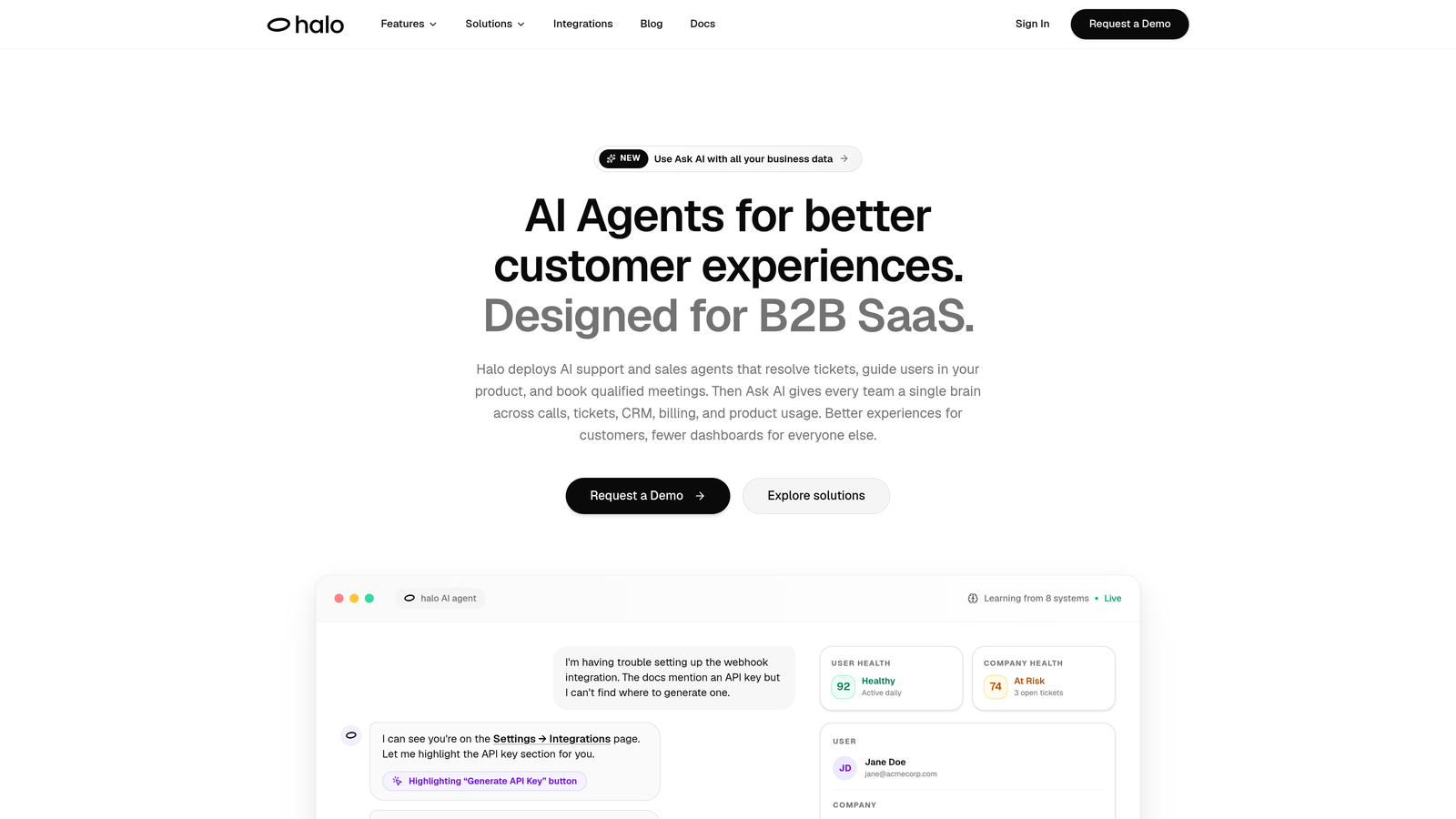
Halo AI is an AI-first customer support platform that deploys autonomous agents to resolve tickets, guide users through your product interface, and generate business intelligence from every support interaction.
Where This Tool Shines
What separates Halo from most competitors is its page-aware architecture. The AI agent doesn't just know your knowledge base; it understands what the user is actually looking at inside your product. That context allows it to provide step-by-step visual UI guidance rather than generic instructions, which makes a meaningful difference for complex SaaS products where "click the settings icon" could mean five different things depending on the user's current screen.
Beyond ticket resolution, Halo's smart inbox surfaces signals that most support tools ignore entirely: customer health indicators, revenue intelligence, and anomaly detection. Your support data starts working as a business intelligence layer, not just a queue to clear.
Key Features
Page-Aware Chat Widget: The AI agent sees what the user sees in-app, enabling precise visual UI guidance rather than generic help content.
Autonomous Ticket Resolution with Continuous Learning: Every resolved interaction trains the system, so resolution quality improves the longer it runs.
Auto Bug Ticket Creation: Automatically generates bug reports to Linear, Jira, and other dev tools when patterns indicate a product issue, reducing manual handoff between support and engineering.
Smart Inbox with Business Intelligence: Goes beyond support metrics to surface customer health signals, revenue intelligence, and anomaly detection directly from support data.
Deep Integration Stack: Native connections to Intercom, Zendesk, Slack, HubSpot, Stripe, Zoom, PandaDoc, and more, meaning it fits into existing workflows rather than requiring a full platform swap.
Best For
Halo is built for B2B SaaS product teams that want AI to be the primary support layer, not a supplement to a human-first workflow. It's particularly well-suited to teams whose products have complex UIs where in-app guidance matters, and to organizations that want support data to inform product and revenue decisions.
Pricing
Contact for pricing. Halo is designed for B2B SaaS teams scaling support operations and offers custom plans based on team size and resolution volume.
2. Intercom Fin
Best for: Teams already on Intercom who want AI resolution without migrating their support stack
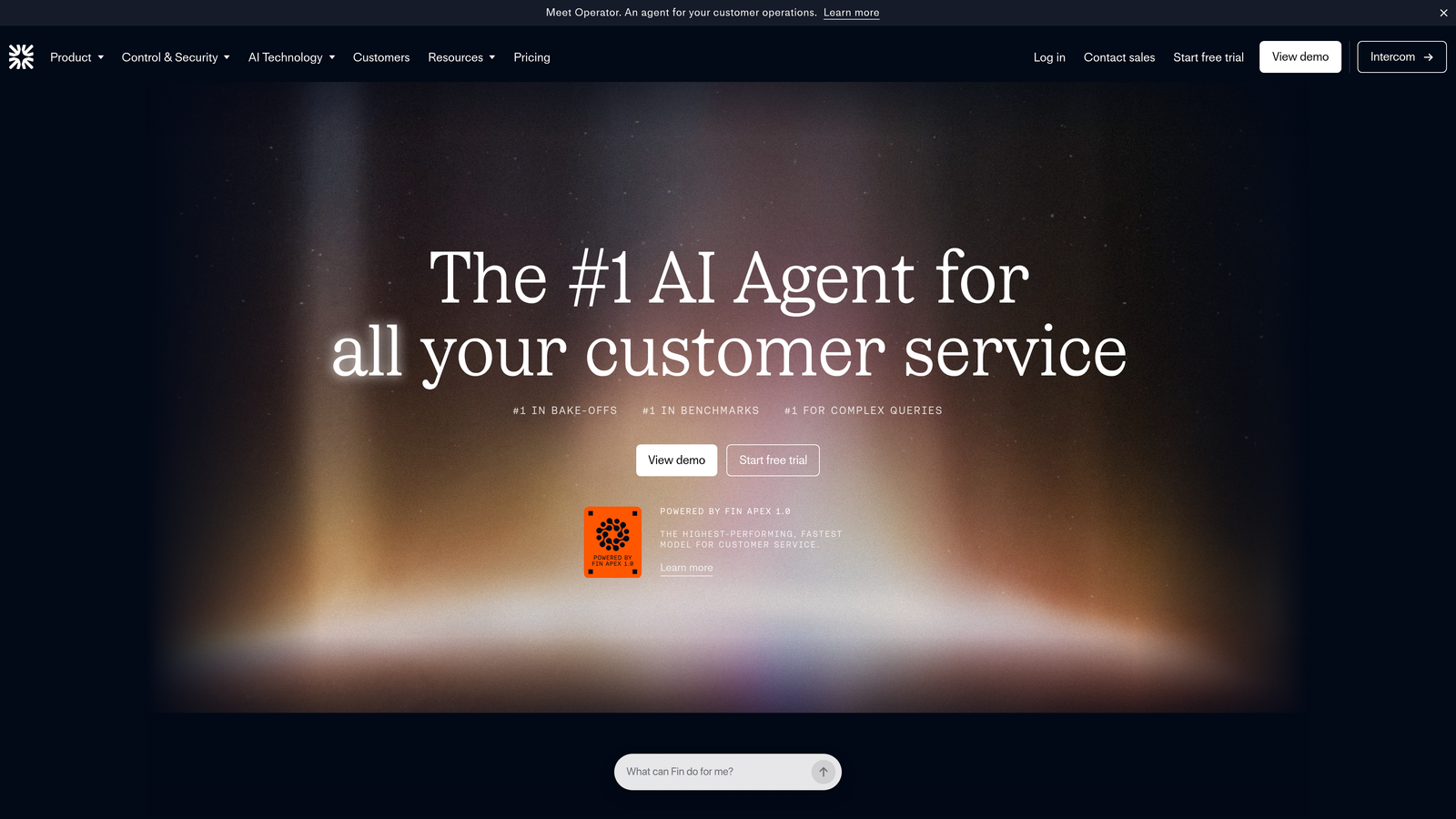
Intercom Fin is Intercom's native AI agent, built directly into the Intercom messenger and support platform to handle customer questions conversationally using existing knowledge base content.
Where This Tool Shines
Fin's biggest advantage is how naturally it fits into an existing Intercom setup. If your team is already using Intercom for live chat and help center management, Fin activates without the friction of a new platform deployment. It reads your existing support content and starts resolving conversations almost immediately.
The conversational quality is strong, and brand voice customization allows teams to make Fin feel like a natural extension of their support experience rather than an obvious bot. Human handoff works smoothly, passing full conversation context to agents when escalation is needed.
Key Features
Native Intercom Integration: Embedded directly in Intercom messenger, inbox, and help center with no third-party configuration required.
Automatic Knowledge Base Training: Trains on existing help content and support articles without manual setup for each topic.
Brand Voice Controls: Customizable tone and conversational style to match your company's communication standards.
Context-Rich Human Handoff: Transfers conversations to live agents with full dialogue history intact.
Usage-Based Pricing: Charged per AI-resolved conversation, which aligns costs with actual value delivered.
Best For
Teams already invested in the Intercom ecosystem who want to add autonomous resolution without switching platforms. Less suited to organizations that need deep integrations outside the Intercom stack or require advanced business intelligence from their support data.
Pricing
Per-resolution pricing on top of existing Intercom base plans. Costs scale with the volume of conversations Fin resolves autonomously.
3. Zendesk AI
Best for: Enterprise teams with established Zendesk workflows looking to add AI across the agent and customer experience
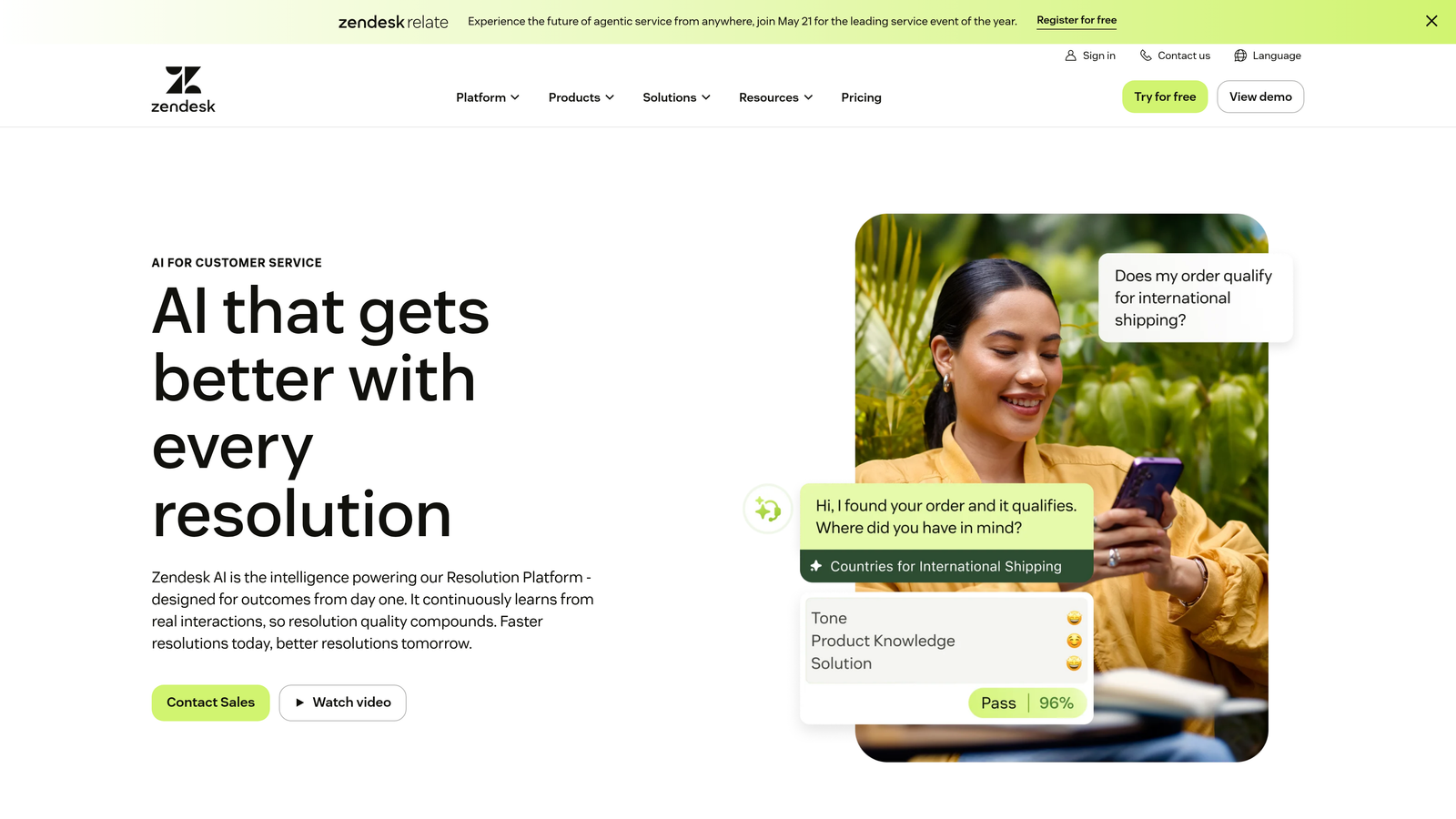
Zendesk AI layers artificial intelligence across Zendesk's enterprise helpdesk platform, covering AI agents for customer-facing resolution, intelligent triage, agent assist, and generative content tools.
Where This Tool Shines
Zendesk AI benefits from years of training data across a massive customer base. The pre-trained intent models cover common support scenarios out of the box, which reduces the time-to-value for teams that don't want to build AI logic from scratch. Intelligent triage and routing alone can meaningfully reduce the manual overhead of keeping a large support queue organized.
The agent assist tools are particularly valuable for large teams where consistency matters. Suggested replies and real-time knowledge surfacing help newer agents respond with the same quality as experienced ones.
Key Features
Pre-Trained Intent Models: Ready-to-use AI models trained on common support categories that activate without extensive configuration.
AI Triage and Routing: Automatically classifies, tags, and routes incoming tickets to the right team or resolution path.
Agent Assist: Surfaces suggested replies and relevant knowledge articles in real time as agents work tickets.
Generative Help Center Tools: AI-assisted content creation for keeping help center articles current and comprehensive.
Extensive Marketplace: Thousands of integrations available through the Zendesk marketplace for virtually any tech stack.
Best For
Enterprise support teams with significant existing investment in Zendesk infrastructure. Organizations starting fresh may find the platform's complexity and cost structure less accessible than AI-native alternatives.
Pricing
AI features are included in higher-tier Zendesk plans, with an Advanced AI add-on available for additional cost. Pricing scales with agent seats and plan tier.
4. Ada
Best for: Large enterprise CX teams that need measurable autonomous resolution rates and compliance-grade security
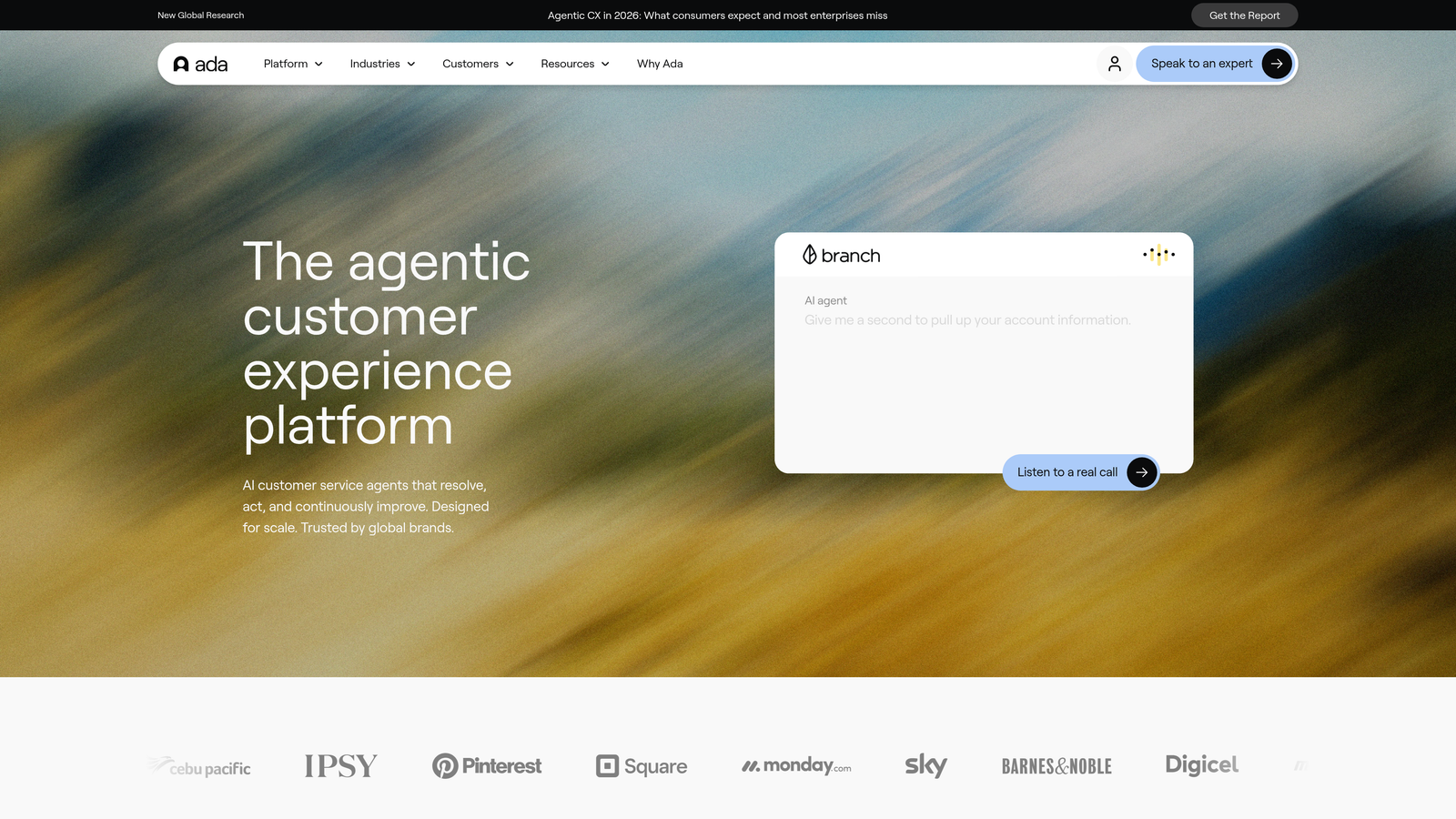
Ada is an enterprise-grade AI agent platform with a no-code builder and a strong focus on delivering quantifiable autonomous resolution rates and clear ROI for large-scale customer experience operations.
Where This Tool Shines
Ada has built its reputation around measurable outcomes. The platform's dashboards make it straightforward to track what percentage of tickets the AI is handling end-to-end, what the ROI looks like, and where human intervention is still required. For enterprise teams that need to justify AI investment to leadership, this reporting clarity is valuable.
The no-code agent builder makes it accessible to CX operations teams without requiring engineering resources for every configuration change. Multi-channel deployment across web, mobile, social, and SMS is handled within a single platform.
Key Features
No-Code AI Agent Builder: Reasoning engine with a visual builder that CX teams can manage without developer involvement.
ROI and Resolution Dashboards: Built-in tracking of autonomous resolution rates and measurable business impact.
Multi-Channel Deployment: Single platform for web, mobile, social media, and SMS support channels.
Knowledge Integration and Suggestions: Connects to existing content and recommends knowledge gaps based on unresolved queries.
Enterprise Security and Compliance: Certifications and controls suited to regulated industries and large enterprise requirements.
Best For
Large enterprise organizations with complex CX operations, compliance requirements, and a need for clear ROI visibility on their AI investment. Less suited to smaller teams or those needing deep product-context awareness.
Pricing
Custom enterprise pricing. Contact Ada directly for quotes based on volume and deployment scope.
5. Freshdesk Freddy AI
Best for: Teams using Freshworks products who want AI layered across their existing support and CRM workflows
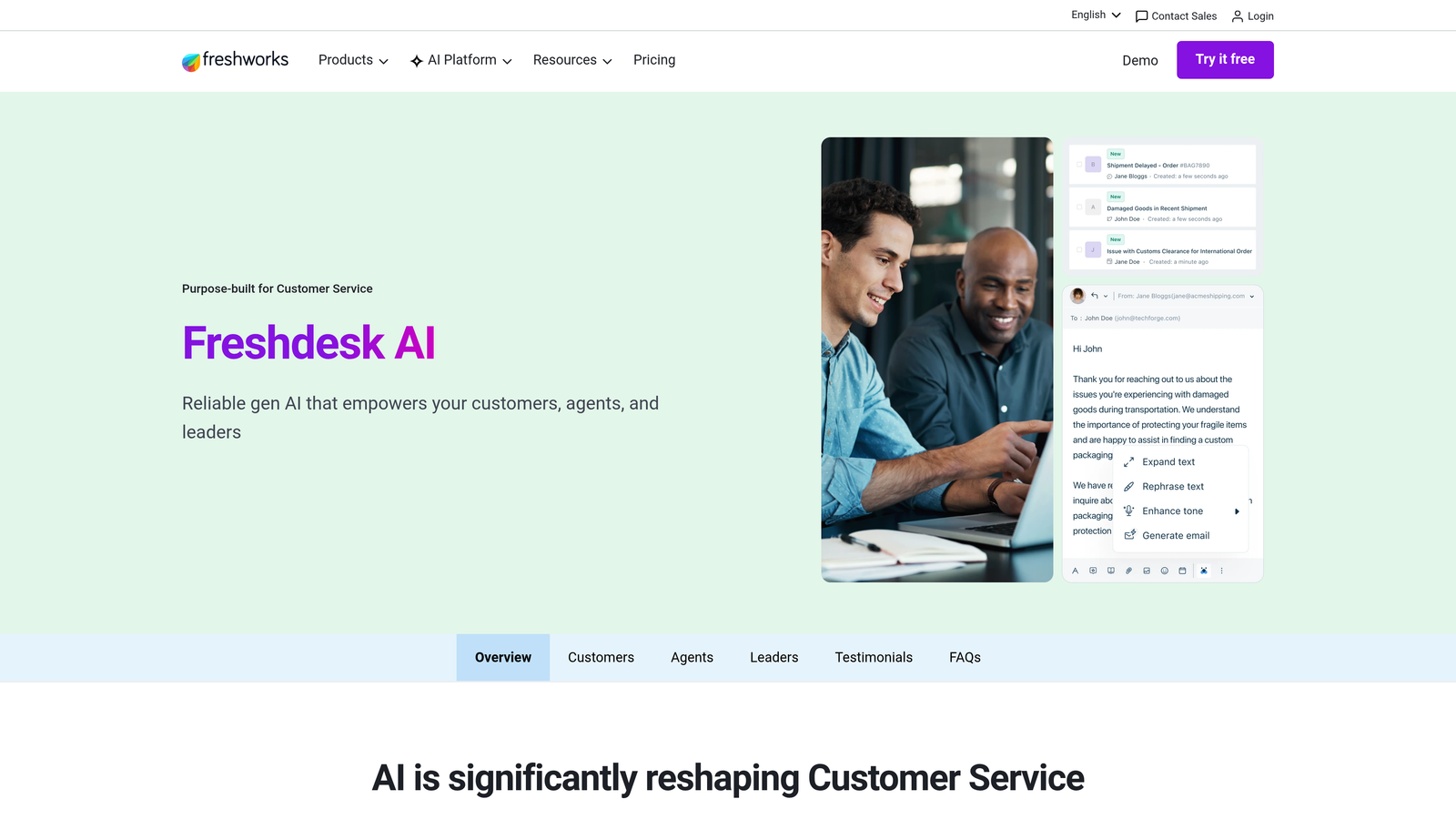
Freshdesk Freddy AI is Freshworks' AI layer for Freshdesk, providing chatbot-driven self-service, agent assist tools, and AI-powered insights within the broader Freshworks product ecosystem.
Where This Tool Shines
Freddy AI's strength is in its tight integration across the entire Freshworks suite. If your team uses Freshdesk for support, Freshsales for CRM, and Freshservice for ITSM, Freddy creates a connected AI layer across all three without requiring separate configurations or data syncing. That ecosystem cohesion is a genuine advantage for teams already standardized on Freshworks.
The pricing tiers are also more accessible than many enterprise-focused competitors, making Freddy a reasonable starting point for growing teams that aren't ready for custom-priced enterprise contracts.
Key Features
Freddy Self-Service: Automated chatbot for customer-facing ticket resolution before reaching a human agent.
Freddy Copilot: Agent-side AI assist with suggested responses and relevant knowledge surfacing during live interactions.
Cross-Suite Integration: Connected AI intelligence across Freshdesk, Freshsales, Freshservice, and other Freshworks products.
Ticket Field Suggestions: AI-powered recommendations for ticket categorization and canned response selection.
Accessible Pricing Tiers: Structured plans that scale without requiring enterprise-level commitments upfront.
Best For
Growing teams already in the Freshworks ecosystem, or those evaluating Freshworks as their primary support and CRM platform. Teams needing standalone AI resolution outside the Freshworks stack may find better fit elsewhere.
Pricing
Freddy AI features are available on Pro and Enterprise plans, starting around $49 per agent per month. Pricing varies by plan tier and feature set.
6. Forethought
Best for: Support operations teams focused on intelligent triage, routing accuracy, and reducing handle time
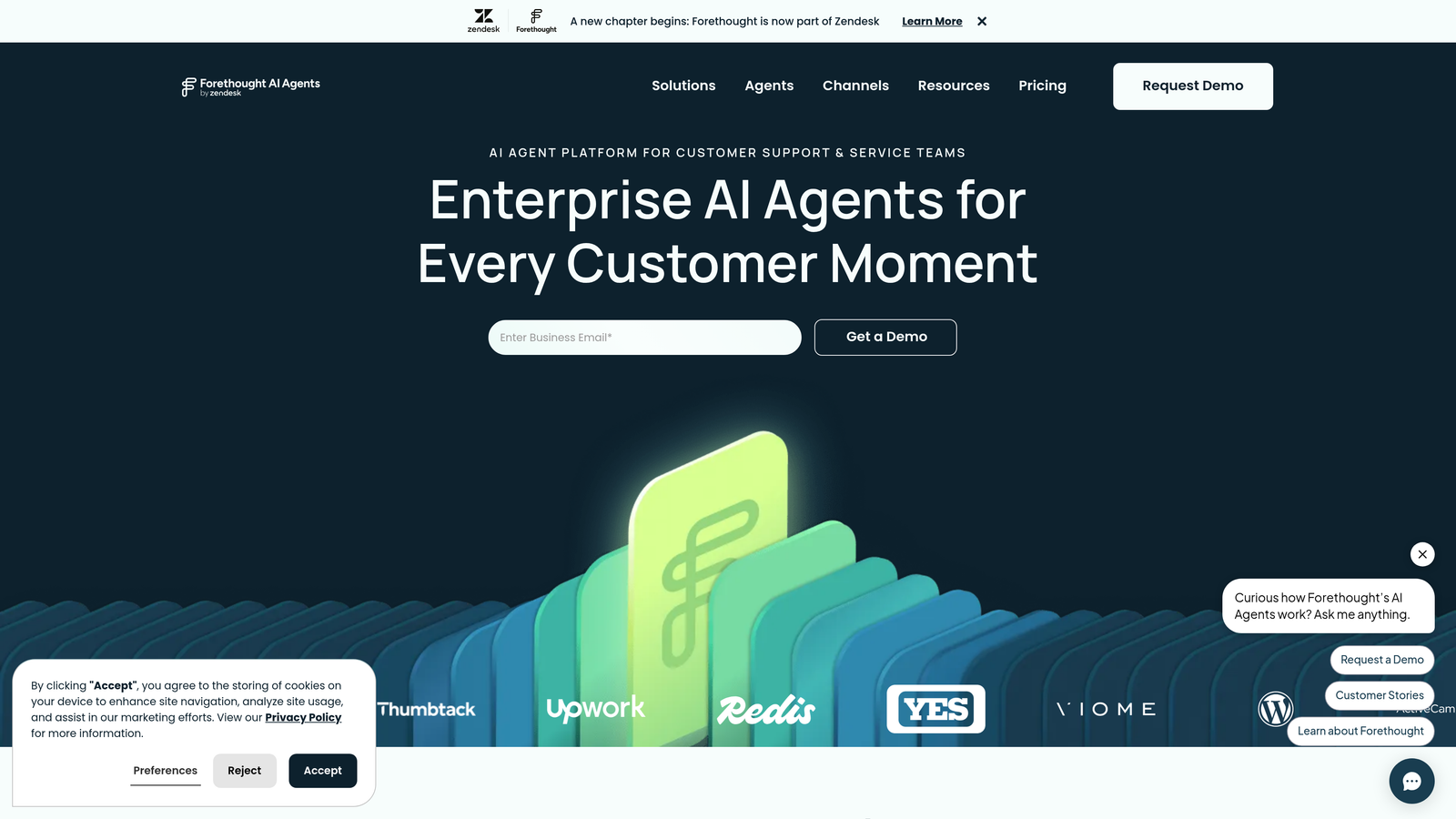
Forethought is an AI platform built around intelligent ticket triage, classification, and resolution, using predictive models to understand and prioritize support requests before they reach an agent.
Where This Tool Shines
Forethought takes a modular approach that separates customer-facing resolution (Solve) from agent-facing assist (Assist), allowing teams to deploy the components that match their current needs. The triage intelligence is particularly strong: tickets are classified, tagged, and routed with predictive accuracy that reduces the manual overhead of queue management.
For teams that have invested in Zendesk or Salesforce as their primary helpdesk, Forethought layers on top without requiring a platform change, which lowers the deployment barrier significantly.
Key Features
AI-Powered Triage: Automatic classification, tagging, and routing of incoming tickets based on predicted intent and priority.
Predictive Resolution Paths: Estimated handle time and suggested resolution paths based on historical ticket data.
Solve (Customer-Facing AI Agent): Autonomous resolution module for handling customer queries without human involvement.
Assist (Agent-Facing AI): Real-time knowledge surfacing and response suggestions for agents handling complex tickets.
Helpdesk Integrations: Deep integration with Zendesk, Salesforce Service Cloud, and other major platforms.
Best For
Support operations teams that want to improve triage accuracy and reduce handle time without fully replacing their existing helpdesk. Strong fit for Zendesk and Salesforce shops looking to add intelligent AI layers.
Pricing
Custom pricing based on ticket volume and the specific modules selected. Contact Forethought for a quote tailored to your support operation.
7. Tidio
Best for: Small businesses and e-commerce teams wanting an affordable, fast-to-deploy AI chat solution
Tidio is an accessible AI chatbot and live chat platform featuring Lyro AI, designed for smaller teams that need conversational support automation without enterprise-level complexity or cost.
Where This Tool Shines
Tidio's primary appeal is accessibility. The platform deploys quickly, the visual chatbot builder requires no technical background, and the free tier allows small teams to start without a budget commitment. Lyro AI trains on your existing support content and begins handling common queries almost immediately after setup.
For e-commerce teams specifically, the native Shopify and WordPress integrations make Tidio a natural fit. The seamless handoff from Lyro AI to a live agent ensures customers aren't left stranded when queries exceed the AI's scope.
Key Features
Lyro AI Chatbot: Conversational AI trained on your support content to handle common customer questions autonomously.
Visual Flow Builder: Drag-and-drop chatbot flow creation for custom automation without coding.
Live Chat with Human Handoff: Smooth escalation from AI to human agents with conversation context preserved.
E-Commerce Integrations: Native connections to Shopify, WordPress, and major e-commerce platforms.
Free Tier Available: Entry-level plan for teams testing AI chat before committing to paid features.
Best For
Small businesses, e-commerce operators, and early-stage teams that need a quick, cost-effective AI chat solution. Not designed for the complexity of enterprise B2B SaaS support with deep integration requirements.
Pricing
Free plan available. Lyro AI add-on starts around $39 per month; paid plans begin around $29 per month with pricing scaling by conversation volume and features.
8. Cognigy
Best for: Enterprise organizations needing sophisticated voice and chat AI in regulated or compliance-heavy industries
Cognigy is an enterprise conversational AI platform built for complex multi-turn dialogues across voice and chat channels, with strong compliance, security, and multilingual capabilities.
Where This Tool Shines
Cognigy stands out in scenarios where the conversation itself is complex: multi-step troubleshooting, regulated industry workflows, or voice-based support interactions that require nuanced dialogue management. The conversational design studio gives teams fine-grained control over dialogue flows that simpler chatbot builders can't match.
The on-premise deployment option is a meaningful differentiator for organizations in industries like financial services, healthcare, or government where data residency and compliance requirements make cloud-only solutions problematic.
Key Features
Omnichannel AI Agents: Unified AI across voice, chat, messaging, and contact center channels from a single platform.
Conversational Design Studio: Advanced visual environment for building complex, multi-turn dialogue flows.
On-Premise and Private Cloud Deployment: Flexible infrastructure options for organizations with strict data residency requirements.
Native Voice Gateway: Built-in voice capabilities and contact center integrations without requiring third-party telephony middleware.
Multilingual Support: Real-time translation and native multilingual agent capabilities for global operations.
Best For
Large enterprises in regulated industries that need sophisticated voice and chat AI with compliance-grade security and on-premise deployment options. The complexity and cost are likely excessive for teams with simpler support needs.
Pricing
Enterprise pricing only. Contact Cognigy directly for custom quotes based on deployment scope and channel requirements.
9. Ultimate (Zendesk)
Best for: Global support teams managing high ticket volumes across multiple languages within the Zendesk ecosystem
Ultimate, now integrated into Zendesk's AI offerings following acquisition, brings strong multilingual AI automation and no-code bot building to global support operations.
Where This Tool Shines
Ultimate's original differentiation was multilingual capability, and that strength carries forward post-acquisition. For support teams handling tickets across many languages, the breadth of language coverage and the ability to track automation rates by language and channel is genuinely useful operational intelligence.
The no-code bot builder with dialog management allows support operations teams to build and iterate on automation flows without engineering involvement, which keeps deployment cycles short when support needs change.
Key Features
Multilingual AI Agents: Broad language support for global support teams handling diverse customer bases.
No-Code Bot Builder: Visual dialog management for building and updating automation flows without developer resources.
Deep Zendesk Integration: Native embedding within Zendesk workflows following the acquisition and platform consolidation.
API-Based Backend Integrations: Connects to backend systems to personalize responses with customer-specific data.
Multilingual Analytics Dashboard: Tracks automation rates and resolution performance broken down by language and channel.
Best For
Zendesk customers with global support operations where language coverage is a primary requirement. Teams not already on Zendesk would need to adopt the full platform to access Ultimate's capabilities.
Pricing
Now part of Zendesk's AI offerings. Pricing is accessed through Zendesk plan tiers rather than as a standalone product.
10. Kustomer
Best for: Customer-centric teams that want AI resolution built on a complete CRM timeline rather than isolated ticket data
Kustomer is a CRM-centric AI support platform, backed by Meta, that unifies complete customer history with support interactions in a single timeline, giving AI agents the full context needed for personalized resolution.
Where This Tool Shines
Most support AI tools operate on the current ticket in isolation. Kustomer's architecture is different: the AI agent has access to the customer's full history across every channel and interaction, which means responses can be genuinely personalized rather than generic. That context matters when a customer's current issue relates to a previous order, an open billing dispute, or a product they purchased six months ago.
The proactive support capabilities are worth noting. Kustomer can trigger outreach based on customer behavior signals, shifting the support model from reactive to proactive in scenarios where early intervention prevents a ticket from being raised at all.
Key Features
CRM-First Architecture: Unified customer timeline combining purchase history, previous interactions, and support data in one view.
Context-Rich AI Chatbots: AI agents that access full customer history to deliver personalized, relevant responses.
Omnichannel Support: Unified handling of email, chat, social media, SMS, and voice within a single platform.
Workflow Automation Engine: Conditional logic and automation rules for routing, escalation, and task creation.
Proactive Support Capabilities: Behavior-triggered outreach to address issues before customers need to reach out.
Best For
Mid-market and enterprise teams, particularly in e-commerce and consumer-facing businesses, where customer lifetime value and personalization are central to the support strategy. The CRM depth may be more than pure B2B SaaS support teams require.
Pricing
Enterprise pricing starting around $89 per user per month. Contact Kustomer for custom quotes based on team size and feature requirements.
Which Tool Is the Right Fit for Your Team
The most important question to ask before selecting a customer support AI solution is architectural: do you want AI as the primary support layer, or as a layer on top of an existing human-centric helpdesk? That decision shapes everything from resolution quality to learning speed to the depth of insights you'll get over time.
For B2B SaaS teams building toward autonomous support with product-context awareness and business intelligence built in, Halo AI is the strongest fit. Its page-aware architecture and continuous learning model are purpose-built for the complexity of SaaS product support, and the smart inbox turns support data into signals that matter beyond the queue.
If your team is already deeply embedded in Intercom or Zendesk, Intercom Fin and Zendesk AI offer the lowest-friction path to adding AI resolution without a platform migration. For enterprise CX operations that need measurable ROI reporting and compliance-grade security, Ada and Cognigy are worth serious evaluation. Teams in the Freshworks ecosystem will find Freddy AI the most cohesive option, while smaller teams and e-commerce operators can start quickly and affordably with Tidio.
For global teams where language coverage drives the decision, Ultimate via Zendesk remains the strongest multilingual option. And for organizations where full customer history context is the differentiator, Kustomer's CRM-first approach stands apart.
Your support team shouldn't scale linearly with your customer base. Let AI agents handle routine tickets, guide users through your product, and surface business intelligence while your team focuses on complex issues that need a human touch. See Halo in action and discover how continuous learning transforms every interaction into smarter, faster support.