9 Best Customer Support AI Tools Compared for 2026
This in-depth Customer Support AI Tools Comparison evaluates nine leading platforms — from AI-first solutions to legacy helpdesks with bolted-on AI — across the criteria that matter most: autonomous resolution capability, integration depth, live agent handoff quality, and pricing transparency. Whether you run a lean SaaS startup or a high-volume support operation, this guide gives you the clarity to choose the right tool with confidence.
 Matt PattoliFounder13 min read
The customer support landscape has fundamentally shifted. AI isn't a nice-to-have anymore — it's the baseline expectation for scaling B2B support without scaling headcount. But with dozens of platforms claiming to "use AI," picking the right one is genuinely hard. Some bolt AI onto legacy helpdesk infrastructure. Others are built AI-first from the ground up. The difference matters enormously for resolution rates, team efficiency, and customer experience.
This comparison covers nine customer support AI tools evaluated across the criteria that actually matter: autonomous resolution capability, integration depth, learning over time, live agent handoff quality, and pricing transparency. Whether you're running a lean support team at a SaaS startup or managing high-volume tickets at scale, this guide cuts through the noise so you can make a confident decision.
Let's get into it.
1. Halo AI
Best for: B2B SaaS teams wanting AI-first autonomous ticket resolution with deep business intelligence
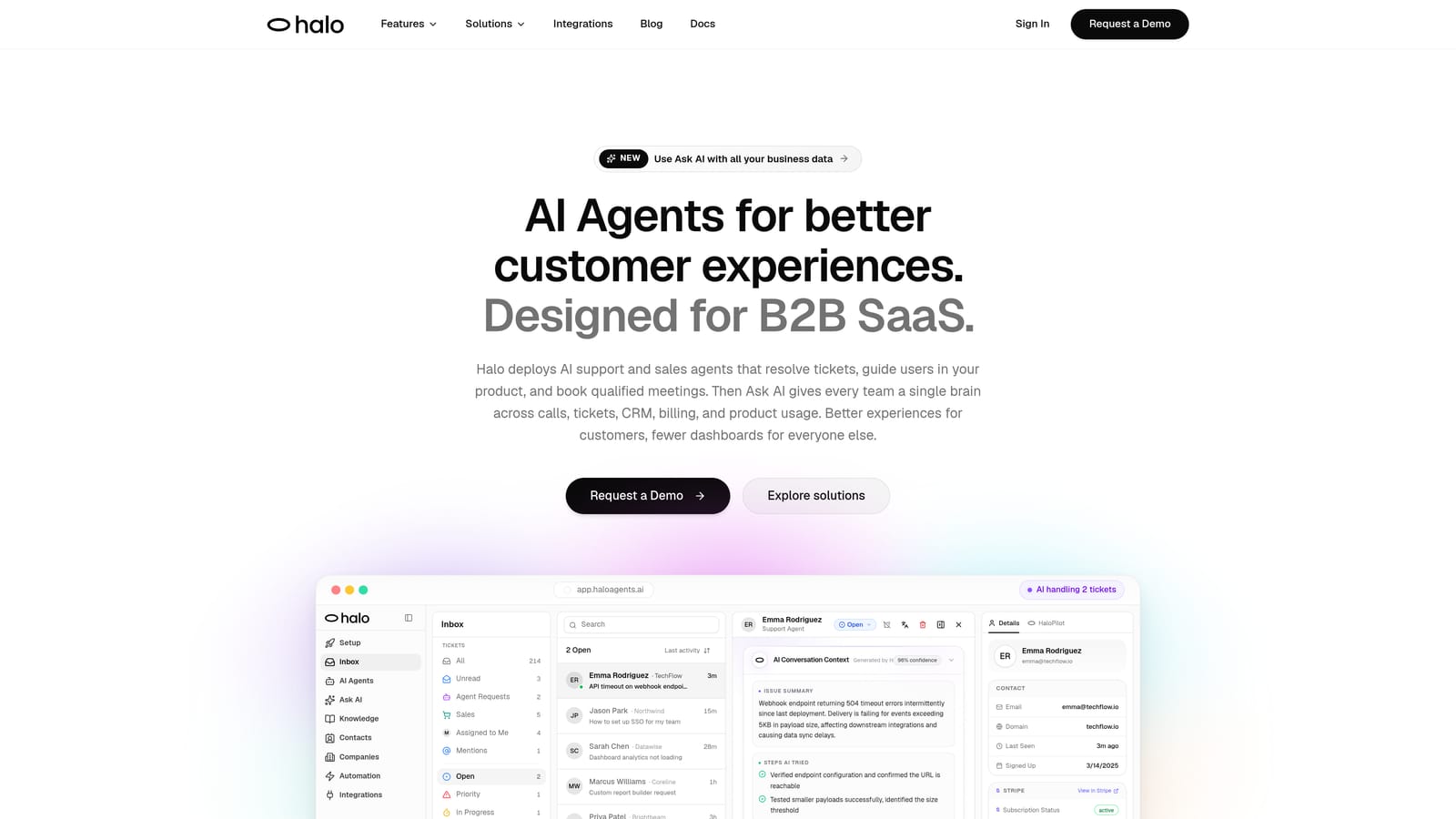
Halo AI is an AI-first customer support platform that deploys autonomous agents to resolve tickets, guide users with page-aware context, and surface business intelligence — all while learning from every interaction.
Where This Tool Shines
What separates Halo from most tools on this list is the architecture. It wasn't built as a feature layer on top of an existing helpdesk — it was designed from the ground up with AI as the core resolution engine. That distinction shows up in practice: the AI doesn't just suggest replies for a human to approve, it closes tickets autonomously and gets smarter with every interaction it handles.
The page-aware chat widget is particularly compelling for product teams. The AI sees what the user sees on screen, enabling contextual visual guidance rather than generic FAQ responses. Pair that with the smart inbox that surfaces customer health signals, revenue anomalies, and churn indicators, and you have a support platform that doubles as business intelligence infrastructure.
Key Features
Autonomous AI Agents: Resolve tickets without human involvement, handling the full resolution lifecycle from intake to close.
Page-Aware Chat Widget: AI understands the user's current product context, enabling precise visual guidance rather than generic answers.
Smart Inbox with Business Intelligence: Surfaces customer health signals, revenue anomalies, and churn indicators beyond standard ticket management.
Auto Bug Ticket Creation: Automatically generates bug reports and routes them to Linear or connected project management tools.
Live Agent Handoff: Escalates complex issues to human agents gracefully, with full conversation context preserved.
Deep Integrations: Connects to Linear, Slack, HubSpot, Intercom, Stripe, Zoom, PandaDoc, and Fathom — your entire business stack, not just your helpdesk.
Best For
Halo is purpose-built for B2B SaaS companies and product teams that want autonomous resolution, not just AI-assisted agents. It's particularly well-suited for lean support organizations that need to scale ticket volume without scaling headcount, and for teams that want their support data to feed into broader business intelligence.
Pricing
Contact for pricing. A demo is available at haloagents.ai to explore fit before committing.
2. Intercom
Best for: SaaS companies wanting conversational AI with strong in-app messaging and onboarding flows
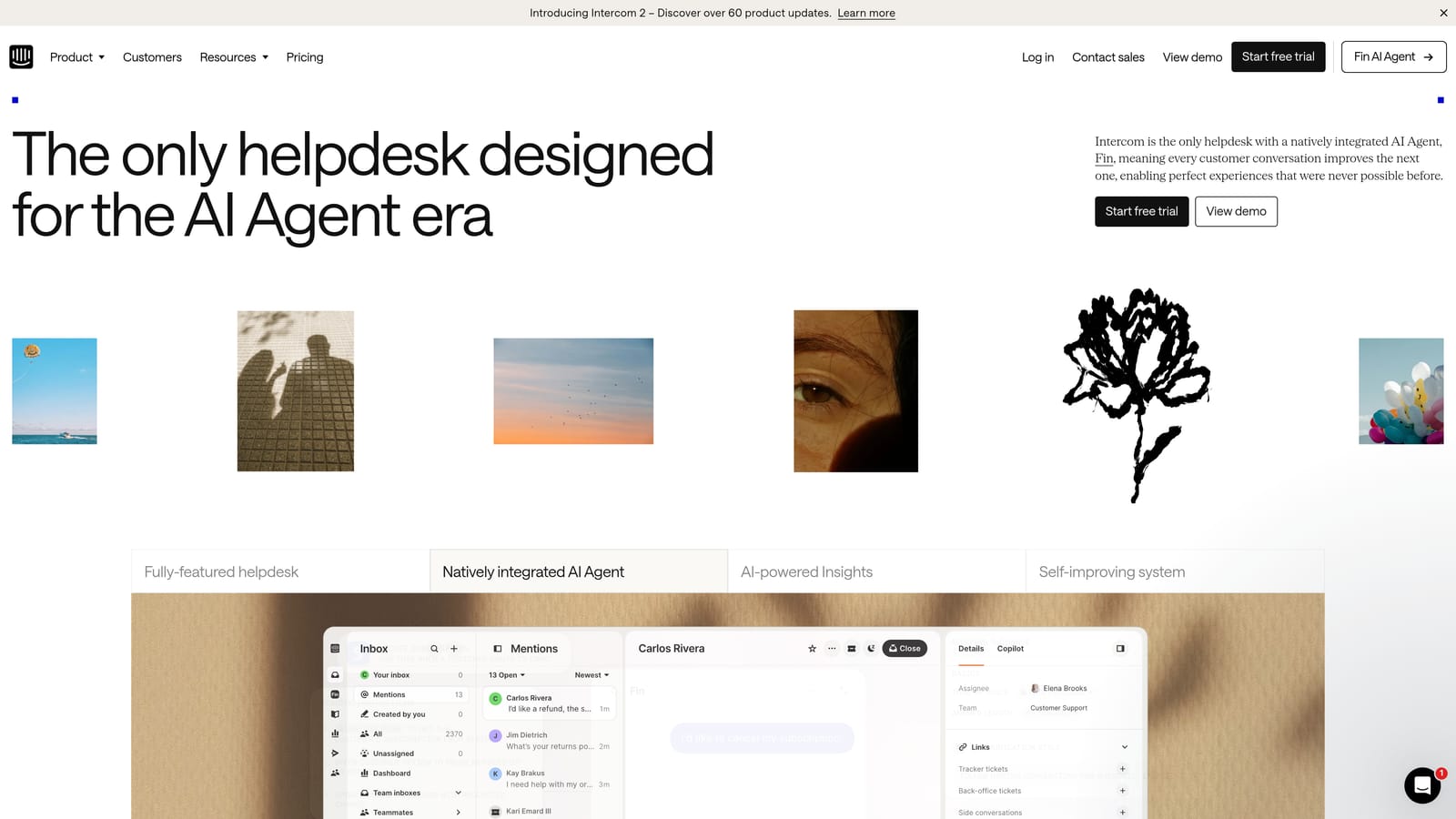
Intercom is a conversational support platform featuring Fin AI Agent, an LLM-powered bot that resolves customer questions autonomously and hands off to human agents when needed.
Where This Tool Shines
Intercom has earned its place as one of the most recognized names in SaaS support, and Fin AI Agent represents a meaningful step forward from their earlier rule-based bots. Fin is trained on your support content and uses large language models to handle nuanced questions, not just keyword matching. For teams already invested in Intercom's messenger experience, adding Fin feels like a natural evolution.
Beyond support resolution, Intercom's strength is its breadth. Product tours, onboarding flows, in-app announcements, and proactive messaging all live in the same platform. If you want a single tool for the entire customer communication lifecycle, Intercom is worth serious consideration.
Key Features
Fin AI Agent: LLM-powered bot trained on your support content for autonomous question resolution.
Unified Inbox: Combines AI bot conversations and human agent conversations in a single workspace.
In-App Messaging and Product Tours: Extends beyond support into onboarding and proactive customer engagement.
Usage-Based Fin Pricing: Charges per resolution, meaning costs scale with actual AI usage rather than seat count.
CRM and SaaS Integrations: Connects with Salesforce, HubSpot, Stripe, and a wide ecosystem of SaaS tools.
Best For
SaaS companies that want conversational AI deeply embedded in their product experience, particularly those already using Intercom for messaging. Also strong for teams that want AI-assisted onboarding alongside support automation.
Pricing
Fin AI Agent uses per-resolution pricing. Platform plans start around $74/month. Verify current pricing at intercom.com before budgeting.
3. Zendesk AI
Best for: Large enterprises with complex ticketing workflows, SLAs, and established agent teams
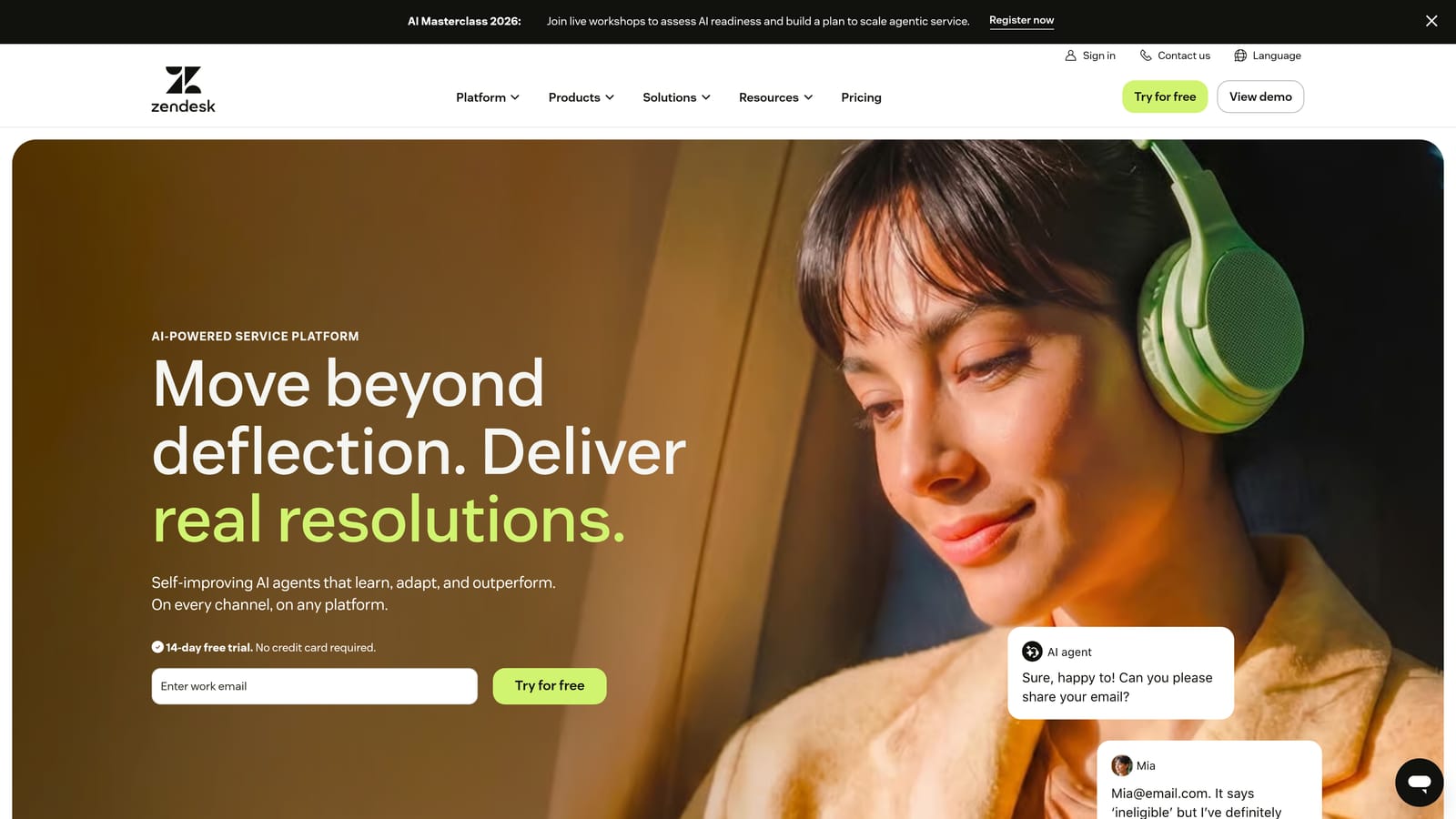
Zendesk is a mature enterprise helpdesk platform with AI features including Intelligent Triage, an agent copilot, AI Agents for self-service deflection, and generative AI reply drafting.
Where This Tool Shines
Zendesk's core strength is its depth. Decades of enterprise helpdesk development have produced a workflow engine that handles complex SLAs, custom routing logic, macros, and reporting at scale. For large support organizations with established processes, Zendesk's AI features enhance what already works rather than requiring a rebuild.
Intelligent Triage automatically classifies and routes incoming tickets, while the Agent Copilot provides suggested replies, conversation summaries, and next-best actions in real time. These features meaningfully reduce agent effort without requiring teams to change how they fundamentally operate.
Key Features
Intelligent Triage: AI classifies and routes incoming tickets automatically based on intent, sentiment, and content.
Agent Copilot: Provides AI-suggested replies, ticket summaries, and next-best actions for human agents.
AI Agents (Answer Bot): Self-service deflection before tickets reach the human queue.
Generative AI Reply Drafting: Drafts full responses for agents to review, edit, and send.
Enterprise Workflow Engine: Mature SLA management, macros, triggers, and reporting built for large teams.
Best For
Large enterprises with complex support operations, dedicated agent teams, and established Zendesk infrastructure. Less suited for teams wanting high autonomous resolution rates without human involvement at the center of the workflow.
Pricing
AI features available on Suite Professional and above. Plans start around $115/agent/month. Verify current pricing at zendesk.com.
4. Freshdesk (Freddy AI)
Best for: SMBs and growing teams wanting AI-assisted helpdesk at accessible price points
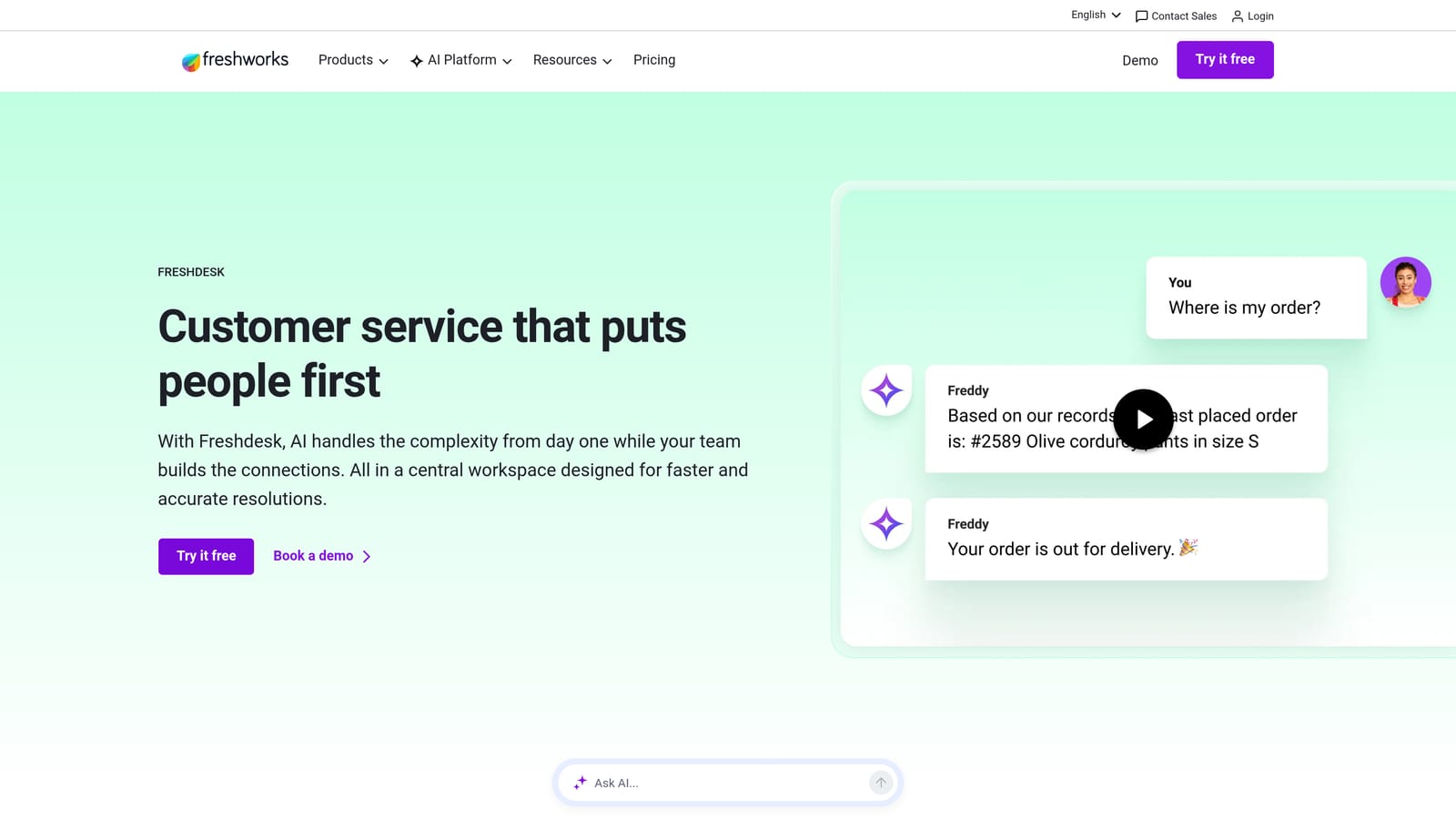
Freshdesk is an SMB-friendly helpdesk platform powered by Freddy AI, spanning self-service chatbots, agent copilot functionality, and analytics insights without enterprise-level pricing.
Where This Tool Shines
Freshdesk hits a sweet spot for teams that want meaningful AI assistance without the complexity or cost of enterprise platforms. Freddy AI covers three distinct areas: self-service deflection, agent productivity, and analytics insights. That breadth at accessible pricing makes it a compelling option for growing support teams.
Freddy Copilot is particularly useful for smaller teams where each agent handles a high variety of ticket types. Draft suggestions, ticket summaries, and recommended next steps help agents move faster without requiring deep product expertise on every issue.
Key Features
Freddy Self Service: AI chatbot that deflects common questions before they reach the human queue.
Freddy Copilot: Drafts replies, summarizes tickets, and suggests next steps for agents in real time.
Freddy Insights: AI-powered analytics with anomaly detection for support trends and performance.
Accessible Pricing: Significantly more affordable than enterprise competitors, with AI features available on mid-tier plans.
Broad Integration Ecosystem: Connects with telephony, CRM, and e-commerce platforms.
Best For
SMBs and early-growth SaaS teams that want a capable AI-assisted helpdesk without enterprise pricing or implementation complexity. A solid choice for teams graduating from basic email-based support.
Pricing
Growth plan starts around $15/agent/month. Freddy AI features available as add-ons on higher tiers. Verify current pricing at freshdesk.com.
5. Tidio
Best for: Small businesses and e-commerce teams wanting fast, no-code AI chat deflection
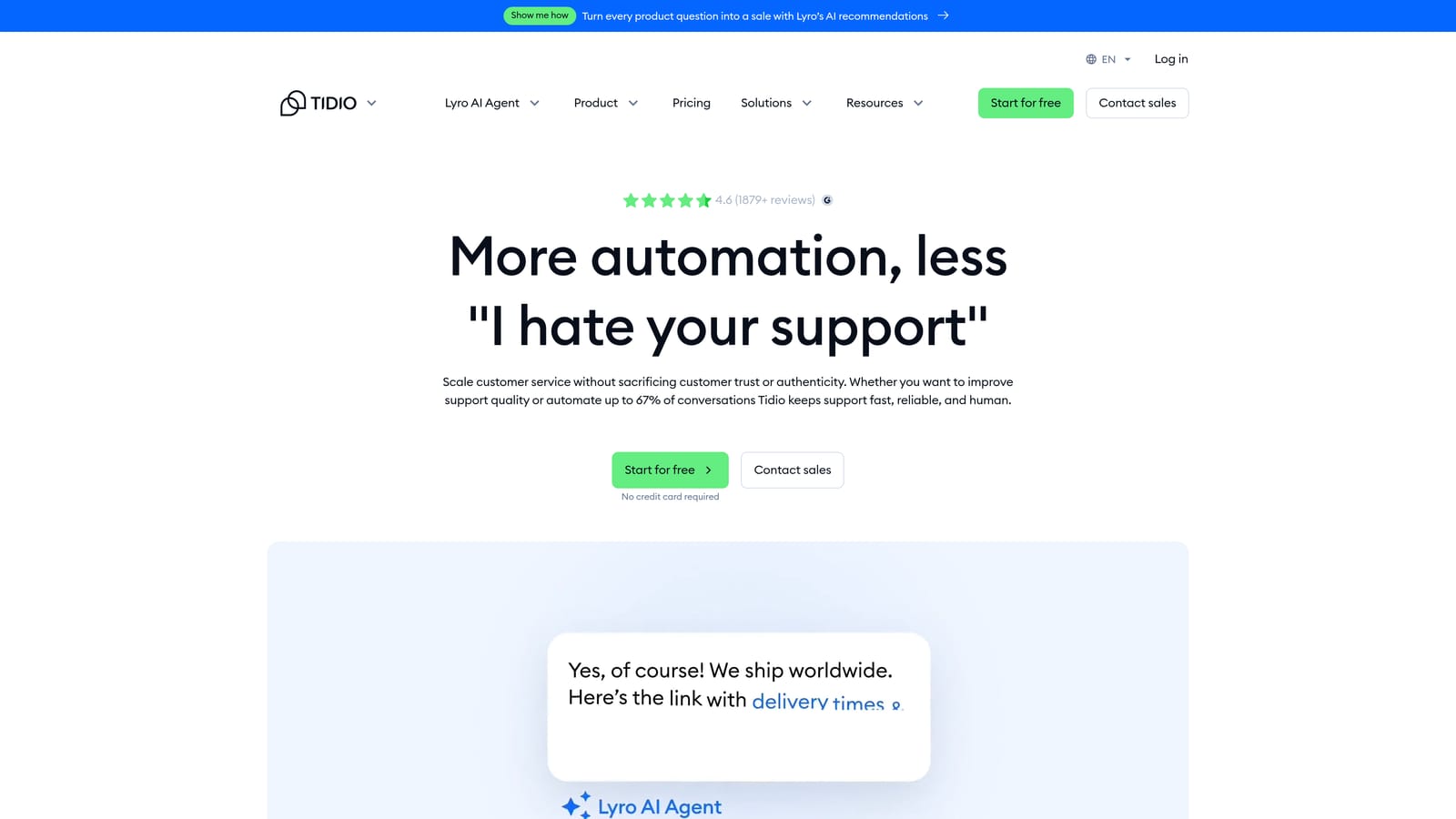
Tidio is a live chat and AI chatbot platform built for small businesses, featuring Lyro AI for conversational deflection with minimal setup and no engineering requirement.
Where This Tool Shines
Tidio's primary advantage is speed to value. Lyro AI can be trained on your FAQ content and deployed in minutes, without touching code or involving a developer. For small teams that need to handle chat volume quickly and can't afford a long implementation cycle, that matters.
The live chat hybrid model works well in practice: Lyro handles the volume, and human agents step in when conversations need a personal touch. The handoff is seamless enough that customers rarely notice the transition.
Key Features
Lyro AI: Conversational chatbot trained on your FAQ and help content for autonomous deflection.
No-Code Setup: Deployable in minutes without engineering support or technical configuration.
Live Chat Hybrid: AI handles volume while human agents take over complex conversations seamlessly.
Shopify and E-Commerce Integrations: Strong native integrations for online retail use cases.
Affordable Entry Point: Free plan available with paid tiers at accessible price points.
Best For
Small businesses, e-commerce brands, and early-stage SaaS teams that need quick AI chat deflection without complexity. Less suited for B2B teams with complex multi-step support workflows or enterprise-grade routing requirements.
Pricing
Free plan available. Paid plans from around $29/month. Lyro AI conversations charged separately as an add-on. Verify current pricing at tidio.com.
6. Forethought
Best for: Teams with complex ticket routing logic that want AI layered onto their existing helpdesk
Forethought is an AI platform specializing in intelligent ticket triage, routing, and agent assist, designed to enhance existing helpdesks rather than replace them.
Where This Tool Shines
Forethought takes a different approach from most tools on this list: it doesn't try to be your helpdesk. Instead, it sits on top of platforms like Zendesk, Salesforce Service Cloud, and Freshdesk, adding AI intelligence to your existing workflows. For teams with significant investment in their current helpdesk setup, that's a meaningful advantage.
The triage capability is particularly strong. Forethought's AI classifies and tags incoming tickets with high accuracy, which reduces the manual categorization burden that quietly eats agent time in high-volume environments. Teams with complex routing logic and multiple support tiers get the most value here.
Key Features
Triage: AI classifies, tags, and routes tickets with high accuracy across complex categorization schemas.
Solve: AI resolution layer for common, repetitive questions that don't require human involvement.
Assist: Real-time agent copilot with suggested responses and knowledge retrieval during live conversations.
Helpdesk Integrations: Works on top of Zendesk, Salesforce Service Cloud, and Freshdesk rather than replacing them.
Routing Intelligence: Strong fit for teams with multi-tier support structures and complex escalation logic.
Best For
Mid-market and enterprise teams with established helpdesk infrastructure and complex categorization or routing requirements. Ideal for organizations that want to add AI intelligence without migrating away from their current platform.
Pricing
Enterprise pricing, not publicly listed. Contact sales at forethought.ai for a quote.
7. Kustomer
Best for: B2C and subscription businesses with rich customer data wanting CRM-native support
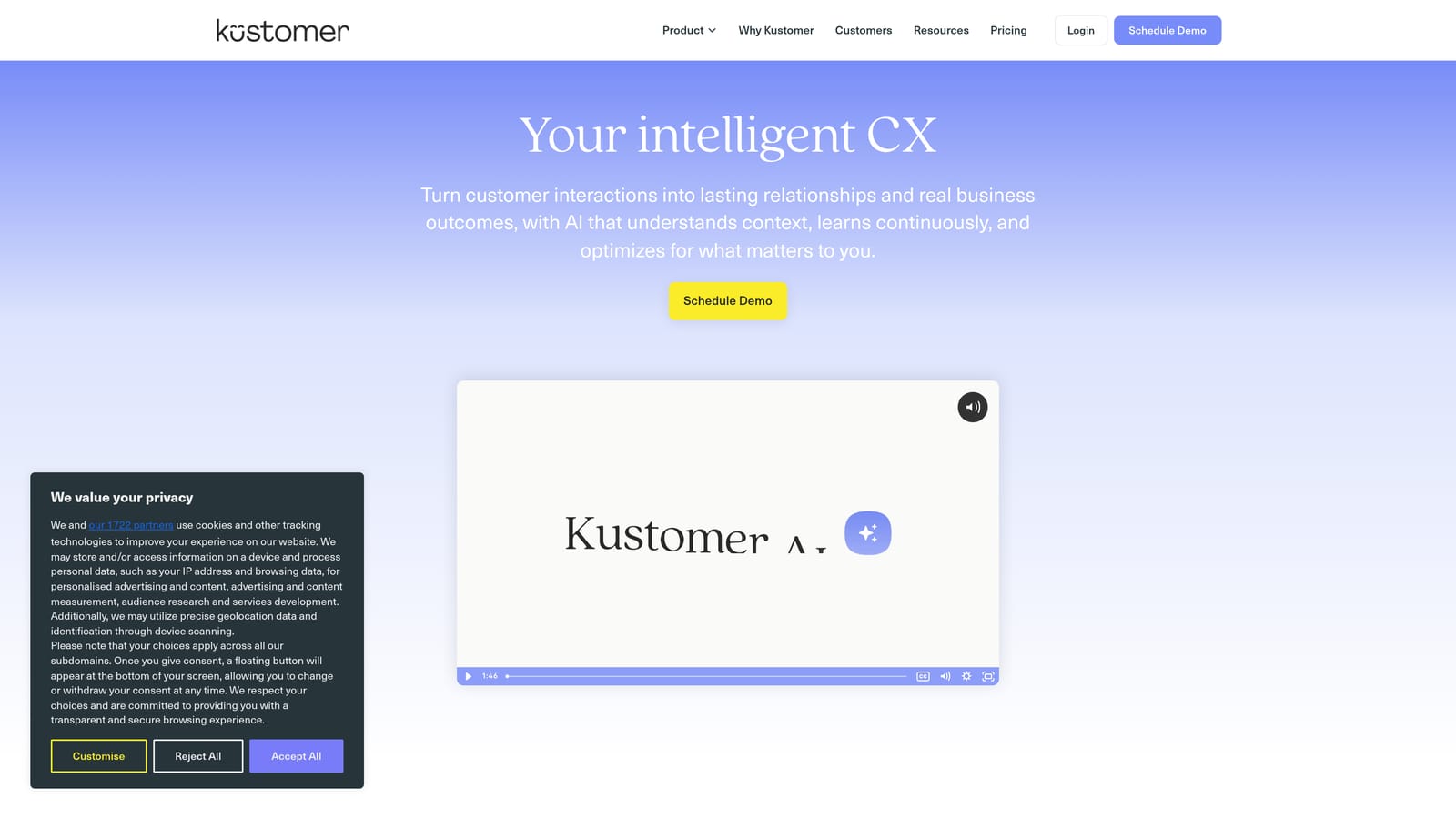
Kustomer is a CRM-native customer support platform, owned by Meta, that combines full customer timeline data with AI-powered self-service and agent assist capabilities.
Where This Tool Shines
Kustomer's defining feature is the customer timeline view: every support interaction, order, subscription event, and CRM data point visible in a single interface. For support teams that regularly need full customer context to resolve issues, this eliminates the tab-switching and data hunting that slows agents down.
The AI features, including KIQ Customer Assist for self-service deflection and AI-suggested replies, are informed by that rich customer history. An AI that knows a customer's order history, subscription tier, and past support interactions can provide far more relevant responses than one working from a knowledge base alone.
Key Features
Customer Timeline View: Full support, order, and CRM history consolidated in a single agent interface.
KIQ Customer Assist: AI self-service bot for deflecting common questions before they reach agents.
Context-Aware AI Replies: AI-suggested responses informed by the customer's full history and data.
Omnichannel Inbox: Email, chat, SMS, and social media conversations managed in one place.
CRM Integration Depth: Native CRM functionality rather than a separate integration, reducing data silos.
Best For
B2C brands, subscription businesses, and companies with rich customer data where context-aware support is a competitive differentiator. Less common in pure B2B SaaS contexts where the CRM-helpdesk combination is less central.
Pricing
Enterprise per-agent pricing, starting around $89/agent/month. Verify current pricing at kustomer.com.
8. Ada
Best for: Enterprise teams wanting no-code AI automation across multiple channels with strong governance
Ada is an enterprise AI automation platform featuring a no-code conversation builder and a generative AI reasoning engine for multi-channel customer support automation.
Where This Tool Shines
Ada gives non-technical teams genuine control over complex automated support journeys. The no-code visual flow builder lets support and operations teams design, test, and iterate on automated conversations without waiting on engineering. That independence is valuable in fast-moving organizations where support needs change frequently.
The Ada Reasoning Engine adds a generative AI layer on top of the flow builder, enabling more dynamic and context-aware responses when structured flows aren't sufficient. The combination of structured automation and generative flexibility covers a wider range of conversation scenarios than either approach alone.
Key Features
No-Code Visual Flow Builder: Design complex automated support journeys without engineering involvement.
Ada Reasoning Engine: Generative AI for dynamic, context-aware responses beyond scripted flows.
Multi-Channel Deployment: Web, mobile app, phone, and social messaging from a single platform.
CRM and Helpdesk Integrations: Connects with major platforms to pull context into automated conversations.
Enterprise Governance and Analytics: Conversation analytics and oversight tools suited to large organizations.
Best For
Enterprise support and operations teams that want non-technical ownership of AI automation, multi-channel deployment, and strong governance controls. Used widely by large consumer brands with high self-service volumes.
Pricing
Enterprise contracts, pricing not publicly listed. Contact sales at ada.cx for a quote.
9. Help Scout
Best for: SMBs and startups that want AI as a productivity layer while keeping support relationship-driven
Help Scout is a human-first helpdesk platform that integrates AI as a productivity layer for agents, with AI Drafts, Summarize, and Answers features built for relationship-driven support teams.
Where This Tool Shines
Help Scout is the most honest about its philosophy: AI should make human agents better, not replace them. If your support identity is built on thoughtful, personal responses and your customers expect that quality, Help Scout's approach preserves it while removing the tedious parts. AI Drafts generates a reply suggestion; the agent reviews, edits, and sends it. The human stays in control.
The simplicity and clean interface are genuine strengths. Help Scout is consistently praised for being easy to set up, easy to use, and easy to manage — particularly for teams that don't have dedicated support operations staff. Transparent per-user pricing without per-resolution surprises also makes budgeting predictable.
Key Features
AI Drafts: Generates reply suggestions for agents to review and send, keeping humans in the loop.
AI Summarize: Condenses long conversation threads instantly so agents can get up to speed quickly.
Beacon with AI Answers: Proactive self-service help widget that answers questions before a ticket is created.
Transparent Pricing: Per-user pricing with no per-resolution charges, making costs predictable.
Clean, Simple Interface: Minimal learning curve, beloved by SMBs and early-stage teams.
Best For
SMBs, early-stage startups, and teams where relationship quality is the core support differentiator. Less suited for organizations prioritizing high autonomous resolution rates or complex workflow automation.
Pricing
Standard plan from around $22/user/month. Plus plan from around $44/user/month. Verify current pricing at helpscout.com.
Which Tool Is Right for Your Team?
The honest answer is that the right tool depends on where you sit on two spectrums: how much autonomous resolution you want, and how much you're willing to change your existing infrastructure to get it.
Here's a quick breakdown by use case to help you orient:
AI-first autonomous resolution: Halo AI is built for this. If you want the AI to close tickets, learn from every interaction, and surface business intelligence beyond support, this is the platform designed around that goal.
Enterprise helpdesk with AI enhancement: Zendesk AI is the mature choice for large teams with complex workflows, established SLAs, and significant existing infrastructure investment.
Conversational AI at scale: Intercom's Fin AI Agent is strong for SaaS teams that want chat-based resolution deeply embedded in their product experience alongside messaging and onboarding.
Budget-conscious SMBs: Freshdesk offers meaningful AI capability at accessible price points. Tidio is the fastest path to AI chat deflection for very small teams and e-commerce brands.
Triage and routing specialist: Forethought is the standout choice for teams with complex categorization logic that want AI on top of their existing helpdesk rather than a replacement.
CRM-integrated support: Kustomer makes the most sense for B2C and subscription businesses where full customer context is central to every support interaction.
No-code automation builder: Ada gives enterprise teams non-technical ownership of multi-channel automation with strong governance controls.
Human-first with AI productivity: Help Scout is the right fit for teams where relationship quality drives retention and AI should assist agents, not replace them.
Your support team shouldn't scale linearly with your customer base. Let AI agents handle routine tickets, guide users through your product, and surface business intelligence while your team focuses on complex issues that need a human touch. See Halo in action and discover how continuous learning transforms every interaction into smarter, faster support.