9 Best Helpdesk AI Solutions Compared for 2026
This helpdesk AI solutions comparison evaluates nine leading platforms for B2B teams in 2026, breaking down key differences in autonomous resolution rates, integration depth, escalation quality, and analytics capabilities to help organizations choose between AI-native platforms and traditional helpdesks with added AI features.
 Grant CooperFounder13 min read
Choosing the right AI helpdesk solution has never been more complex. The market is crowded with options ranging from purpose-built AI-native platforms to traditional helpdesks that have layered AI features on top of existing workflows. For B2B teams evaluating these tools, the differences between them can be subtle but consequential: autonomous resolution rates, integration depth, escalation quality, and analytics capabilities all vary significantly from one platform to the next.
This comparison is designed to cut through the noise. Whether you're exploring AI helpdesk software for the first time or reassessing your current stack, or you're looking to deepen your customer service automation strategy, this guide covers nine leading solutions across different categories. You'll find AI-native platforms built with autonomy at their core alongside AI-enhanced versions of established helpdesks, so you can evaluate what actually fits your team's goals and technical environment.
Here are the top helpdesk AI solutions worth evaluating in 2026.
1. Halo AI
Best for: B2B SaaS teams wanting fully autonomous AI agents with deep integration and business intelligence
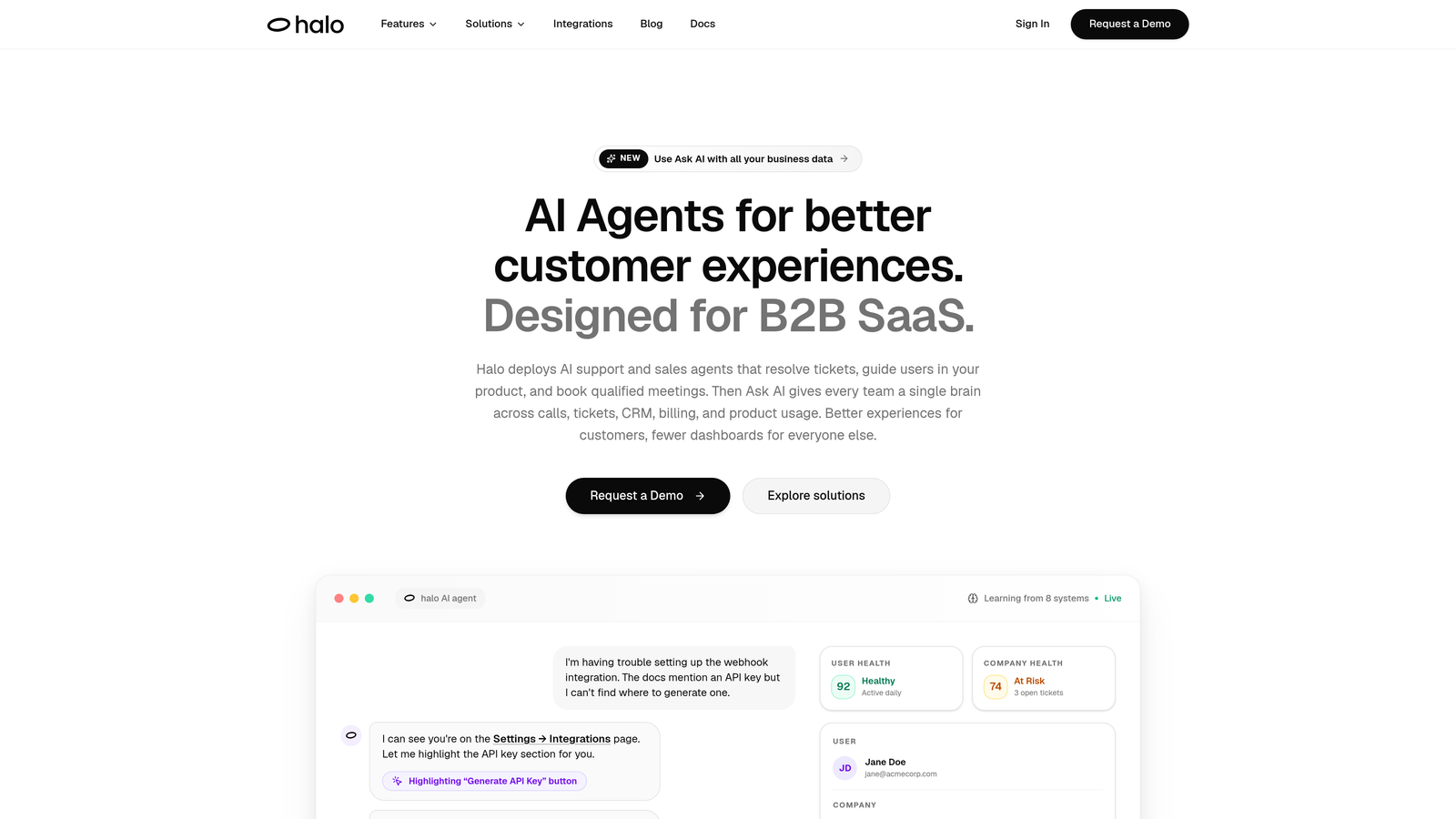
Halo AI is an AI-native customer support platform that deploys autonomous agents to resolve tickets, guide users through your product, and surface business intelligence across your entire stack.
Where This Tool Shines
Halo AI was built AI-first, not retrofitted. That architectural decision matters: the platform doesn't treat AI as a feature you toggle on inside a traditional helpdesk. Instead, every component, from ticket resolution to bug reporting to analytics, is designed around autonomous AI operation with human escalation as the exception rather than the rule.
One genuinely distinctive capability is the page-aware chat widget. Rather than generic chatbot responses, Halo's AI sees what the user sees on screen, allowing it to provide visual UI guidance that's contextually relevant to where the user is in your product. For SaaS companies dealing with complex onboarding or feature adoption questions, this is a meaningful differentiator.
Key Features
Page-Aware Chat Widget: The AI understands the user's current page context and delivers visual UI guidance specific to what they're looking at.
Autonomous AI Agents: AI agents resolve tickets end-to-end and continuously learn from every interaction, improving resolution quality over time without manual retraining.
Auto Bug Ticket Creation: Automatically identifies and logs bug reports directly into engineering tools like Linear, closing the loop between support and product teams.
Smart Inbox with Business Intelligence: Goes beyond support metrics to surface customer health signals, revenue intelligence, and anomaly detection inside the support workflow.
Deep Integration Ecosystem: Connects natively with Linear, Slack, HubSpot, Intercom, Stripe, Zoom, PandaDoc, and Fathom, enabling contextual responses that draw on your full business stack.
Best For
Product-led SaaS companies and B2B teams that want their support function to do more than deflect tickets. Halo is particularly well-suited for teams that need their AI to operate across engineering, sales, and customer success workflows, not just within a siloed support inbox.
Pricing
Contact Halo AI directly for pricing details. Given the platform's enterprise-grade integration depth and AI-native architecture, pricing is tailored to team size and use case.
2. Zendesk AI
Best for: Teams already invested in the Zendesk ecosystem looking to add AI across existing workflows
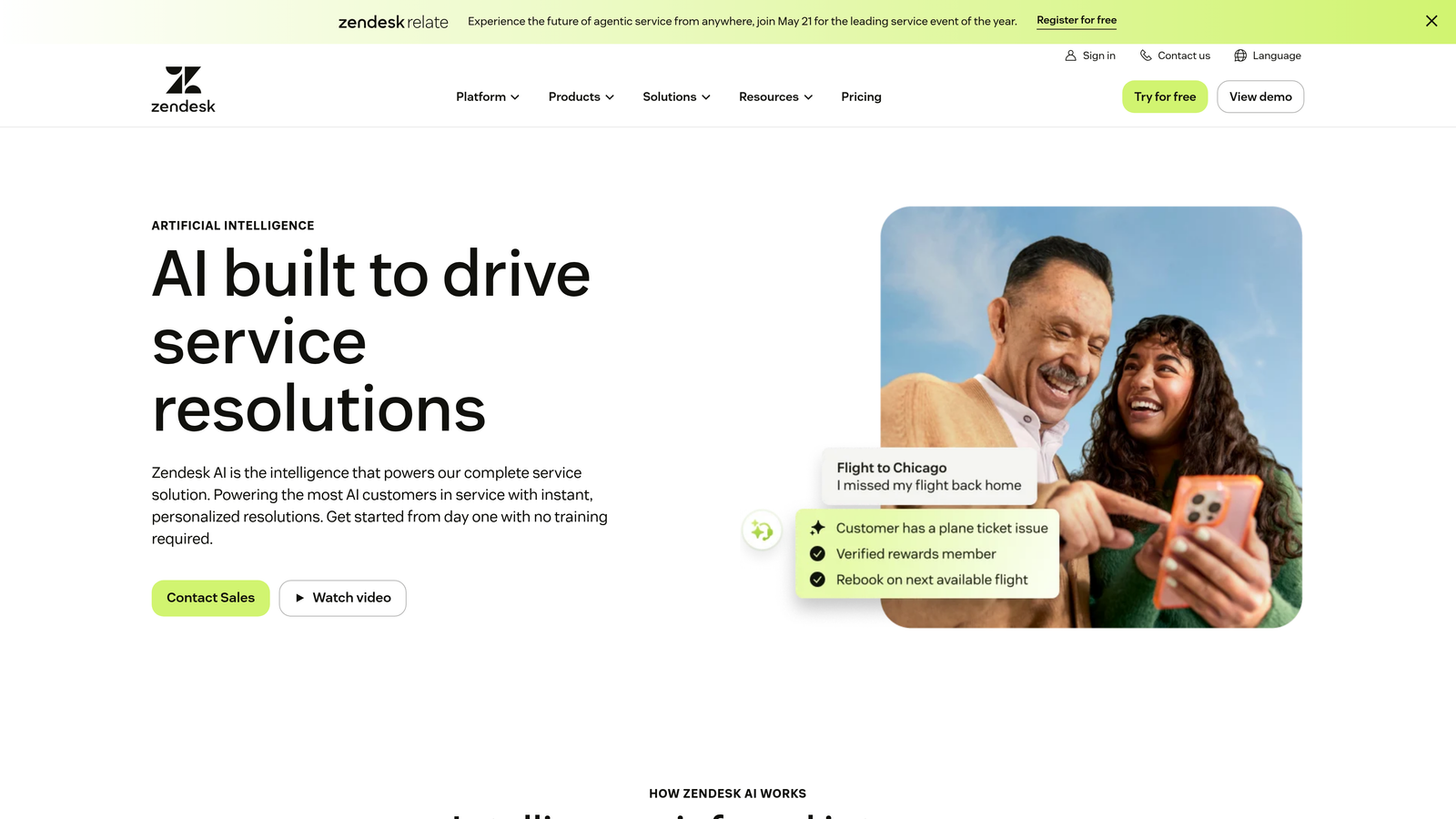
Zendesk AI is an AI layer built into the Zendesk Suite, offering intent detection, agent assist, automated routing, and generative AI capabilities within familiar Zendesk workflows.
Where This Tool Shines
If your team already lives inside Zendesk, the AI capabilities feel like a natural extension rather than a new tool to learn. Intent detection and ticket classification work within the workflows your agents already use, reducing the adoption friction that often undermines AI rollouts.
The generative AI features for drafting and summarizing tickets are practical for high-volume support teams. Agent assist surfaces relevant knowledge base articles and suggested responses in real time, which can meaningfully reduce handle time without requiring agents to change how they work.
Key Features
AI-Powered Intent Detection: Automatically classifies incoming tickets by topic and intent to route them accurately from the start.
Agent Assist: Surfaces suggested responses and relevant knowledge base content during live conversations.
Generative AI: Drafts replies and summarizes long ticket threads to reduce manual effort for agents.
Native Suite Integration: Works across Zendesk Support, Chat, Talk, and Guide without additional configuration.
Advanced Analytics: Robust reporting dashboards covering team performance, ticket trends, and customer satisfaction.
Best For
Mid-market to enterprise teams already on Zendesk Suite Professional or above who want to incrementally add AI to their existing support operations without migrating platforms.
Pricing
AI features are included in Suite Professional at $115 per agent per month and above. An Advanced AI add-on is available for additional capabilities at an additional cost.
3. Intercom Fin
Best for: Teams using Intercom who want a conversational AI agent with per-resolution pricing
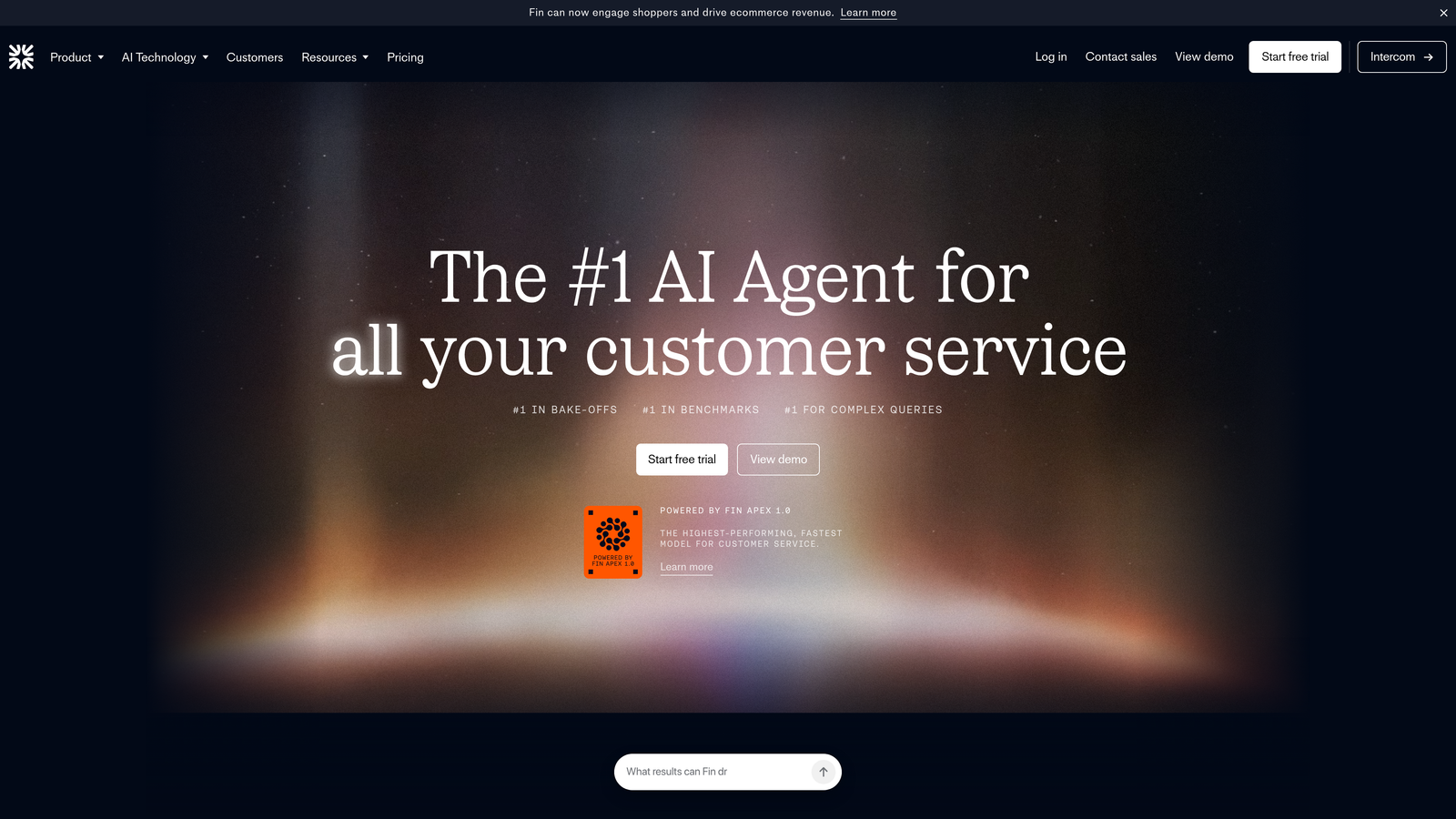
Intercom Fin is an AI agent built into Intercom's messaging platform, trained on help center content to resolve conversations autonomously with natural language understanding and clean human handoff.
Where This Tool Shines
Fin's conversational quality stands out. The multi-turn dialogue support means users can ask follow-up questions naturally without the conversation falling apart, which is a common failure point for simpler chatbot implementations. The handoff experience is also well-designed: when Fin escalates to a human agent, the full conversation context transfers cleanly.
The per-resolution pricing model is worth paying attention to. For teams with variable support volumes, paying only for resolved conversations can be more predictable than per-seat models, though it requires careful monitoring as resolution volume scales.
Key Features
Help Center Training: Fin is trained directly on your existing help center articles, enabling accurate, on-brand responses without extensive manual configuration.
Multi-Turn Dialogue: Handles natural, back-and-forth conversations rather than single-turn FAQ matching.
Seamless Human Handoff: Transfers full conversation context to human agents when escalation is needed.
Per-Resolution Pricing: Charges only for conversations Fin successfully resolves, aligning cost with actual value delivered.
Multilingual Support: Handles conversations across multiple languages and channels.
Best For
Intercom customers who want to automate a meaningful portion of their conversation volume without a full platform migration. Well-suited for product and SaaS teams with strong help center documentation already in place.
Pricing
Per-resolution pricing starts at $0.99 per resolved conversation. An active Intercom plan is required, and costs scale with resolution volume.
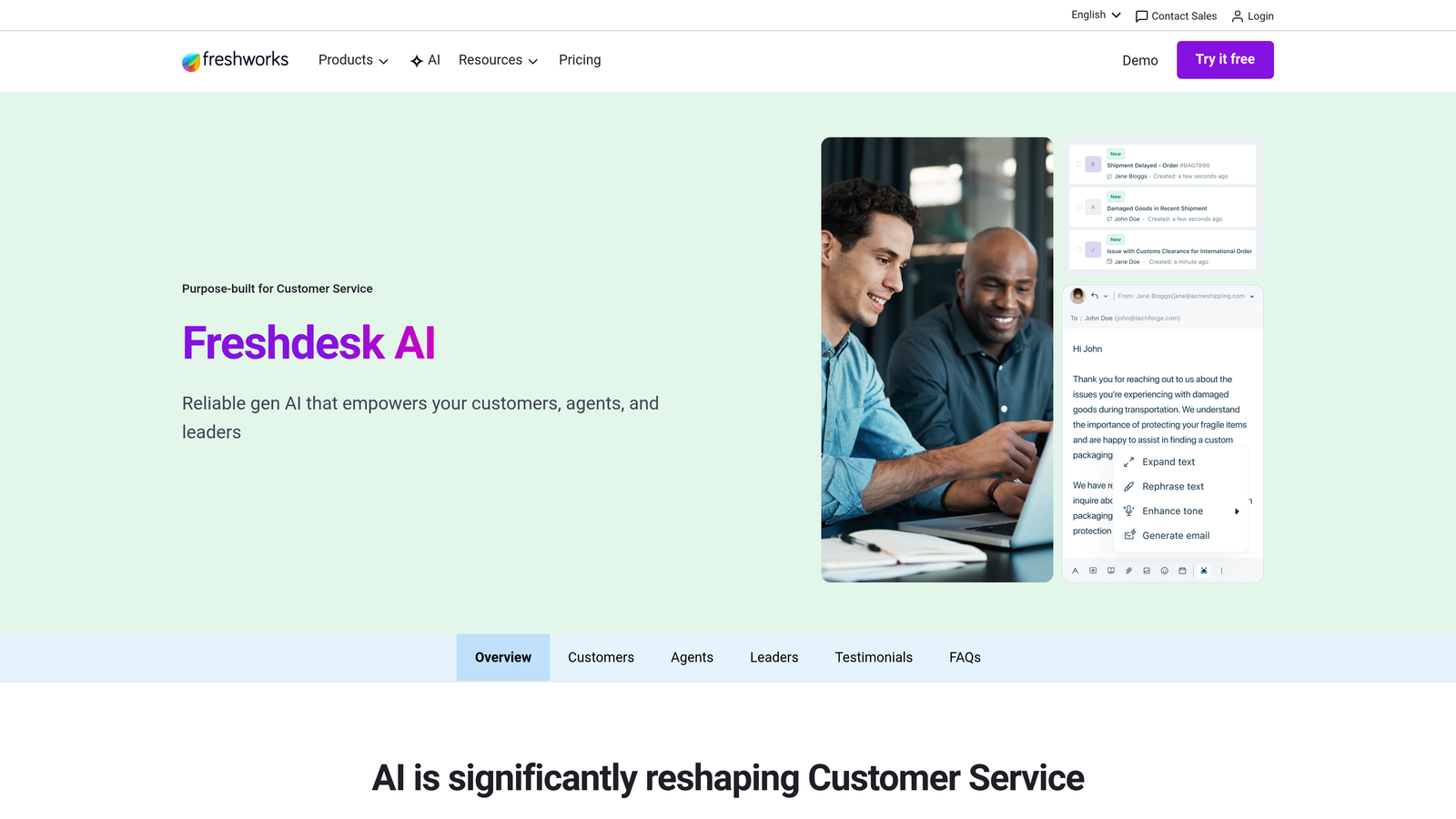
4. Freshdesk Freddy AI
Best for: Mid-market teams in the Freshworks ecosystem needing AI across support, CRM, and ITSM
Freshdesk Freddy AI is an AI assistant embedded across the Freshworks suite, providing ticket auto-triage, suggested responses, self-service bots, and cross-product intelligence at accessible price points.
Where This Tool Shines
Freddy AI's strength is its breadth across the Freshworks ecosystem. If your team uses Freshdesk for support, Freshsales for CRM, and Freshservice for ITSM, Freddy can pull intelligence across all three, giving agents a richer view of the customer without switching tools.
For mid-market teams conscious of budget, Freshdesk's pricing tiers make AI features accessible at a lower entry point than many enterprise competitors. The self-service bot (Freddy Self Service) handles common queries without requiring significant technical configuration to deploy.
Key Features
Auto-Triage: Automatically classifies and routes incoming tickets based on content and intent.
AI-Suggested Responses: Recommends canned replies and knowledge base articles to agents during live ticket handling.
Freddy Self Service: Chatbot for deflecting common queries before they reach the human support queue.
Cross-Suite Intelligence: Shares AI-driven insights across Freshdesk, Freshsales, and Freshservice for a unified customer view.
Accessible Pricing: AI features available at mid-market price points, making automation accessible without enterprise budgets.
Best For
Mid-market companies already using one or more Freshworks products who want to expand AI capabilities across their customer-facing operations without adopting a separate platform.
Pricing
AI features are available on the Pro plan at $49 per agent per month and above. A Freddy AI add-on is available for more advanced capabilities at an additional cost.
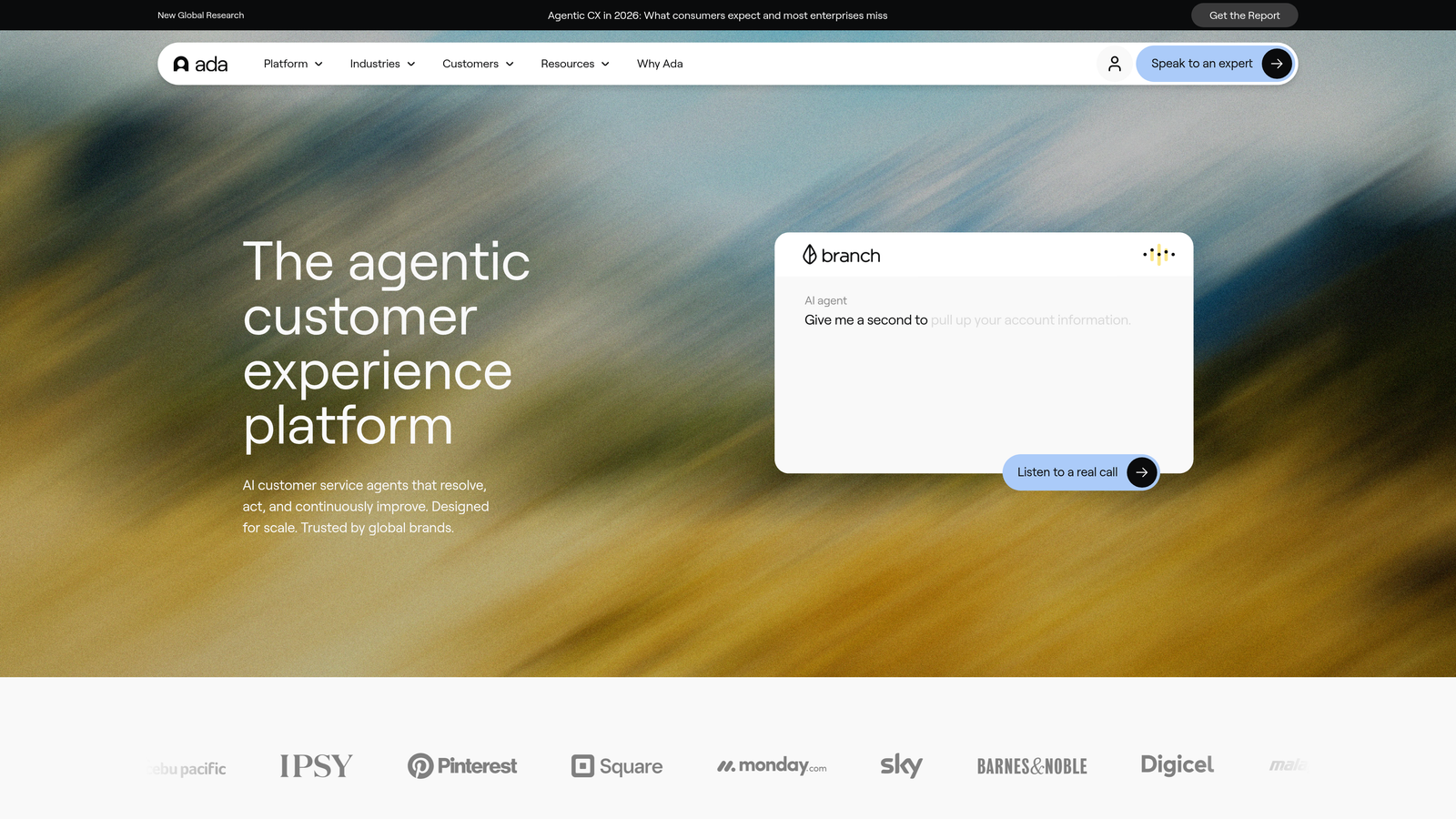
5. Ada
Best for: Enterprise teams needing omnichannel AI automation at scale with multilingual requirements
Ada is an enterprise AI agent platform purpose-built for automated customer service at scale, featuring no-code setup, omnichannel deployment, and strong multilingual capabilities across 50-plus languages.
Where This Tool Shines
Ada is designed for enterprise scale from the ground up. The no-code agent builder means business teams can configure and update AI workflows without waiting on engineering resources, which dramatically speeds up iteration cycles. For global enterprises dealing with multilingual support requirements, Ada's language coverage is among the strongest in the market.
The reasoning-based AI engine handles complex, multi-step queries more gracefully than simpler keyword-matching bots. This matters for enterprise products where customer questions often span multiple topics or require conditional logic to resolve correctly.
Key Features
No-Code Agent Builder: Business teams can build, deploy, and update AI agents without engineering support.
Omnichannel Deployment: Operates across web, mobile, social, SMS, and email from a single platform.
50-Plus Language Support: Handles multilingual conversations natively, making it viable for global enterprise deployments.
Major Platform Integrations: Connects with Zendesk, Salesforce, and other enterprise platforms out of the box.
Reasoning-Based AI Engine: Handles complex, multi-step queries with contextual understanding rather than simple pattern matching.
Best For
Enterprise companies with high support volumes, global customer bases, and multilingual requirements who need an AI agent that can operate autonomously across multiple channels without heavy technical overhead to maintain.
Pricing
Custom enterprise pricing. Contact Ada directly for a quote tailored to your volume and deployment requirements.
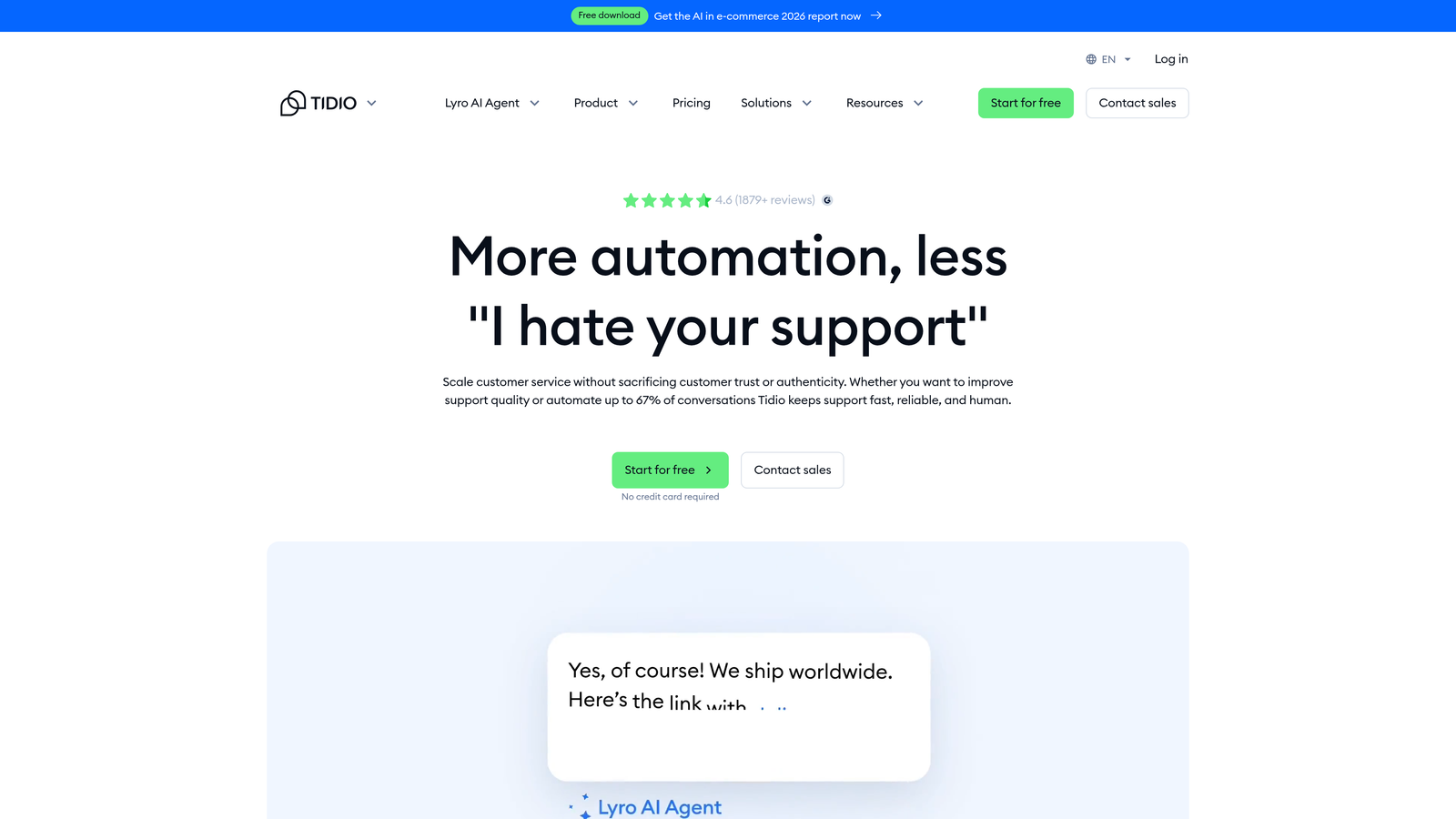
6. Tidio
Best for: SMBs and e-commerce teams wanting affordable AI chat and ticketing in one package
Tidio is an accessible AI chatbot and helpdesk platform that combines the Lyro AI chatbot, live chat, and ticketing in a single affordable package designed for smaller teams and e-commerce businesses.
Where This Tool Shines
Tidio's biggest advantage is its low barrier to entry. Small teams can get a functional AI chatbot, live chat, and ticketing system running quickly without significant technical resources or a large budget. The visual chatbot flow builder makes it easy to customize conversation paths without writing code.
For e-commerce teams specifically, Tidio's native integrations with Shopify and WordPress mean the platform slots into existing storefronts without friction. Lyro AI handles common FAQ-style queries conversationally, reducing the volume of repetitive questions reaching human agents.
Key Features
Lyro AI Chatbot: Handles automated FAQ and conversational support queries using natural language understanding.
Visual Flow Builder: Drag-and-drop interface for building custom chatbot conversation paths without coding.
All-in-One Platform: Combines live chat, AI chatbot, and ticketing in a single tool to reduce platform sprawl.
E-Commerce Integrations: Native connections to Shopify, WordPress, and other popular e-commerce platforms.
Quick Setup: Designed for minimal engineering involvement, making it accessible to non-technical teams.
Best For
SMBs, e-commerce businesses, and early-stage teams that need a cost-effective entry point into AI-assisted support without the complexity or cost of enterprise platforms.
Pricing
A free plan is available with limited features. Paid plans start from $29 per month, with the Lyro AI add-on available from $39 per month separately.
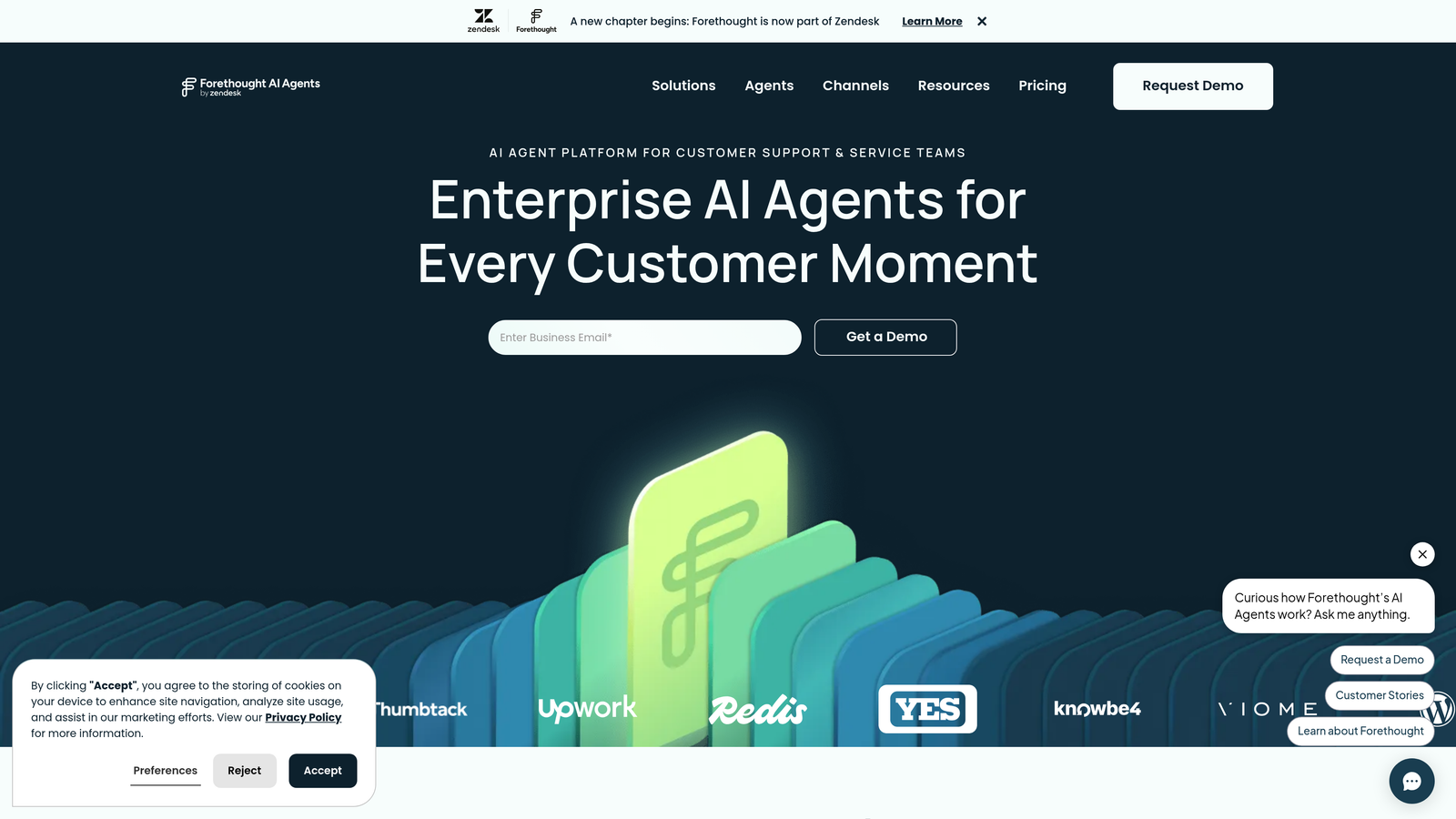
7. Forethought
Best for: Enterprise teams wanting AI layered on top of existing helpdesks like Zendesk or ServiceNow
Forethought is an enterprise AI platform that layers intelligent triage, auto-resolution, and agent assist onto existing helpdesk systems using its SupportGPT technology, without requiring a platform migration.
Where This Tool Shines
Forethought's core value proposition is additive: it makes your existing helpdesk smarter rather than replacing it. For enterprise teams with significant investment in Zendesk, Salesforce Service Cloud, or ServiceNow, the ability to add sophisticated AI capabilities without migrating platforms is a practical advantage.
SupportGPT-powered auto-resolution goes beyond simple deflection. The system can draft contextually accurate responses and handle multi-step resolution workflows, which can meaningfully reduce the manual workload on agents handling high ticket volumes.
Key Features
SupportGPT Auto-Resolution: Generates and sends accurate responses to tickets autonomously, handling resolution end-to-end for qualifying queries.
Intelligent Triage: Classifies and prioritizes tickets with AI-driven routing to the right team or agent.
Real-Time Agent Assist: Surfaces relevant knowledge and suggested responses to agents during live ticket handling.
Helpdesk Integration Layer: Works on top of Zendesk, Salesforce Service Cloud, and ServiceNow without replacing them.
Workflow Automation: Automates repetitive support tasks and routing rules to reduce manual queue management.
Best For
Enterprise support teams committed to existing helpdesk platforms who want to significantly improve automation rates and agent productivity without the disruption of a full platform migration.
Pricing
Custom enterprise pricing. Contact Forethought directly for a quote based on ticket volume and integration requirements.
8. Kustomer
Best for: Teams that need CRM-grade customer context built directly into their support workflow
Kustomer is a CRM-centric helpdesk platform with AI classification, sentiment analysis, and a unified customer timeline that provides full relationship context for every support interaction.
Where This Tool Shines
Kustomer's unified customer timeline is its most distinctive feature. Rather than viewing support tickets in isolation, agents see a complete history of every interaction, purchase, and touchpoint in a single thread. This context makes AI-suggested responses and automated workflows significantly more relevant because they're informed by the full customer relationship, not just the current ticket.
Sentiment analysis adds another layer of intelligence. The system can flag conversations where customer frustration is escalating, allowing teams to prioritize proactively rather than reactively.
Key Features
Unified Customer Timeline: Consolidates all interactions, purchases, and touchpoints into a single customer thread accessible during every support conversation.
AI Classification and Sentiment Analysis: Automatically categorizes tickets and monitors emotional tone to flag at-risk conversations.
Suggested Responses and Workflows: AI-driven reply suggestions and automated routing based on customer history and ticket content.
CRM-Grade Customer Data: Full customer relationship data accessible directly within the support interface.
Omnichannel Support: Handles email, chat, social, and voice interactions in a unified inbox.
Best For
Customer-centric teams, particularly in e-commerce and subscription businesses, where understanding the full customer relationship is as important as resolving the immediate ticket. Strong fit for teams where support and CRM data are currently siloed.
Pricing
Enterprise plan starting at $89 per user per month. Contact Kustomer for custom pricing based on team size and feature requirements.
9. Help Scout
Best for: Small to mid-sized teams wanting a clean, human-first helpdesk with emerging AI features
Help Scout is a simple, human-first helpdesk with emerging AI capabilities including AI Drafts, conversation summarization, and the Beacon widget for lightweight self-service and embedded chat.
Where This Tool Shines
Help Scout has always prioritized simplicity and usability, and its AI additions follow that same philosophy. AI Drafts generates reply suggestions based on conversation context without overwhelming agents with complexity. The interface remains clean and intuitive, which matters for smaller teams where support is often handled by people who aren't dedicated support specialists.
The Beacon widget provides a lightweight way to embed self-service and chat directly into your product or website without significant development work. For teams that want to offer proactive support without investing in a full enterprise platform, this is a practical starting point.
Key Features
AI Drafts: Generates contextually relevant reply suggestions based on the conversation thread, reducing time spent composing responses.
AI Summarize: Produces quick overviews of long conversation threads so agents can get up to speed without reading every message.
Beacon Widget: Embeds self-service search and live chat directly into your product or website with minimal setup.
Docs Knowledge Base: Built-in knowledge base with AI-powered search to help customers find answers independently.
Clean, Intuitive Interface: Designed for teams where ease of use is as important as feature depth.
Best For
Small to mid-sized teams, startups, and businesses where support is handled by generalists rather than dedicated support specialists. Ideal for teams that prioritize simplicity and want AI as a helpful assist rather than a fully autonomous resolution engine.
Pricing
Standard plan from $25 per user per month. Plus plan from $50 per user per month, which includes AI features like AI Drafts and AI Summarize.
Which Helpdesk AI Solution Is Right for Your Team?
The right choice depends on three core variables: how much autonomy you want AI to have, how deeply it needs to integrate with your existing stack, and what you need from analytics beyond basic support metrics.
If you want AI to operate autonomously across your entire support and business workflow, not just deflect tickets, Halo AI is the standout option. Its AI-native architecture, page-aware guidance, and business intelligence capabilities make it the strongest fit for product-led SaaS companies that need their support function to contribute to customer health and revenue signals, not just ticket resolution.
For teams already committed to an existing platform, the path is more straightforward. Zendesk AI and Freshdesk Freddy AI both deliver solid AI capabilities within their respective ecosystems, making them the natural choice if migration isn't on the table. Intercom Fin works similarly for Intercom customers, with the added advantage of per-resolution pricing for variable-volume teams.
Enterprise teams needing sophisticated automation layered onto existing helpdesks should evaluate Ada and Forethought. Ada is the better fit when multilingual, omnichannel scale is the priority. Forethought is the stronger choice when you want AI on top of Zendesk or ServiceNow without replacing them.
Kustomer earns its place for teams where CRM context is central to support quality. And for smaller teams or those just getting started with AI-assisted support, Tidio and Help Scout offer accessible entry points without the complexity or cost of enterprise platforms.
When evaluating any of these tools, prioritize integration depth over feature lists. An AI that connects to your engineering tools, CRM, and communication stack will outperform a feature-rich platform that operates in isolation. The goal is automated customer support that gets smarter with every interaction, not just automation for its own sake. Look for platforms where the AI support agent learns continuously rather than requiring constant manual retraining.
Your support team shouldn't scale linearly with your customer base. Let AI agents handle routine tickets, guide users through your product, and surface business intelligence while your team focuses on complex issues that need a human touch. See Halo in action and discover how continuous learning transforms every interaction into smarter, faster support.