9 Best Intelligent Support Inbox Software Solutions in 2026
Modern intelligent support inbox software transforms chaotic ticket management into streamlined operations using AI-powered prioritization, smart routing, and automated resolution capabilities. This comprehensive evaluation of the 9 best intelligent support inbox software solutions for 2026 examines AI capabilities, routing intelligence, analytics features, and integration options to help support teams choose platforms that genuinely enhance efficiency rather than just adding complexity.
 Matt PattoliFounder11 min read
Your support inbox shouldn't feel like a black hole where tickets go to die. Modern intelligent support inbox software uses AI and automation to prioritize, route, and even resolve tickets before your team touches them—turning chaos into clarity. But with dozens of tools claiming 'intelligence,' finding the right fit for your team requires cutting through the noise.
We evaluated these platforms based on their AI capabilities, routing intelligence, analytics depth, and integration ecosystems to help you find the inbox that actually works smarter, not just harder. Here are the top intelligent support inbox solutions reshaping customer support in 2026.
1. Halo AI
Best for: Teams wanting AI agents that autonomously resolve tickets and surface business intelligence
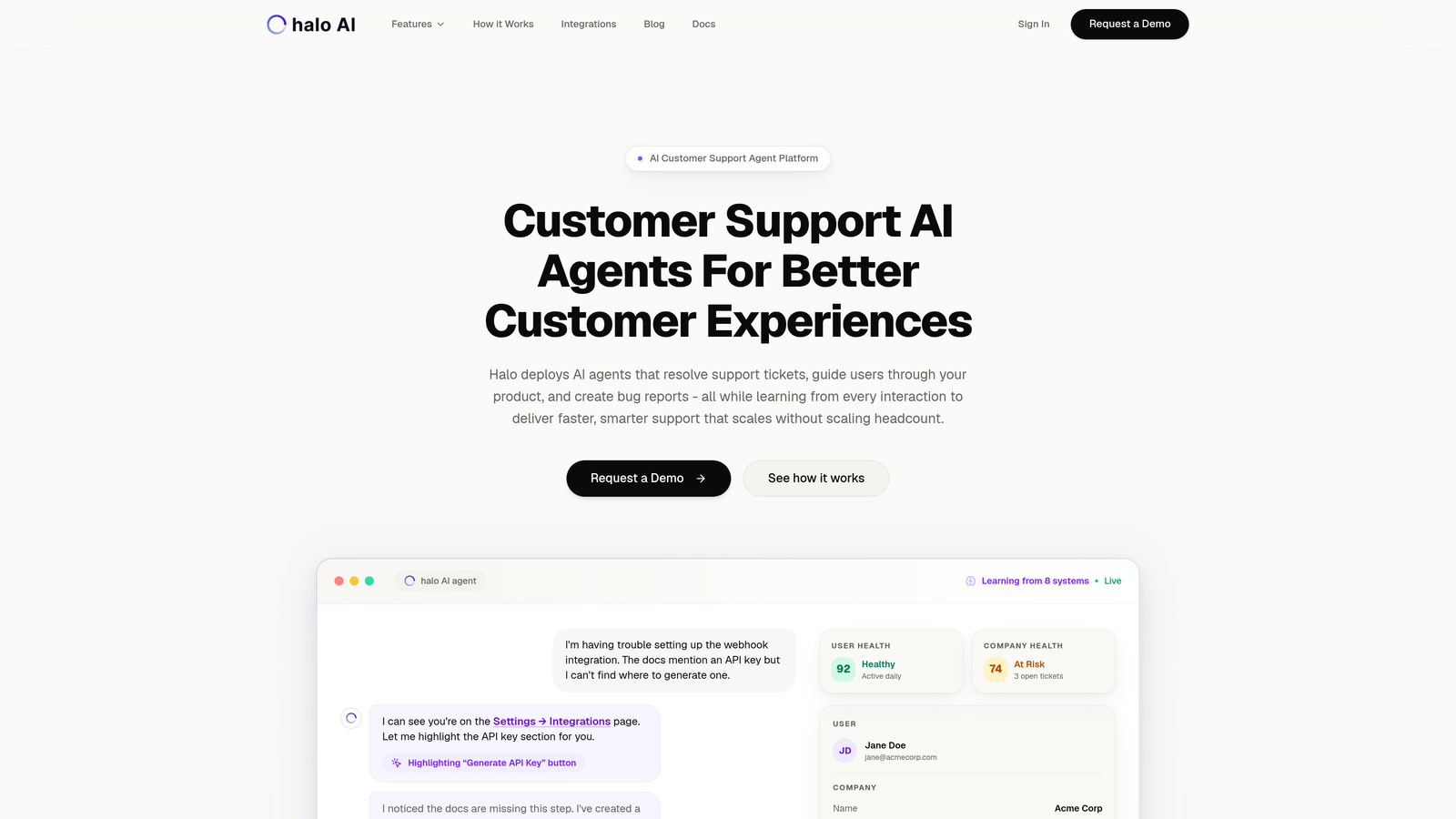
Halo AI is an AI-native support platform built around continuous learning rather than bolt-on automation features.
Where This Tool Shines
Unlike traditional helpdesks with AI features added later, Halo's entire architecture centers on autonomous resolution. Its AI agents don't just route tickets—they actually resolve them by understanding your product context and learning from every interaction.
The page-aware chat widget sees what users see on your interface, enabling visual guidance that traditional text-based support can't match. This contextual awareness means fewer back-and-forth messages and faster resolutions.
Key Features
Autonomous AI Agents: Resolve support tickets independently while learning patterns from every customer interaction to improve over time.
Page-Aware Chat Widget: Provides visual UI guidance by detecting what users see on screen, offering contextual help that traditional chat can't deliver.
Business Intelligence Analytics: Surfaces customer health signals, revenue intelligence, and anomaly detection beyond standard support metrics.
Auto Bug Ticket Creation: Automatically generates engineering tickets in Linear when issues require development attention, streamlining handoffs.
Deep Integration Ecosystem: Connects across your business stack including Slack, HubSpot, Intercom, Stripe, Zoom, and PandaDoc for comprehensive customer context.
Best For
B2B SaaS companies and product teams seeking autonomous support that scales without adding headcount. Particularly valuable for teams already using helpdesk systems like Zendesk or Freshdesk who want intelligence that goes beyond ticket routing to actual resolution.
Pricing
Contact for pricing based on your team size and resolution volume.
2. Zendesk Suite
Best for: Enterprise teams needing omnichannel support with extensive compliance and security requirements
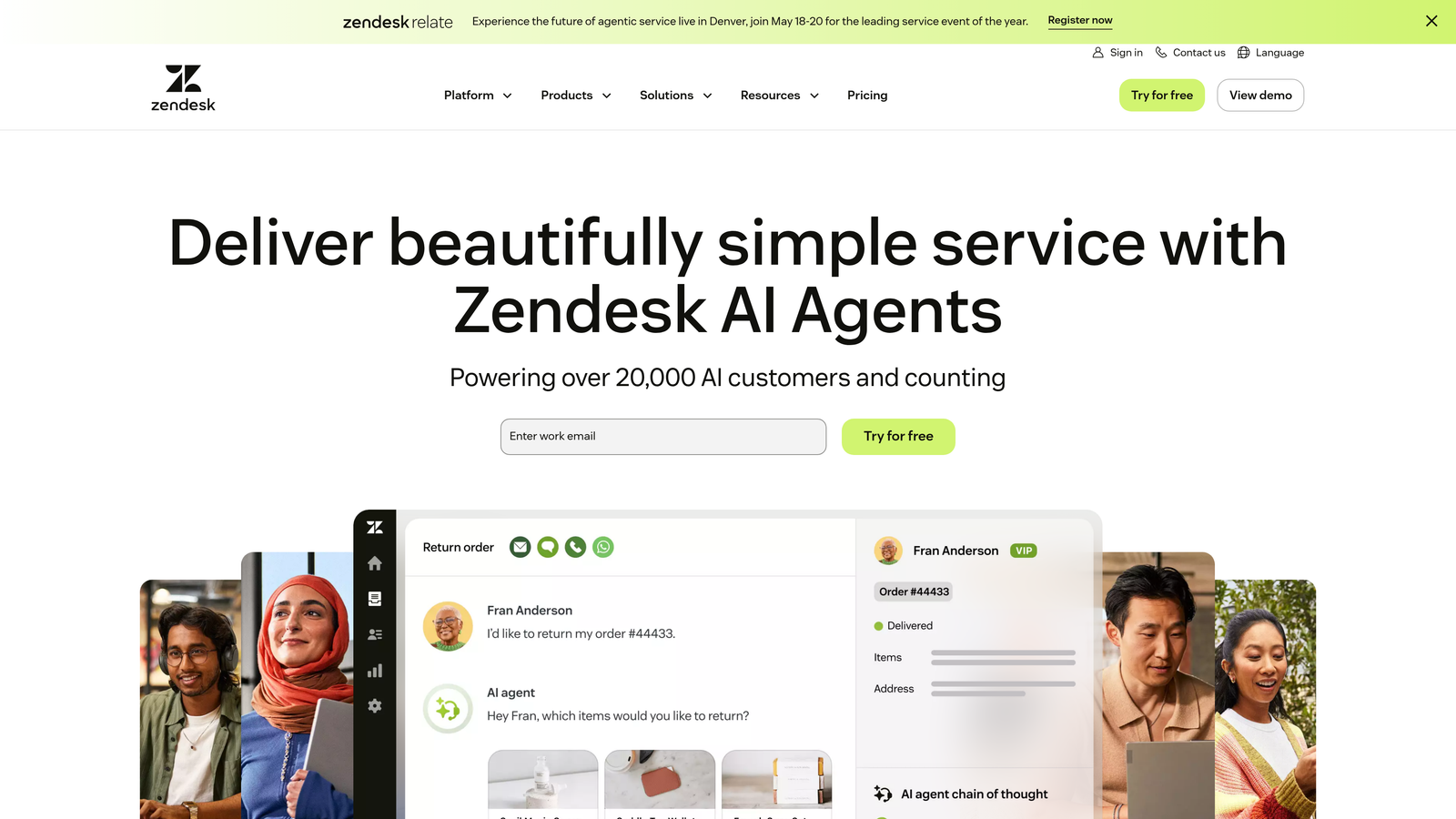
Zendesk Suite is an enterprise-grade helpdesk platform offering comprehensive omnichannel routing and a massive integration marketplace.
Where This Tool Shines
Zendesk's strength lies in its maturity and breadth. When you need to support customers across email, chat, phone, social media, and messaging apps from a single interface, few platforms match its channel coverage.
The marketplace ecosystem with over 1,500 integrations means you'll likely find pre-built connections for your existing tools. For enterprise buyers, the compliance certifications and security controls provide peace of mind that smaller platforms can't offer.
Key Features
Omnichannel Support: Unified inbox handling email, live chat, phone, social media, and messaging channels with consistent workflow across all.
AI-Powered Intent Detection: Analyzes incoming tickets to determine customer intent and routes to the appropriate team or suggests knowledge base articles.
Extensive App Marketplace: Over 1,500 pre-built integrations covering CRM, commerce, productivity, and business intelligence tools.
Advanced Analytics: Custom reporting dashboards, SLA tracking, and performance metrics with data export capabilities for external analysis.
Enterprise Security: SOC 2, HIPAA, and GDPR compliance with role-based access controls and audit logging.
Best For
Large enterprises managing high ticket volumes across multiple channels who need proven compliance certifications and extensive customization options. Works well for organizations with dedicated support operations teams.
Pricing
Suite Team starts at $55 per agent per month, with higher tiers adding advanced AI and analytics features.
3. Freshdesk
Best for: Growing teams wanting powerful automation without enterprise pricing or complexity
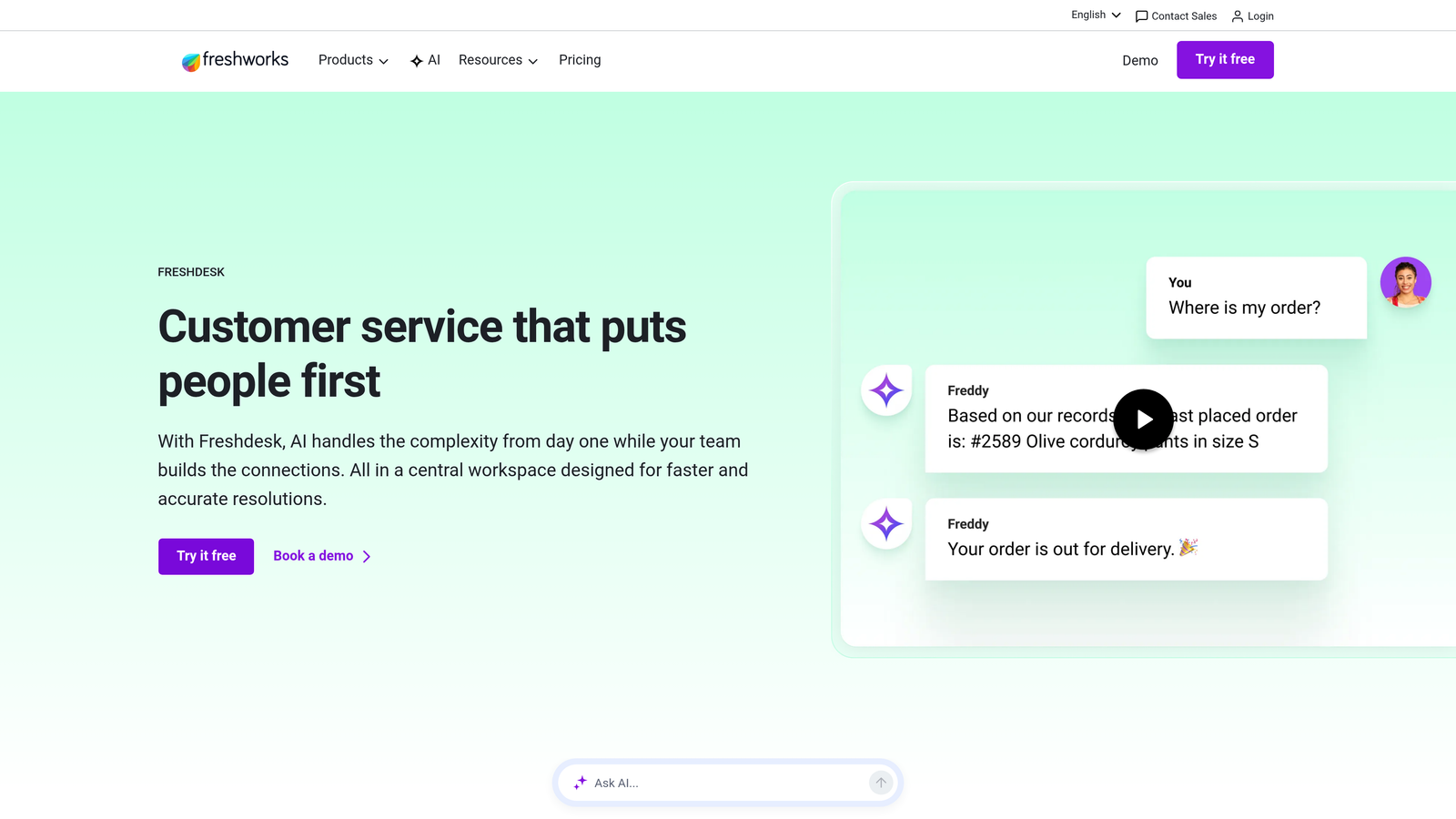
Freshdesk is an intuitive helpdesk solution balancing advanced features with accessible pricing and straightforward setup.
Where This Tool Shines
Freshdesk hits a sweet spot for mid-market teams. Freddy AI provides intelligent ticket triage and suggested responses without requiring extensive training or configuration. The scenario automations let you build complex workflows visually rather than through code.
The free tier offers genuine value for small teams just starting with structured support, while paid plans remain competitive as you scale. Collision detection prevents multiple agents from working the same ticket simultaneously—a small feature that prevents big headaches.
Key Features
Freddy AI: Automatically categorizes tickets, suggests responses based on historical data, and identifies trending issues requiring attention.
Scenario Automations: Visual workflow builder for complex routing rules, escalations, and multi-step processes without coding.
Collision Detection: Alerts agents when colleagues are viewing or responding to the same ticket to prevent duplicate work.
SLA Management: Define response and resolution time targets with automatic escalation when deadlines approach.
Free Tier Availability: Functional free plan for up to 10 agents makes it accessible for startups testing helpdesk software.
Best For
Growing companies transitioning from shared email inboxes to structured support systems. Ideal for teams of 10-50 agents who need automation power without enterprise complexity or budget.
Pricing
Free tier available with basic features; paid plans start at $15 per agent per month.
4. Intercom
Best for: Product-led companies prioritizing in-app messaging and conversational support experiences
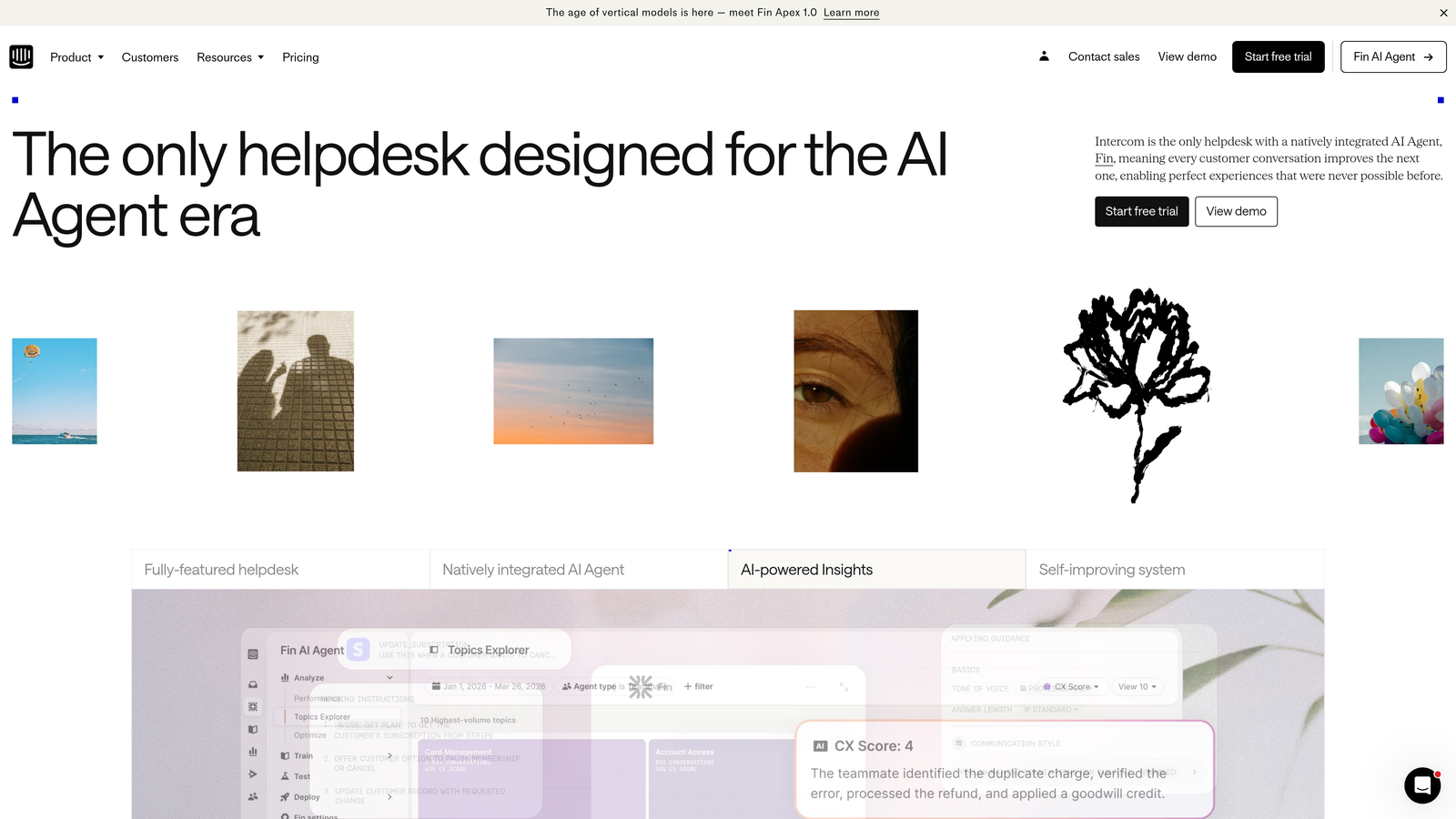
Intercom is a conversational support platform combining Fin AI agent capabilities with strong product engagement tools.
Where This Tool Shines
Intercom excels when support and product experience blur together. The Fin AI agent handles conversational ticket resolution naturally, understanding context across multiple messages rather than treating each as an isolated event.
Product tours and in-app messaging let you proactively guide users before they need to submit tickets. Real-time customer segmentation means you can tailor support experiences based on user behavior, subscription tier, or feature usage patterns.
Key Features
Fin AI Agent: Conversational AI that resolves customer questions through natural dialogue, learning from your knowledge base and past interactions.
Unified Inbox: Single interface managing live chat, email, and social media conversations with consistent context across channels.
Product Tours: In-app onboarding flows and feature announcements that reduce support volume by educating users proactively.
Custom Bots: Build automated conversation flows for common scenarios like account setup, billing questions, or feature requests.
Customer Segmentation: Target messages and route tickets based on real-time user data, subscription status, and behavioral triggers.
Best For
SaaS companies where support and product experience overlap significantly. Particularly strong for teams wanting to reduce ticket volume through proactive in-app guidance and self-service.
Pricing
Starts at $39 per seat per month for basic support features; Fin AI priced separately per resolution.
5. Front
Best for: Teams managing high-context customer relationships requiring internal collaboration on responses
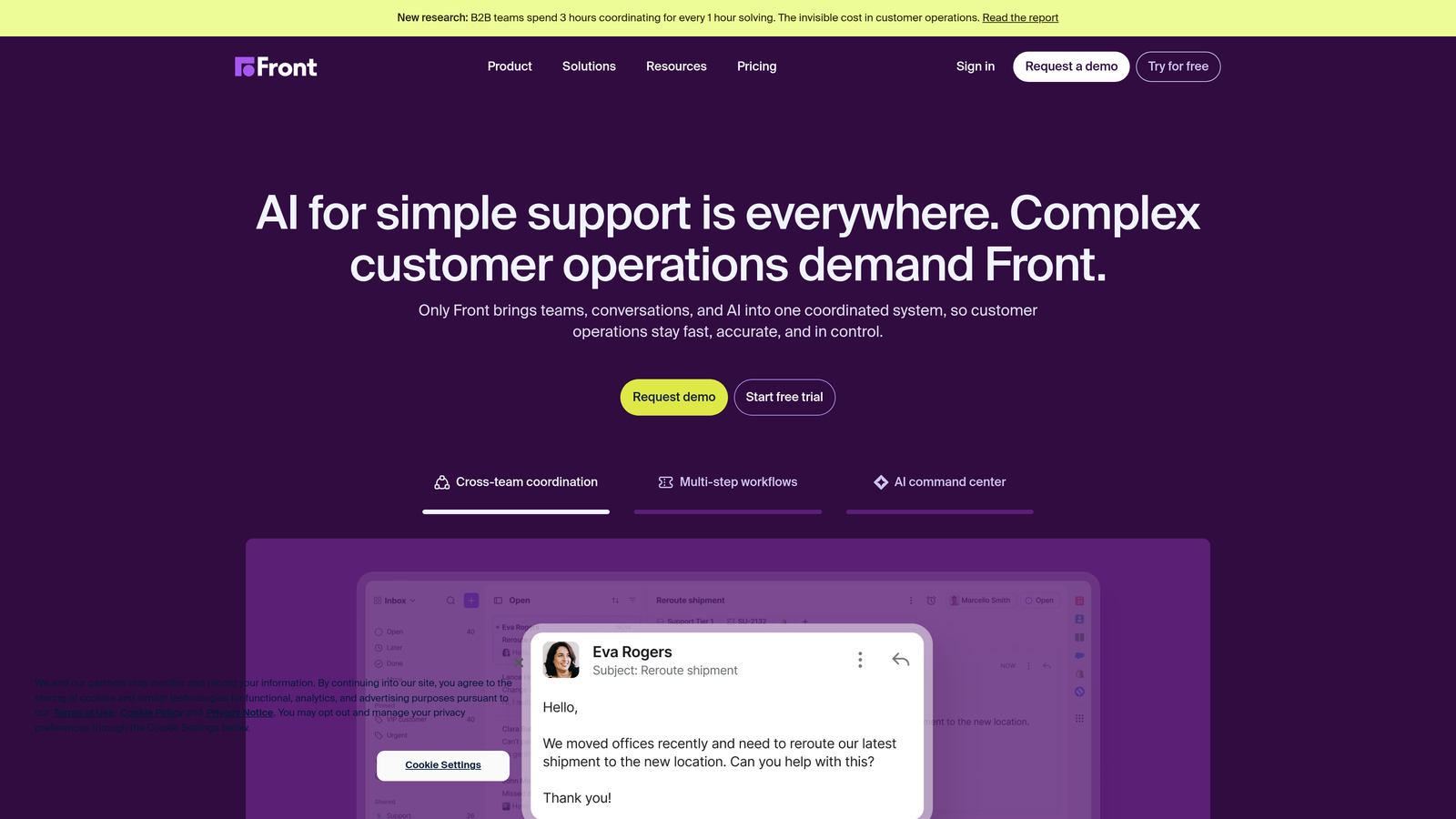
Front is a collaborative inbox merging email workflow with helpdesk intelligence and team coordination features.
Where This Tool Shines
Front treats customer communication as team sport rather than individual task. Internal commenting on messages lets colleagues collaborate on complex responses without forwarding emails or switching to Slack. This works brilliantly for account management, sales support, or technical escalations requiring multiple perspectives.
The AI-powered message drafting analyzes conversation context to suggest responses, while assignment rules automatically distribute incoming messages based on workload, expertise, or customer segments. CRM integrations surface customer data directly in the inbox, eliminating constant tab-switching.
Key Features
Shared Inboxes with Internal Comments: Team members collaborate on responses with private notes visible only to colleagues, not customers.
AI Message Drafting: Generates contextual response suggestions based on conversation history and team knowledge patterns.
Assignment Rules and Load Balancing: Automatically distributes incoming messages based on agent availability, expertise tags, or round-robin rotation.
CRM Integration Context: Displays customer data from Salesforce, HubSpot, or other CRMs directly within conversation threads.
Performance Analytics: Tracks response times, resolution rates, and individual agent metrics with customizable dashboards.
Best For
Account management teams, sales support groups, and customer success organizations where responses require collaboration and customer context matters more than ticket volume throughput.
Pricing
Starter plan begins at $19 per seat per month with core collaboration features.
6. Help Scout
Best for: Teams prioritizing personal customer relationships over high-volume ticket processing
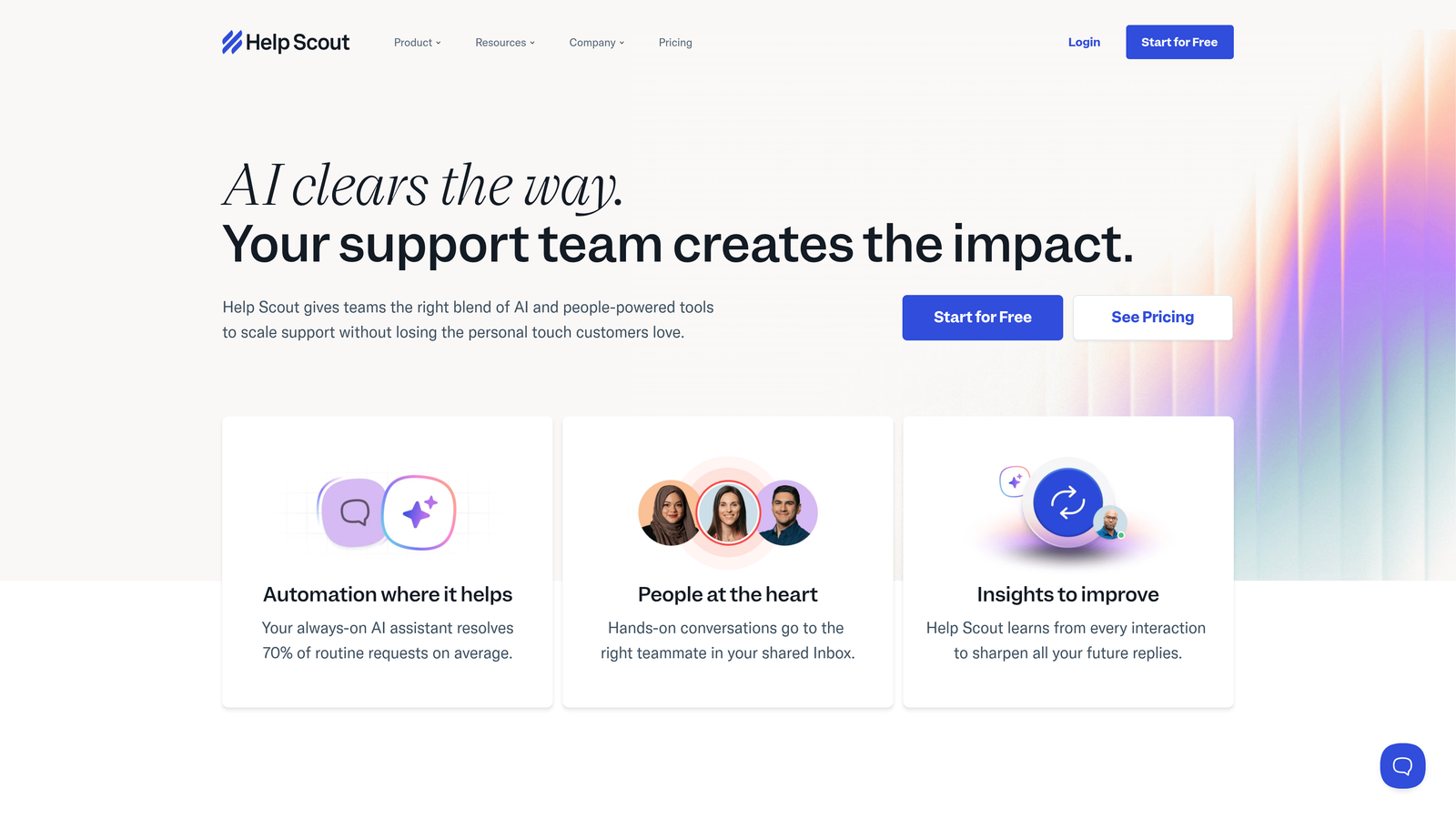
Help Scout is a human-first helpdesk emphasizing clean design, conversation quality, and customer relationship building.
Where This Tool Shines
Help Scout deliberately avoids feeling like a ticketing system. The clutter-free inbox presents conversations rather than tickets, encouraging agents to maintain personal tone and relationship continuity. Customer profiles automatically display interaction history, making every conversation feel like continuing a relationship rather than starting fresh.
The Beacon widget embeds help articles, contact forms, and live chat into your product with minimal visual footprint. AI drafts and summarization tools speed up responses without sacrificing the personal touch that defines Help Scout's philosophy.
Key Features
Conversation Threading: Clean inbox design presenting customer interactions as ongoing conversations rather than isolated tickets.
AI Drafts and Summarization: Generates response suggestions and summarizes long conversation threads while maintaining personal tone.
Beacon Embedded Widget: Combines knowledge base search, contact forms, and live chat in a single, customizable interface for your site.
Customer Profiles: Automatic history display showing all past interactions, notes, and context without manual searching.
Docs Integration: Knowledge base articles surface within conversations, making it easy to share helpful content with customers.
Best For
Small to mid-sized companies where brand personality and customer relationships drive retention. Particularly strong for B2C businesses and SaaS companies emphasizing customer experience over efficiency metrics.
Pricing
Plans start at $20 per user per month with core features included.
7. Gorgias
Best for: E-commerce businesses needing order-aware support with revenue attribution tracking
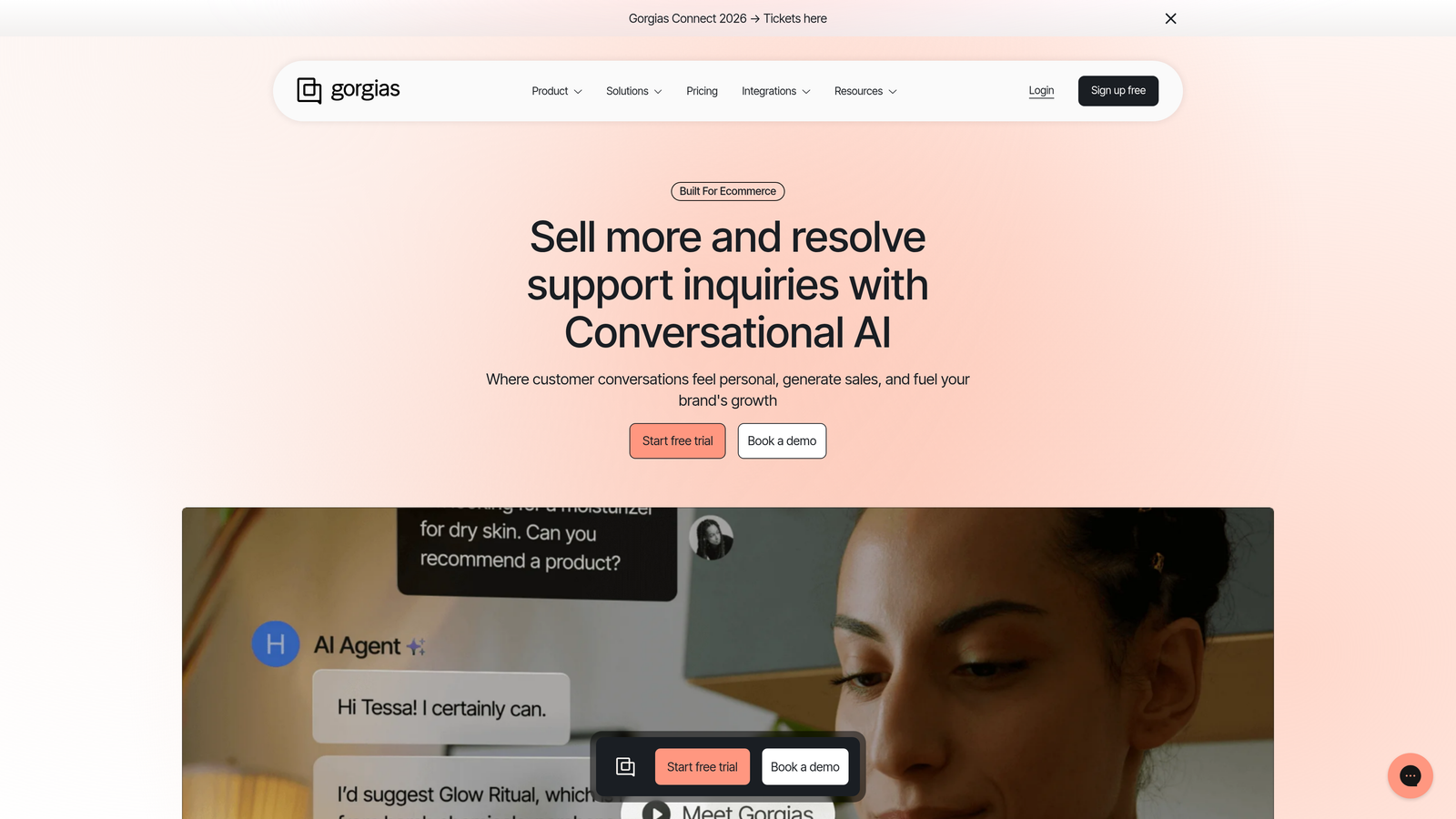
Gorgias is an e-commerce-focused helpdesk with deep Shopify integration and revenue-tracking analytics built specifically for online retail.
Where This Tool Shines
Gorgias understands e-commerce support is fundamentally different from SaaS support. Native integrations with Shopify, BigCommerce, and Magento let agents view order details, process refunds, or modify shipments without leaving the conversation. This eliminates the context-switching that slows down retail support.
Revenue attribution shows which support interactions influenced purchases, helping justify support investment with concrete ROI data. Macros with dynamic order variables let you create templated responses that automatically insert customer-specific order information.
Key Features
Native E-commerce Integrations: Deep connections with Shopify, BigCommerce, and Magento for order lookup and actions within support tickets.
Order Actions in Tickets: Process refunds, cancel orders, modify shipping addresses, or apply discounts directly from conversation interface.
Dynamic Order Macros: Create response templates that automatically populate with customer-specific order details, tracking numbers, or product information.
Revenue Attribution: Track which support conversations influenced purchases or prevented cancellations with dollar value assigned to interactions.
Social and SMS Channels: Manage Instagram, Facebook, SMS, and WhatsApp conversations alongside email and chat in unified inbox.
Best For
E-commerce businesses on Shopify, BigCommerce, or Magento where support teams frequently handle order issues, returns, and shipping questions. Particularly valuable for brands using social commerce.
Pricing
Starts at $10 per month for 50 tickets, scaling with ticket volume rather than agent count.
8. Kustomer
Best for: Companies wanting CRM-powered support with unified customer timelines across all touchpoints
Kustomer is a CRM-powered support platform presenting complete customer timelines rather than isolated ticket views.
Where This Tool Shines
Kustomer flips traditional helpdesk architecture by organizing around customers instead of tickets. The single timeline view displays every interaction—support conversations, purchase history, product usage, marketing emails—in chronological order. This comprehensive context helps agents understand the full customer relationship.
AI-powered sentiment and intent analysis detects frustrated customers or complex issues requiring immediate escalation. Proactive support triggers can initiate conversations based on behavioral signals like abandoned carts or repeated login failures, preventing issues before customers reach out.
Key Features
Unified Customer Timeline: Single chronological view displaying all interactions, purchases, and touchpoints across the entire customer relationship.
AI Sentiment and Intent Analysis: Automatically detects customer frustration levels and conversation intent to prioritize urgent issues.
Proactive Support Triggers: Initiates outreach based on behavioral signals like cart abandonment, feature non-adoption, or error patterns.
Skills-Based Routing: Routes conversations to agents with specific expertise tags, language capabilities, or product knowledge.
Business Process Automation: Build complex workflows connecting support actions to backend systems like billing, fulfillment, or account provisioning.
Best For
Mid-market to enterprise companies where understanding complete customer context drives support quality. Strong fit for businesses with complex customer journeys spanning multiple products or long sales cycles.
Pricing
Starts at $89 per user per month with enterprise features available at higher tiers.
9. Dixa
Best for: Teams managing high voice call volumes alongside digital channels with native phone system
Dixa is an omnichannel customer service platform with real-time routing, native voice support, and agent-centric workflow design.
Where This Tool Shines
Dixa treats voice as a first-class channel rather than an add-on feature. The native phone system includes IVR, callback queuing, and call recording without requiring separate telephony providers. Real-time routing distributes incoming calls, chats, and emails based on agent availability and skills across all channels simultaneously.
Customer recognition displays caller history before agents answer, providing context from the first hello. Side conversations let agents consult with colleagues or specialists during active calls without putting customers on hold, streamlining complex issue resolution.
Key Features
Real-Time Omnichannel Routing: Distributes voice calls, live chat, and email to available agents based on skills, priority, and current workload.
Native Phone System: Built-in telephony with IVR, call queuing, automated callbacks, and recording without third-party integrations.
Side Conversations: Internal consultation feature letting agents discuss issues with colleagues during active customer interactions without holds.
Customer Recognition: Automatically displays caller history and previous interactions when calls connect, providing immediate context.
Quality Assurance Tools: Call monitoring, scoring rubrics, and coaching workflows for maintaining service standards across the team.
Best For
Support teams handling significant phone volumes alongside digital channels. Particularly strong for industries like financial services, healthcare, or telecommunications where voice remains primary support channel.
Pricing
Contact for pricing based on agent count and channel requirements.
Finding Your Intelligent Inbox Match
The right intelligent support inbox depends on where your bottlenecks actually live. If you're drowning in repetitive tickets that consume agent time without requiring human judgment, platforms with autonomous resolution capabilities like Halo AI deliver immediate ROI by handling those interactions completely.
For teams already invested in specific ecosystems, alignment matters more than features. E-commerce businesses on Shopify gain more from Gorgias's native order actions than from generic AI routing. Enterprise teams needing compliance documentation should prioritize Zendesk's certifications over cutting-edge AI that lacks audit trails.
Consider your support philosophy too. Help Scout and Front optimize for relationship quality over ticket throughput, while Kustomer and Intercom excel when support blends with product experience. Teams managing high call volumes need Dixa's native telephony, not bolt-on phone features that feel like afterthoughts.
The intelligence that matters most isn't always the flashiest AI feature. Sometimes it's understanding which agent has relevant expertise, recognizing when a customer's frustration requires escalation, or surfacing the business context that transforms a transaction into a relationship. Your support team shouldn't scale linearly with your customer base. Let AI agents handle routine tickets, guide users through your product, and surface business intelligence while your team focuses on complex issues that need a human touch. See Halo in action and discover how continuous learning transforms every interaction into smarter, faster support.