9 Best Intelligent Ticket Deflection Tools in 2026
Intelligent ticket deflection tools use AI to automatically resolve common customer questions through self-service portals, chatbots, and smart knowledge bases before they reach human agents. This guide evaluates the 9 best platforms in 2026 based on AI sophistication, integration depth, and real deflection outcomes to help teams reduce support costs and agent workload.
 Grant CooperFounder12 min read
Every support ticket that reaches a human agent costs time, money, and bandwidth — resources that could be spent on complex issues that truly need a human touch. Intelligent ticket deflection tools use AI to resolve common customer questions before they ever become tickets, through self-service portals, AI chat agents, automated workflows, and smart knowledge base surfacing.
The result: faster resolutions for customers, lighter queues for agents, and lower support costs across the board. But with dozens of platforms now claiming deflection capabilities, choosing the right one matters.
We evaluated these tools based on AI sophistication, integration depth, ease of setup, analytics capabilities, and real deflection outcomes. Whether you're a growing SaaS startup or an enterprise managing thousands of daily tickets, this list covers the best options available in 2026.
1. Halo AI
Best for: B2B SaaS teams that want AI-native deflection with page-aware context and continuous learning
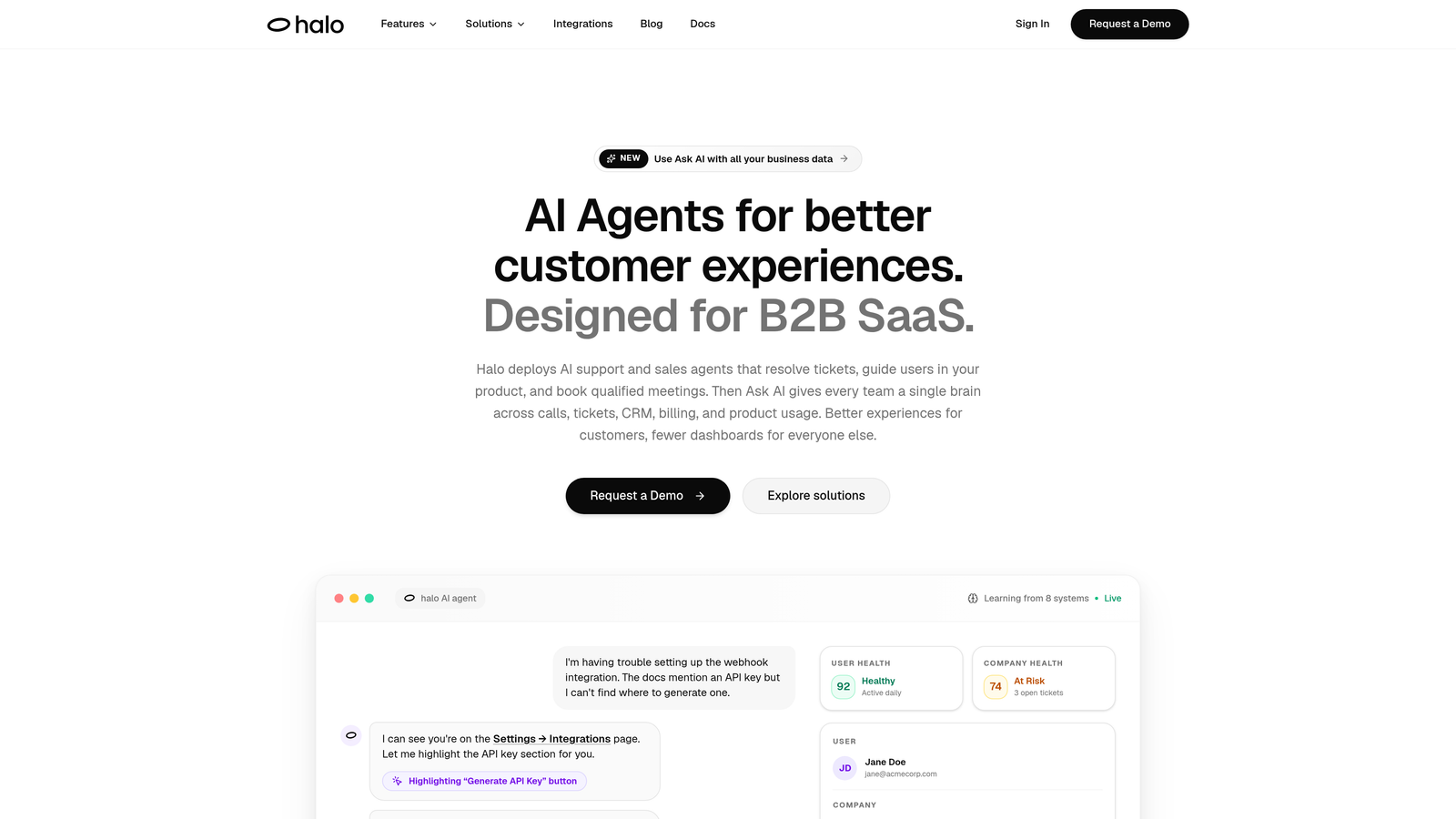
Halo AI is an AI-first customer support platform where intelligent agents resolve tickets, guide users visually through your product, and get smarter with every interaction.
Where This Tool Shines
What separates Halo from most deflection tools is its page-aware architecture. The AI agent doesn't just respond to what a user types — it sees what they're looking at on-screen and provides contextual guidance tied to that exact moment in the product. This closes the gap between "I have a question" and "I found my answer" faster than generic chatbot approaches.
The continuous learning engine is another genuine differentiator. Rather than requiring manual retraining or content updates, Halo improves its deflection accuracy from every conversation it handles. Over time, the system becomes a compounding asset rather than a static tool.
Key Features
Page-Aware Chat Widget: The AI sees what users see on-screen, enabling contextual guidance specific to where they are in your product.
Continuous Learning: Every resolved and escalated interaction feeds back into the model, improving deflection quality without manual intervention.
Smart Inbox with Business Intelligence: Beyond deflection, the inbox surfaces customer health signals, anomaly detection, and revenue intelligence that typical helpdesks miss.
Auto Bug Ticket Creation: When the AI detects a product issue during a conversation, it automatically creates a bug report — bridging support and engineering without human handoff overhead.
Deep Integration Stack: Connects natively with Linear, Slack, HubSpot, Intercom, Stripe, Zoom, PandaDoc, and more, enabling the AI to resolve a wider range of ticket types autonomously.
Best For
B2B SaaS companies and product-led growth teams that want more than deflection rates from their support tooling. Halo is particularly well-suited for teams where support intelligence — understanding why customers get stuck — is as valuable as the deflection itself.
Pricing
Contact for pricing. Designed specifically for B2B SaaS teams; pricing is scoped to team size and usage volume.
2. Zendesk AI
Best for: Existing Zendesk customers wanting native AI deflection without switching platforms
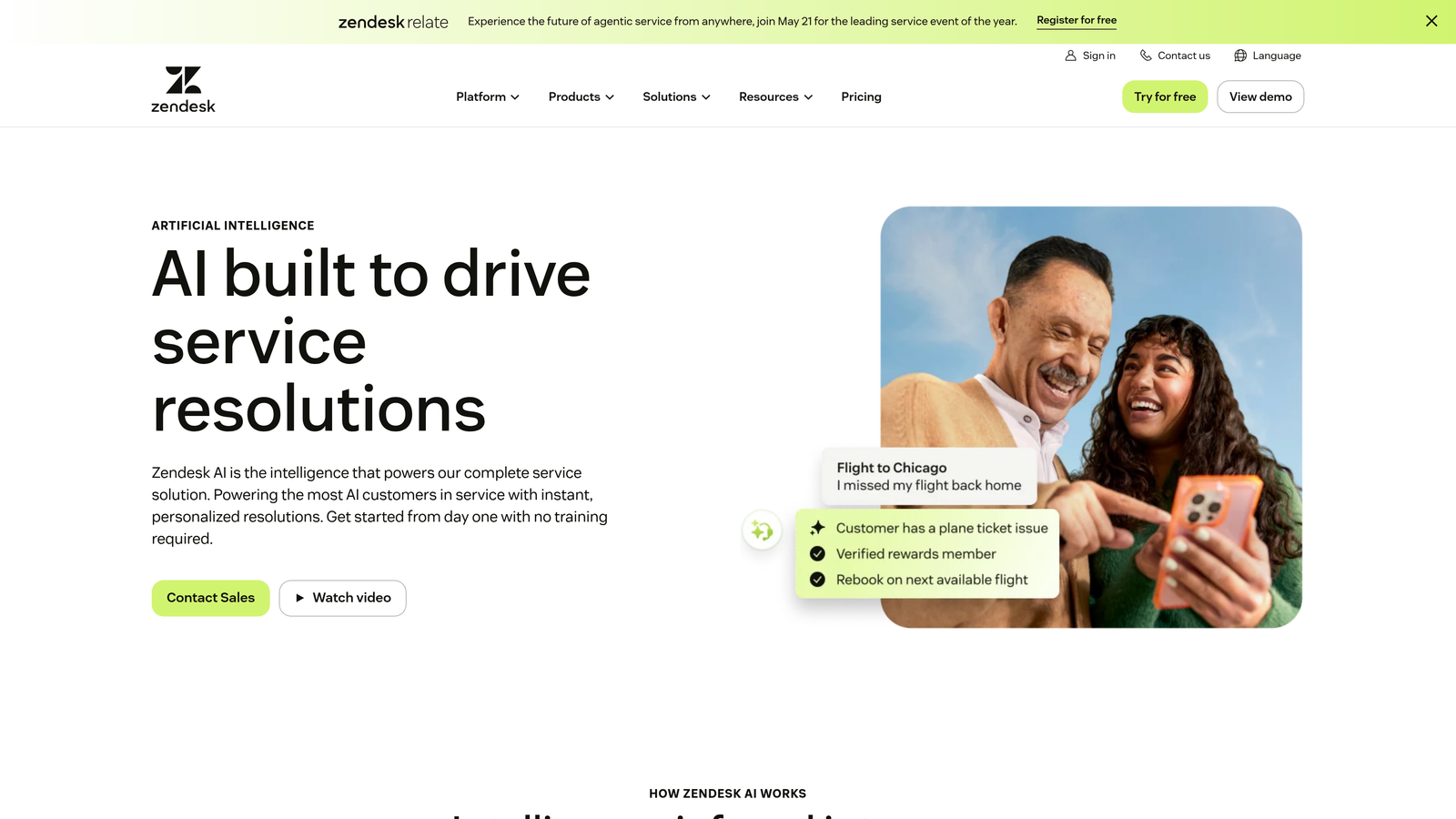
Zendesk AI is the native AI layer within the Zendesk Suite, offering automated ticket resolution, intelligent triage, and generative AI replies powered by your help center content.
Where This Tool Shines
If your team is already running on Zendesk, the AI layer is the path of least resistance. There's no migration, no new vendor relationship, and no integration work to manage. The AI agents pull directly from your existing knowledge base to auto-resolve tickets, which means your existing content investment starts working harder immediately.
The triage capabilities are particularly strong. Intent detection, language identification, and sentiment analysis all feed into automatic routing — so tickets that do reach agents land in the right queue from the start.
Key Features
AI Agents: Auto-resolve tickets by drawing on your existing Zendesk help center content, without requiring new content creation.
Intelligent Triage: Detects intent, language, and sentiment to automatically categorize and route incoming tickets.
Generative AI Reply Suggestions: Drafts contextually relevant responses for human agents to review and send, reducing handle time on tickets that do escalate.
Native Suite Integration: Works seamlessly across Zendesk Support, Guide, and Chat without third-party connectors.
Best For
Mid-market and enterprise teams already invested in the Zendesk ecosystem who want to add AI deflection without introducing another vendor or managing a separate platform.
Pricing
AI add-on available on Suite plans; Advanced AI starts at $50 per agent per month on top of base Suite pricing.
3. Intercom Fin
Best for: Teams using Intercom's messenger who want a conversational AI agent with transparent source citations
Intercom Fin is a conversational AI agent built into Intercom's messenger that resolves customer questions using your knowledge base, with source-cited answers and seamless human handoff.
Where This Tool Shines
Fin's approach to trust is worth noting. Rather than presenting AI-generated answers as authoritative and final, it cites the source content behind each response. Customers can verify the answer themselves, which reduces friction in high-stakes support scenarios where trust matters.
The handoff experience is also well-executed. When Fin determines it can't resolve an issue, the transition to a human agent preserves the full conversation context, so customers don't have to repeat themselves — a common frustration with lesser deflection tools.
Key Features
Multi-Source AI Answers: Generates responses from your help center, documentation, and custom content sources in a single unified answer.
Source Citations: Every AI-generated answer includes a reference to the underlying content, building customer confidence in the response.
Customizable Behavior Rules: Control tone, topic scope, escalation triggers, and handoff conditions without engineering involvement.
Multi-Channel Support: Deploys across in-app messenger, email, and SMS from a single configuration.
Best For
Product and support teams already using Intercom's platform who want to add AI deflection without managing a separate tool, particularly in B2B SaaS environments where documentation quality is high.
Pricing
Per-resolution pricing model; included within Intercom plans. Costs scale with the volume of conversations Fin successfully resolves.
4. Freshdesk Freddy AI
Best for: Cost-conscious teams wanting AI deflection across web and messaging channels without enterprise pricing
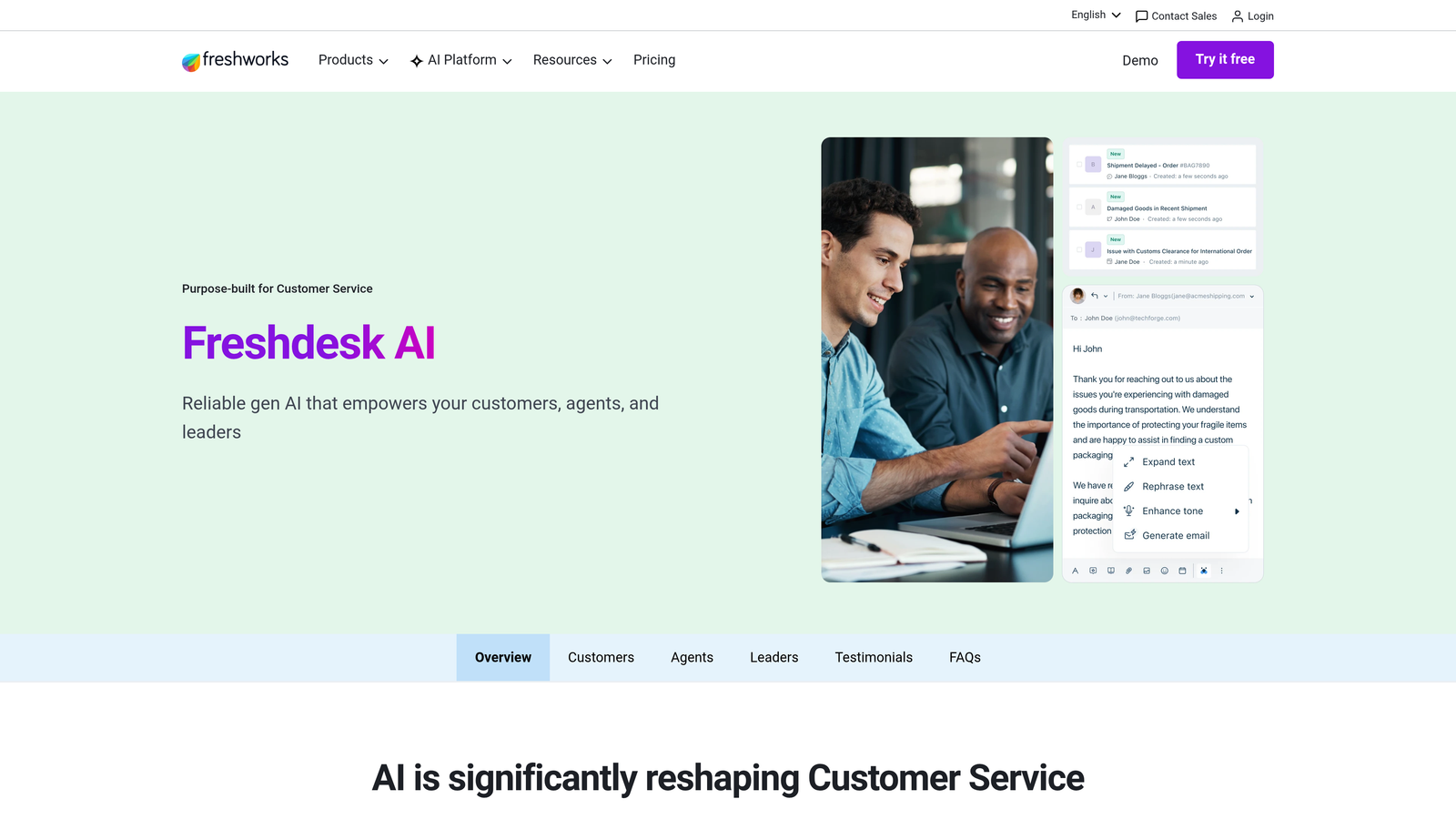
Freshdesk Freddy AI is an AI capability suite embedded across Freshdesk, covering self-service bots, auto-triage, and agent assist at Freshworks' competitive price points.
Where This Tool Shines
Freddy's value proposition is breadth at an accessible price. The platform covers the full deflection workflow: automated self-service before tickets are created, intelligent triage for tickets that do come in, and AI-assisted drafting for agents handling escalations. Most enterprise alternatives charge significantly more for the same coverage.
For growing teams that need to show ROI quickly, Freshdesk's pricing structure makes it easier to justify AI investment without a lengthy procurement process.
Key Features
Freddy Self-Service Bots: Deploys automated resolution bots on web and messaging channels to handle common questions before ticket creation.
Auto-Triage: Categorizes, prioritizes, and routes incoming tickets using AI-detected intent and context.
Freddy Copilot: Provides human agents with AI-generated reply suggestions and knowledge base recommendations during live ticket handling.
Competitive Pricing: AI features are included at the Pro tier rather than requiring expensive add-ons.
Best For
SMBs and mid-market teams looking for a full-featured AI deflection and assist package without the pricing complexity of enterprise platforms like Zendesk or Salesforce.
Pricing
AI features included in the Pro plan at $49 per agent per month; additional Freddy add-ons available for expanded capabilities.
5. Ada
Best for: Enterprises needing a fully autonomous AI agent with deep API-driven actions and compliance controls
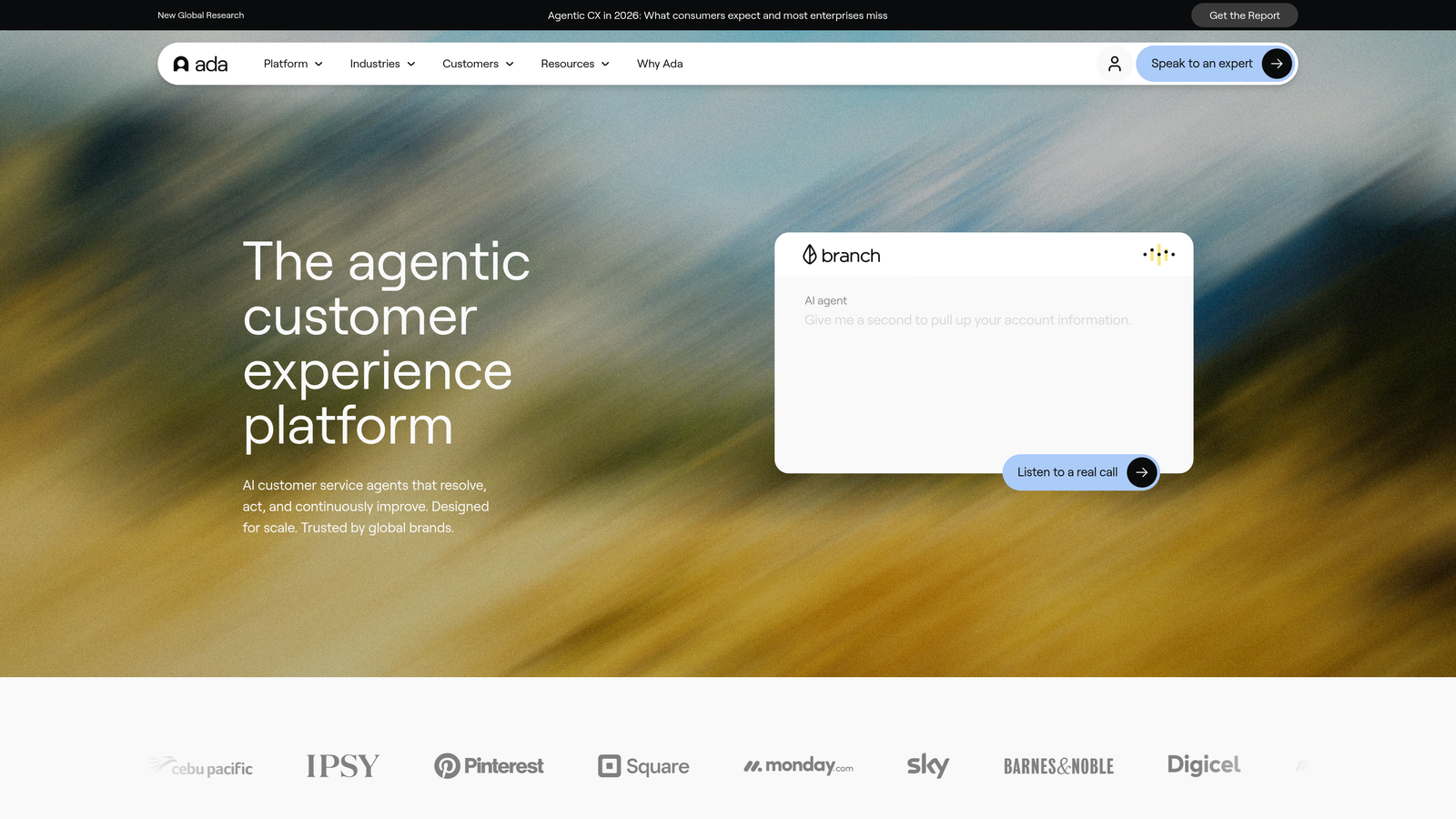
Ada is an enterprise-grade AI agent platform purpose-built for automated customer service, supporting multi-channel deployment with deep personalization through API-driven actions.
Where This Tool Shines
Ada goes beyond deflection into genuine autonomous resolution. The AI agent can check order statuses, update account information, process requests, and complete multi-step workflows by calling your backend APIs directly. This means it can resolve ticket types that simpler tools simply can't touch.
For enterprises operating in regulated industries or across global markets, Ada's compliance controls and multi-language support (50+ languages) address requirements that lighter-weight tools can't meet.
Key Features
No-Code AI Agent Builder: Build and configure complex multi-step resolution flows without engineering resources using Ada's reasoning engine.
API-Driven Actions: The AI agent connects to your systems to check orders, update accounts, and process requests in real time during conversations.
Multi-Language Support: Handles customer conversations across 50+ languages from a single deployment.
Enterprise Compliance Controls: Includes content safety guardrails, audit logs, and HIPAA compliance options for regulated industries.
Best For
Large enterprises in e-commerce, financial services, and healthcare that need an AI agent capable of taking real actions in backend systems, not just answering questions from documentation.
Pricing
Custom enterprise pricing based on usage and deployment scope; contact Ada directly for a quote.
6. Forethought
Best for: Teams wanting AI deflection and triage layered on top of their existing helpdesk without migrating
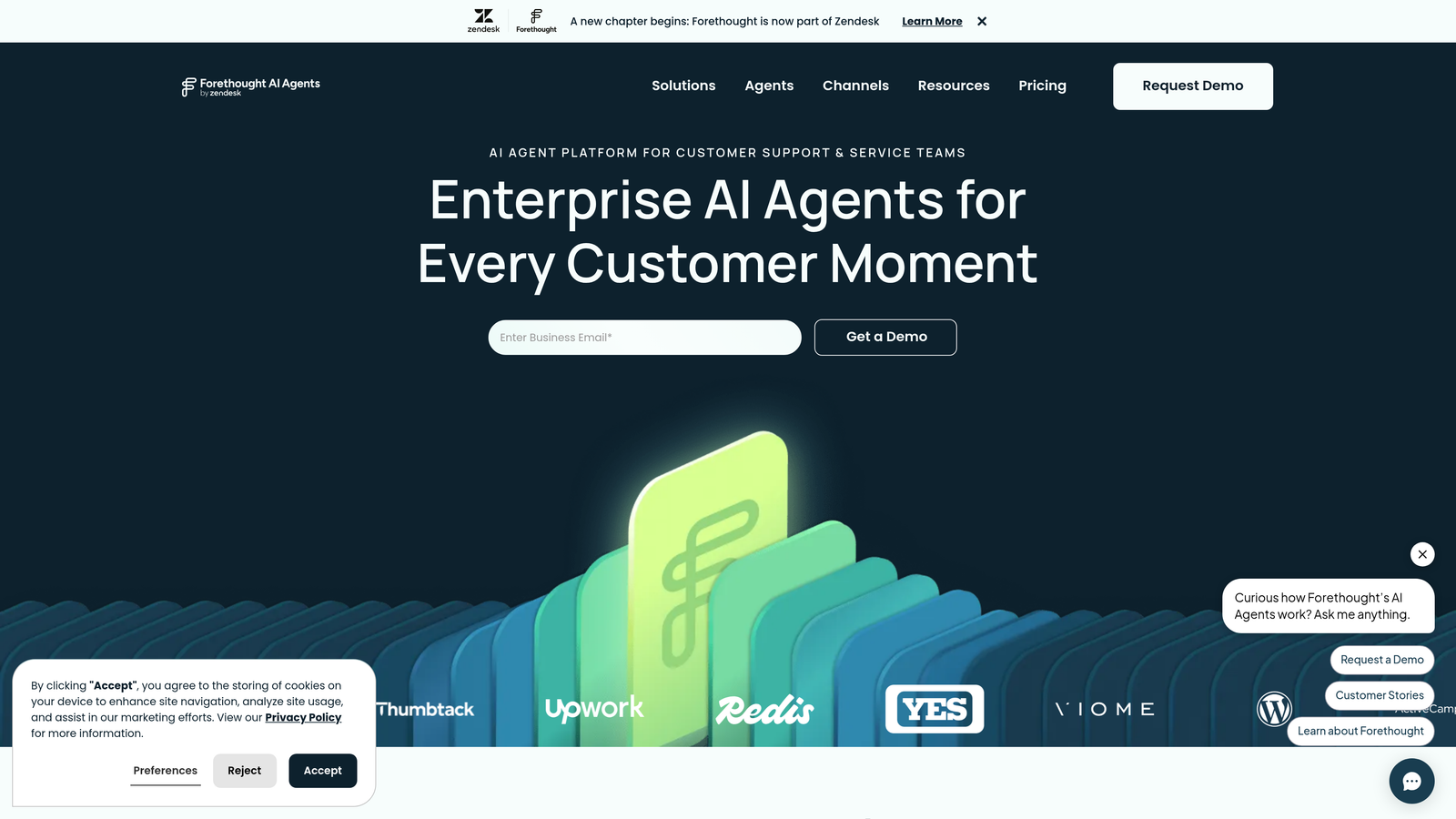
Forethought is an AI platform that layers intelligent deflection, triage, and agent assist on top of existing helpdesks like Zendesk, Salesforce, and ServiceNow.
Where This Tool Shines
Forethought's overlay architecture is its core selling point. Rather than replacing your helpdesk, it sits on top of it and adds AI capabilities without requiring a platform migration. This makes it a practical choice for teams with significant helpdesk customization they don't want to rebuild.
The modular product structure is also useful. Teams can deploy just the deflection layer (Solve), just the triage layer, or the full stack including agent assist — scaling AI investment incrementally rather than all at once.
Key Features
Solve (Deflection): AI-driven ticket deflection via chat and email that intercepts common questions before they enter the queue.
Triage: Automatic ticket classification and routing based on AI-detected intent, reducing manual queue management.
Assist: Real-time AI suggestions for human agents during active ticket handling, surfacing relevant knowledge and suggested replies.
Helpdesk-Agnostic Architecture: Works as an overlay on Zendesk, Salesforce Service Cloud, ServiceNow, and others without requiring migration.
Best For
Mid-market and enterprise teams with established helpdesk infrastructure who want to add AI capabilities incrementally without committing to a platform switch.
Pricing
Custom pricing based on ticket volume and the specific Forethought products selected; contact for a quote.
7. Deflekt.ai
Best for: Teams that want fast deflection setup across email, web forms, and Slack without a long implementation
Deflekt.ai is a lightweight, purpose-built deflection tool that intercepts support requests by surfacing relevant knowledge base answers before tickets are ever created.

Where This Tool Shines
Deflekt.ai earns its place on this list by doing one thing well: stopping tickets before they start. It connects to your existing knowledge base, deploys across multiple channels, and starts deflecting within hours. There's no AI agent to configure, no complex decision trees to build, and no lengthy onboarding process.
For teams that have solid documentation but are still drowning in repetitive tickets, Deflekt.ai is often the fastest path to measurable deflection improvement.
Key Features
Multi-Channel Deployment: Deploys across email, web forms, chat widgets, and Slack from a single configuration.
Knowledge Base Integration: Connects to existing docs and knowledge bases to power AI-driven answers without requiring content migration.
Deflection Analytics Dashboard: Tracks resolution rates by channel and topic so teams can identify content gaps and optimize over time.
Fast Setup: Typically operational within hours, making it one of the quickest deflection tools to deploy on this list.
Best For
Small to mid-sized teams with good existing documentation who need fast deflection results without the complexity or cost of a full AI agent platform.
Pricing
Free tier available; paid plans start at approximately $49 per month, making it one of the most accessible options on this list.
8. Tidio AI (Lyro)
Best for: SMBs and e-commerce businesses wanting conversational AI with minimal setup and transparent per-conversation pricing
Tidio's Lyro AI is a conversational AI chatbot that learns from your FAQ and help content to handle customer conversations autonomously, with live chat fallback when escalation is needed.
Where This Tool Shines
Lyro is designed for teams that don't have dedicated AI implementation resources. It learns from your existing FAQ content with minimal configuration and handles multi-turn conversations with context retention — meaning customers don't feel like they're talking to a rigid decision tree.
The live chat fallback is seamlessly integrated, so when Lyro hits the edge of its knowledge, a real agent can step in without the customer experiencing a jarring handoff. For e-commerce teams managing high conversation volumes with small support teams, this balance works well.
Key Features
Lyro AI Learning: Trains from your help content and FAQs with minimal setup, requiring no AI expertise to configure.
Multi-Turn Context Retention: Maintains conversation context across multiple exchanges, enabling more natural and accurate resolutions.
Live Chat Fallback: Includes real-time visitor monitoring and seamless agent handoff when AI resolution isn't possible.
E-Commerce Integrations: Native integrations with Shopify, WooCommerce, and other e-commerce platforms for order-related deflection.
Best For
E-commerce businesses and SMBs with high volumes of repetitive customer inquiries — order status, return policies, product questions — that need affordable AI deflection without enterprise complexity.
Pricing
Free tier available with limited Lyro conversations; paid plans start from $29 per month with conversation-based scaling.
9. Helpshift
Best for: Mobile-first businesses in gaming, fintech, and consumer apps needing in-app AI support at scale
Helpshift is a mobile-first customer support platform with in-app messaging, AI-powered intent detection, and automated resolution flows built specifically for app-based businesses.
Where This Tool Shines
Most deflection tools are built for web-first experiences and then adapted for mobile. Helpshift is the reverse: it was built for mobile from the ground up, with a native SDK that integrates directly into iOS and Android apps. The result is a support experience that feels like part of the product rather than an external tool bolted on.
For high-volume consumer apps where support requests spike unpredictably — a common reality in gaming and fintech — Helpshift's ability to handle large volumes of in-app interactions autonomously is a meaningful operational advantage.
Key Features
Native Mobile SDK: Integrates directly into iOS and Android apps for a seamless in-app support experience without redirecting users to external channels.
AI Intent Classification: Detects user intent from in-app messages to route and resolve tickets automatically based on what users are actually trying to accomplish.
In-App Knowledge Base Surfacing: Presents relevant FAQ and help content within the app before a ticket is created, intercepting common questions at the source.
Automated Resolution Bots: Handles structured resolution flows for common request types like account issues, payment questions, and game-specific support scenarios.
Best For
Mobile app companies in gaming, fintech, and consumer tech with high ticket volumes and a need for in-app deflection that doesn't break the product experience.
Pricing
Custom pricing based on monthly active users and interaction volume; contact Helpshift for a quote tailored to your app's scale.
How to Choose the Right Deflection Tool for Your Team
The right intelligent ticket deflection tool depends less on feature checklists and more on where your team sits today and where you're trying to go.
If you're a B2B SaaS company that wants AI deflection with page-aware context, continuous learning, and business intelligence built in, Halo AI is the strongest purpose-built option. It's the only tool on this list that connects what users see on-screen to the support response they receive, and its integration depth means the AI can resolve ticket types that knowledge-base-only tools can't touch.
If you're already running Zendesk or Intercom, the native AI layers from Zendesk AI and Intercom Fin offer the fastest time-to-deflection with no migration risk. For budget-conscious teams, Freshdesk Freddy AI delivers comparable capabilities at a lower price point.
For enterprises needing autonomous action-taking (not just answering questions), Ada is the clear choice. For teams that want AI on top of their existing helpdesk without ripping anything out, Forethought's overlay architecture solves that problem cleanly.
If speed of deployment is the priority and your documentation is already solid, Deflekt.ai gets you operational in hours. Tidio Lyro serves e-commerce and SMB teams well with its accessible pricing and natural conversation handling. And if your business lives in a mobile app, Helpshift is in a category of its own.
The broader shift worth keeping in mind: the industry is moving away from measuring surface deflection (users who simply abandon after hitting a bot) toward meaningful deflection (issues actually resolved). The tools that win over the next few years will be those that can demonstrate real resolution, not just reduced ticket counts.
Your support team shouldn't scale linearly with your customer base. Let AI agents handle routine tickets, guide users through your product, and surface business intelligence while your team focuses on complex issues that need a human touch. See Halo in action and discover how continuous learning transforms every interaction into smarter, faster support.