9 Best Tools Support Agents Need for Faster, Smarter Service in 2026
Support agents need better tools to keep pace with rising ticket volumes and customer expectations, and this guide evaluates nine top platforms for 2026 across AI capabilities, integrations, analytics, and scalability. From AI-first solutions to helpdesk workhorses and knowledge management tools, the list covers the best options for lean teams and large enterprise operations alike.
 Grant CooperFounder12 min read
Customer support has never been more demanding. Ticket volumes are climbing, customers expect instant answers across every channel, and support teams are under pressure to resolve issues faster without simply adding more headcount. The reality is that agents, whether human or AI-powered, are only as effective as the tools behind them.
Choosing the right stack matters more than ever. For this list, tools were evaluated on AI capabilities, integration depth, ease of deployment, analytics and reporting quality, and how well they scale with growing support operations. The result is a mix of AI-first platforms, helpdesk workhorses, knowledge management solutions, and workflow tools that collectively represent the best of what modern support teams have available in 2026.
Whether you're building a lean AI-driven support operation or optimizing a large team handling complex enterprise tickets, there's something here for you. Let's get into it.
1. Halo AI
Best for: B2B SaaS teams replacing bolt-on AI with genuine autonomous ticket resolution
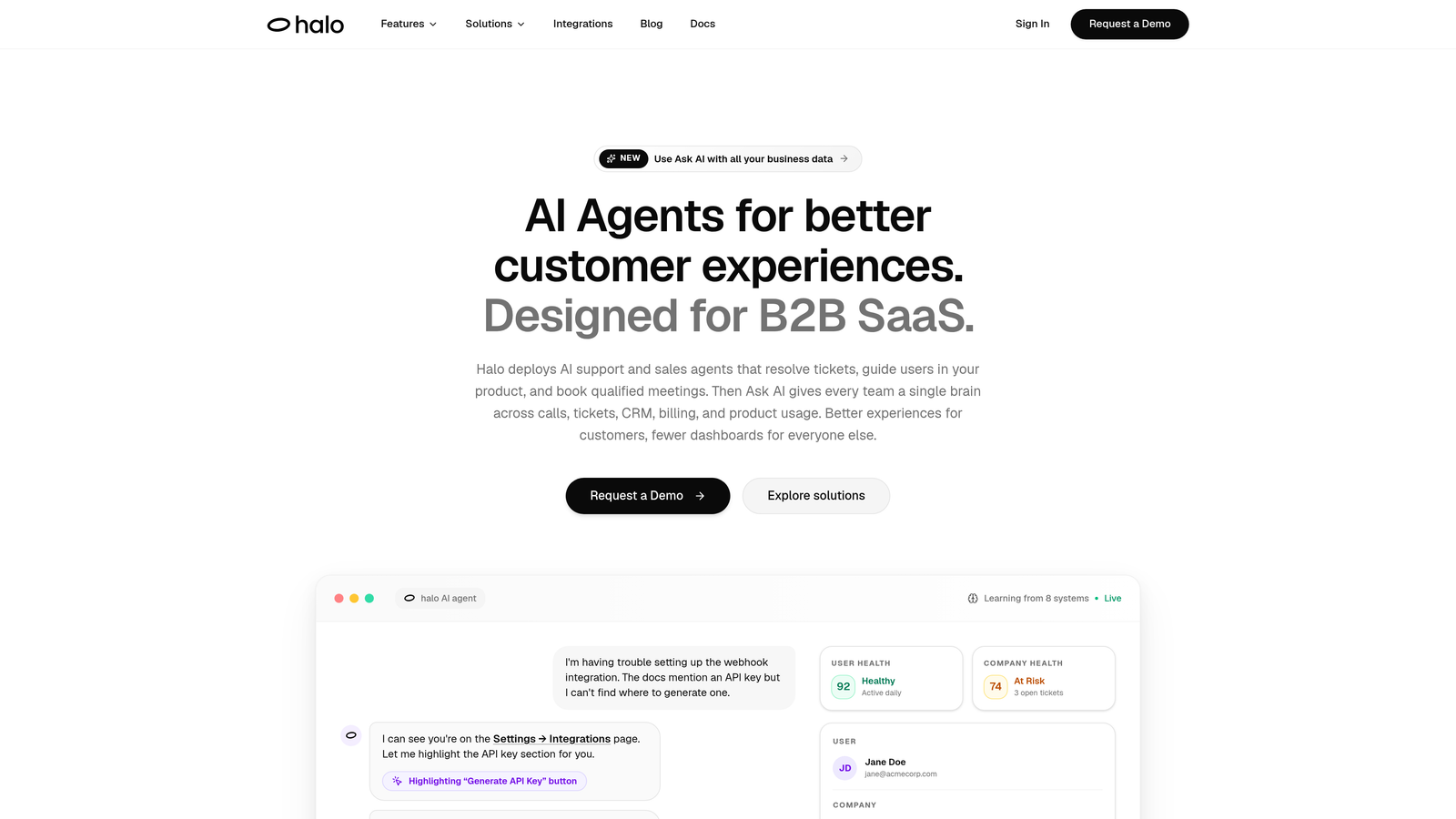
Halo AI is an AI-first customer support platform that deploys autonomous agents capable of resolving tickets end-to-end, guiding users through your product visually, and surfacing business intelligence beyond basic support metrics.
Where This Tool Shines
Most AI tools bolt onto existing helpdesks and handle only the simplest FAQs. Halo is built differently: its AI agents are designed to actually resolve tickets rather than just deflect them. The platform understands product context, connects to your business stack, and learns from every interaction to get smarter over time.
What sets Halo apart is its page-aware architecture. The chat widget sees what users see, allowing it to provide contextual, visual guidance rather than generic responses. For SaaS teams where product complexity drives most support volume, this is a meaningful difference.
Key Features
Autonomous ticket resolution: AI agents handle tickets end-to-end, not just deflect them, reducing the volume that reaches human agents.
Page-aware chat widget: The widget understands which page a user is on and provides contextually relevant visual guidance based on what they're seeing.
Auto bug ticket creation: Automatically generates bug reports and routes them directly to Linear, Slack, or engineering tools without manual intervention.
Smart inbox with business intelligence: Goes beyond support metrics to surface customer health signals, revenue intelligence, and anomaly detection from support interactions.
Live agent handoff: Escalates complex issues to human agents with full conversation context preserved, so nothing gets repeated or lost.
Best For
B2B SaaS companies and product teams that need support to scale without scaling headcount. Particularly well-suited for teams frustrated with AI tools that automate simple questions but fail on context-dependent issues that require product knowledge and system integrations.
Pricing
Contact for pricing. Designed for B2B SaaS teams that want a full autonomous support layer, not just an AI add-on to an existing helpdesk.
2. Zendesk
Best for: Enterprise support teams needing a mature, deeply integrated helpdesk platform
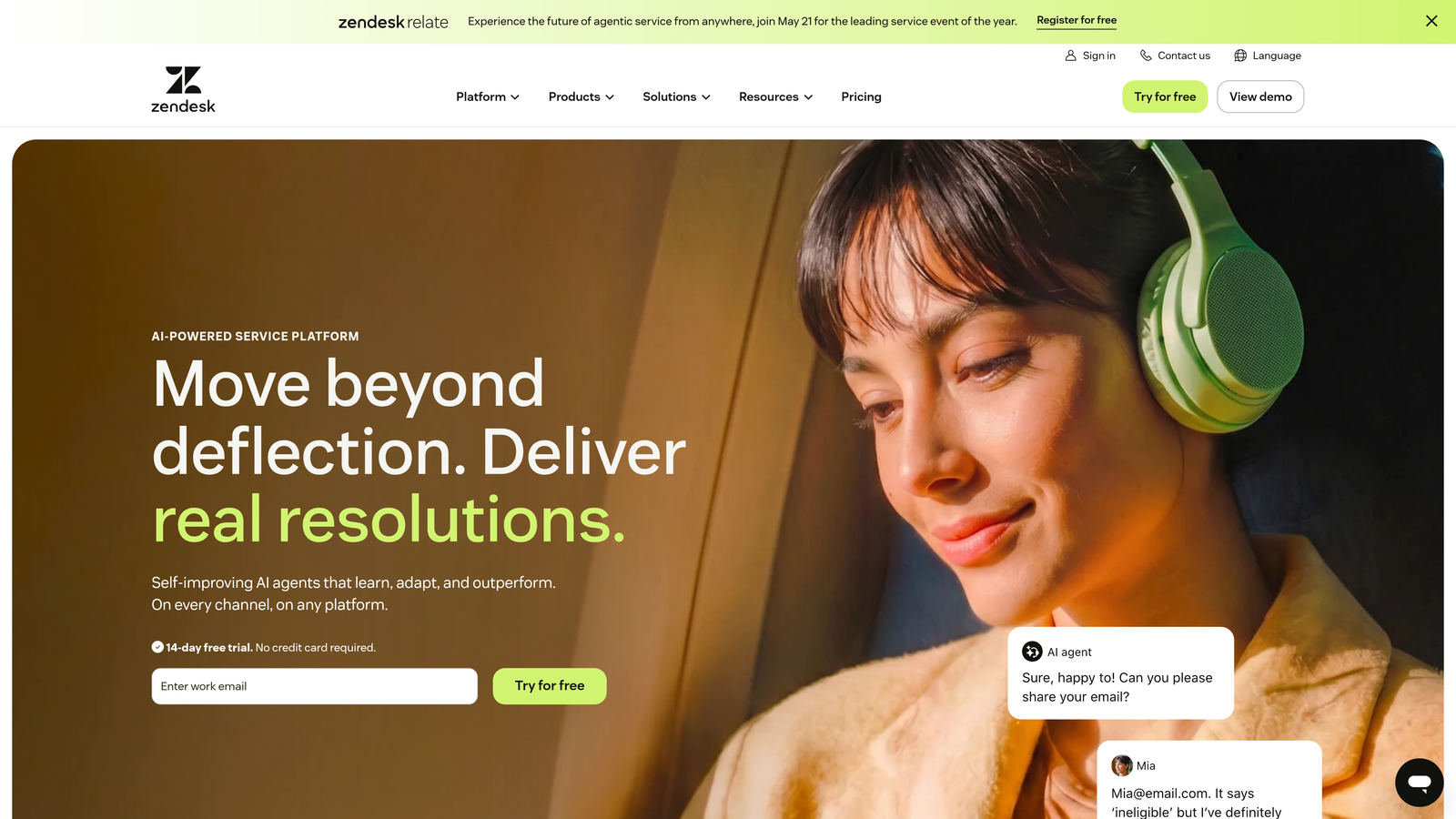
Zendesk is the industry's most established helpdesk platform, offering enterprise-grade ticket management, advanced routing, and a growing AI copilot layer built into its core workflows.
Where This Tool Shines
Zendesk's strength is its breadth. Few platforms match its combination of omnichannel support, SLA management, and a marketplace with hundreds of integrations. For large teams managing complex workflows across multiple channels, it remains the default choice.
The platform has invested heavily in AI in recent years, adding copilot features for agent assistance, automated ticket summarization, and intelligent routing. Its acquisition of Klaus also brought quality assurance capabilities directly into the suite.
Key Features
AI copilot: Assists agents with suggested responses, ticket summarization, and next-step recommendations during live interactions.
Advanced routing and SLA management: Sophisticated rules-based and AI-assisted routing that handles complex multi-tier support workflows.
App marketplace: Hundreds of integrations covering CRM, billing, analytics, and collaboration tools.
Omnichannel support: Unified inbox covering email, live chat, phone, and social media channels.
Best For
Mid-market and enterprise support teams with established workflows who need a proven, scalable platform. Also a strong choice for teams that rely on a large integration ecosystem and want AI as a layer on top of existing processes.
Pricing
Support Team plan starts at $19/agent/month. AI features and advanced capabilities are available at additional cost on higher tiers.
3. Intercom
Best for: Product-led companies needing conversational, in-app support with AI-driven resolution
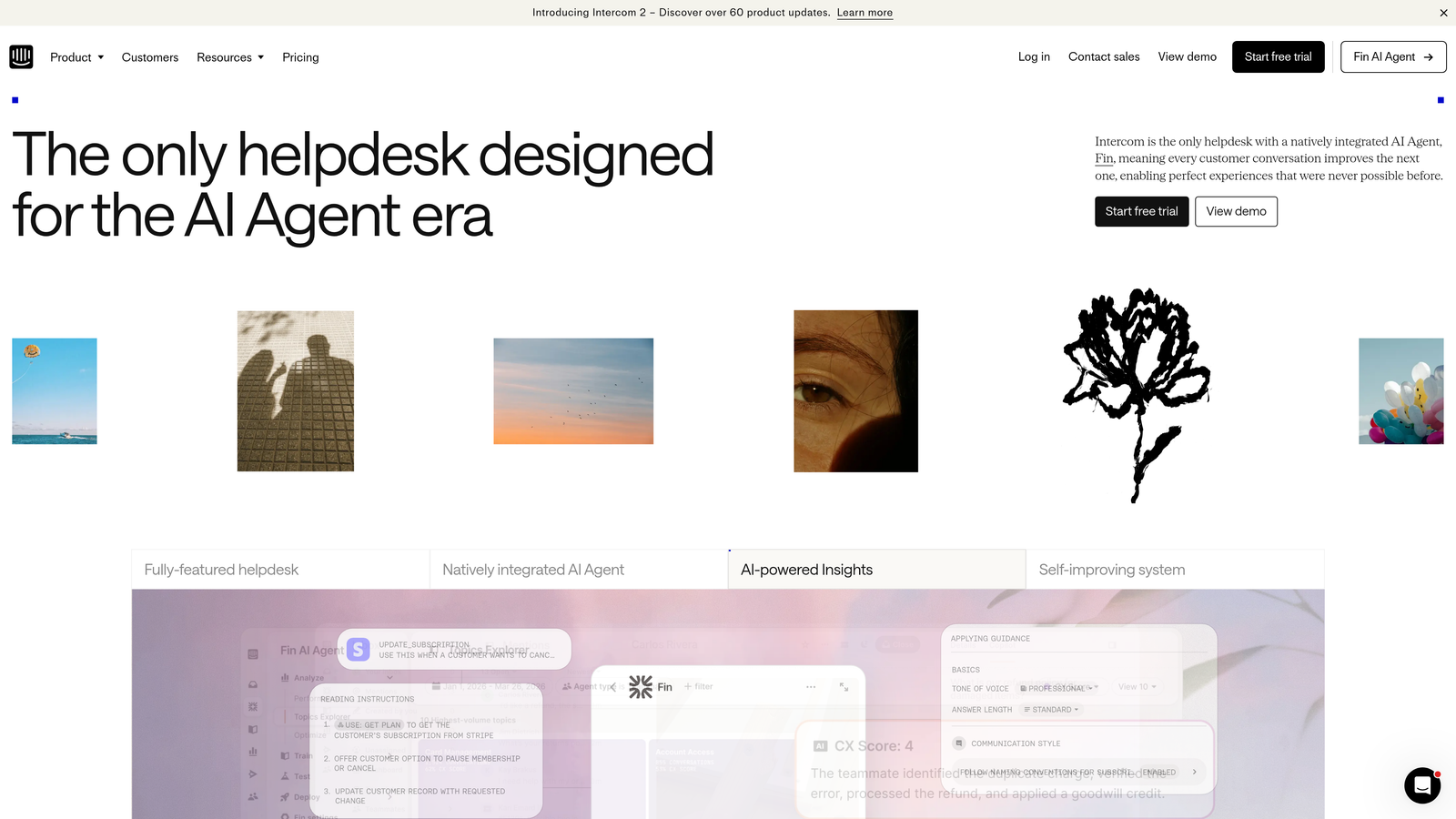
Intercom has repositioned itself as an AI-first customer service platform, anchored by its Fin AI agent, which handles autonomous conversation resolution across chat and messaging channels.
Where This Tool Shines
Intercom's real advantage is its in-app messaging experience. For SaaS products where most support happens inside the application itself, Intercom's messenger and product tour capabilities create a native, seamless feel that email-first platforms struggle to replicate.
Fin AI agent handles a significant portion of incoming conversations autonomously, escalating to human agents when needed. The platform also excels at proactive support, reaching out to users before they submit a ticket.
Key Features
Fin AI agent: Autonomous conversation resolution using your existing knowledge base and help content.
In-app messaging and product tours: Proactive onboarding and support experiences built directly into your product interface.
Customizable workflows and bots: Multi-step automation for routing, qualification, and resolution flows.
Unified inbox: Consolidates chat, email, and social channel conversations for agents.
Best For
Product-led SaaS companies where the support experience lives primarily inside the application. Strong fit for teams that want to combine proactive engagement with reactive support in a single platform.
Pricing
Essential plan starts at $29/seat/month. Fin AI is charged per resolution, so costs scale with usage volume.
4. Freshdesk
Best for: Growing mid-market teams needing full-featured helpdesk capabilities at an accessible price
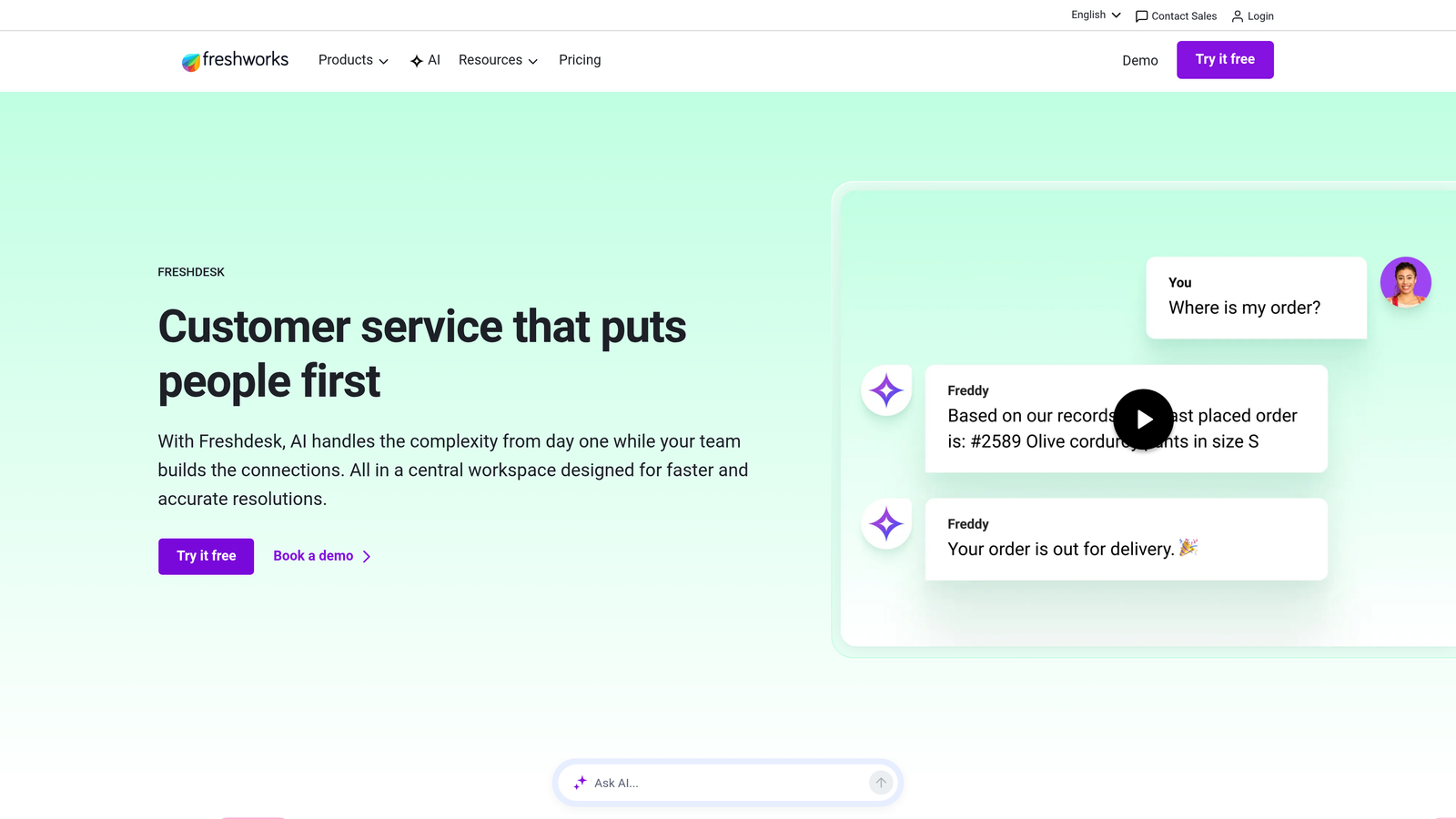
Freshdesk by Freshworks is a full-featured helpdesk platform with Freddy AI built in, offering auto-triage, sentiment analysis, and suggested responses without the enterprise price tag.
Where This Tool Shines
Freshdesk hits a sweet spot for teams that need more than a basic ticketing system but aren't ready for Zendesk's complexity or cost. The interface is intuitive, onboarding is fast, and the free tier makes it accessible for smaller teams just getting started.
Freddy AI handles a lot of the repetitive work automatically: categorizing tickets, flagging sentiment, and suggesting responses so agents can move faster. Collision detection prevents two agents from working the same ticket simultaneously, which is a small but meaningful productivity feature.
Key Features
Freddy AI: Handles auto-triage, sentiment detection, and suggested response generation natively within the platform.
SLA management and collision detection: Keeps tickets on track and prevents duplicate agent effort.
Free tier: A genuinely functional free plan for small teams before they need to scale up.
Integration marketplace: Connects to CRM, billing, and collaboration tools including Slack, HubSpot, and Salesforce.
Best For
Growing SMB and mid-market support teams that need solid AI-assisted ticketing without committing to enterprise-level costs or complexity. Also a good option for teams migrating from basic email-based support for the first time.
Pricing
Free tier available for unlimited agents with basic features. Paid plans start at $15/agent/month with more advanced AI and automation capabilities.
5. Guru
Best for: Teams struggling with scattered knowledge and agents wasting time searching for answers
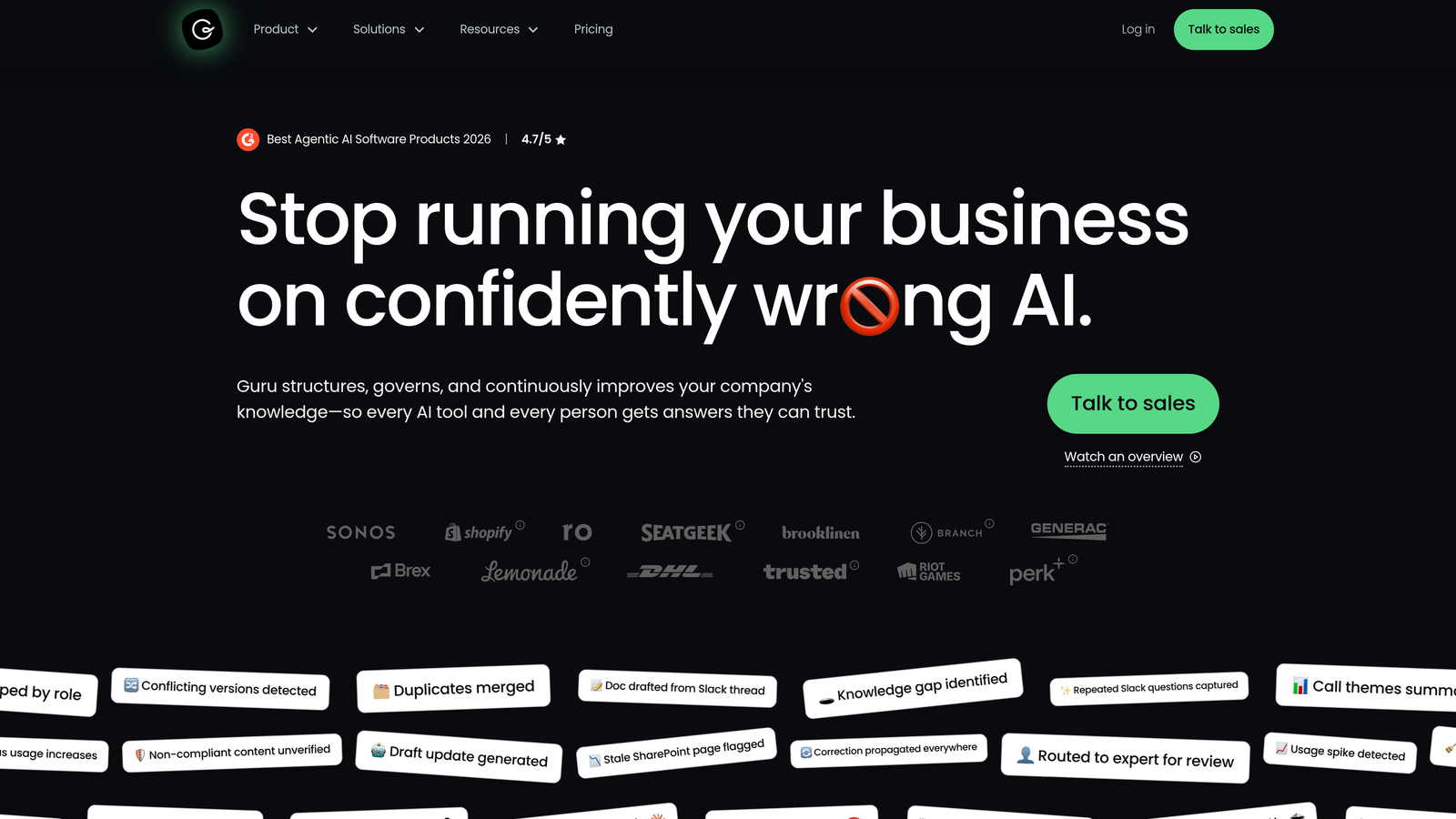
Guru is an AI-powered knowledge management platform that surfaces verified answers directly inside the tools agents are already using, eliminating the context-switching that slows response times.
Where This Tool Shines
Knowledge management is one of the most persistent pain points in support. Agents often have to search across multiple wikis, Slack threads, and shared drives to find a reliable answer. Guru solves this by bringing verified knowledge into the agent's workflow rather than requiring them to leave it.
The verification workflow is particularly valuable. Knowledge cards can be assigned to subject matter experts who confirm accuracy on a schedule, so agents aren't relying on outdated documentation during live conversations.
Key Features
AI-powered knowledge suggestions: Surfaces relevant answers contextually within Zendesk, Intercom, Slack, and other tools agents use daily.
Verification workflows: Assigns ownership and expiration dates to knowledge cards to keep content accurate.
Browser extension: Makes knowledge accessible anywhere, not just inside integrated tools.
Knowledge gap analytics: Identifies frequently searched topics with no good answer, highlighting where documentation needs work.
Best For
Support teams of any size where inconsistent answers and time spent searching for information are measurable problems. Especially valuable when onboarding new agents or scaling a team quickly.
Pricing
Free tier available. Paid plans start at $10/user/month with advanced AI features and analytics included at higher tiers.
6. Klaus (Zendesk QA)
Best for: Support teams that need systematic quality assurance and coaching at scale
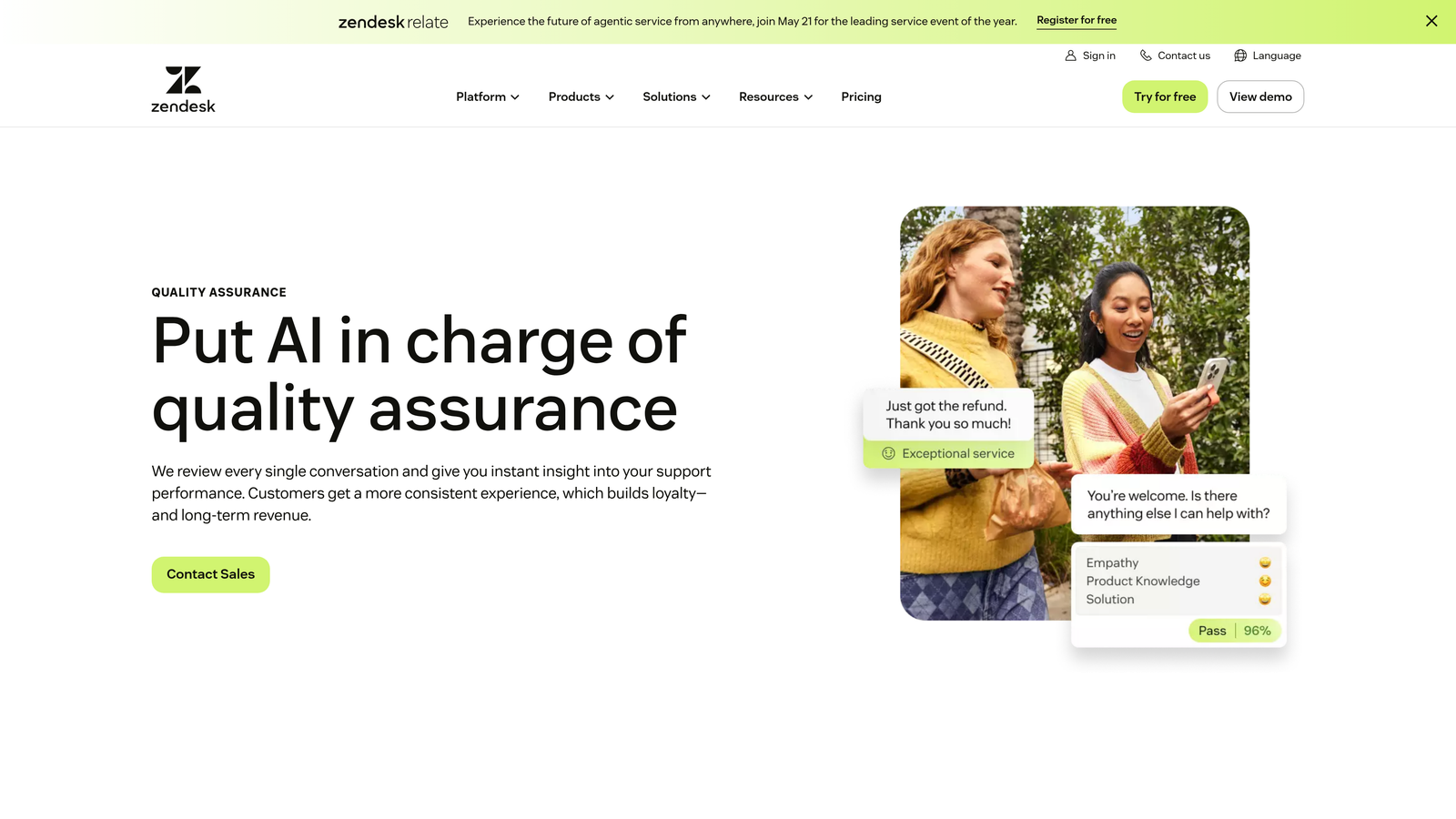
Klaus, now part of Zendesk's QA suite, is an AI-driven quality assurance platform that scores every support conversation automatically, making consistent coaching possible even as team size grows.
Where This Tool Shines
Traditional QA processes review a small sample of conversations, which means most quality issues go undetected. Klaus changes this by scoring 100% of conversations using AI, giving managers a complete picture rather than a statistical sample.
The root cause analysis capability is where Klaus earns its keep for team leads. Rather than just flagging low-scoring conversations, it identifies patterns that point to systemic training gaps, process issues, or product problems driving poor customer experiences.
Key Features
AI auto-scoring: Evaluates every conversation across all channels, not just a random sample.
Customizable scorecards: Define rubrics tailored to different channels, teams, or ticket types.
Root cause analysis: Identifies recurring issues and systemic patterns behind quality scores.
Coaching workflows: Structured calibration sessions and feedback tools that connect QA scores to agent development.
Best For
Support managers and QA leads at growing teams who need to maintain quality standards as volume increases. Also valuable for teams building a coaching culture where data drives development conversations.
Pricing
Contact for pricing. Klaus is now integrated into Zendesk's QA product suite, so pricing may vary depending on existing Zendesk contracts.
7. Linear
Best for: Support teams that need a tight, reliable loop between customer-reported bugs and engineering resolution
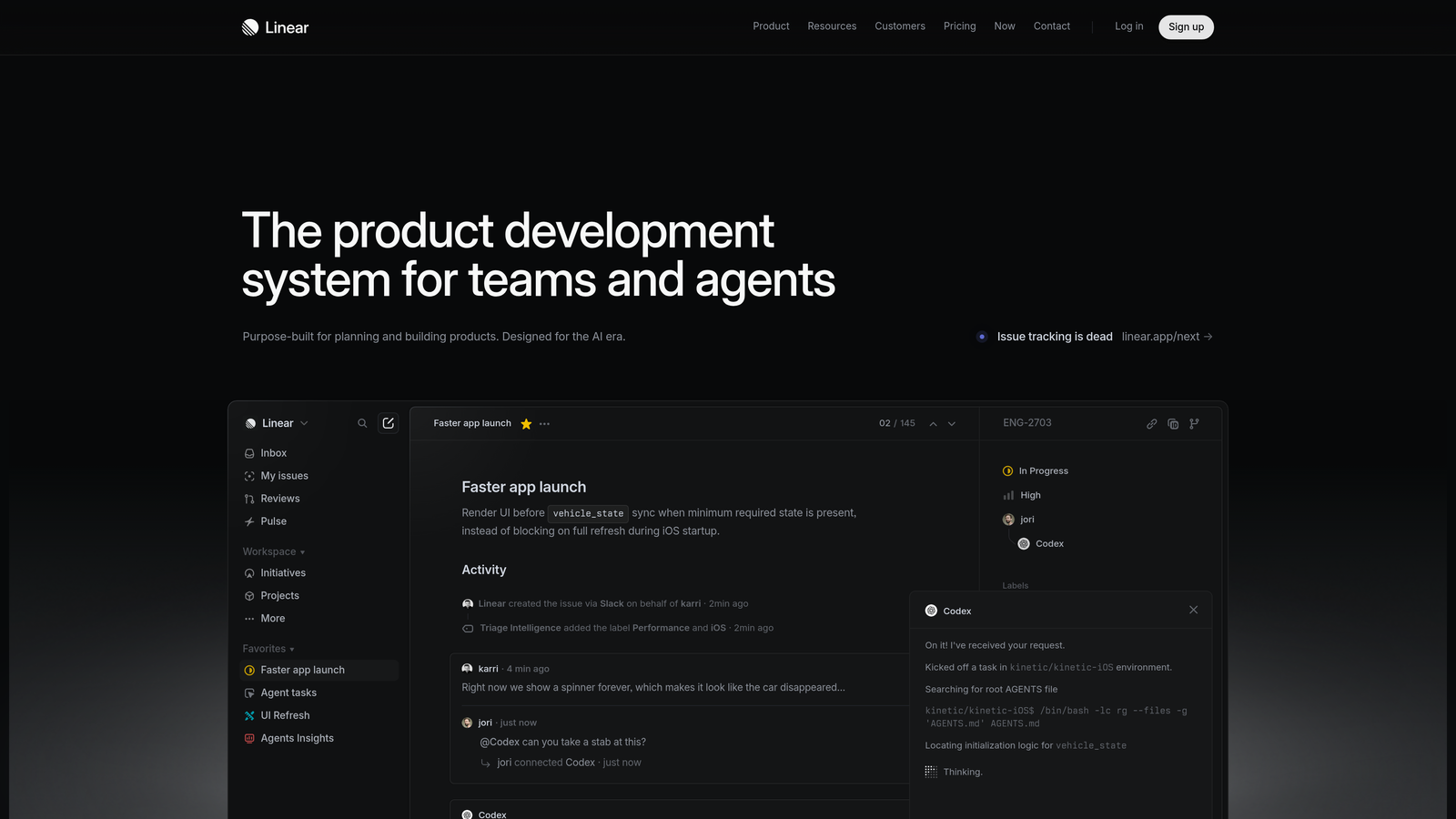
Linear is a fast, opinionated issue tracker that bridges the gap between support teams filing bugs and engineering teams resolving them, keeping feedback loops short and accountable.
Where This Tool Shines
One of the most frustrating experiences in support is filing a bug report and watching it disappear into a backlog with no visibility. Linear's cycle-based project management and triage workflows give support teams a clearer view of where reported issues stand and when they're likely to be addressed.
For teams using Halo AI, the integration is particularly seamless: Halo can automatically create Linear issues from support conversations, meaning bugs get filed the moment they're detected rather than waiting for a human to manually document them.
Key Features
Streamlined issue creation: Fast, low-friction bug filing with support tool integrations that reduce manual work.
Cycle-based project management: Predictable engineering sprints that make it easier to communicate timelines back to customers.
Triage workflows: Prioritization tools that surface customer-reported bugs and keep them from getting buried.
API and integrations: Connects with Slack, GitHub, and major support platforms for automated routing.
Best For
SaaS companies where product bugs are a significant driver of support volume and where closing the loop between support and engineering is a priority. Works best when paired with a support platform that can automate issue creation.
Pricing
Free for small teams. Paid plans start at $8/user/month with additional features for larger teams and organizations.
8. Assembled
Best for: Support operations leaders optimizing staffing in hybrid human-AI support models
Assembled is a workforce management platform built specifically for support teams, combining AI-powered forecasting with real-time scheduling and staffing optimization.
Where This Tool Shines
As support teams move toward hybrid models where AI handles a portion of volume and humans handle the rest, workforce management becomes significantly more complex. Assembled is designed for exactly this environment, helping ops leaders forecast demand accurately and staff accordingly without over- or under-hiring.
Real-time queue monitoring means managers can see coverage gaps as they develop rather than discovering them after SLAs have been missed. The schedule adherence tracking also provides visibility into whether agents are where they're supposed to be during peak periods.
Key Features
AI-powered forecasting: Predicts ticket volume and recommends staffing levels based on historical patterns and current trends.
Real-time queue monitoring: Live visibility into queue health and schedule adherence across the team.
Helpdesk integrations: Connects with Zendesk, Salesforce, Intercom, and other major platforms to pull live data.
Utilization and coverage reporting: Tracks agent efficiency and identifies coverage gaps before they become customer experience problems.
Best For
Mid-market and enterprise support operations teams managing large groups of agents across multiple shifts or time zones. Particularly valuable for teams transitioning to hybrid AI-human models where demand patterns are changing.
Pricing
Contact for pricing. Positioned for mid-market and enterprise support organizations with established workforce management needs.
9. Slack (with Support Integrations)
Best for: Teams using real-time internal collaboration and cross-functional escalation as part of their support workflow
Slack is the team communication platform most support teams already use, and when properly integrated with helpdesks and AI tools, it becomes a powerful escalation and collaboration hub that accelerates resolution on complex tickets.
Where This Tool Shines
Slack's value in a support stack isn't always obvious until you see what happens without it. Complex tickets often require input from engineers, account managers, or product teams. Without a fast, structured way to loop in the right people, those tickets stall. Slack channels, workflows, and Huddles solve this coordination problem.
The integration ecosystem is what makes Slack genuinely useful for support. Connected to your helpdesk, alerting tools, and AI agents, it becomes a real-time operations hub where the right people get notified about the right issues at the right time.
Key Features
Escalation channels: Dedicated channels for routing urgent tickets to the right cross-functional teams instantly.
Integration ecosystem: Connects with helpdesks, AI agents, alerting tools, and CRM systems for automated notifications.
Slack Workflows: Automations that route support alerts, trigger responses, and reduce manual coordination steps.
Huddles: Quick voice and video discussions for resolving complex tickets without scheduling a full meeting.
Best For
Any support team operating in a larger organization where resolving tickets often requires coordination with engineering, product, or customer success. Most effective when deeply integrated with the rest of the support stack rather than used in isolation.
Pricing
Free tier available with limited history and features. Pro plan starts at $7.25/user/month with full message history and expanded integrations.
Which Tool Is Right for Your Support Stack?
The best support teams in 2026 aren't winning with a single tool. They're winning with a well-integrated stack where each layer handles what it does best. Here's a quick way to think about the options above.
For AI-first full ticket resolution, Halo AI is the clear choice, especially for B2B SaaS teams that need autonomous agents with product context and business intelligence, not just FAQ deflection. For enterprise helpdesk infrastructure, Zendesk remains the benchmark. For conversational, in-app support with AI resolution, Intercom is the natural fit. If budget is a primary constraint, Freshdesk delivers strong AI-assisted ticketing at a fraction of enterprise pricing.
Layer in Guru for knowledge management, Klaus for quality assurance and coaching, and Linear for closing the loop between customer-reported bugs and engineering. Add Assembled when workforce planning becomes complex, and lean on Slack to keep internal coordination fast when tickets need cross-functional input.
The biggest gains come from choosing platforms that integrate well together. Fragmented tools create fragmented experiences, for agents and customers alike. The most effective stacks share context across systems, reduce manual handoffs, and give both AI and human agents the information they need to act quickly.
If your team is ready to move beyond AI that merely deflects tickets toward AI that actually resolves them, see Halo in action and discover how continuous learning transforms every interaction into smarter, faster support. Your support operation shouldn't scale linearly with your customer base. With the right tools, it doesn't have to.