9 Best Support Automation Tools for Software Companies in 2026
Support automation for software companies has evolved beyond simple ticket deflection — today's AI-powered platforms resolve issues end-to-end, handle technical queries at scale, and integrate with developer ecosystems. This guide evaluates the 9 best tools for SaaS and software teams in 2026, comparing AI resolution quality, integrations, analytics depth, and pricing to help lean support teams close the gap between customer demand and team capacity.
 Matt PattoliFounder14 min read
Software companies face a support challenge that's unlike almost any other industry. Users expect technically precise answers fast, ticket volume compounds with every new feature release, and your support team can't clone itself. Whether you're fielding integration questions at 2am or triaging a wave of bug reports after a deploy, the gap between what customers need and what a lean team can deliver gets expensive quickly.
The good news is that support automation has matured considerably. Today's best platforms don't just deflect tickets into a void — they resolve them end-to-end, learn from every interaction, and surface intelligence that helps your whole company move faster. Here are the top support automation tools worth considering for software and SaaS teams in 2026, evaluated on AI resolution quality, developer-ecosystem integrations, analytics depth, and pricing transparency.
1. Halo AI
Best for: B2B SaaS teams that want an AI-first support platform with deep developer-ecosystem integrations and business intelligence built in.
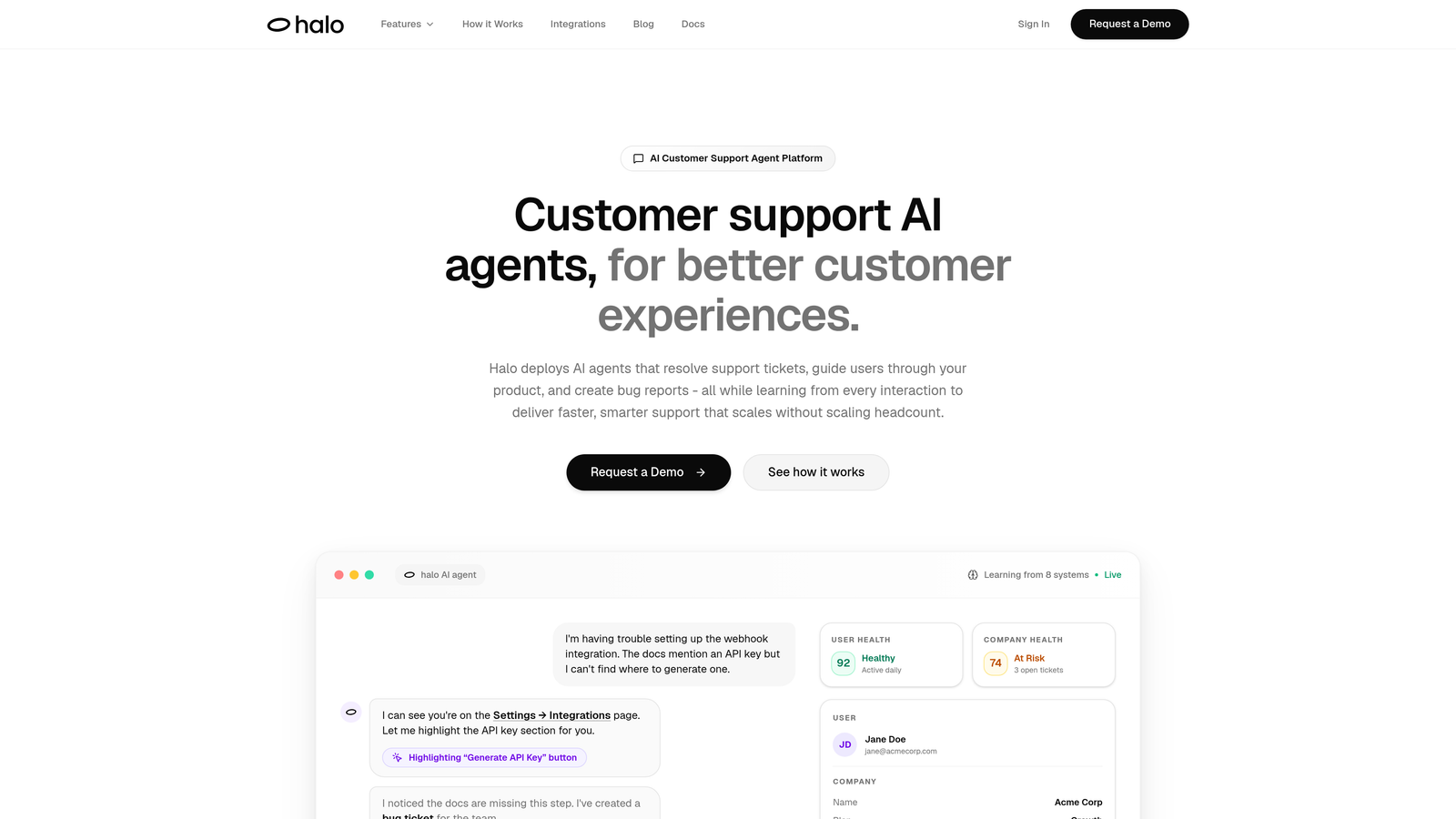
Halo AI is an AI-first customer support platform that deploys intelligent agents to resolve tickets, guide users through your product with page-aware context, and automatically create bug reports — learning from every interaction to get smarter over time.
Where This Tool Shines
What separates Halo from most support tools is its architecture. It wasn't built as a bolt-on layer over an existing helpdesk — it was designed from the ground up around AI agents that operate autonomously and improve continuously. That distinction matters when you're trying to resolve tickets rather than just route them.
The page-aware chat widget is particularly notable for software teams. Instead of asking users to describe what they're looking at, Halo's AI can see the same product context the user sees and provide visual UI guidance in real time. Pair that with auto bug ticket creation in Linear (with full context, not just a screenshot), and your support workflow starts feeding your engineering workflow automatically.
Key Features
Autonomous AI Agents: Resolve support tickets end-to-end with continuous learning that improves resolution quality after every interaction.
Page-Aware Chat Widget: Understands what users are looking at in your product and delivers contextual, visual guidance without requiring users to explain their screen.
Auto Bug Ticket Creation: Detects issues and automatically creates detailed bug tickets in Linear with full context, closing the loop between support and engineering.
Smart Inbox with Business Intelligence: Goes beyond CSAT to surface customer health signals, revenue intelligence, and anomaly detection from support data.
Deep Integrations: Connects natively with Linear, Slack, HubSpot, Intercom, Stripe, Zoom, PandaDoc, and Fathom — the actual stack software companies run on.
Best For
B2B SaaS companies at any stage that want AI agents handling routine tickets autonomously while surfacing business-level insights from support conversations. Especially strong for product-led teams where support data should inform engineering, sales, and customer success simultaneously.
Pricing
Contact for pricing. Halo is designed for B2B SaaS teams of all sizes, so pricing is scoped to your team's needs rather than a one-size-fits-all seat model.
2. Intercom
Best for: SaaS teams that want in-app messaging, product tours, and AI resolution in a single unified platform.
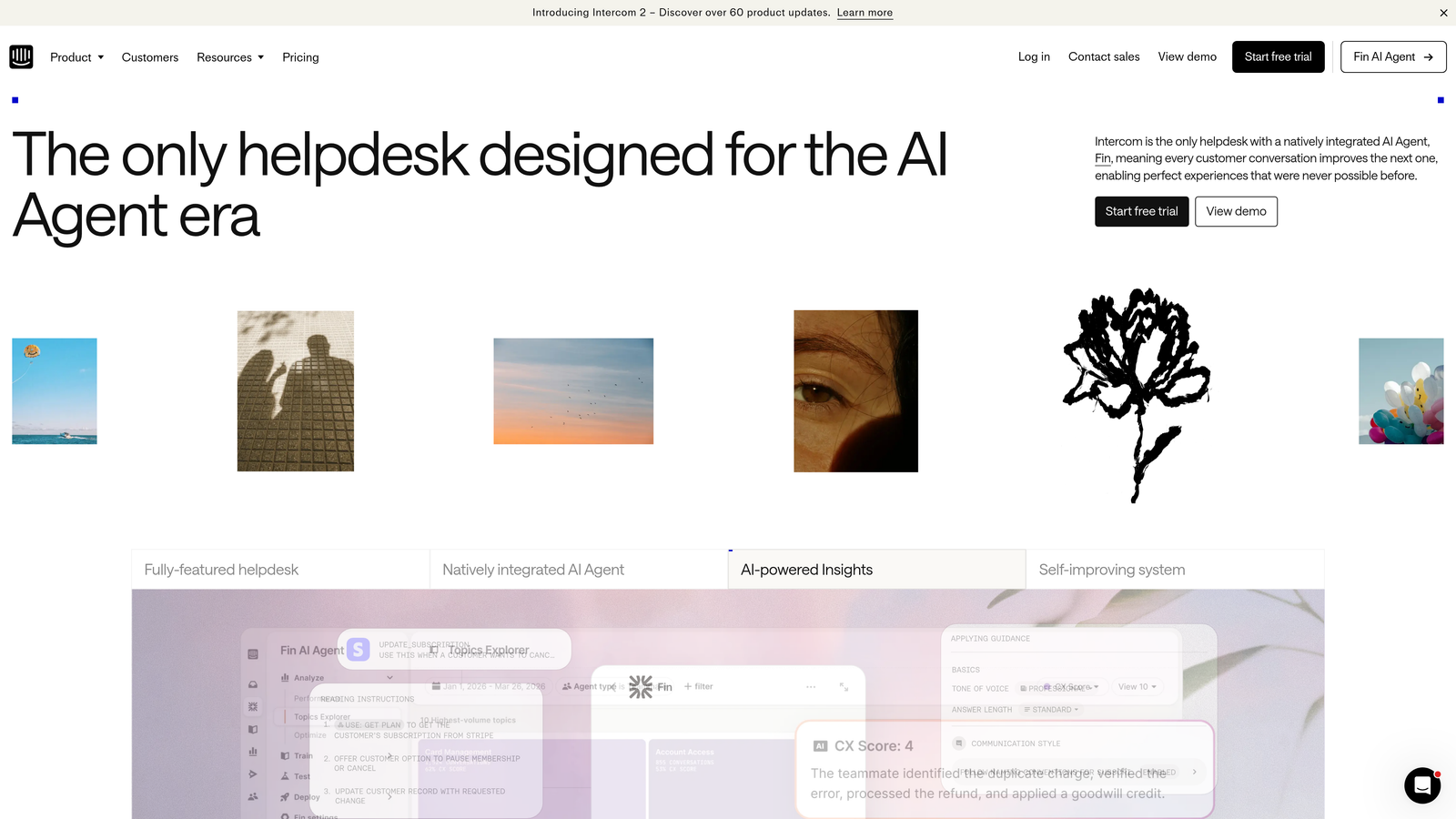
Intercom is a unified customer messaging platform with its Fin AI agent at the center, resolving support questions using your help center and conversation history.
Where This Tool Shines
Intercom's strength is the combination of product-embedded messaging and AI resolution. Fin handles front-line questions across chat, email, and in-app channels, while the platform's onboarding flows and product tours mean support and activation live in the same tool. That's a meaningful simplification for teams managing multiple point solutions.
The customer data platform underneath Intercom is also genuinely powerful. Event tracking gives agents context on what a user has done in your product before they even type their first message, which makes conversations faster and more relevant.
Key Features
Fin AI Agent: Handles automated resolution across chat, email, and in-app channels using your existing help content and conversation history.
In-App Messenger: Embeds directly in your product with product tours, onboarding checklists, and proactive messaging.
Workflow Automation: Custom bots, routing rules, and conditional logic for handling complex support flows without code.
Customer Data Platform: Tracks user events and product behavior so agents have full context before a conversation starts.
App Marketplace: Extensive integrations with 400+ apps and a robust API for custom connections.
Best For
Growth-stage SaaS teams that want their support, onboarding, and in-app messaging to live in one place. Particularly strong for product-led growth companies where activation and support overlap significantly.
Pricing
Starts at $39/seat/month (Essential plan). Fin AI resolution is priced per resolved conversation, so costs scale with AI usage rather than seat count alone.
3. Zendesk
Best for: Larger software teams or enterprises needing a mature, omnichannel support platform with extensive customization.
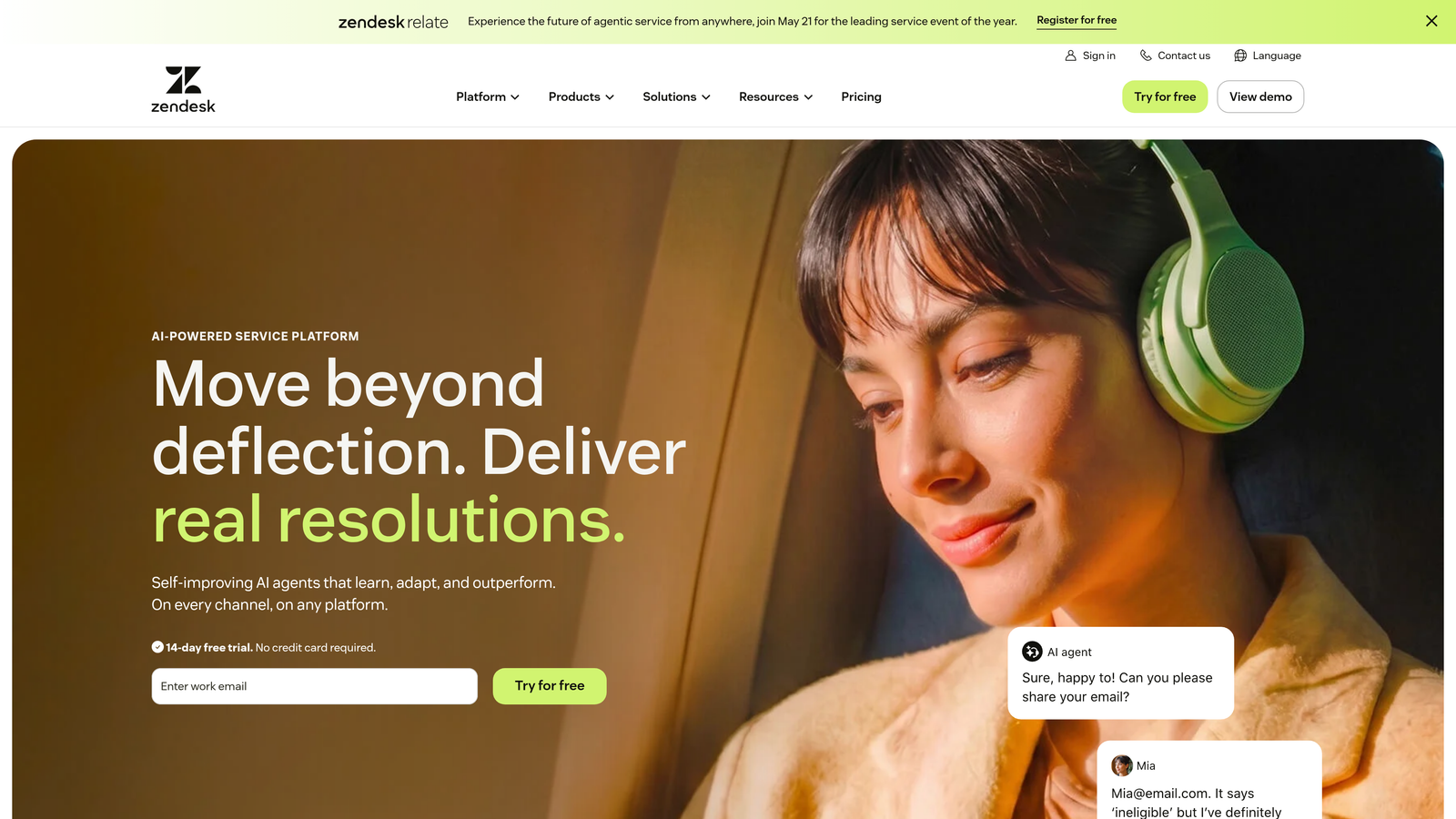
Zendesk is an enterprise-grade support platform with a mature automation engine, a massive integration marketplace, and AI tools for ticket triage, agent assistance, and self-service.
Where This Tool Shines
Zendesk's maturity is both its biggest strength and its most honest limitation. The platform has been refined over many years, and the workflow automation available through triggers, automations, and macros is genuinely deep. For complex support operations with multiple teams, SLAs, and escalation paths, Zendesk handles it without much strain.
The integration marketplace with over 1,500 apps means you can connect almost anything to Zendesk. That breadth is hard to match, though it can also mean relying on third-party apps for capabilities that more modern platforms include natively.
Key Features
AI-Powered Triage: Intelligent routing and ticket classification that reduces manual sorting for high-volume teams.
Advanced Workflow Automation: Triggers, automations, and macros that handle complex routing and response logic at scale.
1,500+ App Marketplace: One of the largest integration ecosystems in the support category.
Omnichannel Support: Email, chat, phone, social, and messaging managed from a single agent workspace.
Robust Analytics: Custom reporting and dashboards with detailed performance metrics across channels and teams.
Best For
Established software companies and enterprises with high ticket volumes, complex routing needs, and existing investments in the Zendesk ecosystem. Less ideal for early-stage teams that need fast setup without heavy configuration.
Pricing
Support Team starts at $19/agent/month. Suite plans (which include AI and omnichannel features) start at $55/agent/month. Enterprise pricing is custom.
4. Freshdesk
Best for: Budget-conscious software teams that need solid automation and AI features without a large upfront investment.
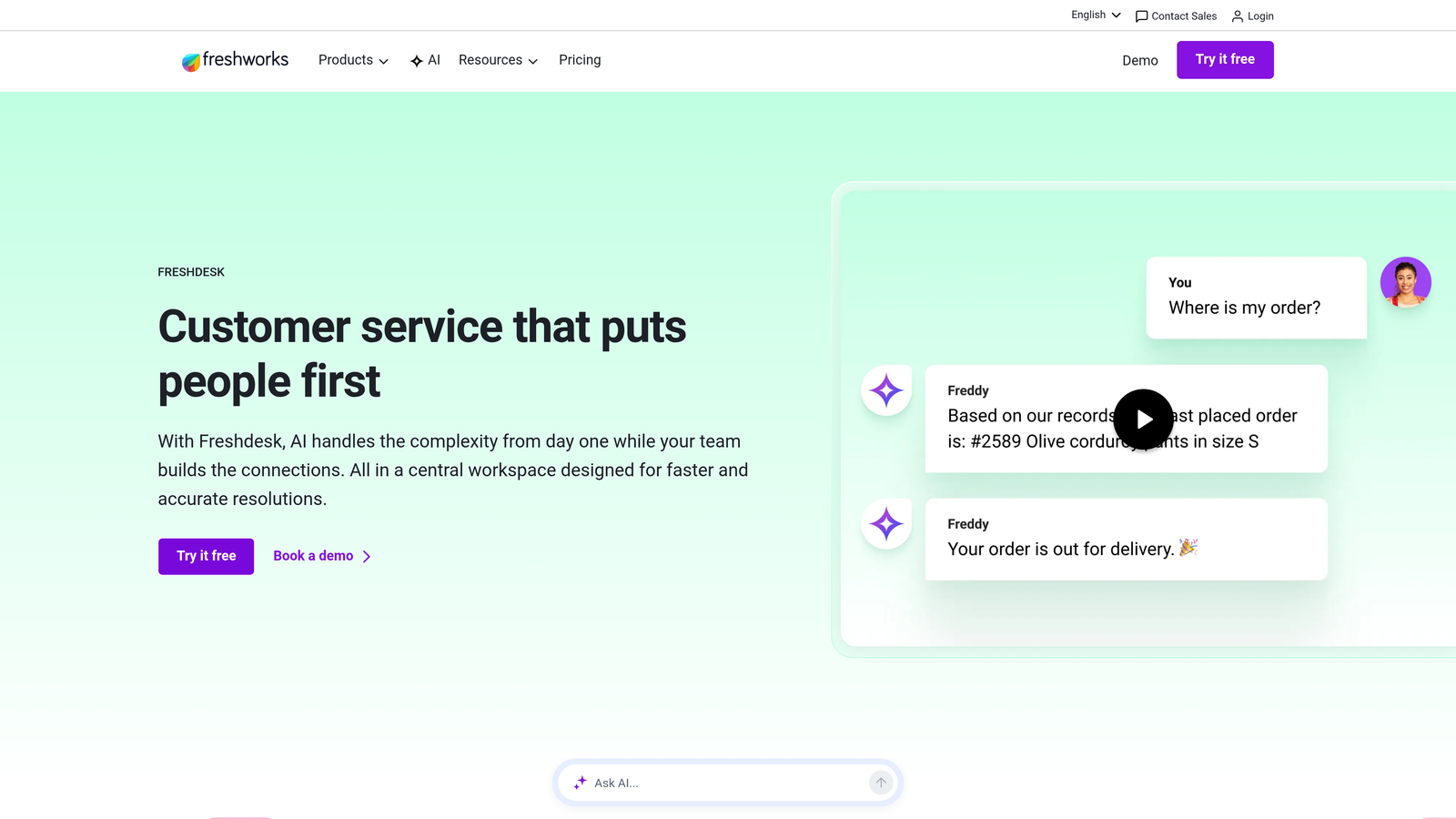
Freshdesk is a feature-rich helpdesk with Freddy AI for auto-triage and suggested responses, offering competitive automation at a price point that works for teams at earlier stages.
Where This Tool Shines
Freshdesk punches above its price point. Freddy AI handles ticket auto-classification and response suggestions without requiring extensive configuration, and the platform's scenario automations let you build multi-step workflows without needing a developer. The free tier is a genuine starting point, not a stripped-down demo.
For software teams just building out their support function, Freshdesk provides enough structure to handle growing ticket volume without the complexity tax that comes with enterprise platforms. You can add channels and automation as your needs evolve.
Key Features
Freddy AI: Automatically classifies incoming tickets and suggests relevant responses to agents, reducing manual triage time.
Scenario Automations: Multi-step automation workflows for routing, tagging, and escalating tickets based on defined conditions.
SLA Management: Configurable SLA policies with automatic escalation when response or resolution targets are at risk.
Built-In Knowledge Base: Self-service articles and community forums to deflect common questions before they become tickets.
Multi-Channel Support: Email, chat, phone, and social managed from a unified inbox with a free entry tier.
Best For
Early-stage to mid-market software companies that want solid AI-assisted automation without enterprise-level pricing. The free tier makes it accessible for very small teams testing their first support workflows.
Pricing
Free tier available for up to 2 agents. Paid plans start at $15/agent/month (Growth). Pro and Enterprise plans are available at higher price points with expanded automation and analytics.
5. Ada
Best for: Software teams focused on measurable automated resolution rates across multiple customer channels.
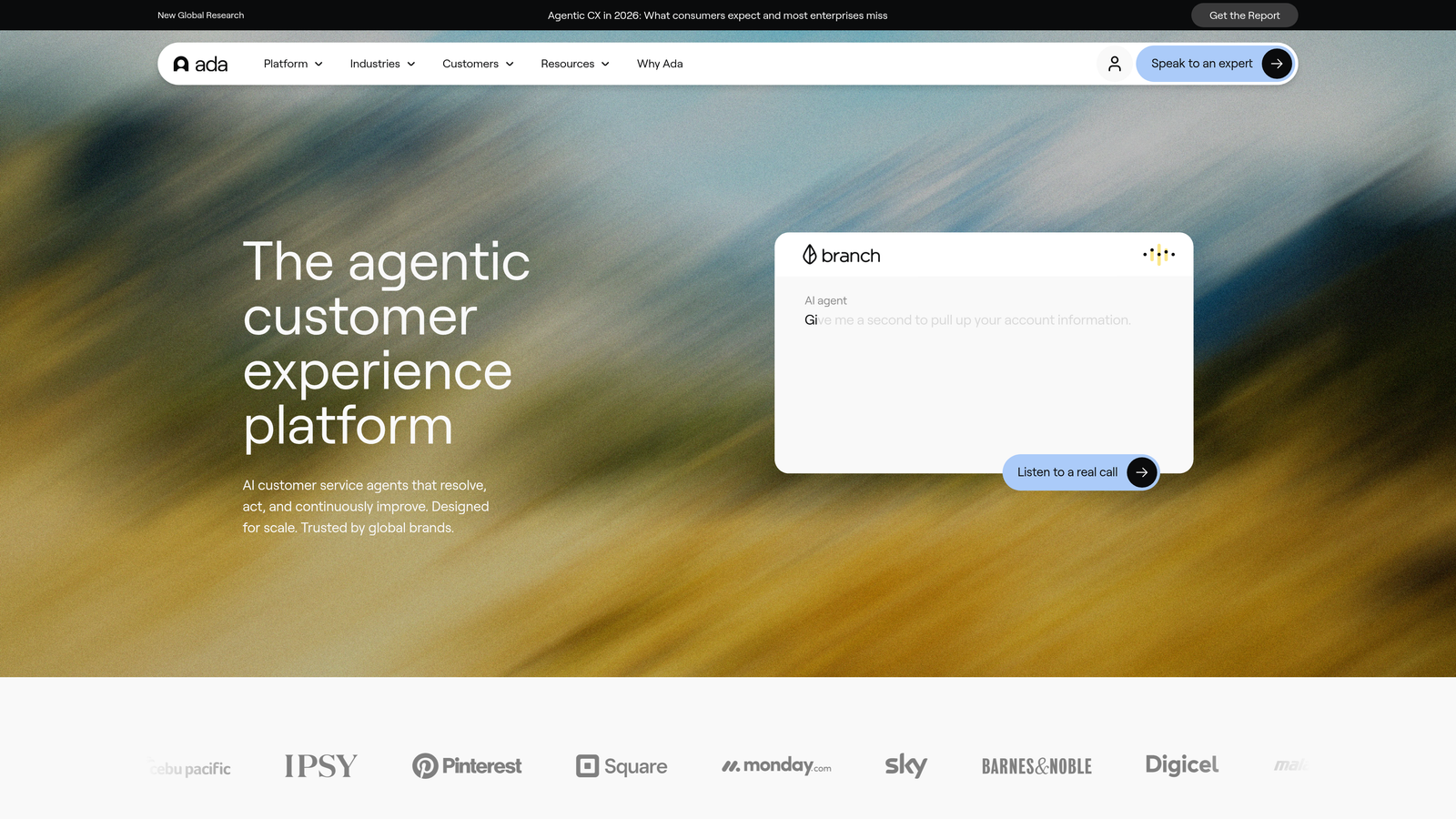
Ada is an AI-first customer service automation platform built around the idea of genuine resolution, not just deflection, with no-code setup and multi-channel deployment.
Where This Tool Shines
Ada's core philosophy is worth noting: the platform measures Automated Resolution as a primary metric, not just deflection rate. That distinction matters. Deflection means a customer gave up; resolution means their question was actually answered. For software companies that care about customer experience alongside efficiency, that framing shapes how you optimize.
The no-code builder makes it practical for support teams to manage and iterate on AI flows without engineering involvement. That independence is valuable when your dev team is focused on shipping product rather than maintaining support tooling.
Key Features
End-to-End AI Resolution: Handles conversations from start to finish, not just the initial deflection step before handing off to a human.
No-Code Flow Builder: Support teams can build, edit, and optimize AI conversation flows without writing code.
Multi-Channel Deployment: Runs across web, mobile, social, SMS, and email from a single management interface.
Automated Resolution Metrics: Tracks genuine resolution as the primary success metric, distinguishing it from simple deflection counting.
Helpdesk and CRM Integrations: Connects with major helpdesks and CRM systems to pull customer context into automated conversations.
Best For
Mid-market and enterprise software companies that want to drive measurable automated resolution across multiple channels and need a platform their support team can operate independently without developer support.
Pricing
Custom pricing. Contact Ada directly for a quote based on your volume and channel requirements.
6. Tidio
Best for: Early-stage software companies and small teams looking for affordable live chat and AI automation without complexity.
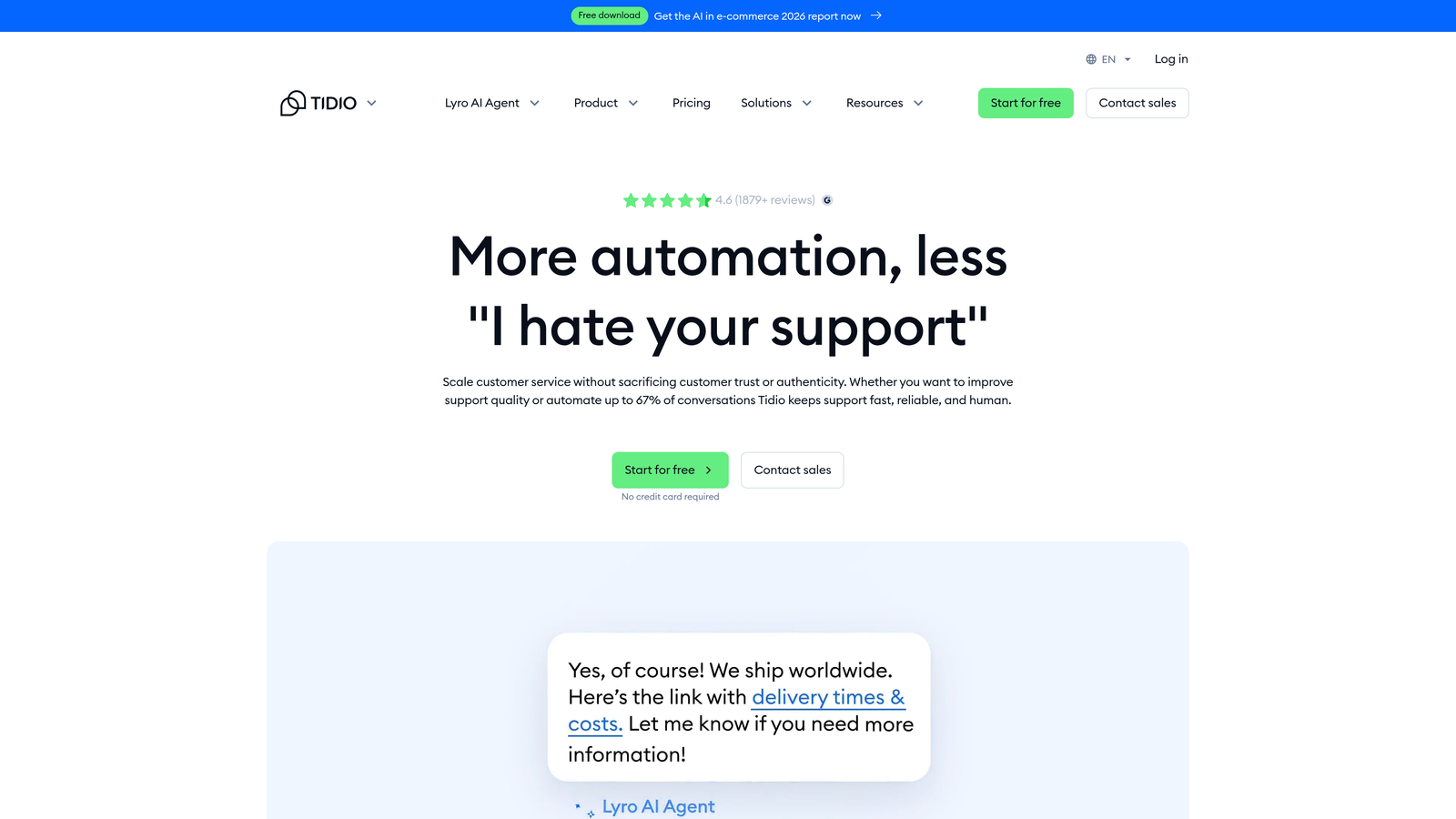
Tidio is a live chat and chatbot platform with Lyro AI, combining simple automation flows with conversational AI at a price point accessible for smaller teams.
Where This Tool Shines
Tidio's appeal is straightforward: it's fast to set up, affordable, and doesn't require a support operations team to manage. Lyro AI trains on your existing help content and starts handling common questions without a lengthy implementation process. For a startup shipping its first product, that speed to value matters.
The visual chatbot flow builder gives non-technical team members control over automation logic. You can create branching conversation paths, set up canned responses, and configure routing rules without touching code or filing a dev ticket.
Key Features
Lyro AI Chatbot: Trained on your help content to handle common customer questions conversationally without manual scripting.
Visual Flow Builder: No-code chatbot builder for creating branching conversation paths and automated routing logic.
Live Chat: Real-time chat with visitor tracking, canned responses, and agent assignment.
Multi-Channel Support: Handles conversations from email and Facebook Messenger alongside website chat.
Free Plan: Core features available at no cost, making it accessible for very small teams.
Best For
Early-stage software companies, indie developers, and small SaaS teams that need a functional chat and automation setup quickly without a significant budget or a dedicated support operations function.
Pricing
Free plan available with core features. Paid plans start at around $29/month, with Lyro AI conversations available as an add-on based on usage volume.
7. HubSpot Service Hub
Best for: Software teams already in the HubSpot ecosystem that want support tightly connected to marketing and sales data.
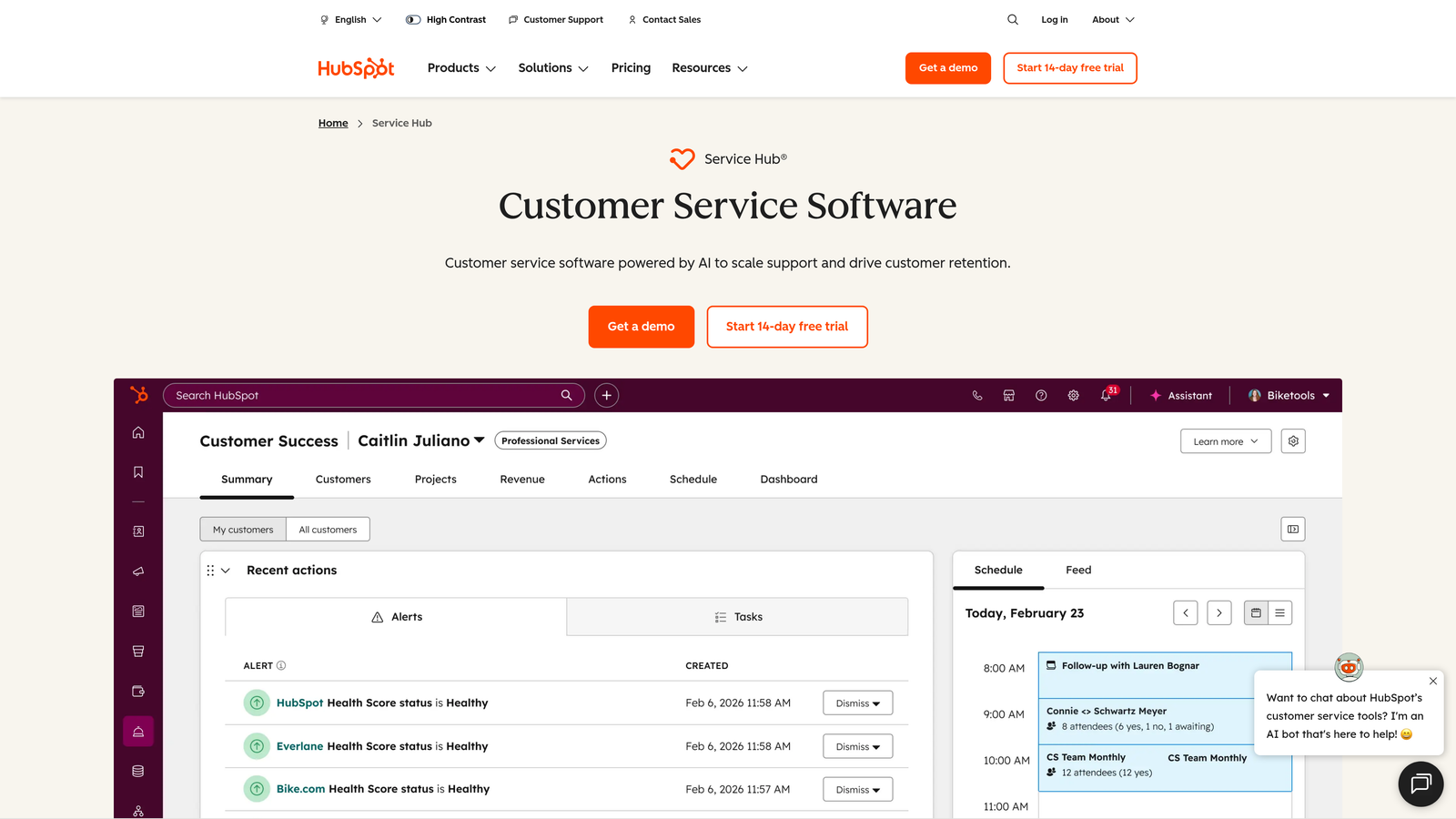
HubSpot Service Hub is a CRM-connected support platform that gives agents full customer lifecycle context, with ticketing automation, a knowledge base, and AI-powered tools built into the HubSpot ecosystem.
Where This Tool Shines
If your company already runs on HubSpot for marketing and sales, Service Hub is the most natural way to extend that into support. Agents can see a contact's full history — deals, emails, marketing touches, and past tickets — without switching tools or requesting data from another team. That context makes support conversations faster and more informed.
The Breeze AI copilot adds practical agent assistance: summarizing long conversation threads, drafting responses, and flagging relevant knowledge base articles. It's not a full autonomous agent, but it meaningfully reduces the cognitive load on your support team.
Key Features
CRM Integration: Every support interaction is connected to the full HubSpot contact record, including marketing, sales, and customer history.
Ticket Automation: Workflow-based automation for routing, SLA tracking, and status updates without manual intervention.
AI-Assisted Knowledge Base: Create and maintain self-service articles with AI assistance for drafting and optimization.
Customer Feedback Tools: Built-in NPS, CSAT, and CES surveys connected to contact records for longitudinal tracking.
Breeze AI Copilot: Agent-facing AI for conversation summarization, response drafting, and knowledge base suggestions.
Best For
Software companies already using HubSpot for CRM, marketing, or sales who want to unify their customer-facing operations in one platform rather than managing a separate support tool.
Pricing
Free tools available. Starter plan at $20/seat/month. Professional from $100/seat/month with advanced automation, reporting, and AI features.
8. Forethought
Best for: Enterprise software teams that want to add generative AI resolution on top of an existing helpdesk like Zendesk or Salesforce.
Forethought is an enterprise AI platform for support teams, using SupportGPT to understand ticket intent, auto-resolve common issues, and intelligently route complex requests to the right specialized agent.
Where This Tool Shines
Forethought's positioning is distinct: it's not trying to replace your helpdesk, it layers on top of it. If you have significant existing investment in Zendesk, Salesforce Service Cloud, or similar platforms and don't want to migrate, Forethought adds generative AI resolution and intelligent routing without disrupting your current setup.
The intent and sentiment-based routing is particularly useful for software companies with specialized support teams. Rather than routing by keyword or category alone, Forethought understands what a customer actually needs and directs them to the agent best positioned to help — reducing handoffs and resolution time.
Key Features
SupportGPT: Generative AI that understands ticket intent and generates contextually accurate responses for front-line resolution.
Solve AI: Front-line automated response layer that handles common questions before they reach a human agent.
Intelligent Triage and Routing: Routes tickets based on intent, sentiment, and complexity rather than simple keyword matching.
Helpdesk Integration Layer: Designed to work on top of existing platforms like Zendesk and Salesforce without requiring migration.
AI Performance Analytics: Dashboard tracking resolution rates, routing accuracy, and ROI from AI automation.
Best For
Enterprise software companies with established helpdesk infrastructure that want to add sophisticated AI resolution and routing without a platform migration. Best suited for teams with meaningful ticket volume and specialized support functions.
Pricing
Custom enterprise pricing. Contact Forethought directly for a demo and pricing based on your volume and helpdesk environment.
9. Help Scout
Best for: Software teams that prioritize customer intimacy and clean agent experience over heavy automation depth.
Help Scout is a human-centered support platform with a shared inbox, Beacon widget for docs-based deflection, and AI drafts for agents — built for teams where the quality of every customer interaction matters as much as efficiency.
Where This Tool Shines
Help Scout earns its place on this list by being genuinely excellent at what it does, even if that scope is narrower than some alternatives. The shared inbox is clean and well-designed, with collision detection that prevents two agents from responding to the same ticket simultaneously. Private notes and conversation threading keep context organized without cluttering the customer-facing experience.
The Beacon widget handles docs-based deflection gracefully, surfacing relevant knowledge base articles before a user submits a ticket. AI drafts help agents respond faster without replacing their voice entirely. For teams where "human" is part of the brand promise, Help Scout respects that balance.
Key Features
Shared Inbox: Collaborative inbox with collision detection, private notes, and conversation tagging to keep teams aligned.
Beacon Widget: In-app widget that surfaces relevant help articles before users submit a support request, reducing ticket volume passively.
AI Drafts and Summarization: Generates draft responses and conversation summaries for agents, speeding up response without full automation.
Docs Knowledge Base: Clean, searchable knowledge base with analytics showing which articles are and aren't solving user questions.
Workflow Automations: Simple rule-based automations and saved replies for handling common routing and response patterns.
Best For
Software teams at any stage that value clean UX, agent experience, and customer intimacy over deep automation. Particularly well-suited for companies where support is a relationship-building function, not purely a cost center.
Pricing
Standard plan starts at $25/user/month. Plus plan at $50/user/month with advanced reporting, custom fields, and additional integrations.
Choosing the Right Automation Stack for Your Team
The right tool depends less on feature lists and more on where your team is today and where your support operation needs to go. A few patterns worth keeping in mind as you evaluate.
If you're an early-stage team shipping your first product, Tidio or Freshdesk's free tier give you functional automation without a budget commitment. They're not the most powerful options on this list, but they'll handle the basics while you figure out your support patterns.
If you're a growth-stage SaaS company where support, onboarding, and product experience overlap, Intercom is the most integrated option for keeping those functions in one place. If you're already running HubSpot for CRM and marketing, Service Hub makes the most sense for unifying your customer data.
For teams that need AI resolution rather than just deflection, and want support data to feed engineering and customer success workflows, Halo AI is built specifically for that use case. The page-aware context, auto bug ticket creation in Linear, and business intelligence layer make it a strong fit for product-led SaaS companies that want their support platform to do more than close tickets.
Enterprise teams with existing helpdesk infrastructure and no appetite for migration should look closely at Forethought, which layers generative AI resolution on top of what you already have. And for teams where Zendesk is already embedded, its AI features and marketplace depth remain hard to displace at scale.
Your support team shouldn't scale linearly with your customer base. Let AI agents handle routine tickets, guide users through your product, and surface business intelligence while your team focuses on complex issues that need a human touch. See Halo in action and discover how continuous learning transforms every interaction into smarter, faster support.