9 Best Support Automation Tools for Tech Companies in 2026
Tech companies in 2026 need support automation that goes beyond basic chatbots to handle increasingly complex user needs without overwhelming engineering teams. Modern support automation for tech companies uses AI to understand technical context, integrate with engineering workflows, automatically resolve tickets, detect bugs early, and provide product insights—transforming support from a cost center into a strategic advantage that helps build better products.
 Matt PattoliFounder11 min read
Tech companies face a paradox: as your product grows more sophisticated, so do your users' support needs—but your engineering team can't afford to become a 24/7 help desk. Support automation has evolved far beyond canned responses and simple chatbots. Today's platforms use AI that understands technical context, learns from every interaction, and integrates directly with your engineering workflows. The right automation tool doesn't just deflect tickets—it resolves them accurately, detects bugs before they escalate, and surfaces insights that help you build better products. Here are the top support automation tools designed specifically for tech companies in 2026.
1. Halo AI
Best for: Tech companies wanting AI-native support with engineering tool integration and continuous learning
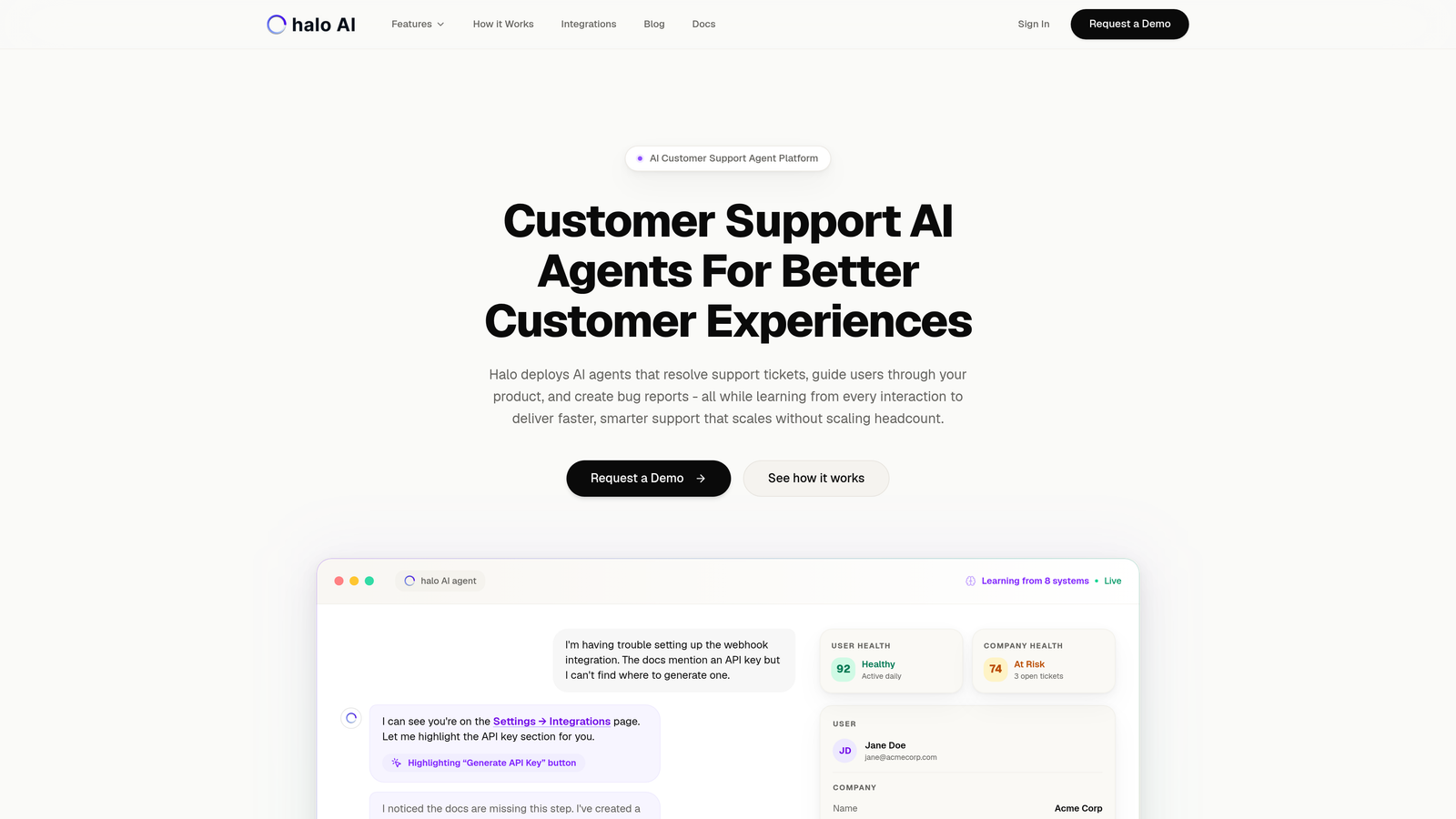
Halo AI is an AI-first customer support platform built specifically for tech companies that need more than basic automation.
Where This Tool Shines
Unlike helpdesk platforms that bolted AI onto existing systems, Halo was architected from the ground up for autonomous support. Its AI agents don't just respond to tickets—they continuously learn from every interaction, improving resolution accuracy over time without manual retraining.
The page-aware chat widget sees exactly what your users see, enabling visual guidance through complex UI flows. When issues require engineering attention, Halo automatically creates detailed bug tickets in Linear with full context, screenshots, and reproduction steps.
Key Features
Autonomous AI Agents: Resolve technical support tickets independently with continuous learning that improves accuracy without manual intervention.
Page-Aware Context: Chat widget understands the exact page and UI state users are viewing for precise visual guidance.
Auto Bug Ticket Creation: Detects bugs and creates detailed Linear tickets with reproduction steps and user context automatically.
Business Intelligence Layer: Surfaces customer health signals, revenue intelligence, and anomaly detection beyond basic support metrics.
Smart Escalation: Seamlessly hands off complex issues to human agents with full conversation context and relevant data.
Best For
B2B SaaS companies and product teams that want support automation tightly integrated with their engineering workflows. Particularly valuable for growth-stage tech companies where support volume is scaling faster than headcount, and where technical accuracy matters more than pure deflection rates.
Pricing
Contact for pricing. Designed for companies prioritizing quality automation over volume-based metrics.
2. Intercom
Best for: Product-led growth companies needing messaging automation with strong mobile support
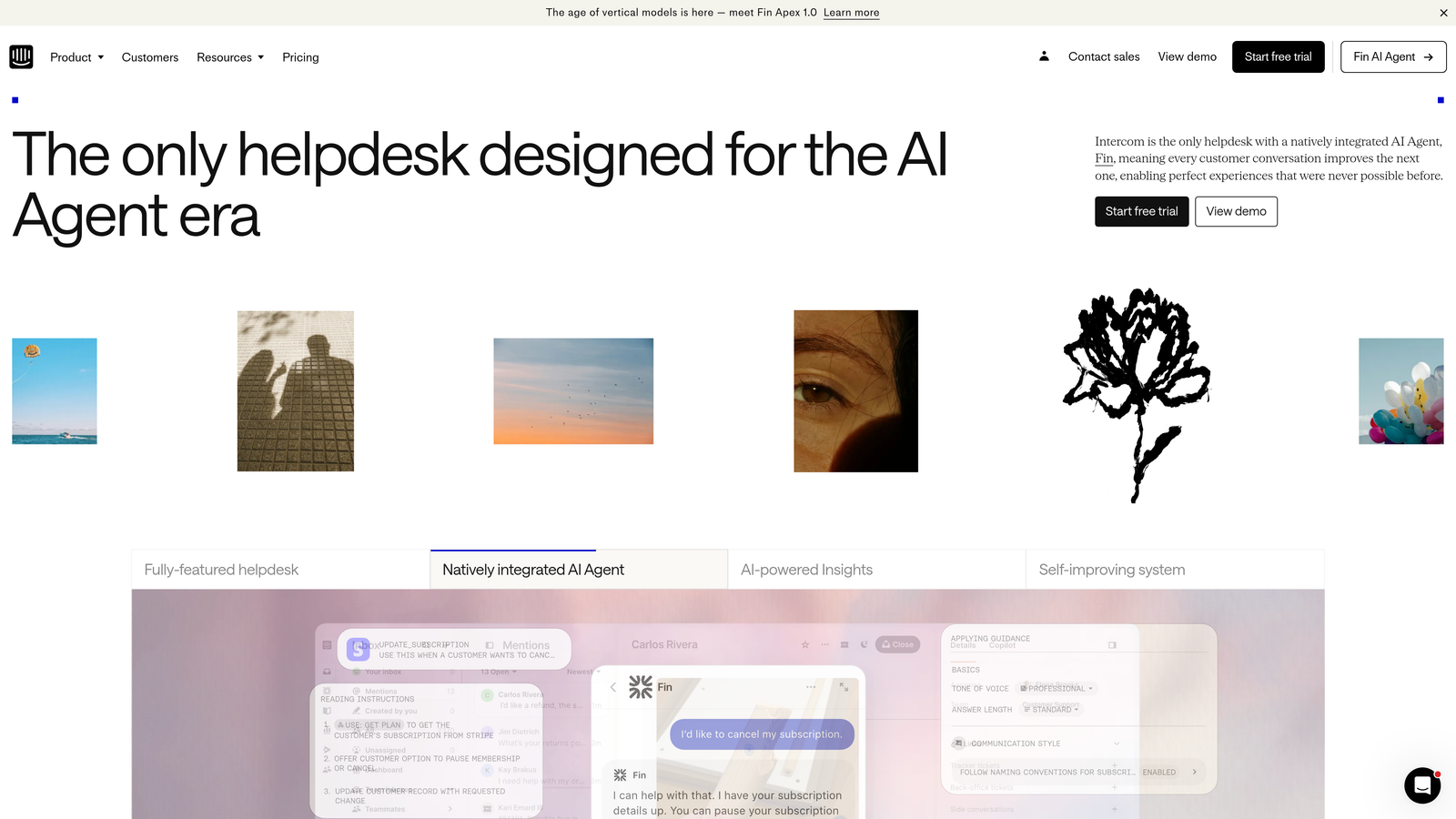
Intercom is a customer messaging platform with Fin AI agent designed for product-first tech companies.
Where This Tool Shines
Intercom excels at combining support automation with product onboarding and growth features. Their Fin AI agent handles common queries while product tours guide users through features proactively, reducing support volume before tickets even arrive.
The mobile SDK integration is particularly robust, making it ideal for tech companies with native iOS or Android apps. You can trigger contextual support messages based on in-app behavior, creating a seamless support experience within your product.
Key Features
Fin AI Agent: Generative AI that resolves customer queries by pulling answers from your knowledge base and past conversations.
Product Tours: Automated onboarding flows that reduce support volume by guiding users through features proactively.
Custom Bot Builder: Create conversation workflows with branching logic for complex technical scenarios.
Resolution Bot: Suggests relevant help articles before users submit tickets, deflecting common queries.
Mobile SDK: Deep integration for iOS and Android apps with contextual messaging based on user behavior.
Best For
Product-led growth tech companies with mobile apps that want to blend support automation with onboarding and engagement. Works best when you have a solid knowledge base and want AI that learns from your existing content.
Pricing
Starts at $39 per seat monthly. Fin AI is priced per resolution, which can scale costs quickly for high-volume support teams.
3. Zendesk
Best for: Enterprise tech companies needing mature automation with extensive integration options
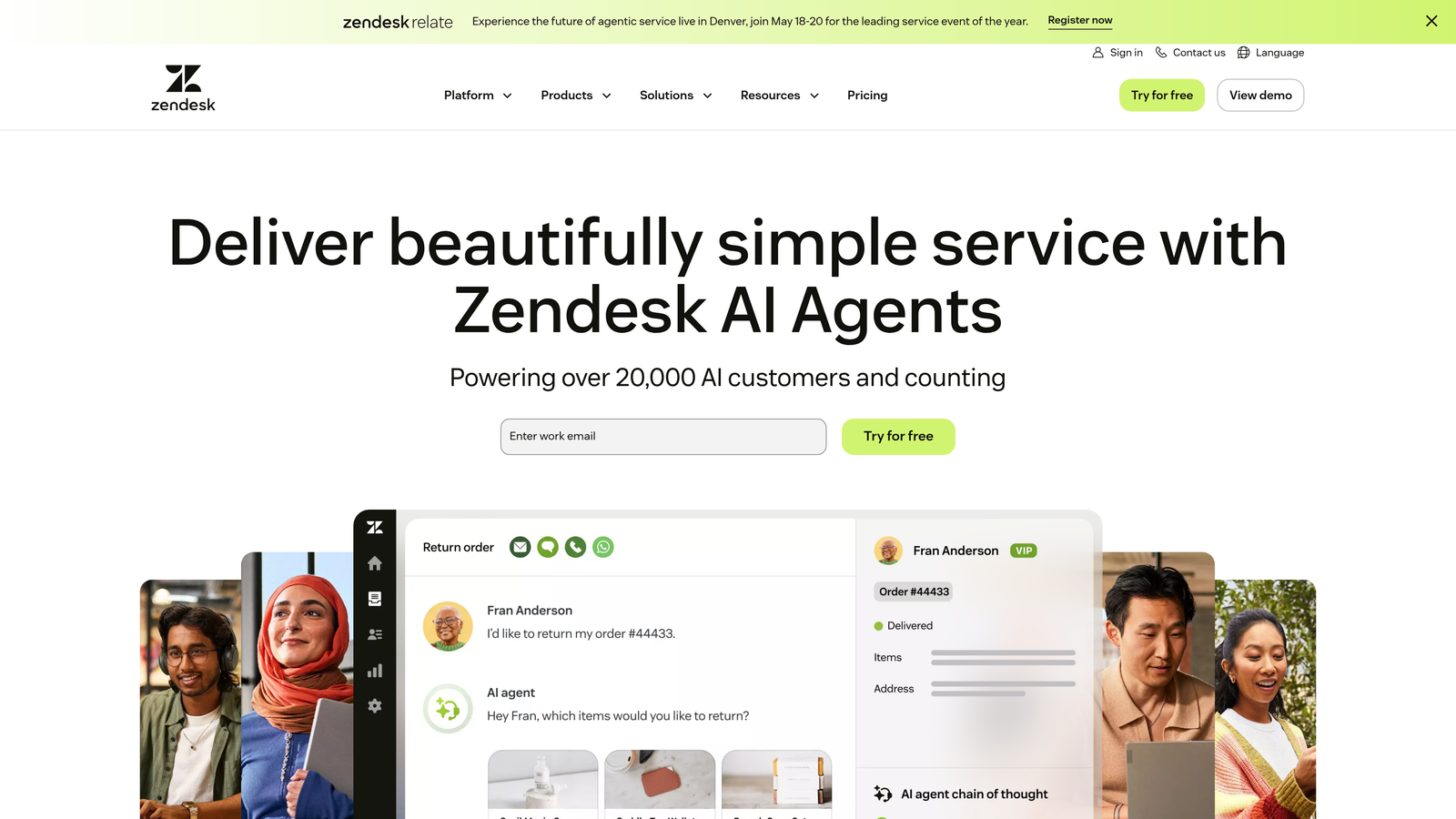
Zendesk is an established helpdesk platform with advanced AI capabilities and a massive ecosystem of integrations.
Where This Tool Shines
Zendesk brings enterprise-grade reliability and a mature automation framework that tech companies can customize extensively. The platform's intent detection AI routes tickets accurately, while automation triggers handle complex multi-step workflows without manual intervention.
The marketplace offers over 1,000 integrations, meaning your support automation can connect to virtually any tool in your tech stack. For companies with complex support operations spanning multiple channels, Zendesk provides the infrastructure to automate at scale.
Key Features
Advanced AI Agents: Intent detection and sentiment analysis route tickets to the right team with appropriate priority.
Automation Triggers: Create complex multi-condition workflows that execute actions across your entire support operation.
Extensive Marketplace: Over 1,000 pre-built integrations connect support automation to your existing tech stack.
Reporting Analytics: Deep insights into automation performance, resolution rates, and team efficiency metrics.
Multi-Channel Management: Unified automation across email, chat, phone, social media, and messaging apps.
Best For
Enterprise tech companies with complex support operations, multiple product lines, or global teams requiring sophisticated automation workflows and extensive customization capabilities.
Pricing
Suite Team starts at $55 per agent monthly. AI features require additional paid add-ons, which can increase costs significantly for full automation capabilities.
4. Freshdesk
Best for: Budget-conscious tech startups wanting solid automation without enterprise pricing
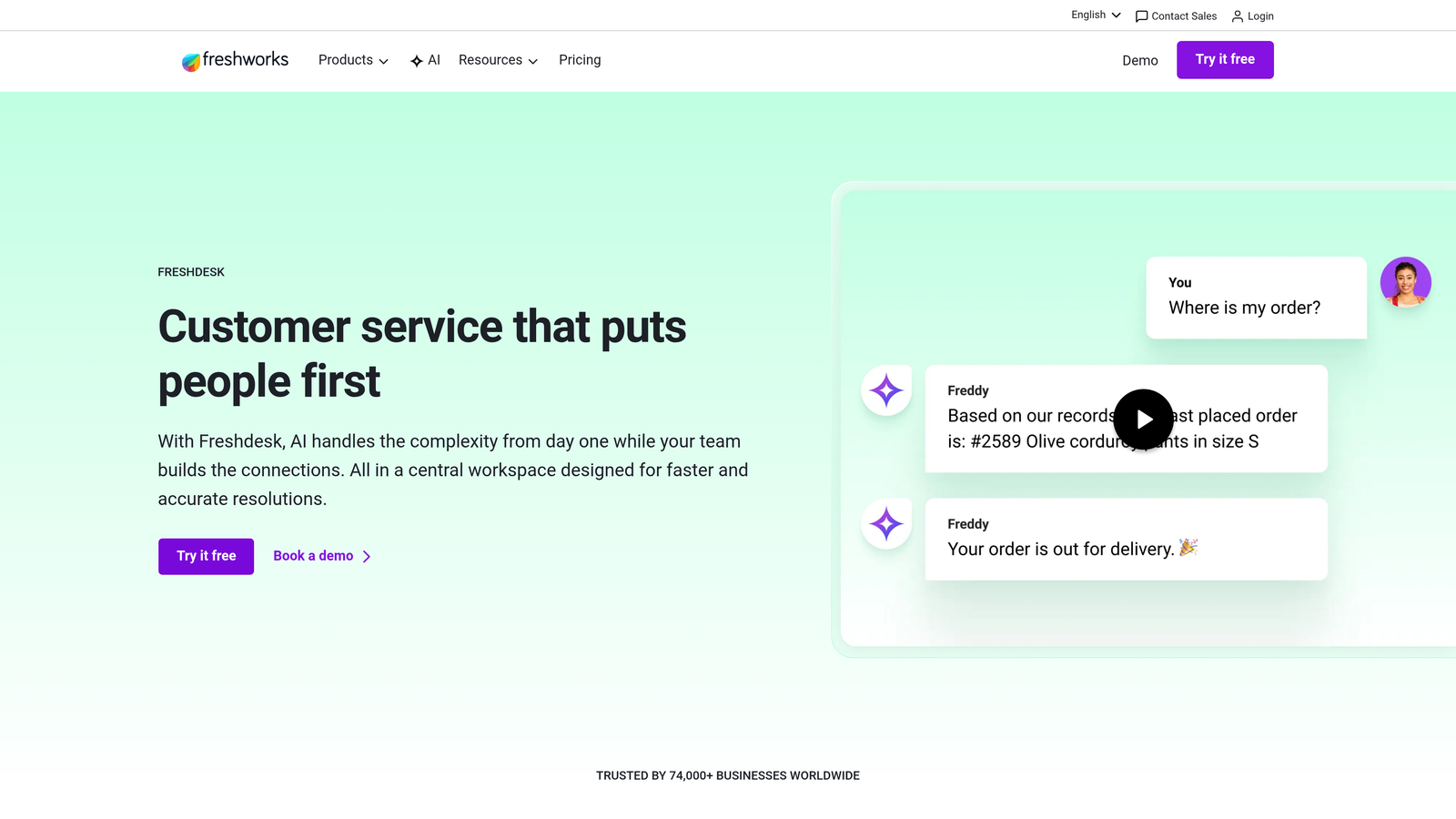
Freshdesk is a cost-effective helpdesk with Freddy AI automation designed for growing tech teams.
Where This Tool Shines
Freshdesk delivers surprisingly robust automation at a fraction of enterprise platform costs. Freddy AI handles intelligent ticket routing and suggests responses based on past resolutions, while scenario automations let you build complex workflows without expensive add-ons.
The developer-friendly REST API makes custom integrations straightforward, and the free tier is genuinely useful for early-stage startups—not just a trial disguised as free software. Built-in collaboration tools mean your team can work together on complex technical issues without switching platforms.
Key Features
Freddy AI: Intelligent ticket routing, suggested responses, and automated categorization based on ticket content and history.
Scenario Automations: Build multi-step workflows with conditions, time delays, and cross-team actions without coding.
Developer API: Clean REST API documentation and webhooks for custom integrations with your tech stack.
Team Collaboration: Internal notes, shared ownership, and parent-child ticket linking for complex technical issues.
Free Tier: Actually functional free plan for up to 10 agents—rare among serious helpdesk platforms.
Best For
Early to mid-stage tech startups that need legitimate automation capabilities but can't justify enterprise helpdesk pricing. Works well for teams that value developer experience and need room to grow.
Pricing
Free tier available for small teams. Growth plan at $15 per agent monthly includes most automation features, making it accessible for bootstrapped startups.
5. Help Scout
Best for: Tech companies prioritizing human-assisted automation over full autonomy
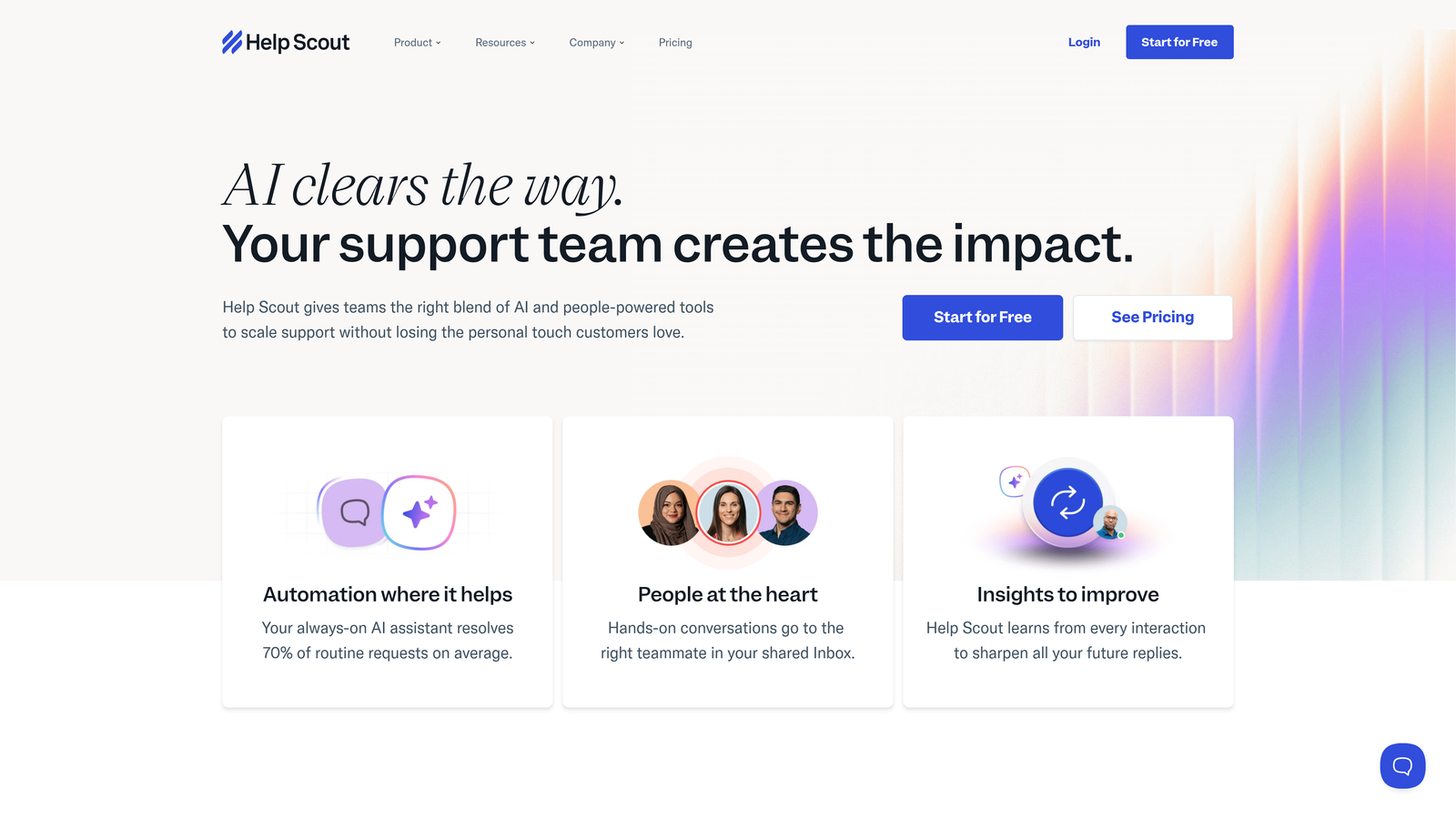
Help Scout is a support platform that uses AI to assist human agents rather than replace them.
Where This Tool Shines
Help Scout takes a different philosophy: AI drafts responses that agents review and send, maintaining human oversight while dramatically reducing response time. This approach works particularly well for tech companies where accuracy matters more than pure automation rates.
The interface is refreshingly clean—no clutter, no unnecessary features, just focused tools for delivering great support. The Beacon widget provides smart suggestions to users before they contact support, while the knowledge base with AI-powered search helps customers self-serve effectively.
Key Features
AI Drafts: AI suggests complete responses based on your knowledge base and past conversations, which agents review before sending.
Beacon Widget: Embedded support widget that suggests relevant articles and answers based on the page users are viewing.
Docs Knowledge Base: AI-powered search helps customers find answers independently with intelligent article suggestions.
Saved Replies: Template library with variables and conditional content for consistent technical responses.
Clean Interface: Distraction-free design keeps agents focused on customers rather than navigating complex software.
Best For
Tech companies that want AI to augment their support team rather than replace it. Ideal when technical accuracy is critical and you prefer human review over fully autonomous responses.
Pricing
Standard plan at $20 per user monthly includes AI features. Straightforward pricing with no hidden automation add-ons.
6. Front
Best for: Tech teams needing collaborative inbox automation with strong email workflows
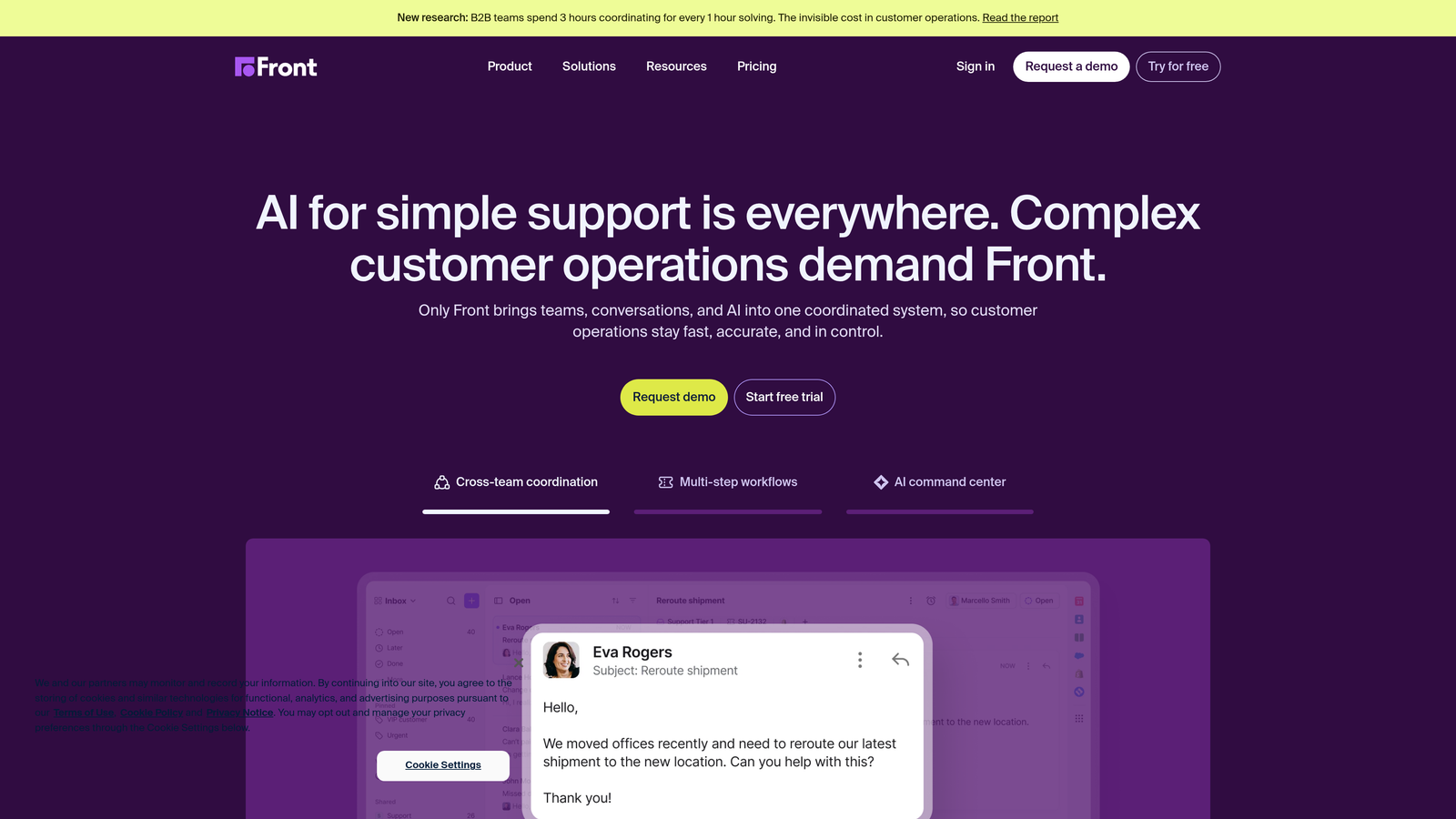
Front is a shared inbox platform with rule-based automation designed for collaborative technical support.
Where This Tool Shines
Front transforms email chaos into organized workflows through intelligent automation rules. The shared inbox with internal comments lets your team collaborate on complex technical issues without forwarding emails or losing context.
The rule-based automation engine is particularly powerful for tech companies with established support processes. You can automatically route emails based on content, assign tickets to specialists, and trigger actions across multiple channels—all while maintaining visibility into team workload and SLA compliance.
Key Features
Shared Inbox: Team members collaborate on emails with internal comments visible only to your team, not customers.
Rule Engine: Sophisticated automation rules route messages, assign conversations, and trigger actions based on multiple conditions.
SLA Management: Automated tracking and alerts ensure technical issues receive timely responses based on priority.
Multi-Channel Routing: Unified automation across email, SMS, social media, and live chat channels.
Email Workflow: Particularly strong at handling complex email threads with multiple stakeholders and technical escalations.
Best For
Tech companies with support operations heavily centered on email, or teams that need strong collaboration features for handling complex technical issues requiring multiple specialists.
Pricing
Starter plan at $19 per seat monthly. Growth and Scale plans add more sophisticated automation rules and analytics.
7. Kustomer
Best for: Tech companies wanting CRM-first support with unified customer context
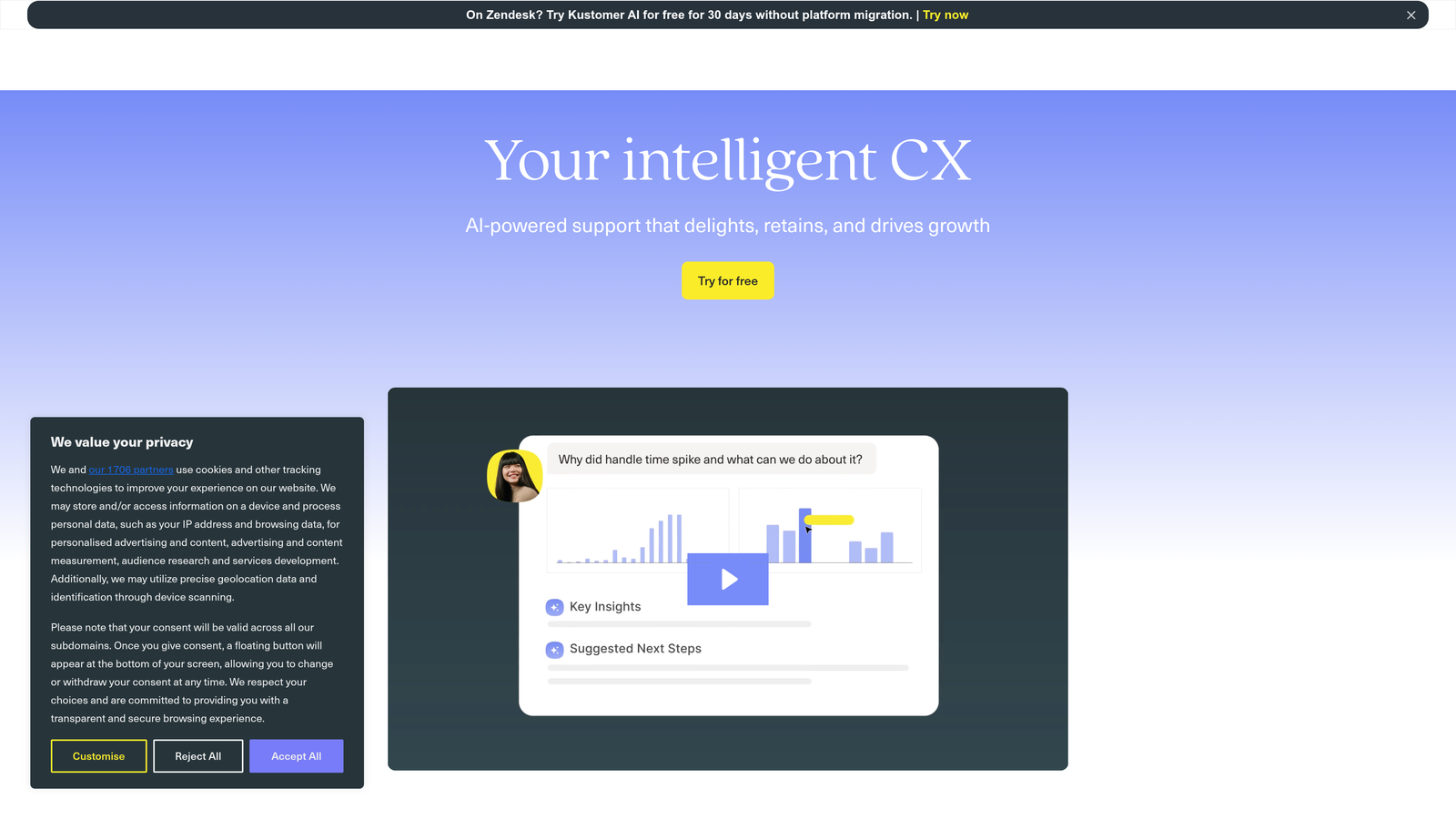
Kustomer is a CRM-native support platform with unified customer timelines and KIQ AI automation.
Where This Tool Shines
Kustomer's unified customer timeline gives support agents complete context—every conversation, transaction, product usage event, and technical issue in one view. This holistic perspective enables more intelligent automation because the system understands the full customer relationship, not just isolated support tickets.
The custom objects feature lets tech companies model their specific data structures, whether that's API usage, feature adoption, or technical account details. KIQ AI then uses this rich context to automate conversations with understanding of each customer's unique situation.
Key Features
Unified Timeline: Complete customer history including support, transactions, and product usage in a single chronological view.
KIQ AI: Conversational AI that understands full customer context for more accurate automated responses.
Business Process Automation: Create automated workflows that span support, operations, and customer success teams.
Custom Objects: Model your tech company's specific data structures for context-aware automation.
Proactive Messaging: Trigger automated outreach based on product usage patterns or technical events.
Best For
Tech companies with complex customer relationships where support automation needs deep context about account history, product usage, and cross-functional interactions.
Pricing
Enterprise plan at $89 per user monthly. Higher price point reflects the CRM-grade capabilities and unified data model.
8. Ada
Best for: High-volume technical support requiring multilingual automation capabilities
Ada is a conversational AI platform focused on achieving high automated resolution rates across languages.
Where This Tool Shines
Ada's no-code builder lets non-technical team members create sophisticated conversation flows without developer involvement. The generative AI responds to technical queries by understanding intent and pulling from your knowledge base, while the multilingual support across 50+ languages makes it valuable for global tech companies.
The analytics dashboard provides clear visibility into what's working and what's not, showing exactly where conversations succeed or require human handoff. This data-driven approach helps you continuously improve automation performance without guesswork.
Key Features
No-Code Builder: Create complex conversation flows and automation logic without writing code or involving developers.
Generative AI: Natural language responses that understand technical queries and pull relevant information from your content.
Multilingual Support: Automated conversations in over 50 languages with consistent quality across markets.
Proactive Campaigns: Trigger automated conversations based on user behavior or technical events in your product.
Performance Analytics: Detailed insights into resolution rates, conversation paths, and opportunities for automation improvement.
Best For
Tech companies with high support volume across multiple languages, or teams that want business users to manage automation without constant developer involvement.
Pricing
Contact for pricing. Usage-based model scales with conversation volume rather than seat count.
9. Drift
Best for: Tech companies needing seamless support-to-sales handoff with revenue intelligence
Drift is a conversational AI platform that bridges support automation with sales engagement and revenue operations.
Where This Tool Shines
Drift recognizes that not every conversation is a support issue—some are sales opportunities. The intelligent routing automatically identifies buying intent and seamlessly transitions conversations from support AI to sales reps, complete with full context.
The revenue intelligence features track which support interactions correlate with expansion or churn risk, giving tech companies visibility into how support automation impacts business outcomes. Account-based targeting lets you customize automation behavior for high-value accounts requiring white-glove treatment.
Key Features
Conversational AI: Handles technical support queries while identifying sales opportunities for intelligent routing.
Intelligent Routing: Automatically directs conversations to support, sales, or account management based on intent and context.
Revenue Intelligence: Tracks how support interactions correlate with account expansion, retention, and churn risk.
Meeting Scheduling: Automated calendar booking for technical demos or escalations requiring live conversation.
Account-Based Targeting: Customize automation behavior and routing rules for strategic accounts.
Best For
Tech companies where support and sales are closely connected, particularly product-led growth companies where support conversations often uncover expansion opportunities.
Pricing
Premium plan starts at $2,500 monthly. Higher price point reflects the revenue operations and sales engagement capabilities beyond pure support automation.
Making the Right Choice
Your support automation strategy should match your company's stage and priorities. If you're building a tech company where support needs to evolve with your product, Halo AI's continuous learning and engineering integrations create a system that gets smarter over time. For product-led growth companies with strong mobile presence, Intercom combines support automation with onboarding flows that reduce ticket volume proactively.
Enterprise teams with complex operations benefit from Zendesk's mature ecosystem, while budget-conscious startups find surprising depth in Freshdesk's affordable plans. Companies prioritizing human oversight appreciate Help Scout's AI-assisted approach, and email-heavy operations leverage Front's collaborative inbox automation.
When choosing, consider these factors: Does the AI actually learn from your interactions, or does it require constant manual training? How deeply does it integrate with your engineering tools—can it create bug tickets automatically or just send notifications? What happens when automation can't resolve an issue—is the handoff to humans seamless or clunky? And critically, does the pricing model align with your growth trajectory?
Your support team shouldn't scale linearly with your customer base. Let AI agents handle routine tickets, guide users through your product, and surface business intelligence while your team focuses on complex issues that need a human touch. See Halo in action and discover how continuous learning transforms every interaction into smarter, faster support.