9 Best Support Automation Platforms for B2B Teams in 2026
This support automation platform comparison evaluates nine leading solutions for B2B teams in 2026, analyzing their AI-powered automation capabilities, autonomous ticket resolution features, integration ecosystems, and pricing structures. The guide helps teams select the right platform to scale support operations efficiently without getting overwhelmed by ticket volume, with detailed breakdowns of each platform's strengths for specific business needs.
 Matt PattoliFounder11 min read
Choosing the right support automation platform can mean the difference between scaling efficiently and drowning in tickets. With AI capabilities advancing rapidly, today's platforms offer far more than simple ticket routing—they can resolve issues autonomously, surface business intelligence, and integrate deeply with your existing tech stack.
This comparison breaks down nine leading platforms, examining their automation capabilities, AI features, integration ecosystems, and pricing to help you find the right fit for your team's specific needs.
1. Halo AI
Best for: B2B teams seeking autonomous AI agents with continuous learning and deep tech stack integration
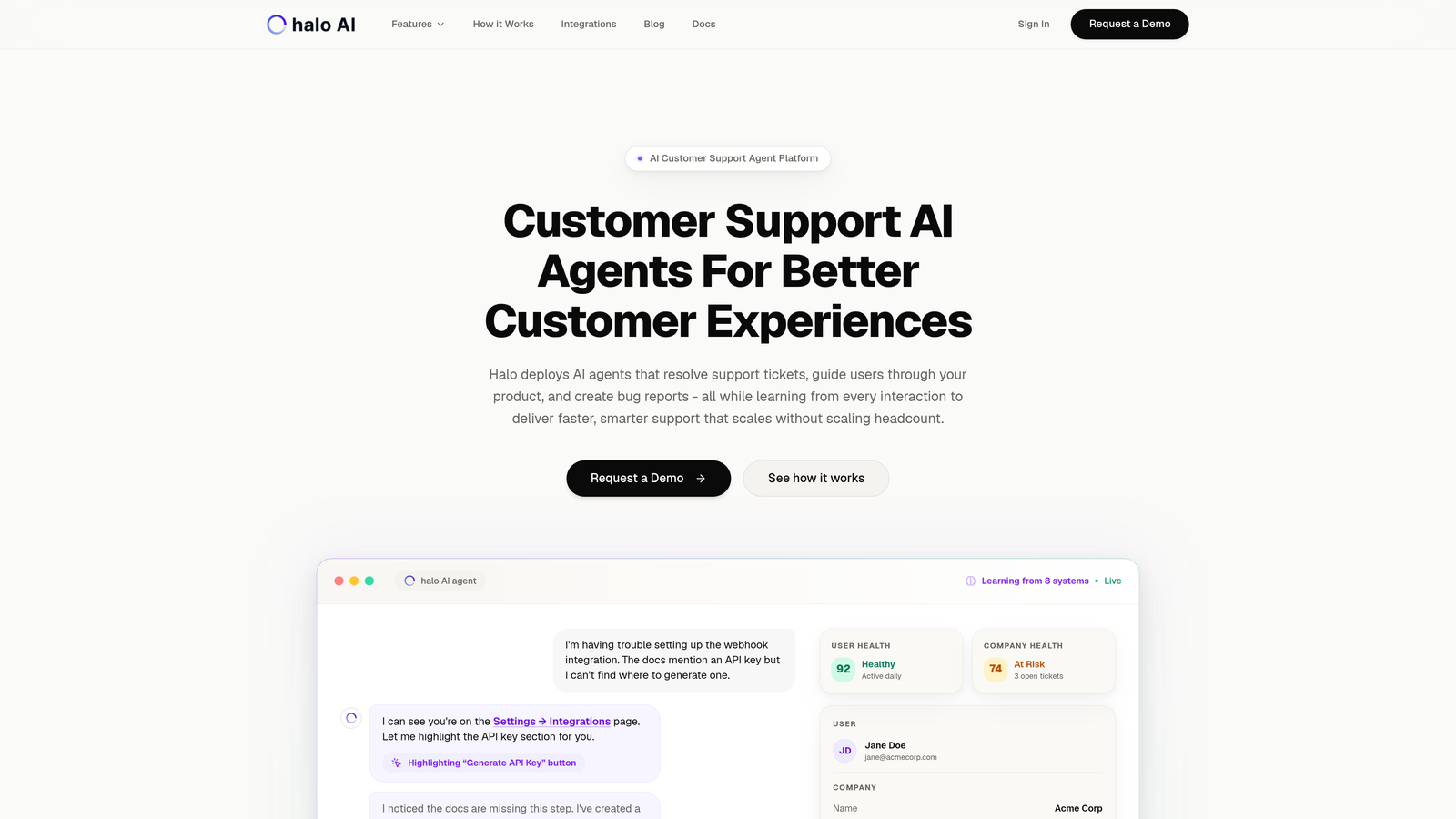
Halo AI is an AI-first support platform built specifically for autonomous ticket resolution rather than bolting AI onto traditional helpdesk infrastructure.
Where This Tool Shines
Unlike platforms that treat AI as an add-on feature, Halo's architecture centers on AI agents that actually resolve tickets rather than just suggesting responses. The page-aware chat widget sees what users see, enabling contextual guidance through visual UI elements instead of generic instructions.
The platform's continuous learning approach means every interaction improves future responses. It connects across your business stack—Linear, Slack, HubSpot, Intercom, Stripe, Zoom—creating bug tickets automatically and surfacing revenue intelligence alongside support metrics.
Key Features
Autonomous AI Agents: Resolve support tickets end-to-end without human intervention for routine issues.
Page-Aware Context: Chat widget understands visual UI state to provide specific guidance rather than general instructions.
Business Intelligence Analytics: Surface customer health signals, revenue insights, and anomaly detection beyond basic support metrics.
Auto Bug Ticket Creation: Automatically generates detailed bug reports in Linear when issues are detected.
Smart Escalation: Seamless handoff to human agents for complex issues requiring judgment or empathy.
Best For
B2B product teams currently using traditional helpdesks like Zendesk or Freshdesk who want true automation that learns and improves rather than static rule-based responses. Particularly valuable for companies with complex products requiring contextual support.
Pricing
Contact for pricing. The platform focuses on teams ready to move beyond per-seat models toward outcome-based support automation.
2. Zendesk
Best for: Enterprise teams needing comprehensive omnichannel support with extensive third-party integrations
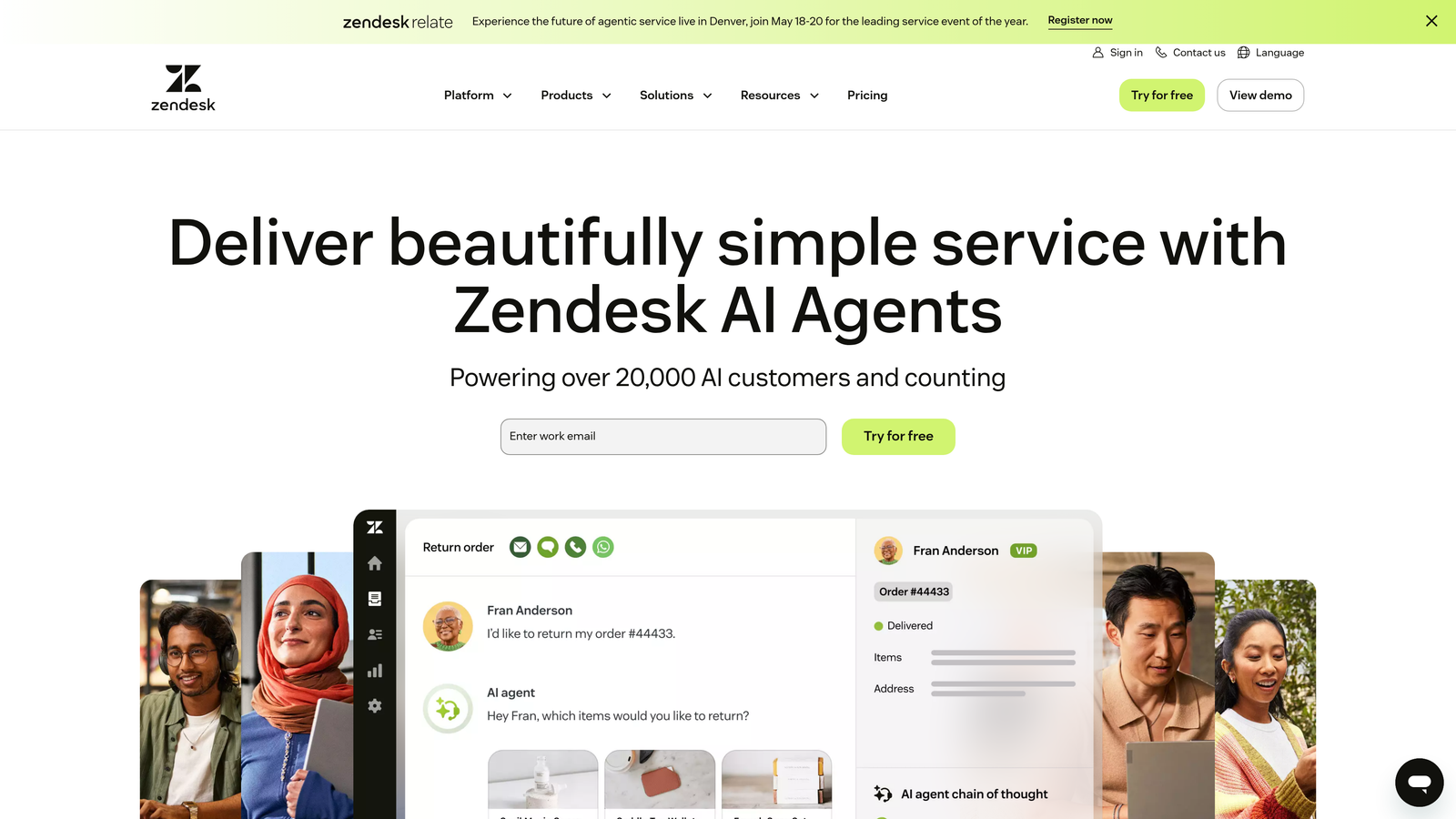
Zendesk is the established enterprise-grade platform offering mature workflows, extensive customization, and a massive integration marketplace.
Where This Tool Shines
Zendesk's strength lies in its completeness and ecosystem maturity. The platform handles email, chat, phone, social media, and messaging apps through a unified interface. With over 1,000 marketplace integrations, you can connect virtually any business tool.
The advanced analytics and custom reporting capabilities give leadership detailed visibility into support operations. For teams with complex routing needs or multiple product lines, Zendesk's workflow customization handles intricate scenarios that simpler platforms can't match.
Key Features
Omnichannel Ticketing: Unified inbox across email, live chat, phone, social media, and messaging platforms.
Answer Bot: AI-powered automated responses using knowledge base content and machine learning.
Advanced Analytics: Custom dashboards, SLA tracking, and detailed performance metrics across teams and channels.
Marketplace Ecosystem: Over 1,000 pre-built integrations covering CRMs, project management, analytics, and communication tools.
Workflow Automation: Customizable macros, triggers, and automations for complex ticket routing and response scenarios.
Best For
Large enterprises with complex support operations spanning multiple channels, products, or regions. Teams that need extensive customization and have the resources to configure and maintain sophisticated workflows.
Pricing
Starts at $55/agent/month for Suite Team. Enterprise plans with advanced features require custom pricing, making it a significant investment for smaller teams.
3. Intercom
Best for: Product-led companies wanting conversational support combined with proactive user engagement
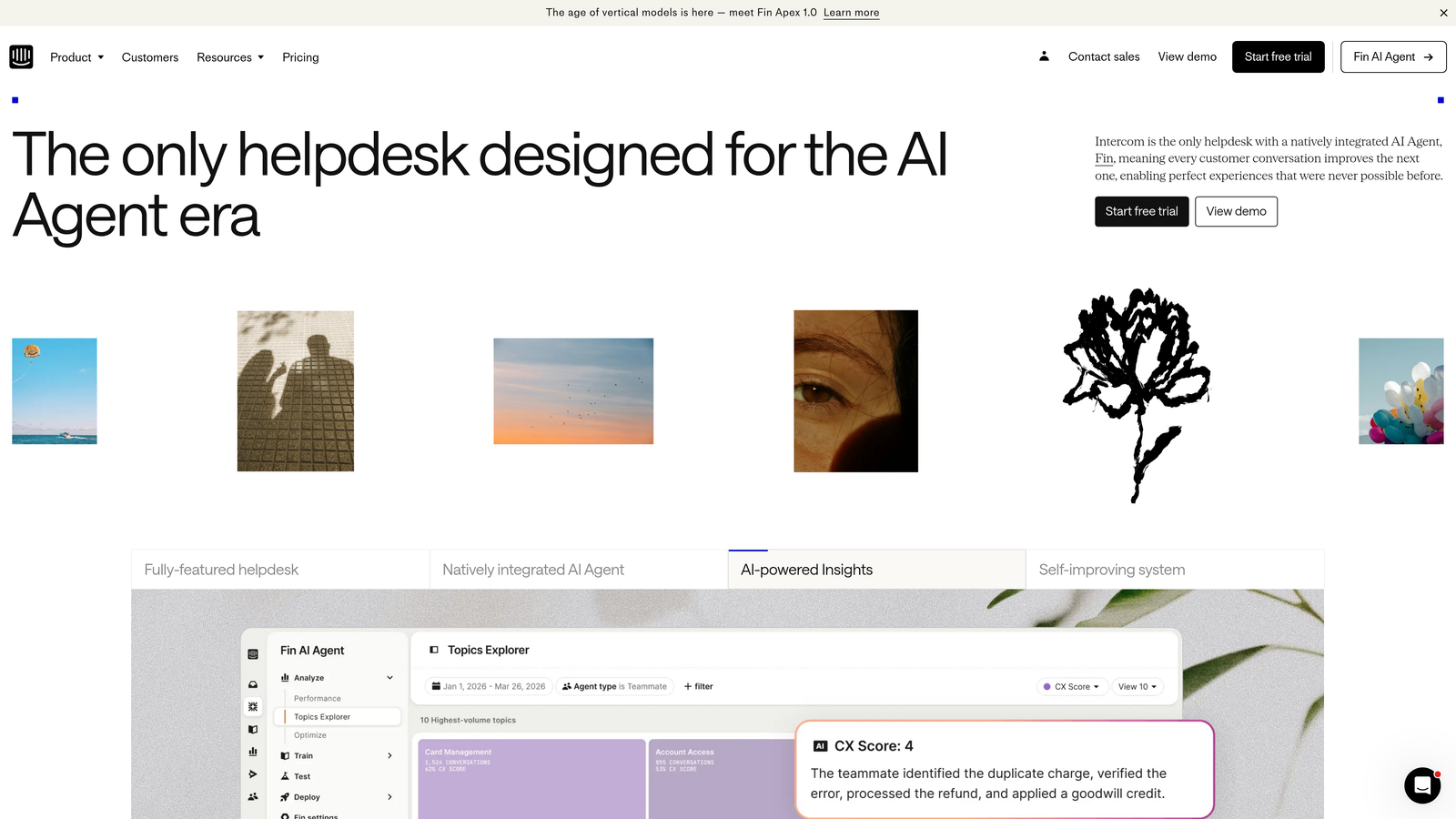
Intercom is a messenger-first platform blending reactive support with proactive product tours and targeted campaigns.
Where This Tool Shines
Intercom excels at the intersection of support and product engagement. The Fin AI agent handles conversational support with natural language understanding, while product tours guide users through features before they need help.
The unified inbox consolidates conversations from chat, email, and in-app messages, giving agents complete context. Proactive messaging capabilities let you reach users based on behavior triggers, preventing issues before they become tickets.
Key Features
Fin AI Agent: Conversational AI that resolves customer questions using your knowledge base and product data.
Product Tours: Interactive walkthroughs and tooltips guiding users through features and workflows.
Unified Inbox: Single view of all customer conversations across channels with complete interaction history.
Custom Bots: Build automated conversation flows with branching logic for qualification and routing.
Targeted Campaigns: Proactive in-app messages triggered by user behavior, segment, or lifecycle stage.
Best For
SaaS companies with product-led growth strategies that want to blend support with user onboarding and engagement. Teams that value preventing tickets through proactive education as much as resolving them quickly.
Pricing
Starts at $39/seat/month for the Starter plan. Fin AI is priced separately per resolution, which can add significantly to costs for high-volume teams.
4. Freshdesk
Best for: Mid-market teams seeking robust automation features without enterprise pricing
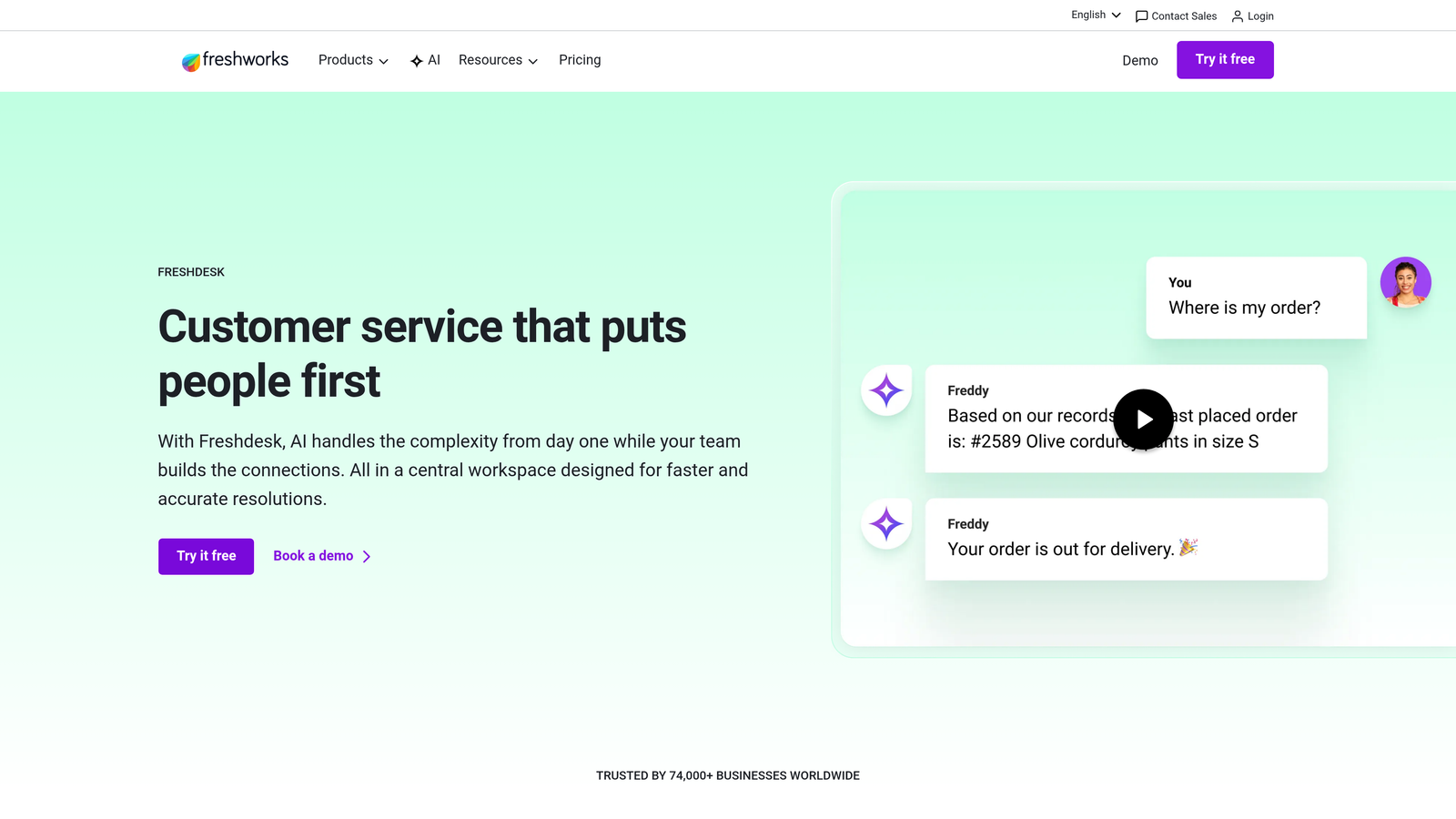
Freshdesk is a feature-rich helpdesk platform delivering strong automation capabilities at competitive price points.
Where This Tool Shines
Freshdesk delivers impressive automation depth for its price tier. Freddy AI provides intelligent ticket triage, suggesting responses and routing based on content analysis. Scenario automations handle complex multi-step workflows that go beyond simple if-then rules.
The platform includes collision detection to prevent agents from duplicating work and parent-child ticketing for managing related issues. Multi-channel support extends to WhatsApp and other messaging apps increasingly important for B2B communication.
Key Features
Freddy AI: AI assistant that triages tickets, suggests responses, and predicts customer satisfaction scores.
Scenario Automations: Complex workflow automation handling multi-condition triggers and sequential actions.
Multi-Channel Support: Email, chat, phone, social media, and WhatsApp through unified interface.
Collision Detection: Prevents multiple agents from working on the same ticket simultaneously.
Parent-Child Ticketing: Link related tickets for managing complex issues affecting multiple customers.
Best For
Growing B2B companies that need enterprise-level automation features but aren't ready for enterprise pricing. Teams that value comprehensive functionality over ecosystem size or brand recognition.
Pricing
Free tier available for small teams. Growth plan starts at $15/agent/month, making it accessible for budget-conscious teams without sacrificing core automation capabilities.
5. HubSpot Service Hub
Best for: Companies already using HubSpot CRM who want seamless context from marketing and sales
HubSpot Service Hub is the service component of HubSpot's unified CRM platform, providing complete customer context across all touchpoints.
Where This Tool Shines
The unified customer timeline is HubSpot's defining advantage. Support agents see every marketing email, sales call, website visit, and previous ticket in one view. This context eliminates the "let me pull up your account" delays that frustrate customers.
Conversational bots with branching logic qualify issues before routing to agents. The knowledge base includes SEO optimization, turning support content into organic traffic drivers. Customer feedback surveys integrate with the CRM for closed-loop improvement tracking.
Key Features
Unified Customer Timeline: Complete interaction history across marketing, sales, and service in single view.
Conversational Bots: Automated chat flows with branching logic for qualification and routing.
Knowledge Base: SEO-optimized help center that drives organic traffic while reducing ticket volume.
Customer Feedback: NPS surveys, CSAT tracking, and feedback loops integrated with customer records.
Ticket Pipelines: Customizable workflows with automation rules and SLA management.
Best For
Companies already invested in HubSpot's marketing or sales hubs who want to extend that unified data model to support. Teams that prioritize customer context and lifecycle visibility over specialized support features.
Pricing
Free tools available for basic ticketing. Starter plan at $20/month provides core features, though advanced automation requires Professional tier at higher cost.
6. Salesforce Service Cloud
Best for: Large enterprises needing maximum customization and deep Salesforce ecosystem integration
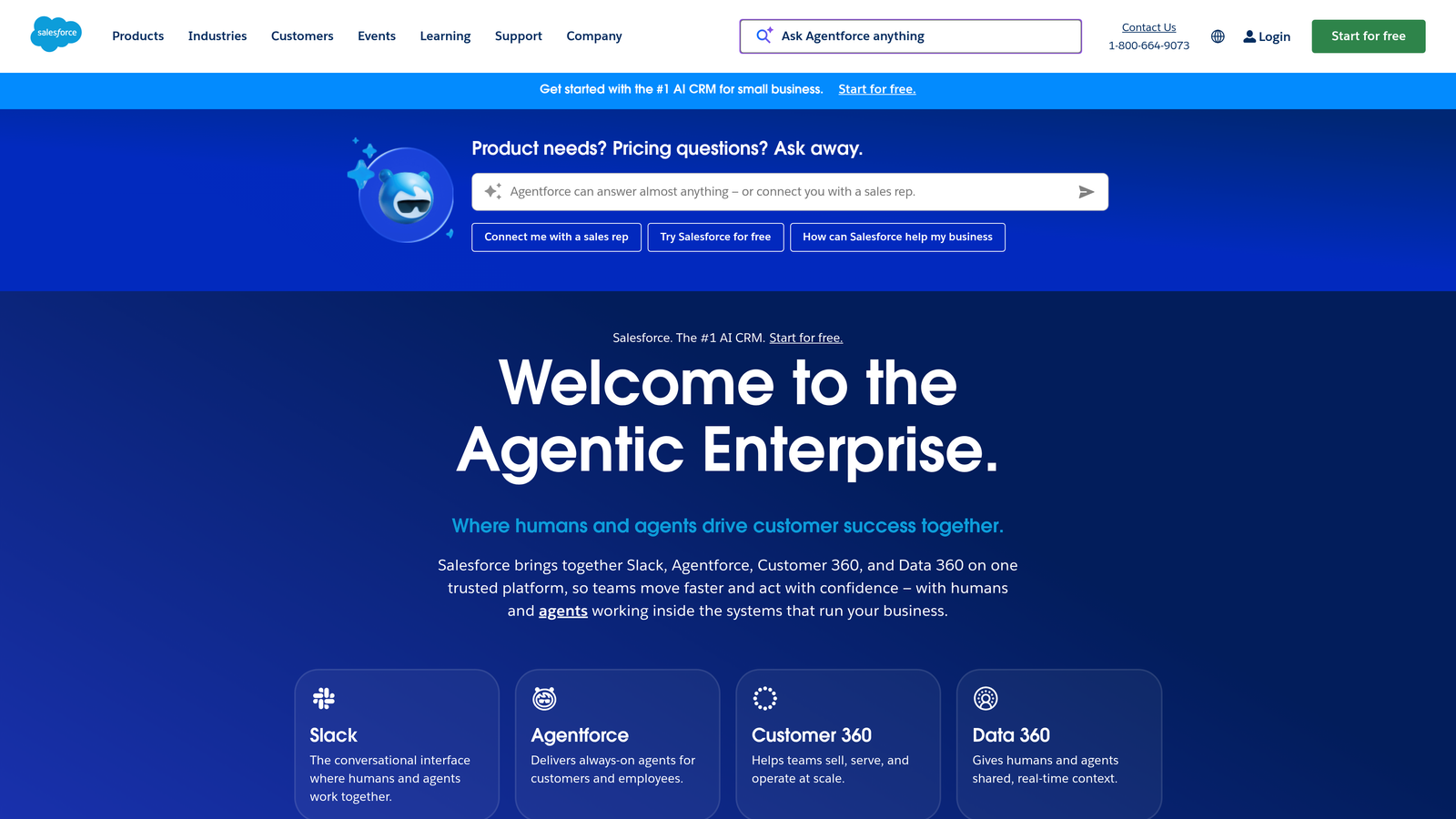
Salesforce Service Cloud is the highly customizable enterprise platform leveraging Einstein AI and the complete Salesforce ecosystem.
Where This Tool Shines
Service Cloud's customization depth is unmatched. Flow Builder lets you create complex automations without code, while developers can extend functionality through Apex and Lightning components. Einstein AI provides case classification, next-best-action recommendations, and predictive analytics.
Omni-channel routing with skills-based assignment ensures tickets reach the right specialist. Field Service Lightning extends support to on-site scenarios with scheduling, inventory, and mobile capabilities. For Salesforce-centric organizations, the integration is seamless and comprehensive.
Key Features
Einstein AI: Predictive case classification, automated responses, and next-best-action recommendations.
Omni-Channel Routing: Skills-based assignment across channels ensuring tickets reach qualified specialists.
Flow Builder: Visual workflow automation handling complex business processes without coding.
Field Service Lightning: Complete field service management with scheduling, inventory, and mobile apps.
Salesforce Integration: Native access to complete customer data across sales, marketing, and commerce clouds.
Best For
Large enterprises already standardized on Salesforce who need support deeply integrated with sales, marketing, and commerce operations. Organizations with complex support processes requiring extensive customization and dedicated Salesforce administrators.
Pricing
Starts at $25/user/month for Essentials with basic features. Professional and Enterprise tiers with advanced capabilities require significantly higher investment plus implementation costs.
7. Help Scout
Best for: Teams prioritizing human-focused support with clean automation that enhances rather than replaces relationships
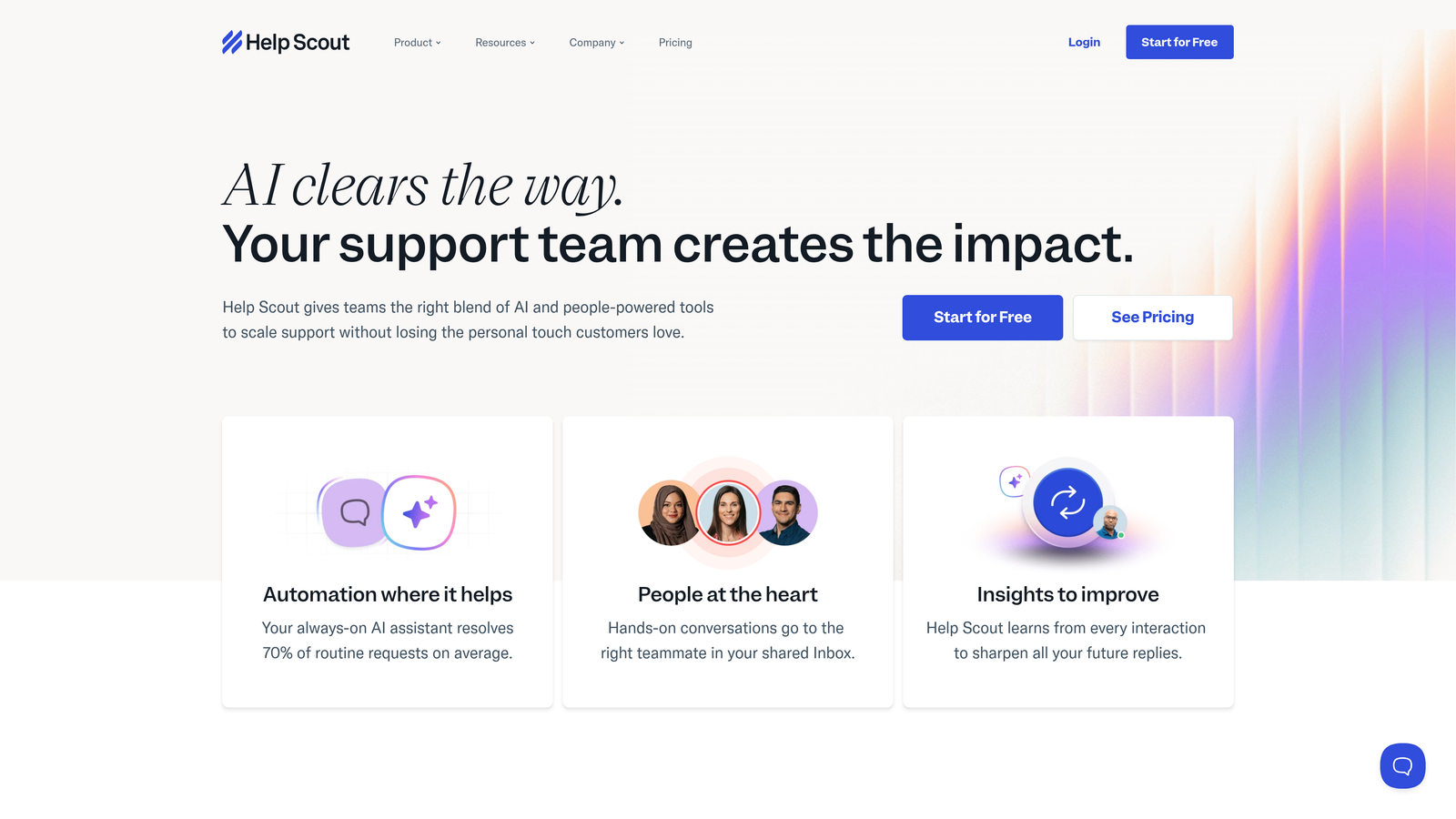
Help Scout is a helpdesk platform emphasizing personal customer relationships through intuitive design and thoughtful automation.
Where This Tool Shines
Help Scout's philosophy centers on making support feel personal even as you automate. The shared inbox provides email-like simplicity with collision detection preventing duplicate responses. Beacon embeds help content and live chat directly in your product interface.
Workflows automate ticket handling without feeling robotic. Customer profiles aggregate conversation history, providing context without overwhelming complexity. The Docs knowledge base integrates seamlessly, surfacing relevant articles during conversations.
Key Features
Shared Inbox: Email-style interface with collision detection and internal notes for team collaboration.
Beacon: Embedded widget combining knowledge base search, contact forms, and live chat in product.
Docs Integration: Knowledge base that surfaces relevant articles during conversations and supports self-service.
Workflows: Automated ticket routing, tagging, and assignment without complex rule builders.
Customer Profiles: Complete conversation history and customer data in clean, accessible format.
Best For
Small to mid-size B2B companies that view support as relationship-building rather than ticket-closing. Teams that want automation to enhance agent efficiency without losing the human touch customers value.
Pricing
Starts at $20/user/month for the Standard plan. Transparent pricing without hidden fees or complex tier structures makes budgeting straightforward.
8. Gorgias
Best for: E-commerce companies, particularly Shopify merchants, needing revenue-focused support automation
Gorgias is an e-commerce-specialized platform with deep Shopify integration and automation built around order management.
Where This Tool Shines
Gorgias transforms support into a revenue channel for e-commerce businesses. Agents can cancel orders, issue refunds, or modify shipments with single clicks directly from tickets. Macros include dynamic order variables, personalizing responses with customer-specific details automatically.
Revenue statistics tie support interactions to sales, showing which conversations drive purchases. Intent detection routes questions about order status, returns, or product inquiries to specialized workflows. Social media and SMS support meet customers on their preferred channels.
Key Features
One-Click Shopify Actions: Cancel, refund, modify orders directly from tickets without switching platforms.
Dynamic Macros: Automated responses with order-specific variables for personalized efficiency.
Revenue Attribution: Track sales generated through support conversations and measure support ROI.
Social and SMS Support: Unified inbox for Instagram, Facebook, SMS alongside traditional channels.
Intent Detection: Automatically categorize and route tickets based on customer question type.
Best For
E-commerce businesses, especially Shopify merchants, that handle high volumes of order-related inquiries. Companies that view support as a revenue driver rather than a cost center.
Pricing
Starts at $10/month for 50 tickets, scaling based on ticket volume. Pricing structure aligns with e-commerce seasonality but can become expensive during peak periods.
9. Kustomer
Best for: Companies wanting CRM-first support with complete customer timelines and unified conversation views
Kustomer is a platform built around unified customer timelines rather than individual tickets, providing complete context for every interaction.
Where This Tool Shines
Kustomer's timeline-centric approach shows every customer interaction chronologically across all channels. Agents see the complete story rather than disconnected tickets. KIQ AI provides automated responses and assists agents with suggestions based on conversation context.
Business process automation extends beyond ticketing to handle complex workflows like subscription changes or account updates. Sentiment analysis flags frustrated customers for priority handling. Proactive support triggers reach customers before they contact you based on behavior patterns.
Key Features
Unified Customer Timeline: Chronological view of all interactions across channels showing complete relationship history.
KIQ AI: Automated responses, agent assist suggestions, and intelligent routing based on conversation analysis.
Business Process Automation: Workflows handling account changes, subscriptions, and complex multi-step processes.
Sentiment Analysis: Automatic detection of customer frustration for priority escalation and intervention.
Proactive Triggers: Reach customers based on behavior patterns before they need to contact support.
Best For
Mid-size to enterprise B2B companies with complex customer relationships requiring deep context. Teams that handle account management and support in integrated workflows rather than separate systems.
Pricing
Starts at $89/user/month, positioning it as a premium option. The higher price point reflects the CRM-level functionality beyond basic helpdesk features.
Making the Right Choice
The right support automation platform depends on where your team needs the most help. If ticket volume is overwhelming your agents, look for platforms with strong autonomous resolution capabilities like Halo AI or Intercom's Fin. If you're drowning in context-switching between tools, prioritize deep integrations—HubSpot Service Hub for HubSpot users, Salesforce Service Cloud for Salesforce shops, or Gorgias for Shopify merchants.
For teams just starting with automation, Freshdesk or Help Scout offer solid foundations without overwhelming complexity. Enterprise teams with sophisticated needs will find the customization depth in Zendesk or Salesforce Service Cloud worth the investment and learning curve.
The most significant shift in this space is the move from rule-based automation to AI-driven resolution. Platforms that learn from every interaction and improve over time will deliver compounding returns, while static automation requires constant manual tuning to remain effective.
Consider your current pain points specifically. Are response times the issue? Look for platforms with strong AI agents. Is agent burnout the problem? Prioritize tools that handle routine questions autonomously. Do you lack visibility into customer health? Choose platforms surfacing business intelligence beyond basic support metrics.
Your support team shouldn't scale linearly with your customer base. Let AI agents handle routine tickets, guide users through your product, and surface business intelligence while your team focuses on complex issues that need a human touch. See Halo in action and discover how continuous learning transforms every interaction into smarter, faster support.