9 Best Support Automation Software Solutions in 2026
Support automation software helps teams resolve common customer issues instantly without manual intervention while routing complex problems to the right agents. This comprehensive guide evaluates the top 9 platforms in 2026 based on AI capabilities, integration options, and real-world performance—helping you transform your support operation from a cost center into a competitive advantage through intelligent automation.
 Grant CooperFounder10 min read
Support teams are drowning in tickets while customers expect instant resolutions. The right support automation software can resolve common issues without human intervention, route complex problems to the right agents, and turn your support operation from a cost center into a competitive advantage. We evaluated dozens of platforms based on AI capabilities, integration depth, ease of implementation, and real-world performance. Here are the top solutions worth your consideration—starting with tools built for modern, AI-first support operations.
1. Halo AI
Best for: Teams wanting autonomous AI agents that learn continuously from every support interaction
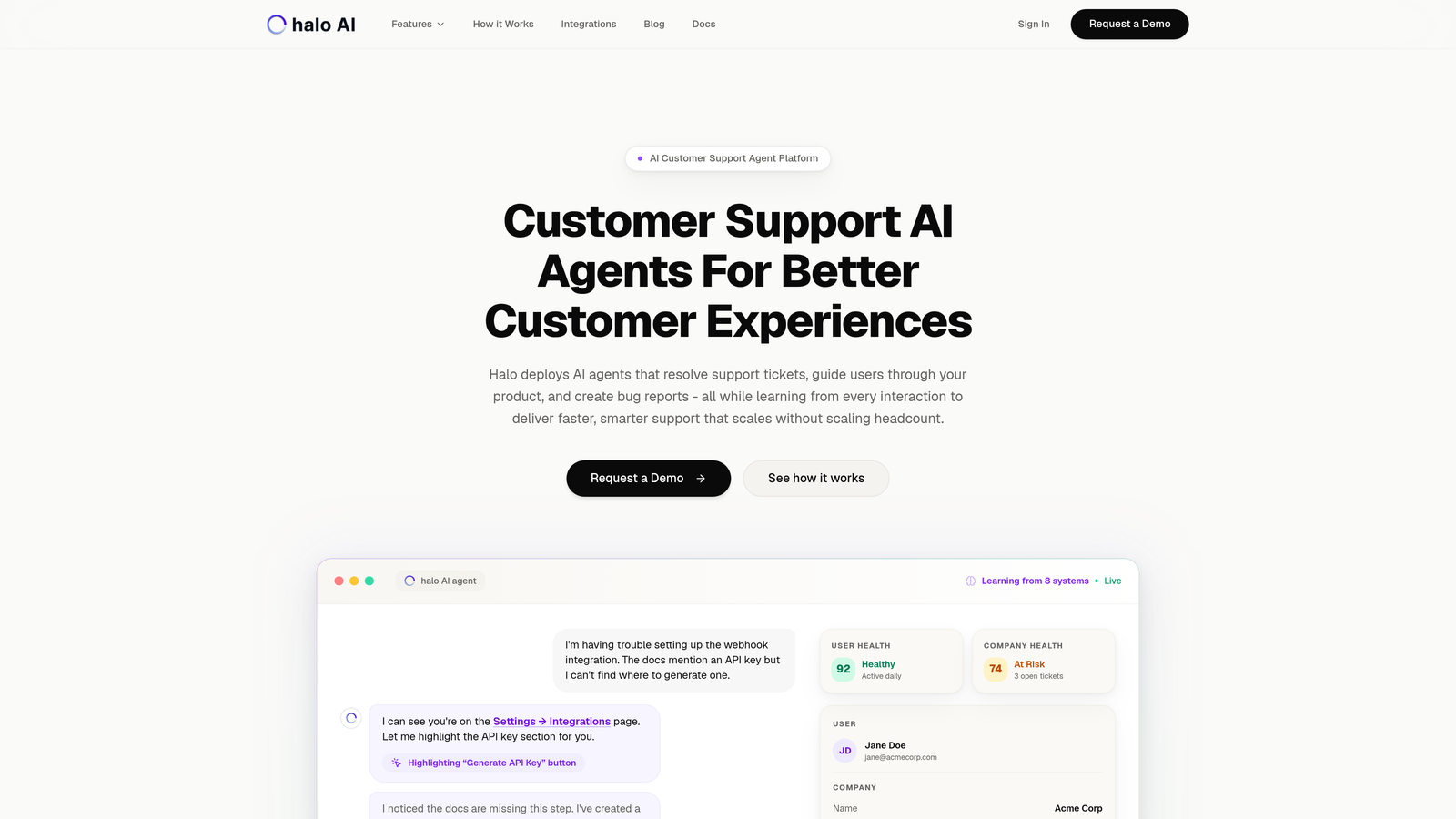
Halo AI is an AI-first customer support platform that deploys intelligent agents to resolve tickets, guide users through products, and create bug reports autonomously.
Where This Tool Shines
Unlike traditional helpdesks with AI features bolted on, Halo is built from the ground up for autonomous operation. Its page-aware chat widget sees exactly what users see in your product, enabling context-rich guidance that goes beyond generic responses.
The platform's continuous learning architecture means every resolved ticket makes the system smarter. It connects across your entire business stack—Linear, Slack, HubSpot, Stripe, Intercom, Zoom—creating a unified intelligence layer that surfaces customer health signals and revenue insights alongside support metrics.
Key Features
Page-Aware Chat Widget: Provides visual UI guidance based on what users are actually seeing in your product.
Autonomous Ticket Resolution: AI agents handle routine issues independently while escalating complex cases to human agents.
Auto Bug Ticket Creation: Automatically generates detailed bug reports for product teams when issues are identified.
Smart Inbox with Business Intelligence: Goes beyond support metrics to deliver customer health signals, revenue intelligence, and anomaly detection.
Multi-System Integrations: Connects to your complete tech stack for comprehensive context in every interaction.
Best For
B2B companies and product teams using helpdesk systems like Zendesk, Freshdesk, or Intercom who want to shift from managing tickets to autonomous resolution. Ideal for teams ready to scale support without scaling headcount.
Pricing
Contact for pricing based on your support volume and integration requirements.
2. Zendesk
Best for: Enterprise teams needing omnichannel support with extensive customization and marketplace integrations
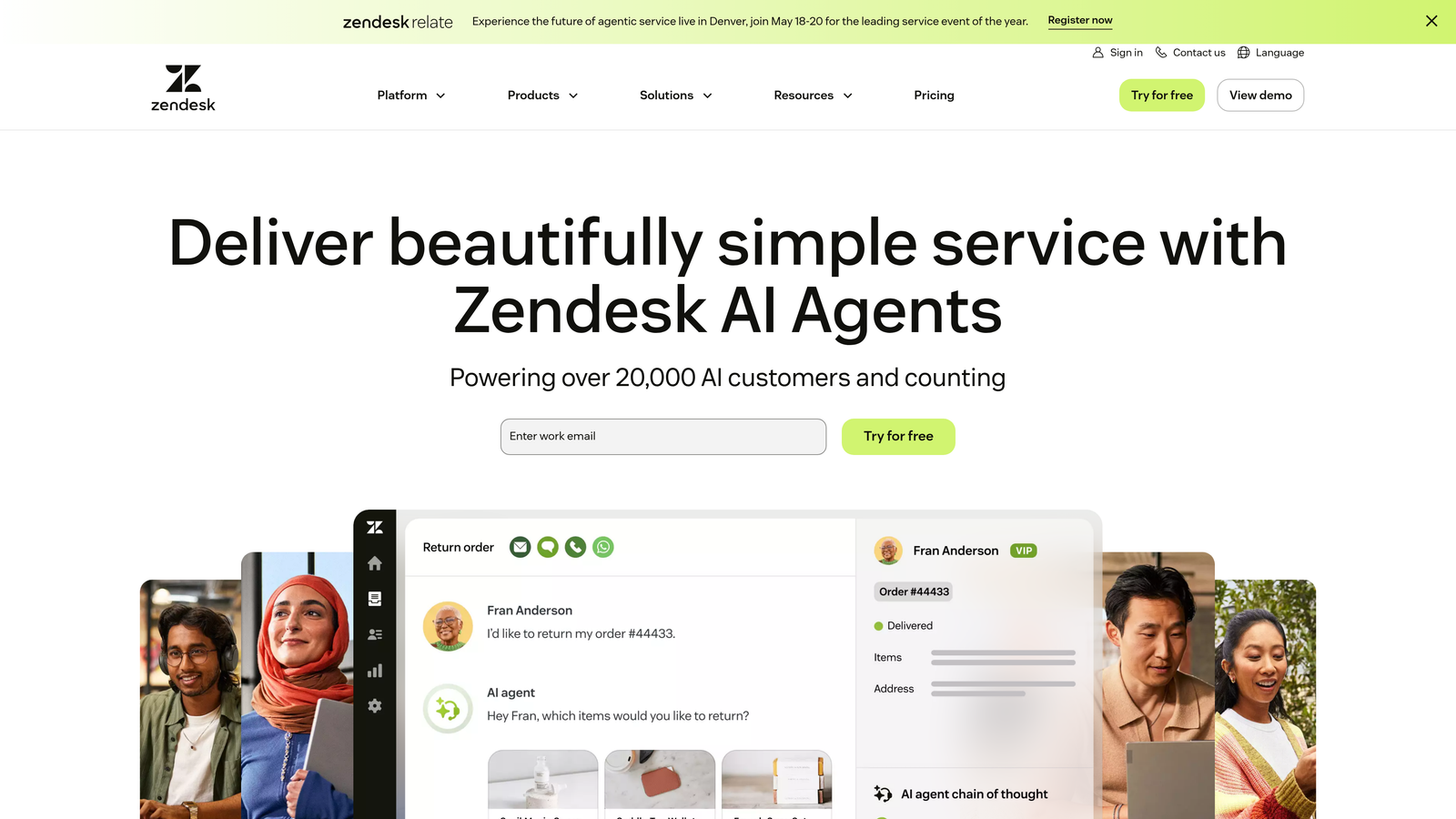
Zendesk is an enterprise-grade helpdesk platform that consolidates customer conversations across email, chat, phone, and social media.
Where This Tool Shines
Zendesk's massive app marketplace gives you pre-built integrations for nearly any tool in your stack. The platform handles complex workflows across multiple channels without breaking a sweat, making it the default choice for large support operations.
Answer Bot provides automated responses to common questions, though it operates more as a rule-based system than truly intelligent AI. The real strength lies in customizable triggers and workflows that route tickets based on sophisticated criteria.
Key Features
Omnichannel Ticketing: Unified inbox for email, chat, phone, social media, and messaging apps.
Answer Bot: Automated responses to frequently asked questions based on knowledge base content.
App Marketplace: Over 1,200 integrations and extensions for customization.
Advanced Reporting: Customizable dashboards tracking everything from first response time to CSAT scores.
Workflow Automation: Triggers, automations, and macros for repetitive tasks and routing logic.
Best For
Large enterprises with complex support operations spanning multiple channels and regions. Teams that need extensive customization options and have the resources to configure them properly.
Pricing
Starts at $19/agent/month for basic features; Suite plans begin at $55/agent/month with more comprehensive capabilities.
3. Intercom
Best for: Product-led companies wanting conversational support with proactive in-app messaging
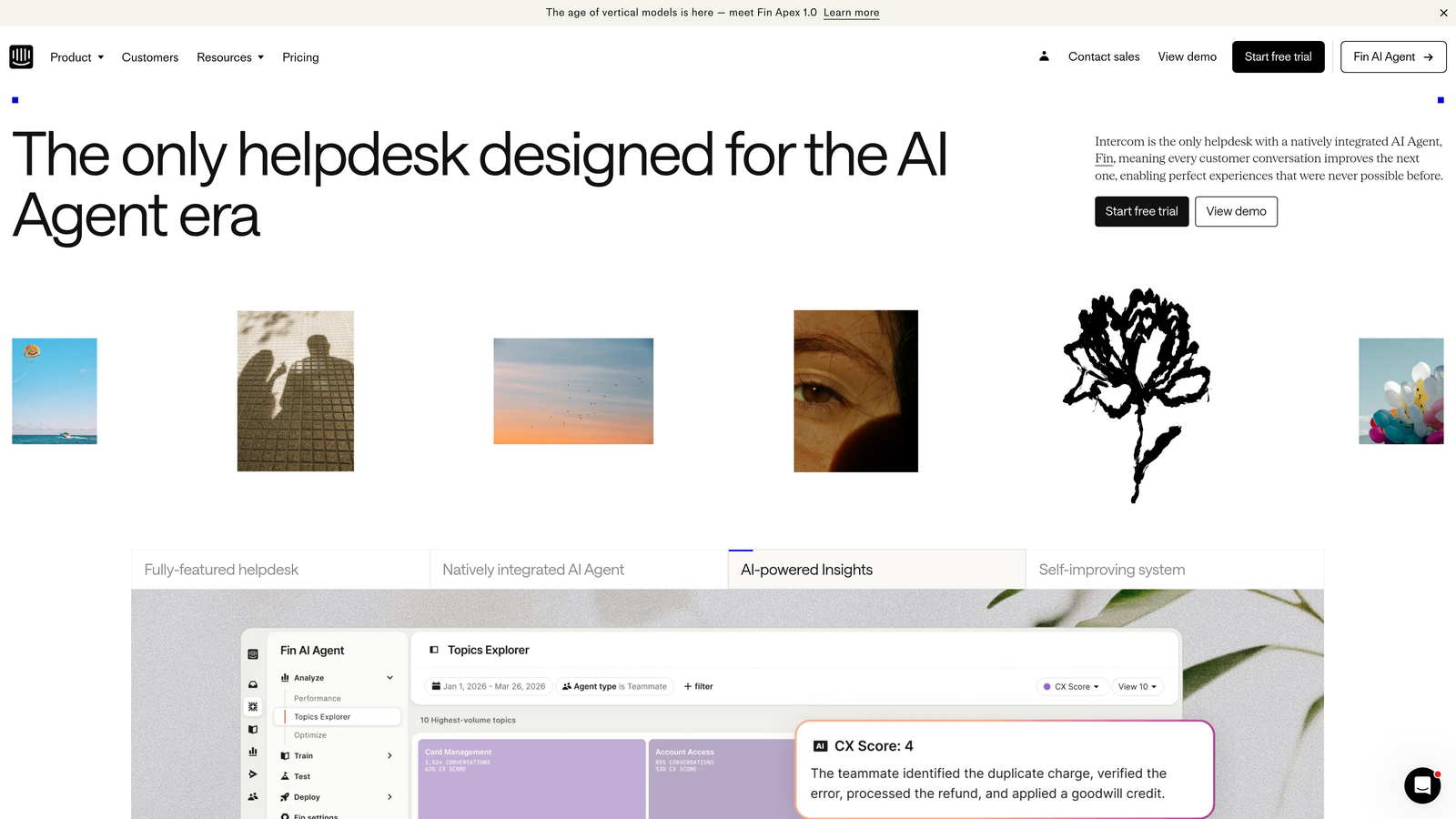
Intercom is a conversational support platform that combines AI-powered resolution with in-app messaging and product tours.
Where This Tool Shines
Intercom excels at proactive support—reaching customers before they even ask for help. The in-app messenger feels native to your product, and you can trigger contextual messages based on user behavior, like offering help when someone gets stuck on a specific page.
Fin AI, their autonomous agent, handles customer conversations end-to-end using your knowledge base content. Unlike basic chatbots, Fin provides nuanced responses and knows when to escalate to humans, though you pay per resolution which can get expensive at scale.
Key Features
Fin AI Agent: Autonomous conversational AI that resolves customer questions using your knowledge base.
In-App Messenger: Native-feeling chat widget that lives inside your product interface.
Proactive Messaging: Trigger messages based on user actions, page visits, or customer attributes.
Product Tours: Interactive guides that onboard users and highlight new features.
Resolution Reporting: Detailed analytics on what Fin resolves versus what requires human agents.
Best For
SaaS companies with product-led growth models who want to blend support with user onboarding and engagement. Teams that value proactive communication over reactive ticket management.
Pricing
Starts at $39/seat/month for core features; Fin AI is priced separately per resolution, typically adding significant cost at volume.
4. Freshdesk
Best for: Mid-market teams wanting AI capabilities without enterprise complexity or pricing
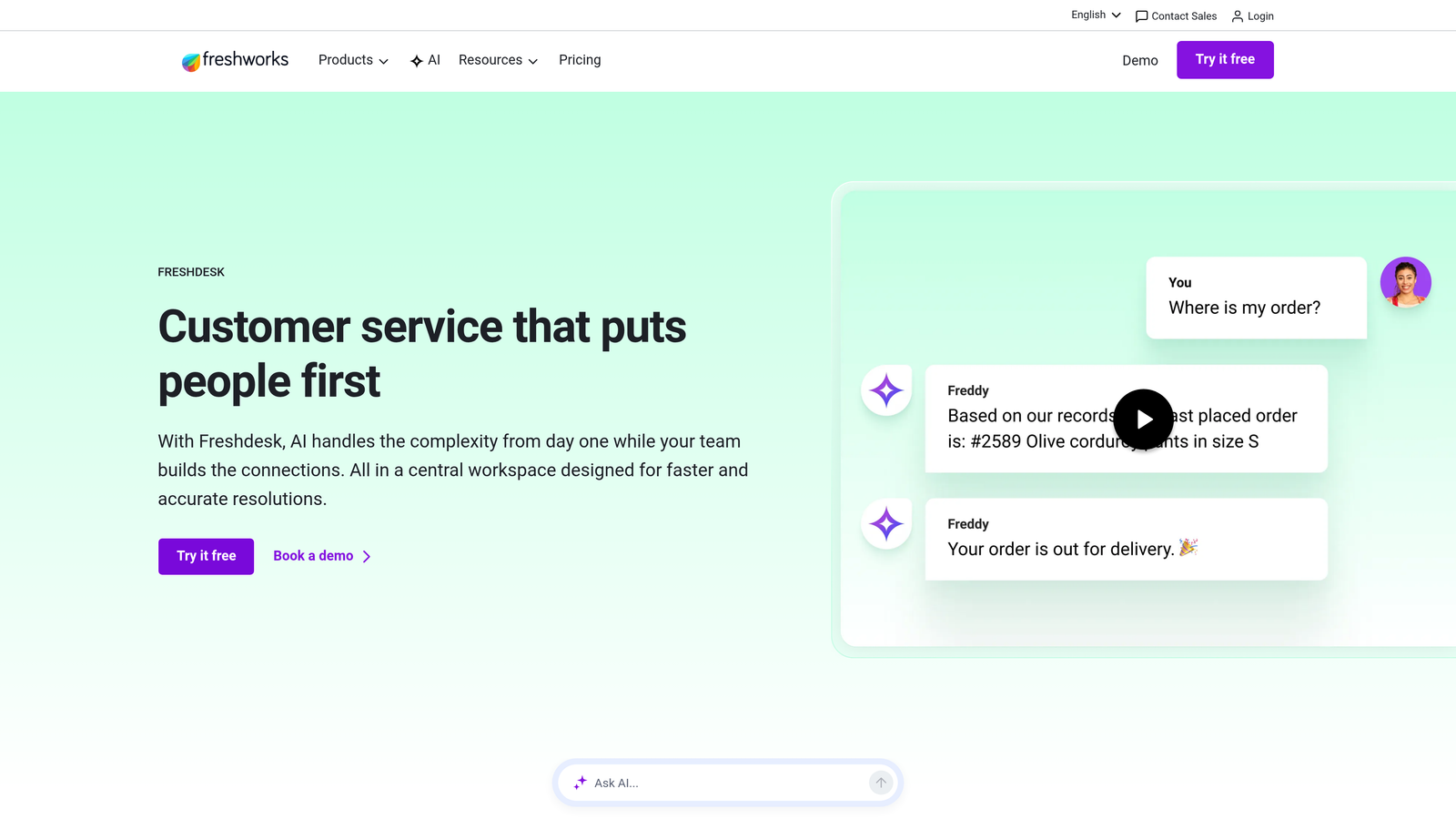
Freshdesk is a mid-market helpdesk that balances AI-powered automation with an intuitive interface designed for growing support teams.
Where This Tool Shines
Freshdesk hits the sweet spot between functionality and simplicity. Freddy AI assists agents by suggesting responses and automatically categorizing tickets, reducing manual triage work without requiring extensive configuration.
Scenario automations let you build complex workflows—like routing high-value customer tickets to senior agents while auto-resolving password resets—without writing code. The platform grows with you from small team to mid-market operation smoothly.
Key Features
Freddy AI: Automated ticket categorization, priority assignment, and agent response suggestions.
Multi-Channel Ticketing: Email, phone, chat, social media, and messaging platforms in one inbox.
Scenario Automations: Visual workflow builder for complex routing and resolution logic.
Team Collaboration: Shared ticket ownership, internal notes, and collision detection.
SLA Management: Automated escalations when response or resolution times are at risk.
Best For
Growing companies that have outgrown basic tools but aren't ready for enterprise complexity. Teams wanting AI assistance without the learning curve of more sophisticated platforms.
Pricing
Free tier available for basic needs; Growth plan starts at $15/agent/month with more robust features.
5. Help Scout
Best for: Teams prioritizing personal customer relationships over ticket volume metrics
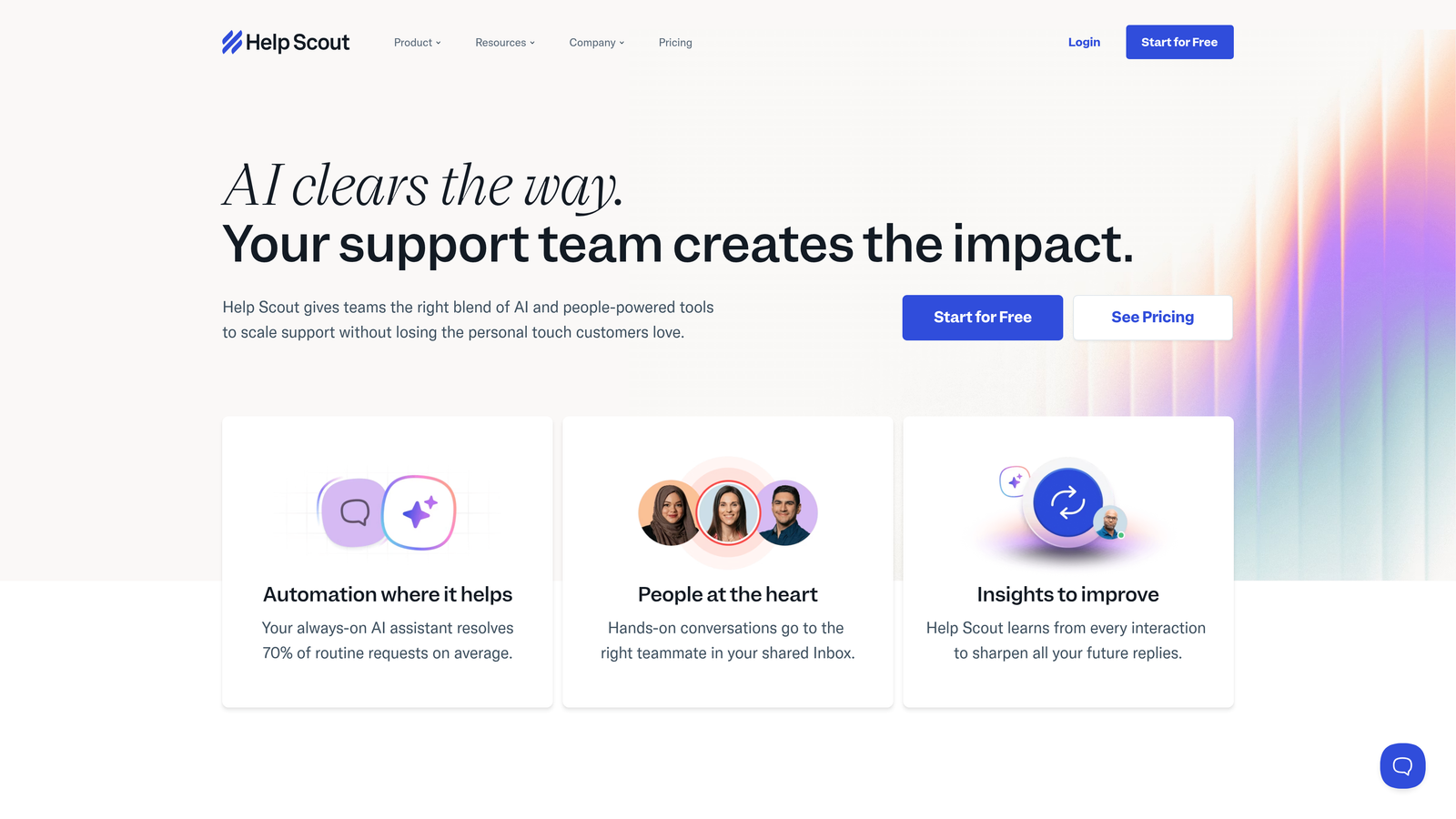
Help Scout is a human-centered support platform with shared inbox and knowledge base tools designed for teams that value quality over speed.
Where This Tool Shines
Help Scout feels more like email than a traditional helpdesk, which makes it incredibly approachable for teams new to support software. The Beacon widget provides contextual help articles right where customers need them, deflecting tickets before they're created.
Collision detection prevents multiple agents from responding to the same customer, while saved replies maintain consistency without feeling robotic. The platform intentionally avoids gamification and aggressive automation in favor of thoughtful, personal support.
Key Features
Shared Inbox: Email-like interface with conversation threading and collision detection.
Beacon Widget: Contextual help widget that shows relevant knowledge base articles based on page content.
Docs Knowledge Base: Self-service documentation with search optimization and analytics.
Saved Replies: Template responses that maintain consistency while allowing personalization.
Customer Satisfaction Ratings: One-click feedback collection after every conversation.
Best For
Small to mid-sized teams that view support as relationship-building rather than ticket-processing. Companies where brand voice and personal touch matter more than automation rates.
Pricing
Starts at $20/user/month with all core features included from the base tier.
6. Gorgias
Best for: E-commerce brands needing order management and revenue tracking inside support tickets
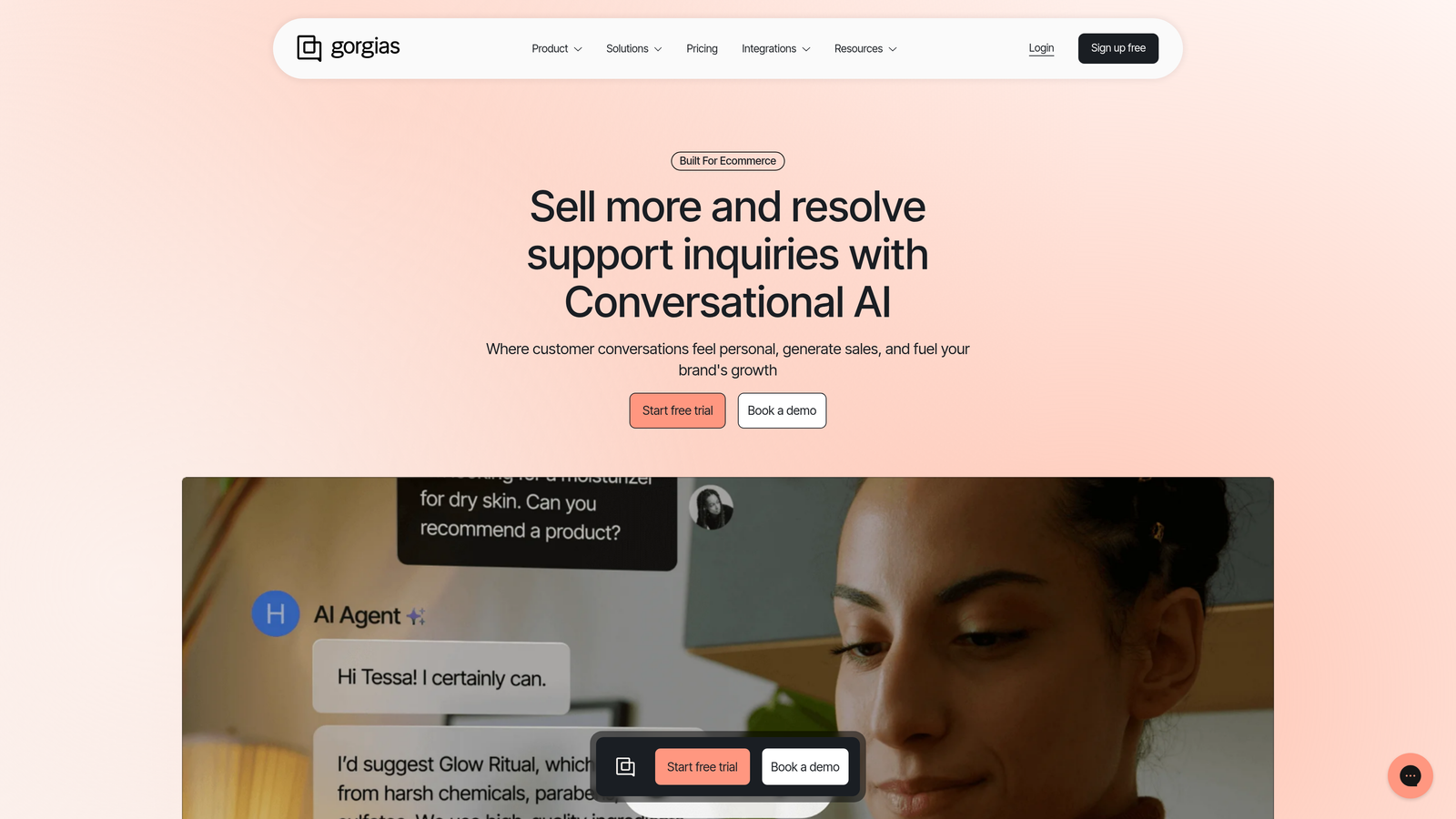
Gorgias is an e-commerce-focused helpdesk with deep shopping platform integrations that let agents handle orders without leaving the ticket.
Where This Tool Shines
Gorgias understands that e-commerce support is fundamentally different from SaaS support. Agents can process refunds, cancel orders, update shipping addresses, and check inventory directly within the ticket interface—no tab-switching to Shopify required.
The platform tracks revenue per support interaction, showing you which agents are turning support conversations into upsells. Macros with dynamic variables pull customer data automatically, so "Where is my order?" responses include actual tracking information without manual lookup.
Key Features
Native Shopping Platform Integrations: Deep connections to Shopify, BigCommerce, and Magento for order access.
Order Actions in Tickets: Process refunds, cancellations, and modifications without leaving the conversation.
Dynamic Macros: Automated responses that pull real-time customer and order data.
Revenue Attribution: Track which support interactions lead to additional purchases.
Social and SMS Support: Handle Instagram DMs, Facebook messages, and SMS alongside email.
Best For
E-commerce brands on Shopify, BigCommerce, or Magento who handle high volumes of order-related inquiries. Teams that want to turn support into a revenue driver.
Pricing
Starts at $10/month for 50 tickets; pricing scales with ticket volume rather than agent count.
7. Front
Best for: Teams wanting collaborative inbox workflows with email-like familiarity
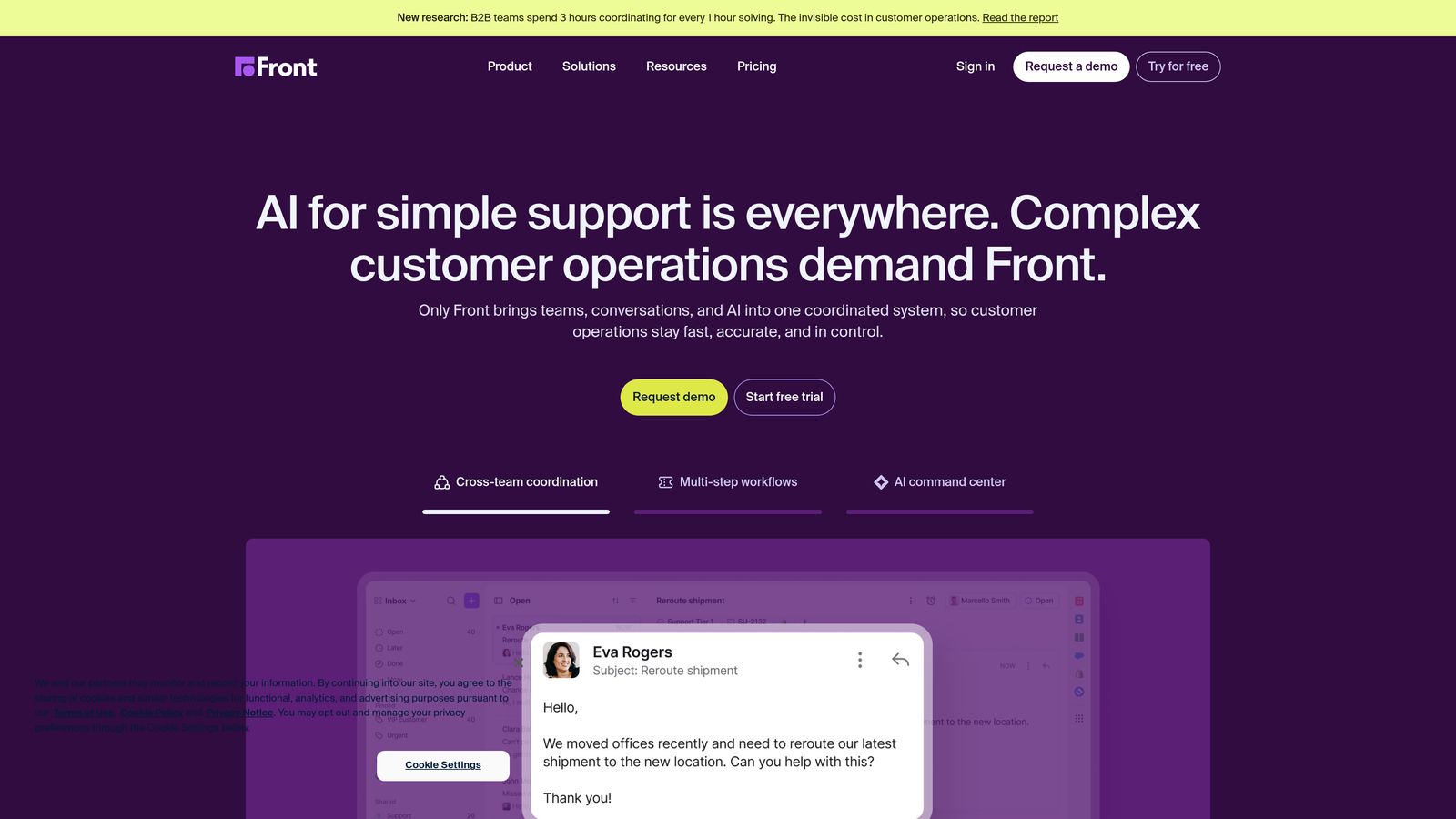
Front is a collaborative inbox platform that combines the simplicity of email with team workflows and automation capabilities.
Where This Tool Shines
Front doesn't try to reinvent communication—it enhances email with collaboration features. Internal comments and @mentions let teams discuss customer issues privately within the thread, while rules automatically route messages based on content, sender, or custom criteria.
The platform feels immediately familiar to anyone who's used Gmail or Outlook, eliminating the learning curve that comes with traditional helpdesk software. Analytics track team performance without the overwhelming dashboards of enterprise platforms.
Key Features
Shared Inbox: Team email management with personal inbox feel and conversation threading.
Rules and Routing: Automated message assignment based on content, sender, or custom logic.
Internal Comments: Private team discussions within customer email threads using @mentions.
Performance Analytics: Response time tracking, team workload distribution, and individual metrics.
CRM Integrations: Pull customer context from Salesforce, HubSpot, and other CRMs directly into conversations.
Best For
Teams currently using shared email addresses who want better collaboration without adopting traditional helpdesk software. Sales and account management teams that need lightweight support capabilities.
Pricing
Starts at $19/seat/month for core collaboration features.
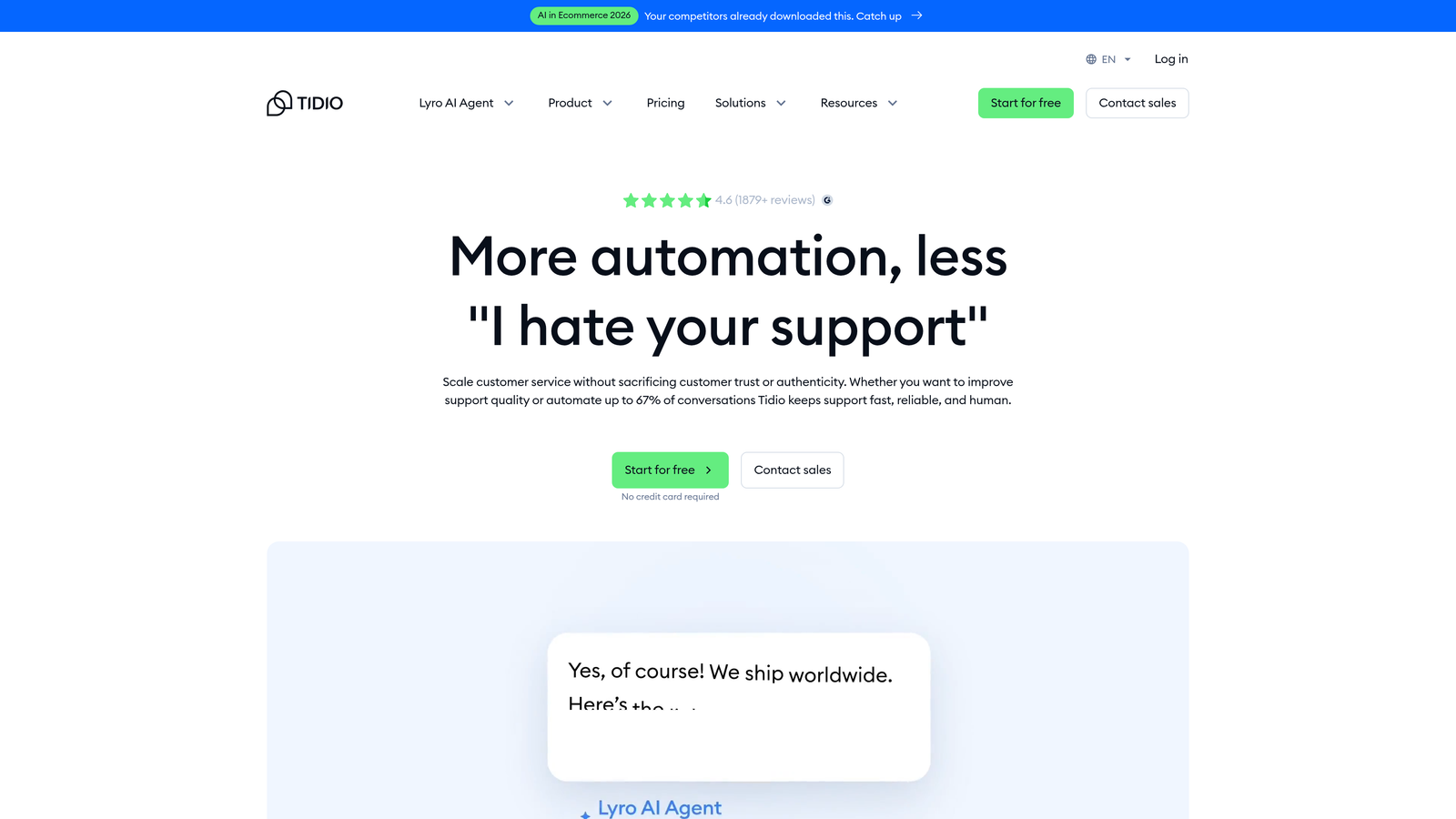
8. Tidio
Best for: Small businesses wanting affordable automation with visual chatbot building
Tidio is an accessible automation platform designed for small businesses with a visual chatbot builder and budget-friendly pricing.
Where This Tool Shines
Tidio's drag-and-drop chatbot builder lets non-technical users create automated conversation flows in minutes. Pre-built templates handle common scenarios like qualifying leads, answering FAQs, or collecting contact information before routing to a human agent.
The platform combines live chat with chatbot automation, so you can start with human-only support and gradually automate as you identify patterns. Mobile apps keep you connected to customer conversations even when you're away from your desk.
Key Features
Visual Chatbot Builder: Drag-and-drop interface for creating automated conversation flows without coding.
Pre-Built Templates: Ready-made chatbots for lead qualification, FAQ handling, and appointment booking.
Live Chat: Real-time messaging with visitor tracking and typing indicators.
Email Marketing Integration: Capture leads through chat and add them to email campaigns.
Mobile Apps: iOS and Android apps for managing conversations on the go.
Best For
Small businesses and solopreneurs who need basic automation without enterprise complexity or cost. Teams just starting to automate support conversations.
Pricing
Free tier with limited features; paid plans start at $29/month for additional capabilities.
9. Kustomer
Best for: Enterprise teams wanting CRM-powered support with unified customer timelines
Kustomer is a CRM-powered support platform that presents customer interactions as unified timelines rather than isolated tickets.
Where This Tool Shines
Kustomer fundamentally rethinks the helpdesk model by organizing around customers instead of tickets. Every interaction—email, chat, phone, social—appears in a single chronological timeline, giving agents complete context without hunting through multiple ticket threads.
AI-powered sentiment analysis flags frustrated customers automatically, while business process automation handles complex workflows like subscription changes or account upgrades. The platform enables proactive outreach based on customer behavior or lifecycle stage.
Key Features
Unified Customer Timeline: All interactions across channels displayed in chronological order per customer.
AI Sentiment Analysis: Automatic detection of customer frustration or satisfaction in conversations.
Business Process Automation: Workflow automation for complex tasks like subscription management or account updates.
Knowledge Base with Deflection: Self-service articles with tracking on how many tickets they prevent.
Proactive Outreach: Trigger messages based on customer lifecycle events or behavioral signals.
Best For
Enterprise companies with complex customer relationships spanning multiple touchpoints. Teams that need CRM-level customer intelligence within their support platform.
Pricing
Enterprise pricing model; contact Kustomer for custom quotes based on volume and requirements.
Making the Right Choice
The right support automation software depends on where you are and where you're heading. If you're building AI-first support that learns continuously, Halo AI delivers autonomous resolution with business intelligence that traditional helpdesks can't match. For enterprise teams needing extensive customization, Zendesk remains the established choice despite its complexity.
Product-led SaaS companies often find Intercom aligns best with their proactive engagement model, while e-commerce brands get immediate value from Gorgias' order management capabilities. Mid-market teams wanting balance between features and simplicity typically choose Freshdesk, and relationship-focused companies appreciate Help Scout's human-centered approach.
Small businesses just starting with automation can begin affordably with Tidio, while teams wanting email-like collaboration prefer Front. Enterprise organizations needing CRM-powered customer timelines should evaluate Kustomer.
Your support team shouldn't scale linearly with your customer base. Let AI agents handle routine tickets, guide users through your product, and surface business intelligence while your team focuses on complex issues that need a human touch. See Halo in action and discover how continuous learning transforms every interaction into smarter, faster support.