9 Best Support Escalation Automation Tools in 2026
Support escalation automation tools intelligently route, prioritize, and escalate tickets without manual intervention — preventing churn and keeping support teams focused on high-value conversations. This guide ranks the 9 best platforms of 2026, evaluated on escalation logic, AI capabilities, integration breadth, and fit for B2B SaaS teams.
 Grant CooperFounder13 min read
When a customer issue slips through the cracks or lands on the wrong agent's desk, the cost isn't just a bad CSAT score. It's churn. Support escalation automation tools solve this by intelligently routing, prioritizing, and escalating tickets without manual intervention, so your team focuses on the conversations that actually need a human.
This list covers the top tools for automating support escalations in 2026, from AI-native platforms that resolve tickets before escalation is even needed, to workflow engines and helpdesk add-ons that give your existing stack smarter routing logic. Whether you're running a lean support team or scaling a complex multi-tier operation, there's a fit here.
We evaluated each tool on escalation logic depth, AI capabilities, integration breadth, ease of setup, and value for B2B SaaS teams. Halo AI is listed first because it's our product, but every tool on this list earns its place on merit.
1. Halo AI
Best for: B2B SaaS teams that want AI-first ticket resolution with intelligent escalation and business intelligence built in.
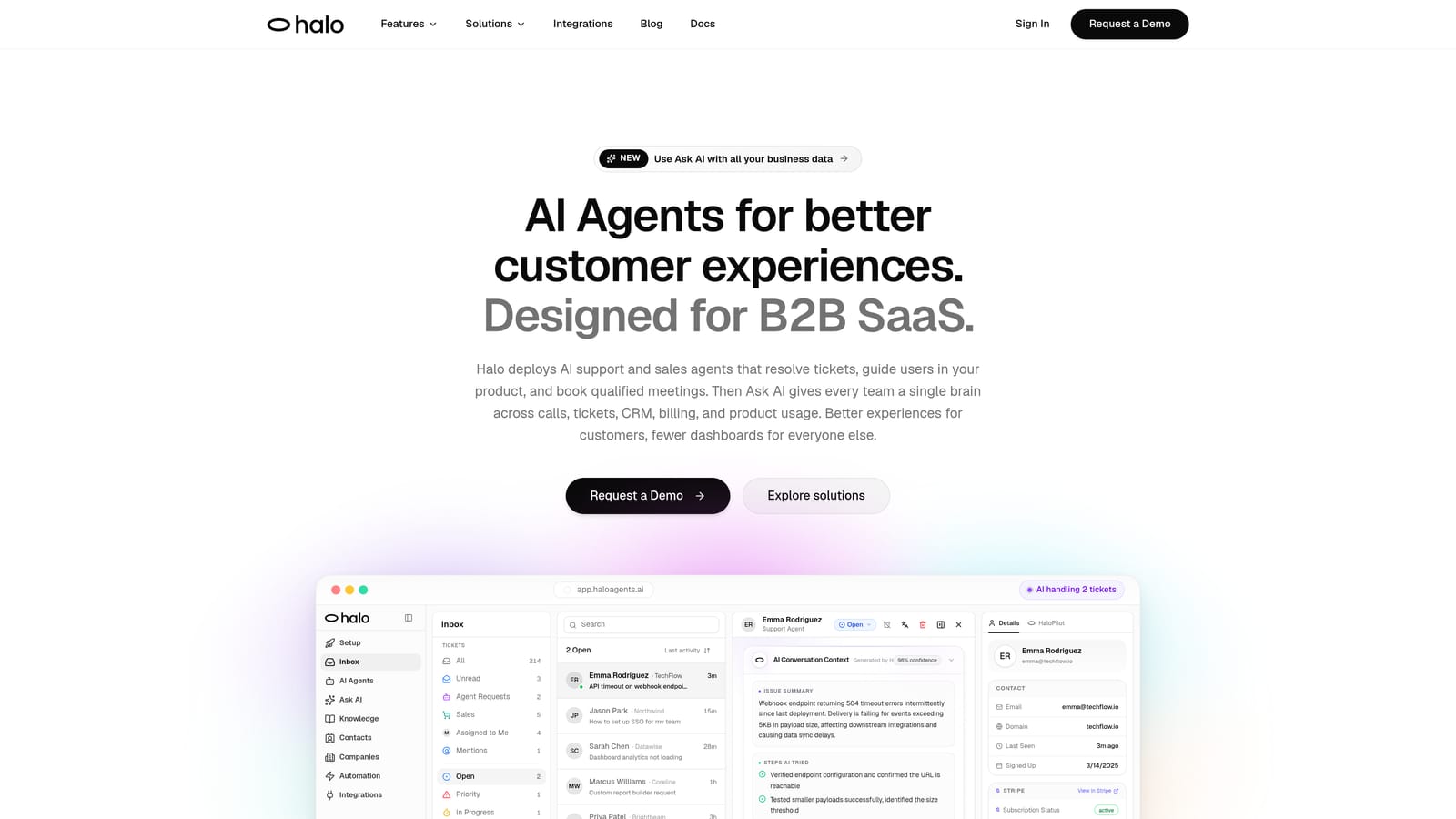
Halo AI is an AI-native customer support platform that resolves tickets autonomously and escalates to human agents only when complexity genuinely demands it.
Where This Tool Shines
Most escalation tools add routing logic on top of a traditional helpdesk. Halo AI is built differently: the AI agent is the first line of support, not a triage layer bolted on afterward. Its page-aware architecture means the AI understands what a user is actually looking at inside your product, enabling contextually accurate guidance rather than generic responses.
The smart inbox goes beyond standard support metrics. It surfaces customer health signals, revenue anomalies, and churn indicators, turning your support queue into a source of business intelligence. When escalation to a human agent is needed, the handoff is seamless, with full context preserved so agents never start cold.
Key Features
Intelligent AI Agents with Live Handoff: Autonomous ticket resolution with smooth escalation to human agents when complexity requires it, preserving full conversation context.
Page-Aware Chat Widget: The AI sees what the user sees in-product, enabling visual UI guidance and contextually relevant support that generic chatbots can't match.
Auto Bug Ticket Creation: Technical issues are automatically identified and routed to engineering via Linear integration, removing a manual step from the escalation chain.
Smart Inbox with Business Intelligence: Customer health signals, revenue anomalies, and churn indicators surface alongside support tickets, giving teams visibility beyond resolution rates.
Continuous Learning: Every interaction improves resolution accuracy over time, meaning the system gets smarter about what to resolve autonomously and what to escalate.
Deep Integration Stack: Connects with Slack, HubSpot, Intercom, Stripe, Zoom, PandaDoc, Fathom, and Linear for a unified support and business operations workflow.
Best For
B2B SaaS companies and product teams that want to reduce escalation volume at the source, not just route tickets faster. Particularly strong for teams that need support intelligence to feed into customer success and revenue workflows.
Pricing
Contact Halo AI directly for pricing. The platform is positioned for B2B SaaS teams and product organizations. Visit haloagents.ai for details.
2. Zendesk
Best for: Teams that need mature, rule-based escalation logic with a large integration ecosystem.
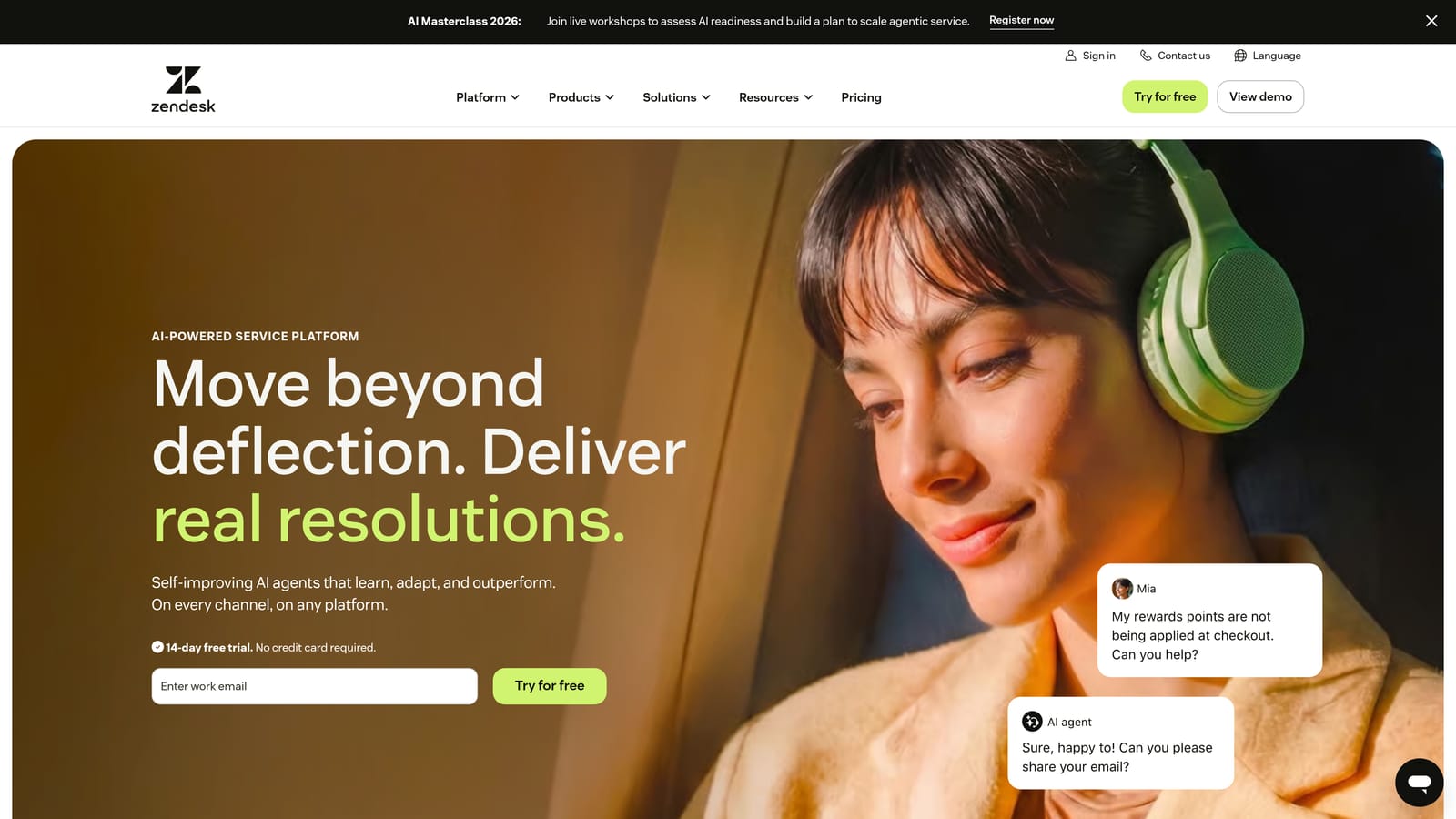
Zendesk is the industry-standard helpdesk platform with a decades-deep trigger and automation system that handles escalation at scale.
Where This Tool Shines
Zendesk's escalation capabilities are built on a robust combination of event-based triggers, time-based automations, and SLA policies. If a ticket hasn't been touched in a defined window, an escalation fires automatically. If a VIP customer submits a ticket, routing rules can prioritize it before a human ever looks at the queue.
The Skills-based routing system matches tickets to agents by expertise, language, or tier, reducing unnecessary escalations caused by misrouting in the first place. The Zendesk AI add-on layers intelligent triage and suggested actions on top of this foundation for teams that want to move beyond pure rule-based logic.
Key Features
Triggers and Automations: Event-based and time-based escalation rules that fire without manual intervention across email, chat, and voice channels.
Skills-Based Routing: Matches incoming tickets to the right agent tier based on defined skills, reducing misrouted escalations.
SLA Policies: Configurable SLA targets with automatic escalation notifications when response or resolution windows are at risk.
Zendesk AI Add-On: AI-powered triage, intent detection, and suggested actions that augment the rule-based escalation system.
App Marketplace: Hundreds of integrations for extending escalation workflows into CRM, project management, and communication tools.
Best For
Mid-market to enterprise teams already invested in the Zendesk ecosystem, or organizations that need a proven, highly configurable rule engine with broad third-party support.
Pricing
Suite plans start at approximately $55 per agent per month, though pricing varies by tier and features. Verify current plans at zendesk.com.
3. Freshdesk
Best for: Growing SMB and mid-market teams that want AI-assisted escalation at a competitive price point.
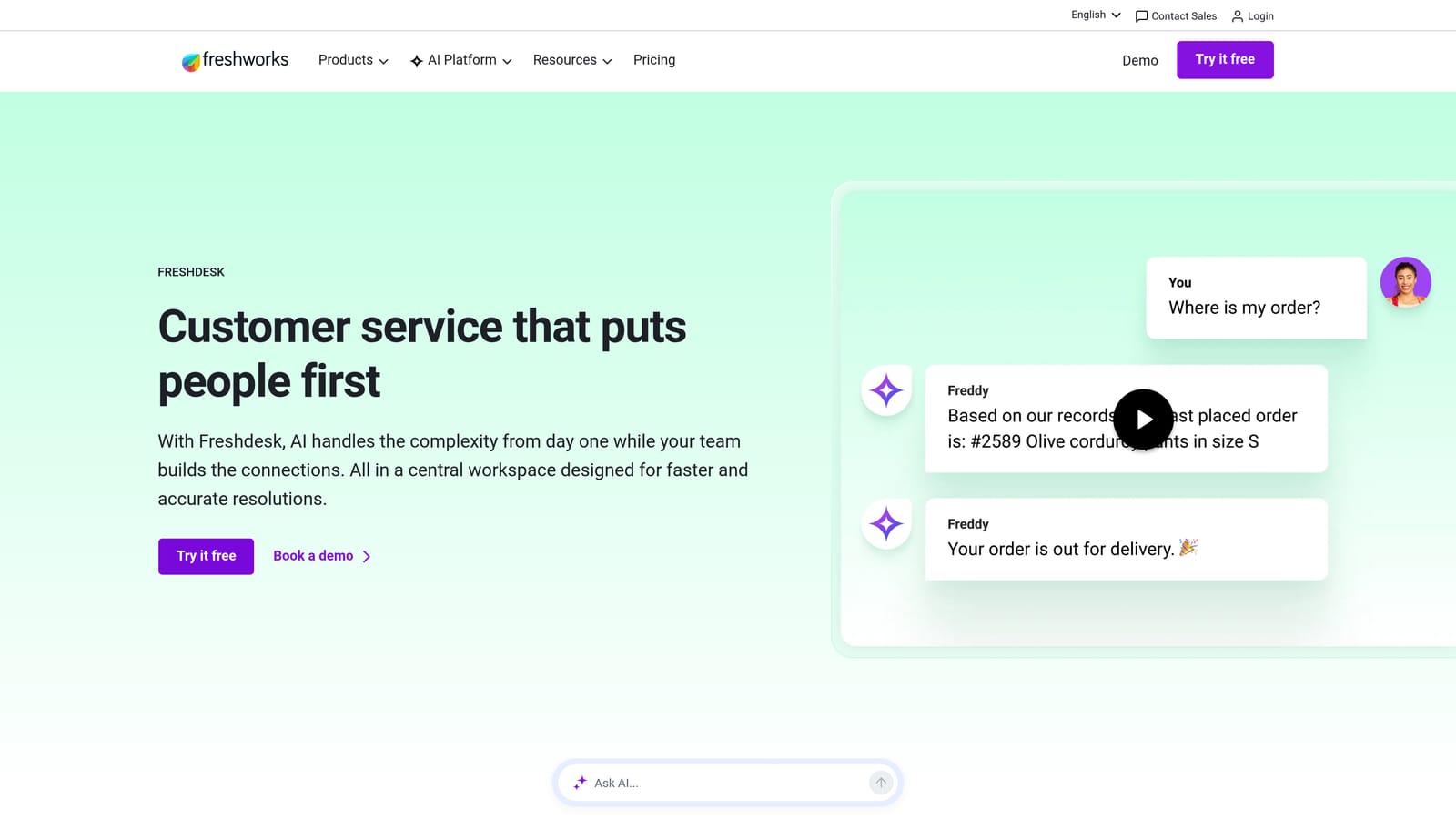
Freshdesk is Freshworks' SMB-friendly helpdesk featuring Freddy AI for auto-triage and configurable SLA-based escalation policies.
Where This Tool Shines
Freshdesk hits a strong price-to-capability ratio for teams that don't need enterprise-grade complexity. Freddy AI handles automatic ticket classification and surfaces suggested responses, reducing the manual triage burden before escalation decisions are made. Scenario Automations let you chain multiple actions together, so a single trigger can reassign a ticket, notify a manager, and update a tag simultaneously.
The free tier makes Freshdesk accessible for small teams testing escalation automation for the first time, while the paid tiers scale into multi-level SLA management with configurable escalation alerts for agents and supervisors.
Key Features
Freddy AI: Automatic ticket classification, sentiment detection, and suggested responses that inform smarter escalation decisions.
Scenario Automations: Multi-step escalation workflows that chain actions together from a single trigger event.
SLA Management: Configurable escalation alerts that notify agents and managers when response or resolution deadlines are approaching.
Skill-Based and Load-Balanced Assignment: Routes tickets to the right agent tier while distributing workload evenly across the team.
Free Tier: Entry-level access for small teams, making it easy to start automating escalations without upfront investment.
Best For
SMBs and growing teams that want solid escalation automation without the cost or complexity of enterprise platforms. A natural choice for teams already using other Freshworks products.
Pricing
Free plan available. Paid plans start at lower price points than comparable Zendesk tiers. Verify current pricing at freshworks.com.
4. Intercom
Best for: Product-led growth companies that need in-product conversational support with intelligent AI-to-human handoff.
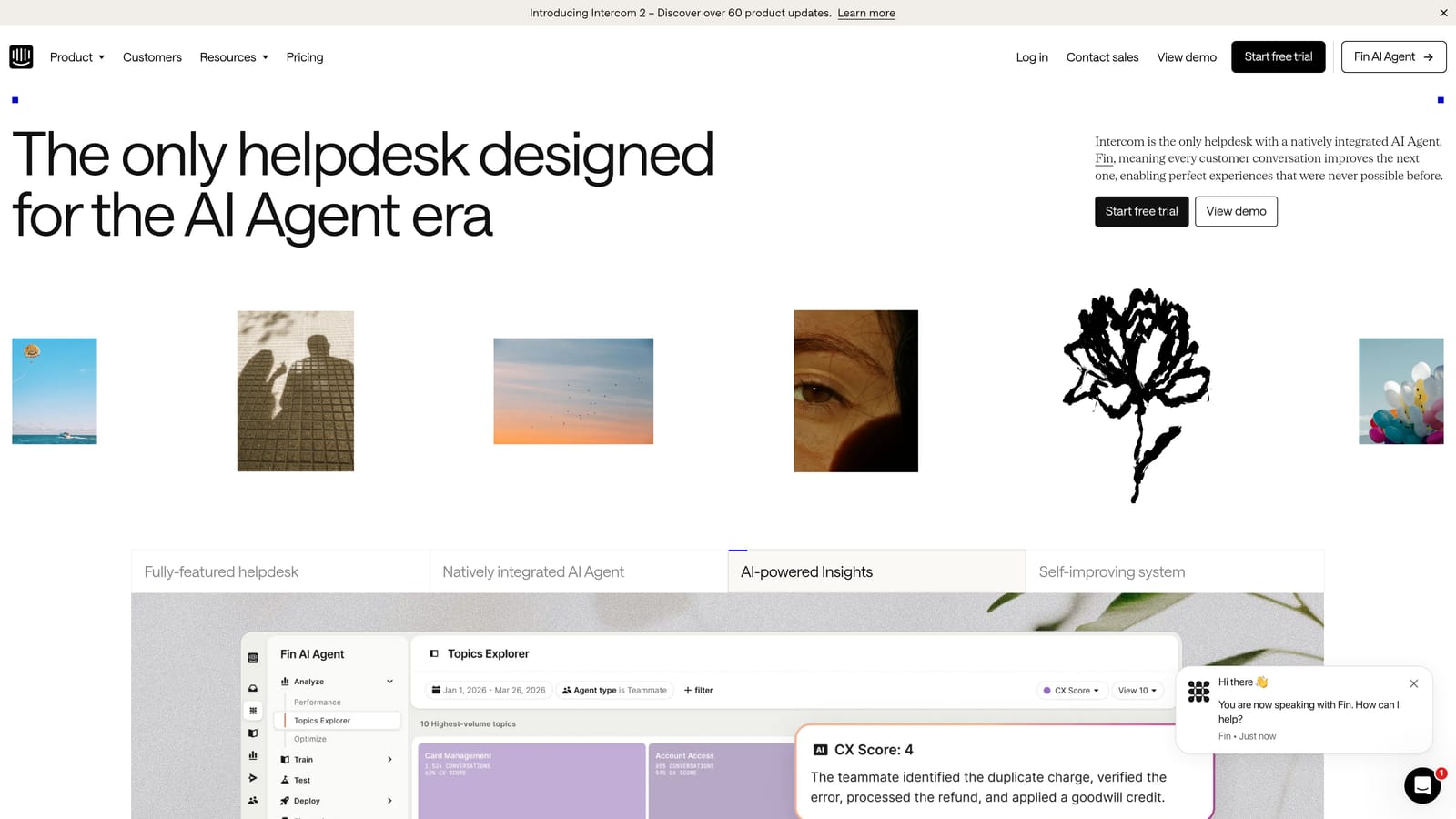
Intercom is a conversational support platform where the Fin AI agent handles front-line resolution and configurable handoff rules manage escalation to human agents.
Where This Tool Shines
Intercom's escalation model is built around conversation flow rather than ticket queues. Fin AI handles incoming queries with configurable escalation triggers: when it can't resolve an issue or detects a specific intent, it hands off to a human agent with full context intact. This makes escalation feel natural to the customer rather than disruptive.
The platform's strength is its depth of context at the moment of escalation. CRM data, product analytics, and customer attributes are all available to inform routing decisions, so escalations go to the right human with the right background, not just whoever is next in queue.
Key Features
Fin AI Agent: Front-line AI resolution with configurable escalation triggers and smooth handoff rules to human agents.
Intent and Attribute-Based Routing: Routes conversations based on detected intent, topic, and customer attributes for context-aware escalation.
In-Product Messaging: Proactive support flows that can prevent escalation by reaching users at the right moment inside the product.
Omnichannel Inbox: Unified inbox covering chat, email, and social channels for consistent escalation management across touchpoints.
CRM and Analytics Integration: Customer data from connected tools informs escalation routing decisions in real time.
Best For
SaaS companies with chat-first support models and product-led growth motions. Particularly strong for teams where in-product experience is central to the support workflow.
Pricing
Intercom uses a usage-based pricing model. Verify current plans at intercom.com.
5. Salesforce Service Cloud
Best for: Enterprise teams that need escalation logic driven by CRM data like account tier, contract value, and open opportunities.
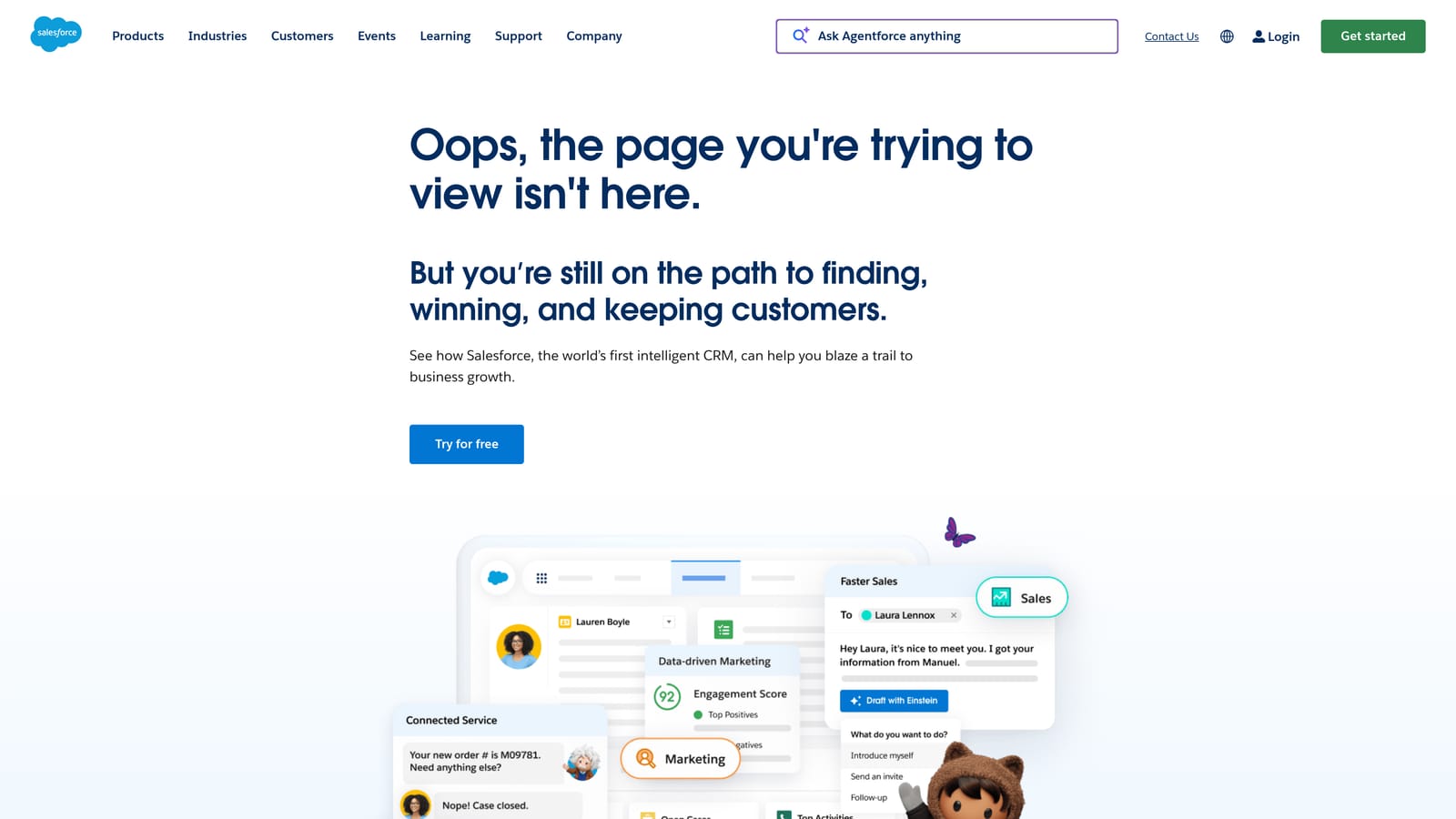
Salesforce Service Cloud is an enterprise-grade service platform where Einstein AI, Omni-Channel routing, and deep CRM integration power revenue-sensitive escalation workflows.
Where This Tool Shines
Service Cloud's core advantage is its native connection to Salesforce CRM data. Escalation rules can be triggered not just by ticket content or SLA timers, but by account tier, contract value, open opportunities, or renewal dates. For enterprise teams where a single escalated case could affect a six-figure renewal, this level of context-aware routing is genuinely valuable.
The Omni-Channel Supervisor dashboard gives managers real-time visibility into queue health and agent capacity, making it easier to intervene before an escalation becomes a crisis. Einstein AI handles case classification and routing recommendations to reduce manual triage overhead.
Key Features
Einstein AI: Intelligent case classification, routing recommendations, and next-best-action suggestions for escalated cases.
CRM-Driven Escalation Rules: Escalation logic informed by account tier, contract value, open opportunities, and other Salesforce CRM fields.
Omni-Channel Supervisor: Real-time queue and agent visibility for managers overseeing escalation workflows across channels.
Time-Based and Criteria-Based Case Escalation: Flexible rule types covering both SLA-driven and business-logic-driven escalation scenarios.
Sales and Marketing Cloud Integration: Deep native connections across the Salesforce ecosystem for unified customer context.
Best For
Enterprise organizations already on the Salesforce platform where CRM-driven escalation logic and revenue context are essential requirements. High implementation cost and complexity make it a poor fit for smaller teams.
Pricing
Enterprise pricing typically ranges from approximately $75 to $300 or more per user per month depending on edition. Verify current plans at salesforce.com.
6. Zoho Desk
Best for: Budget-conscious teams in the Zoho ecosystem that want visual workflow automation and AI-powered sentiment escalation.
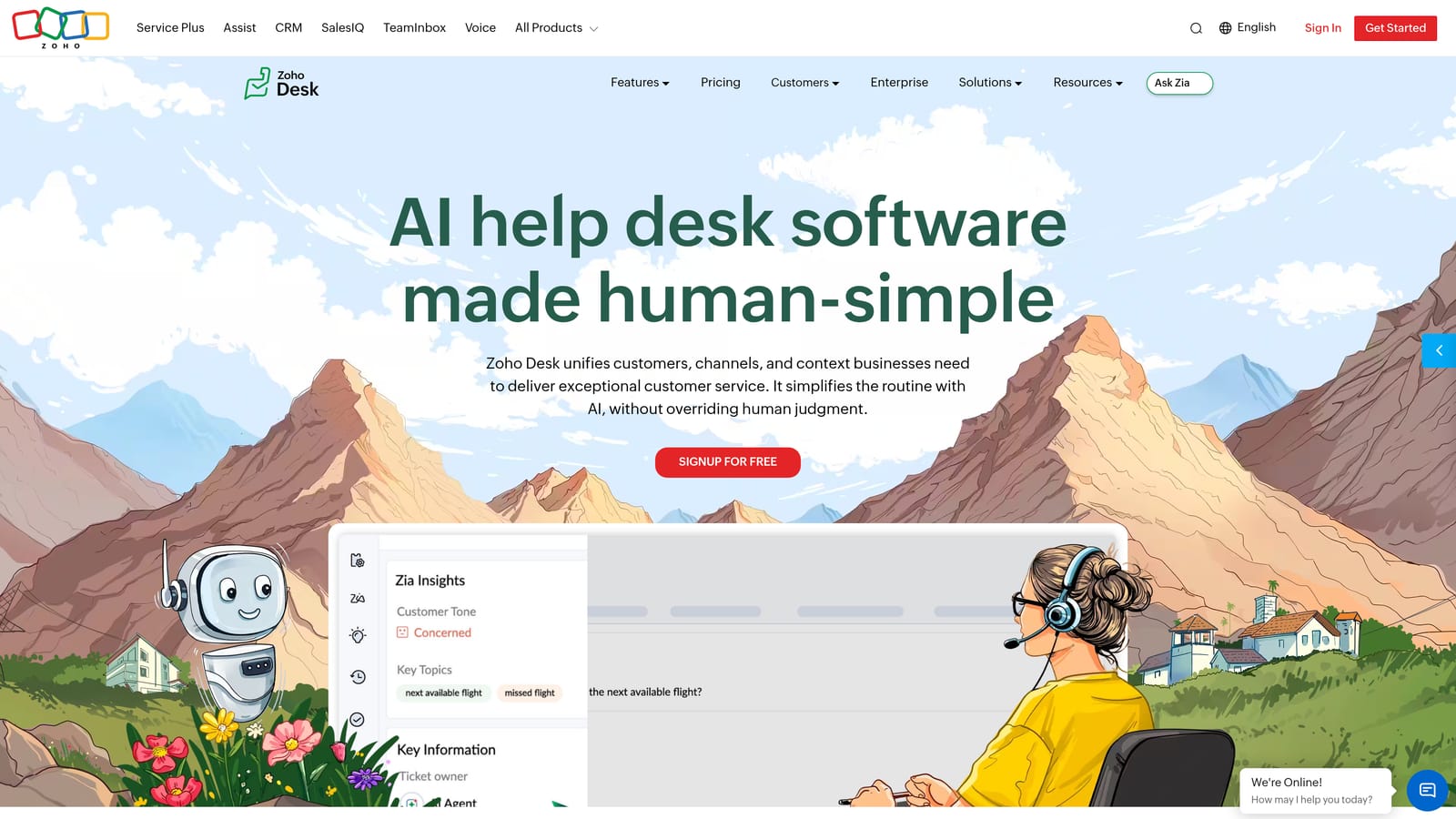
Zoho Desk is a helpdesk platform featuring Zia AI for sentiment-aware escalation and Blueprint for building visual multi-step escalation workflows.
Where This Tool Shines
Zoho Desk's Blueprint feature is a standout for teams that want to map escalation processes visually without writing code. You define states, transitions, and conditions in a drag-and-drop interface, making complex multi-tier escalation flows accessible to operations managers who aren't technical.
Zia AI adds a layer of intelligence by detecting sentiment in incoming tickets and flagging anomalies, so frustrated or at-risk customers can be escalated before a human would have noticed the pattern. For teams already using Zoho CRM or Zoho Analytics, the native integration creates a unified data environment that enriches escalation context.
Key Features
Zia AI: Sentiment detection, automatic ticket tagging, and anomaly alerts that trigger escalation based on customer tone and behavior patterns.
Blueprint Workflow Automation: Visual, drag-and-drop builder for creating multi-step escalation processes without engineering support.
Multi-Level Escalation Policies: Time-based escalation triggers across multiple tiers with configurable notification rules.
Skill-Based and Round-Robin Assignment: Flexible ticket routing to match escalated tickets to the right agent.
Zoho Ecosystem Integration: Native connections with Zoho CRM, Zoho Analytics, and third-party tools for enriched escalation context.
Best For
SMBs and mid-market teams in the Zoho ecosystem, or any team that wants strong visual workflow automation at a competitive price point. Less compelling for teams outside the Zoho stack.
Pricing
Competitive per-agent monthly pricing with a free tier available. Verify current plans at zoho.com/desk.
7. HappyFox
Best for: Operations-focused teams that want precise, no-code escalation rule configuration without relying on engineering.
HappyFox is an operations-focused helpdesk with a Smart Rules engine designed to make time-based and event-based escalation configuration straightforward for non-technical teams.
Where This Tool Shines
HappyFox earns its place on this list by making escalation configuration genuinely accessible. The Smart Rules engine is granular enough to handle complex escalation logic, yet approachable enough that an operations manager can build and maintain rules without opening a support ticket to the engineering team. This is a real differentiator for lean support organizations.
SLA management is a core strength, with automatic escalation notifications sent to agents and managers before breaches occur. The reporting on SLA breaches and escalation frequency gives ops teams the data they need to continuously refine their escalation thresholds.
Key Features
Smart Rules Engine: Granular time-based and event-based escalation triggers configurable entirely through a no-code interface.
SLA Management: Automatic escalation notifications to agents and managers with configurable warning thresholds before breach.
No-Code Setup: Escalation rules fully configurable by operations teams without engineering involvement.
Canned Actions: Bulk ticket update capabilities for fast response during high-volume escalation events.
Escalation Reporting: Visibility into SLA breach rates and escalation frequency to support ongoing workflow optimization.
Best For
Operations-focused support managers who need precise control over escalation logic without technical dependencies. A strong fit for teams where ops owns the support tooling rather than engineering.
Pricing
Agent-based pricing at mid-range price points. Verify current plans at happyfox.com.
8. Gorgias
Best for: E-commerce brands that need revenue-aware escalation logic tied to customer lifetime value and order data.
Gorgias is an e-commerce-specific helpdesk where escalation rules can factor in Shopify order status, customer lifetime value, and revenue risk.
Where This Tool Shines
Gorgias approaches escalation from a revenue lens rather than a pure support operations lens. High-LTV customers and at-risk orders are surfaced and prioritized automatically, meaning a customer with a large pending order gets escalated faster than a first-time buyer with a routine question. This kind of revenue-aware logic is difficult to replicate in general-purpose helpdesks without significant custom configuration.
The depth of e-commerce platform integration is the other major strength. Shopify, WooCommerce, and Magento data appear directly in the ticket context, so agents handling escalated issues have order history, shipping status, and purchase value available without switching tools.
Key Features
Revenue-Aware Escalation: High-LTV customers and at-risk orders are automatically prioritized and escalated based on customer and order data.
E-Commerce Platform Integration: Deep native connections with Shopify, WooCommerce, and Magento for order context directly inside tickets.
Automation Rules: Escalation logic based on customer data, order value, ticket content, and channel.
AI-Powered Response Suggestions: Automated suggestions and auto-close for routine queries to reduce escalation volume.
E-Commerce Macro Library: Pre-built rules and macros for common escalation scenarios specific to online retail.
Best For
E-commerce brands on Shopify or similar platforms where revenue context should directly inform escalation priority. Less relevant for pure B2B SaaS support teams.
Pricing
Ticket-based pricing model common in e-commerce tooling. Verify current plans at gorgias.com.
9. Talkdesk
Best for: Contact center teams handling high-volume voice alongside digital channels who need sentiment-triggered escalation.
Talkdesk is a cloud contact center platform with AI-powered call routing, real-time sentiment detection, and omnichannel queue management for voice-heavy support operations.
Where This Tool Shines
Talkdesk is built for environments where voice is a primary support channel alongside digital. Its real-time sentiment detection can trigger a mid-call escalation to a senior agent when a conversation is going sideways, without waiting for the customer to ask to speak to a manager. This proactive escalation capability is difficult to find in helpdesk-first platforms.
The Talkdesk Copilot feature provides agent assist during escalated interactions, surfacing relevant knowledge and suggested responses in real time. Combined with workforce management tools for staffing escalation queues appropriately, it gives contact center managers meaningful control over how escalations are handled at scale.
Key Features
AI-Powered Call Routing: Skills-based and sentiment-aware routing that directs calls to the most appropriate agent tier from the start.
Real-Time Sentiment Detection: Detects negative sentiment during live calls and can trigger mid-call escalation to senior agents proactively.
Omnichannel Queue Management: Unified queue management across voice, chat, email, and SMS for consistent escalation logic across channels.
Talkdesk Copilot: Real-time agent assist during escalated interactions, surfacing relevant knowledge and response suggestions.
Workforce Management: Staffing and scheduling tools designed to ensure escalation queues are appropriately resourced.
Best For
Contact center environments handling significant voice volume alongside digital channels. A strong fit for teams where phone support is central, less so for SaaS-first support teams operating primarily through chat and email.
Pricing
Enterprise contact center pricing. Verify current plans at talkdesk.com.
Which Tool Is Right for Your Team?
The right escalation automation tool depends less on feature lists and more on where your biggest friction points actually live. Here's a quick-reference breakdown by use case.
If you want to reduce escalation volume at the source: Halo AI's autonomous resolution model means fewer tickets ever need a human. The page-aware AI handles in-product guidance, auto-routes bug reports to engineering, and surfaces business intelligence that most support tools miss entirely.
If you're already on Zendesk or Intercom: Both platforms have mature escalation capabilities worth fully exploiting before switching stacks. Zendesk for rule-based precision and a large marketplace; Intercom for conversational, chat-first workflows with strong AI handoff.
If you're an e-commerce brand: Gorgias is purpose-built for your context. Revenue-aware escalation tied to Shopify data is genuinely difficult to replicate elsewhere without heavy customization.
If you're in an enterprise Salesforce environment: Service Cloud's CRM-driven escalation logic, where account tier and contract value inform routing decisions, is a compelling reason to stay in the ecosystem despite the higher cost and complexity.
If you're an SMB watching budget: Freshdesk and Zoho Desk both offer free tiers and competitive paid plans without sacrificing the core escalation capabilities growing teams need.
Your support team shouldn't scale linearly with your customer base. Let AI agents handle routine tickets, guide users through your product, and surface business intelligence while your team focuses on complex issues that need a human touch. See Halo in action and discover how continuous learning transforms every interaction into smarter, faster support.