9 Best Support Ticket Overflow Solutions in 2026
When ticket volume spikes faster than your team can handle, the right support ticket overflow solutions make all the difference. This guide reviews nine purpose-built tools — covering AI-driven automation, intelligent routing, and self-service deflection — to help B2B support teams absorb demand surges without sacrificing customer satisfaction.
 Grant CooperFounder13 min read
When ticket volume spikes faster than your team can respond, the backlog compounds quickly — and customer satisfaction drops with it. Whether you're managing a product launch surge, a seasonal rush, or simply growing faster than your headcount, ticket overflow is one of the most common pain points for B2B support teams.
The good news: modern tools have moved well beyond simple auto-responders. Today's best solutions combine AI-driven automation, intelligent routing, self-service deflection, and real-time analytics to absorb volume without sacrificing quality.
This list covers nine tools purpose-built to handle support ticket overflow — from AI agents that resolve tickets autonomously to helpdesk platforms with smart triage and self-service portals. We've selected these tools based on automation depth, integration breadth, scalability, and how well they address the root causes of overflow, not just the symptoms.
1. Halo AI
Best for: B2B SaaS teams wanting AI-first ticket resolution with business intelligence built in
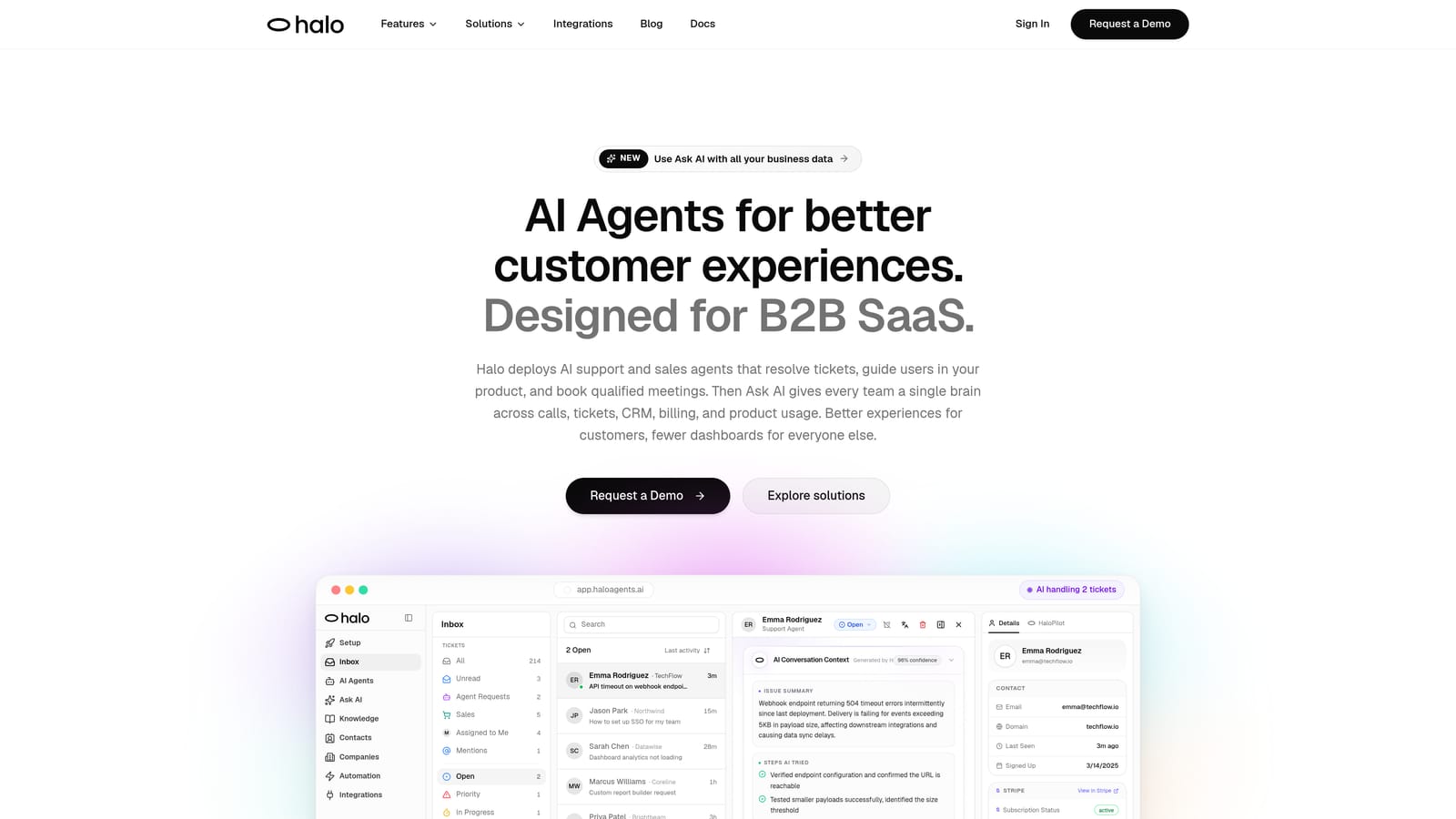
Halo AI is an AI-first customer support platform that deploys autonomous agents to resolve tickets, guide users through your product, and surface business intelligence from every support interaction.
Where This Tool Shines
Most support tools treat overflow as a volume problem. Halo treats it as an intelligence opportunity. Its autonomous AI agents don't just deflect tickets — they resolve them end-to-end, learning from every conversation to get smarter over time. That continuous learning loop means the system improves without your team having to manually retrain it.
The standout differentiator is the page-aware chat widget. Unlike generic chatbots that respond based on keywords alone, Halo's agent sees what the user sees on screen, enabling contextual visual guidance that's genuinely useful rather than frustratingly generic. Combine that with a smart inbox that surfaces customer health signals, revenue anomalies, and product insights, and you have a support platform that doubles as a business intelligence layer.
Key Features
Autonomous AI Agents: Resolve tickets end-to-end without human intervention, handling common queries at any volume without adding headcount.
Page-Aware Chat Widget: The AI agent sees what the user sees on screen, enabling contextual guidance that's specific to where the user is in your product.
Auto Bug Ticket Creation: Automatically generates bug reports directly from support conversations, connecting product issues to your engineering workflow without manual handoffs.
Smart Inbox with Business Intelligence: Surfaces customer health signals, revenue intelligence, and anomaly detection from support data — going well beyond standard reporting.
Live Agent Handoff: Seamlessly escalates complex or sensitive issues to human agents when the situation calls for it.
Deep Integrations: Connects natively with Linear, Slack, HubSpot, Intercom, Stripe, Zoom, PandaDoc, and Fathom.
Best For
B2B SaaS companies and product teams that want an AI-native support solution rather than a traditional helpdesk with AI bolted on. Particularly well-suited for teams that need support automation to connect directly to their product, engineering, and revenue tooling.
Pricing
Contact for pricing at haloagents.ai. Given the enterprise-grade feature set, this is best suited for teams with meaningful support volume to justify the investment.
2. Zendesk
Best for: Enterprise support organizations needing a proven, scalable helpdesk with deep customization
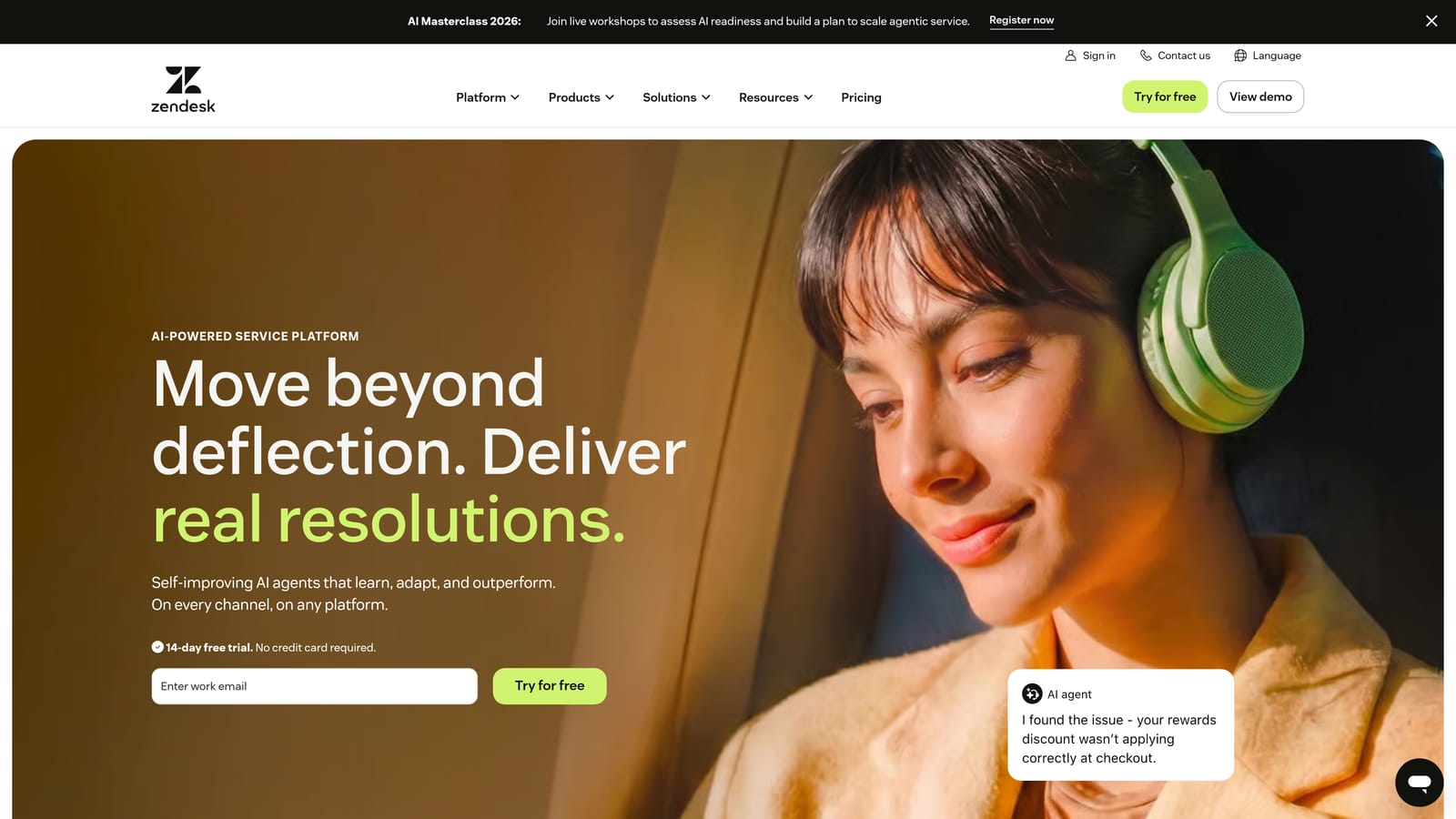
Zendesk is the industry's most established helpdesk platform, offering enterprise-grade ticketing, AI-powered triage, and a vast ecosystem of integrations for large support organizations.
Where This Tool Shines
Zendesk's strength is breadth. It handles virtually every channel — email, chat, voice, social — from a single platform, and its marketplace of 1,000-plus integrations means it can slot into almost any existing tech stack. For teams managing high ticket volumes across multiple channels, that unified visibility is genuinely valuable.
The AI layer, including intelligent triage, ticket classification, and intent detection, has matured considerably. Answer Bot handles self-service deflection before tickets reach the queue, which directly reduces overflow. The tradeoff is complexity: Zendesk's configuration depth is both its strength and its learning curve.
Key Features
Zendesk AI: Intelligent triage, ticket classification, and intent detection to route tickets correctly from the start.
Answer Bot: Deflects tickets through self-service by surfacing relevant knowledge base articles before a query becomes a ticket.
Advanced Routing and SLA Management: Sophisticated rules engine for directing tickets to the right team or agent based on priority, type, and workload.
1,000+ Integrations: Extensive marketplace covering CRM, billing, project management, and more.
Omnichannel Support: Unified handling across email, chat, voice, and social media.
Best For
Enterprise support teams with complex routing needs, multiple channels, and the resources to configure and maintain a sophisticated helpdesk environment. Less ideal for lean teams looking for fast deployment.
Pricing
Suite Team starts around $55/agent/month. Verify current pricing at zendesk.com, as enterprise tiers vary significantly.
3. Intercom
Best for: SaaS companies wanting autonomous AI resolution with proactive in-product messaging
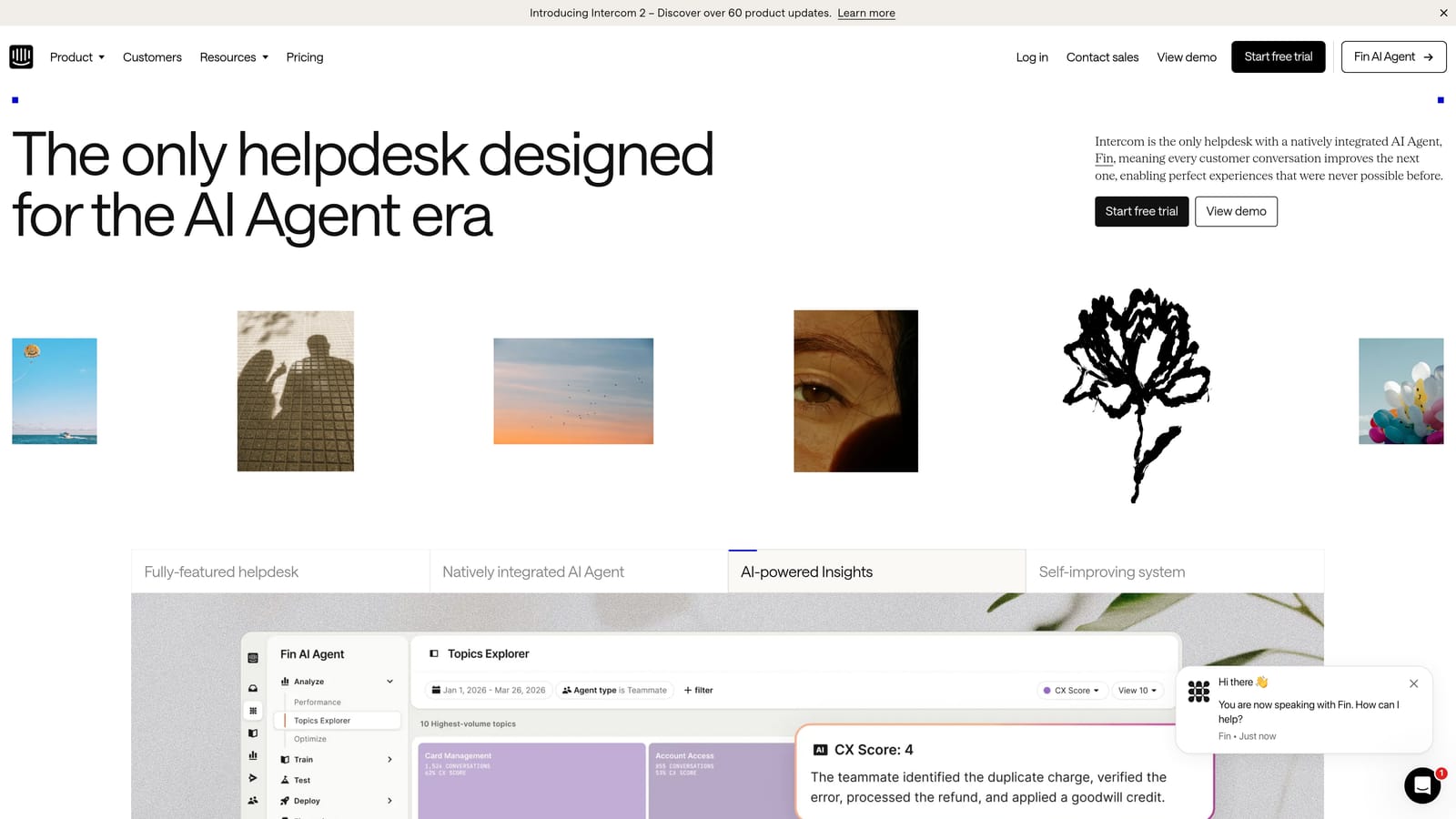
Intercom is a conversational support platform with Fin AI, an autonomous agent that resolves inbound queries across chat and email using your existing knowledge base.
Where This Tool Shines
Intercom's Fin AI agent has become a genuinely capable autonomous resolver. It draws on your knowledge base and help content to answer queries without human involvement, and its per-resolution pricing model means you only pay when it actually works. For SaaS teams already using Intercom for in-product messaging, adding Fin creates a unified layer from proactive communication through to ticket resolution.
The proactive messaging capabilities are a meaningful differentiator for overflow specifically: by surfacing the right content to users before they hit a friction point, Intercom can prevent tickets from being created in the first place. That upstream deflection is often more effective than downstream automation.
Key Features
Fin AI Agent: Autonomous ticket resolution with a per-resolution pricing model, meaning costs scale with actual value delivered.
Unified Inbox: Combines chat, email, and in-app messaging in a single workspace for agents.
Proactive Messaging: In-product tours and targeted messages that reduce ticket creation by addressing issues before users ask.
Conversation Routing: Assignment rules to direct conversations to the right team or agent based on context.
CRM Integrations: Deep connections with Salesforce, HubSpot, Stripe, and others for customer context in every conversation.
Best For
SaaS companies that want autonomous AI resolution combined with proactive in-product support. Particularly strong for teams already using Intercom for customer communication.
Pricing
Base platform plus a per-resolution fee for Fin AI. Verify current pricing at intercom.com, as the structure can vary by plan and volume.
4. Freshdesk
Best for: Growing teams wanting omnichannel helpdesk with built-in AI at an accessible price point
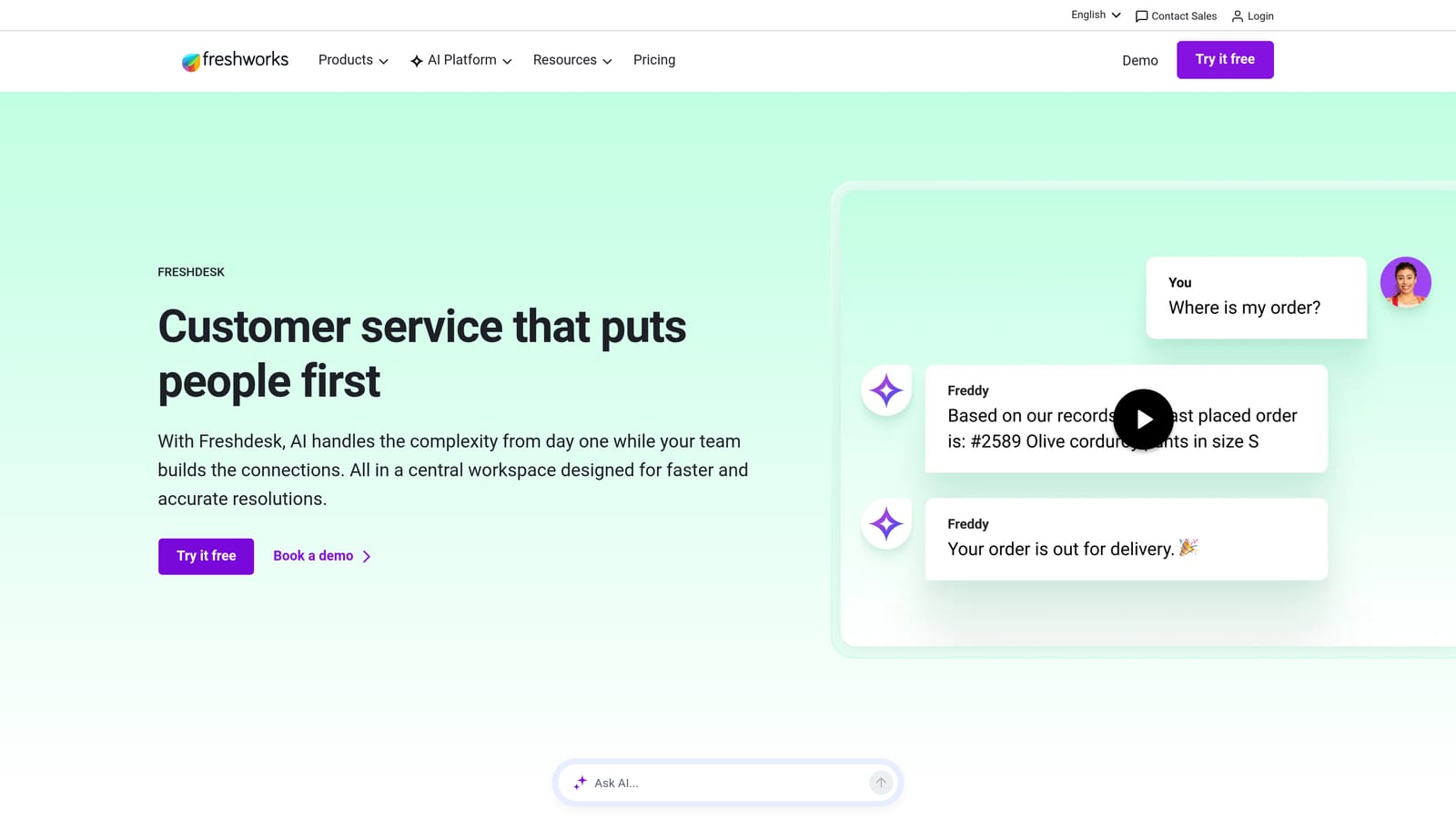
Freshdesk is a feature-rich omnichannel helpdesk with Freddy AI built in for triage, agent assistance, and self-service, positioned as a cost-effective alternative for teams scaling support operations.
Where This Tool Shines
Freshdesk's Freddy AI suite covers the full support workflow: Freddy Self Service handles deflection via chatbot before tickets reach agents, Freddy Copilot assists agents with reply suggestions and ticket summarization, and Freddy Insights surfaces analytics to help managers spot patterns driving overflow. Having all three layers in one platform reduces the integration complexity that often plagues multi-tool support stacks.
The free tier is a genuine entry point for smaller teams, and the paid plans are generally positioned below Zendesk's pricing, making Freshdesk a sensible choice for teams that need enterprise-adjacent features without enterprise pricing.
Key Features
Freddy Self Service: AI-powered chatbot deflection that handles common queries before they become tickets.
Freddy Copilot: Real-time reply suggestions and ticket summarization to speed up agent handling time.
Freddy Insights: AI-driven analytics that surface patterns, trends, and areas driving ticket volume.
Omnichannel Coverage: Email, chat, phone, social media, and WhatsApp in a single platform.
Free Tier: Available for small teams, with paid plans scaling up as volume and feature needs grow.
Best For
Growing support teams that need omnichannel coverage and AI-assisted triage without the complexity or cost of enterprise-tier platforms. Also a strong option for teams migrating away from basic ticketing systems.
Pricing
Free tier available. Paid plans start at competitive rates below Zendesk's entry point. Verify current pricing at freshdesk.com.
5. Tidio
Best for: SMBs and e-commerce teams wanting fast AI chatbot deployment with minimal setup
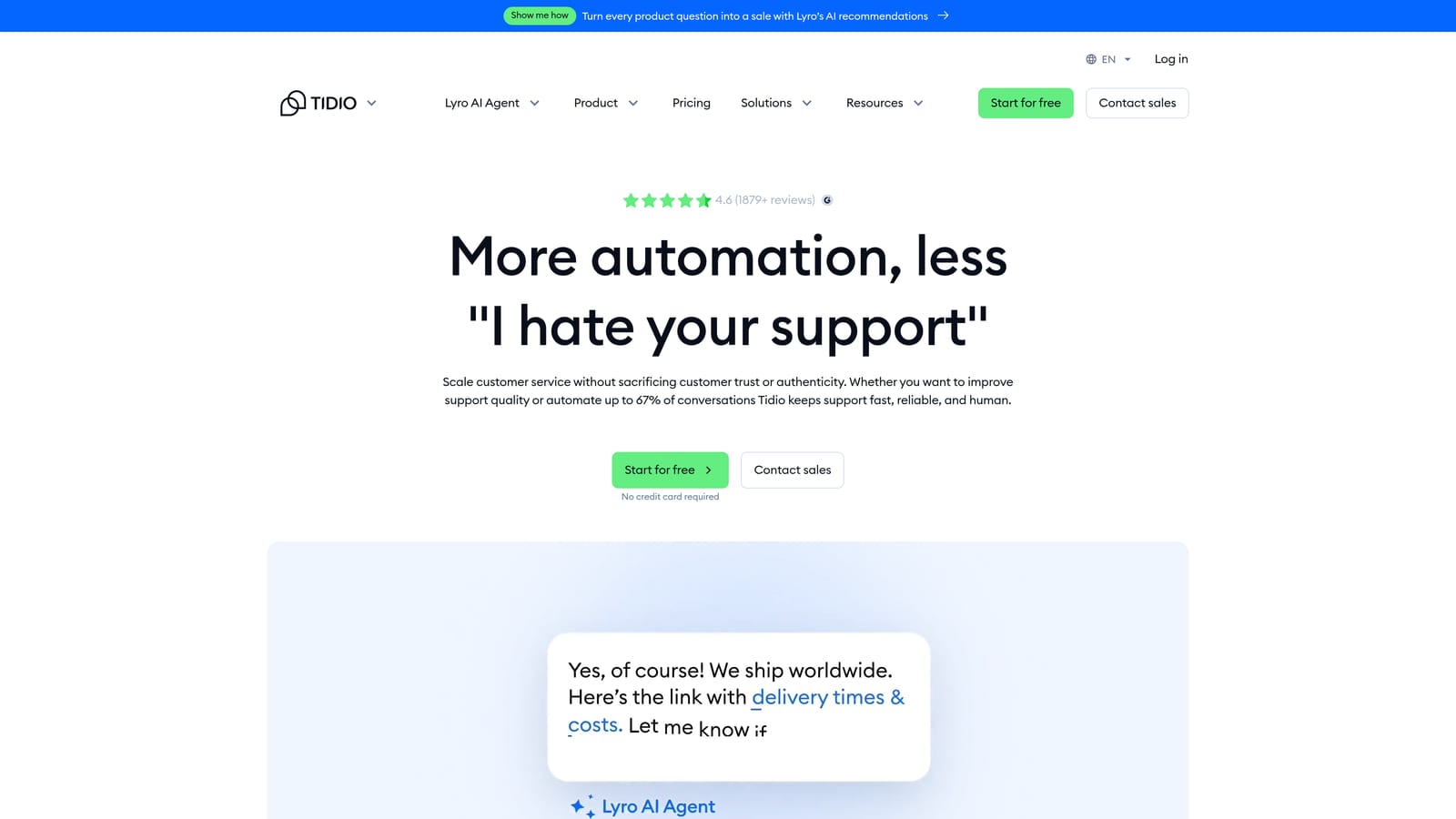
Tidio is a lightweight live chat and AI chatbot platform built for fast deployment, with Lyro AI handling repetitive queries automatically with minimal configuration required.
Where This Tool Shines
Tidio's core advantage is speed to value. Lyro AI is designed to be deployable without extensive training data or lengthy onboarding, which matters when your team is already dealing with overflow and can't afford a months-long implementation. It handles the most common, repetitive queries automatically, freeing agents to focus on conversations that genuinely need human judgment.
For teams with e-commerce components, the native Shopify and WooCommerce integrations mean Lyro can pull order data directly and answer common fulfillment queries without agent involvement. It's not the deepest platform on this list, but for SMBs that need something working quickly, that simplicity is the point.
Key Features
Lyro AI Chatbot: Autonomous handling of common support queries with minimal training data required to get started.
Unified Dashboard: Live chat, chatbot, and email managed from a single interface.
Fast Deployment: Designed to be operational quickly without extensive configuration or data preparation.
E-commerce Integrations: Native connections to Shopify and WooCommerce for order-related query automation.
Free Tier: Available for low-volume teams testing the platform before committing.
Best For
SMBs, early-stage teams, and e-commerce operators that need AI chatbot deflection without the overhead of a full helpdesk implementation. Less suited for complex B2B SaaS support workflows.
Pricing
Free tier available. Lyro AI operates on usage-based pricing. Verify current pricing at tidio.com.
6. Help Scout
Best for: Teams that want AI-assisted support without removing the human feel from customer interactions
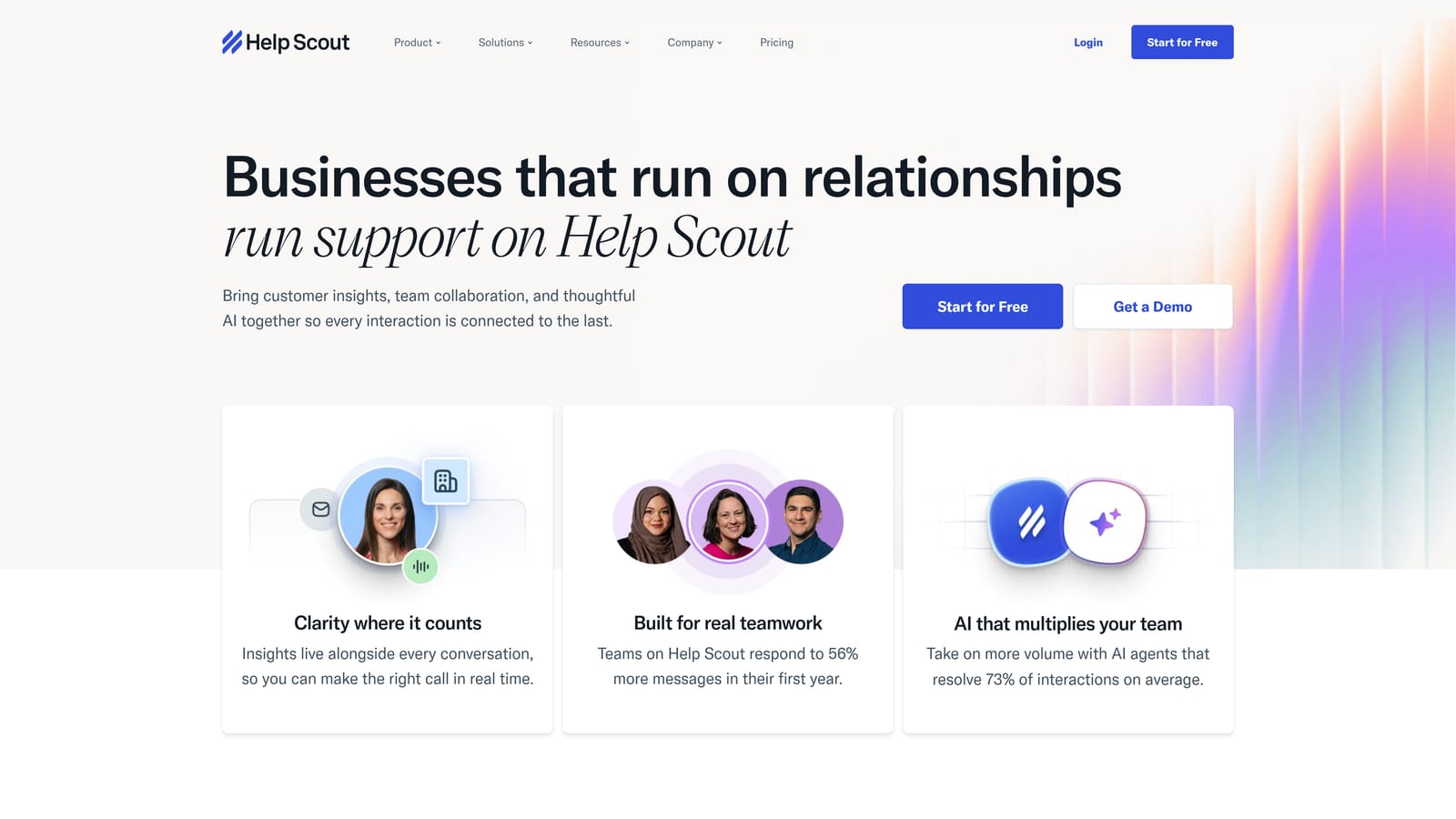
Help Scout is a customer support platform that prioritizes a human-first experience, using AI to help agents work faster without depersonalizing customer interactions.
Where This Tool Shines
Help Scout takes a deliberately different philosophical stance from fully autonomous AI tools. Rather than replacing human agents, its AI features are designed to make agents faster and less cognitively taxed. AI Summarize condenses long conversation threads so agents can get up to speed instantly on complex tickets. AI Assist helps draft and refine replies. The result is meaningful throughput improvement without the risk of robotic, impersonal responses.
The collision detection feature in the shared inbox is a practical overflow management tool that's easy to overlook: it prevents two agents from drafting responses to the same ticket simultaneously, eliminating a common source of wasted effort during high-volume periods.
Key Features
AI Summarize: Instantly condenses long conversation threads so agents can understand context without reading every message.
AI Assist: Drafts, improves, and adjusts the tone of agent replies to speed up response time.
AI Answers: Self-service deflection via knowledge base content surfaced at the point of customer inquiry.
Collision Detection: Prevents duplicate responses by alerting agents when a colleague is already working on a ticket.
Clean UX: Designed to reduce agent cognitive load, which matters when teams are under pressure from high volume.
Best For
Teams where brand voice and personal touch are central to the customer experience, and where AI augmentation of agents is preferable to full automation. Strong fit for companies in relationship-driven industries.
Pricing
Starts around $20-25/user/month. Verify current pricing at helpscout.com.
7. Zoho Desk
Best for: Teams embedded in the Zoho ecosystem needing context-aware AI triage and anomaly detection
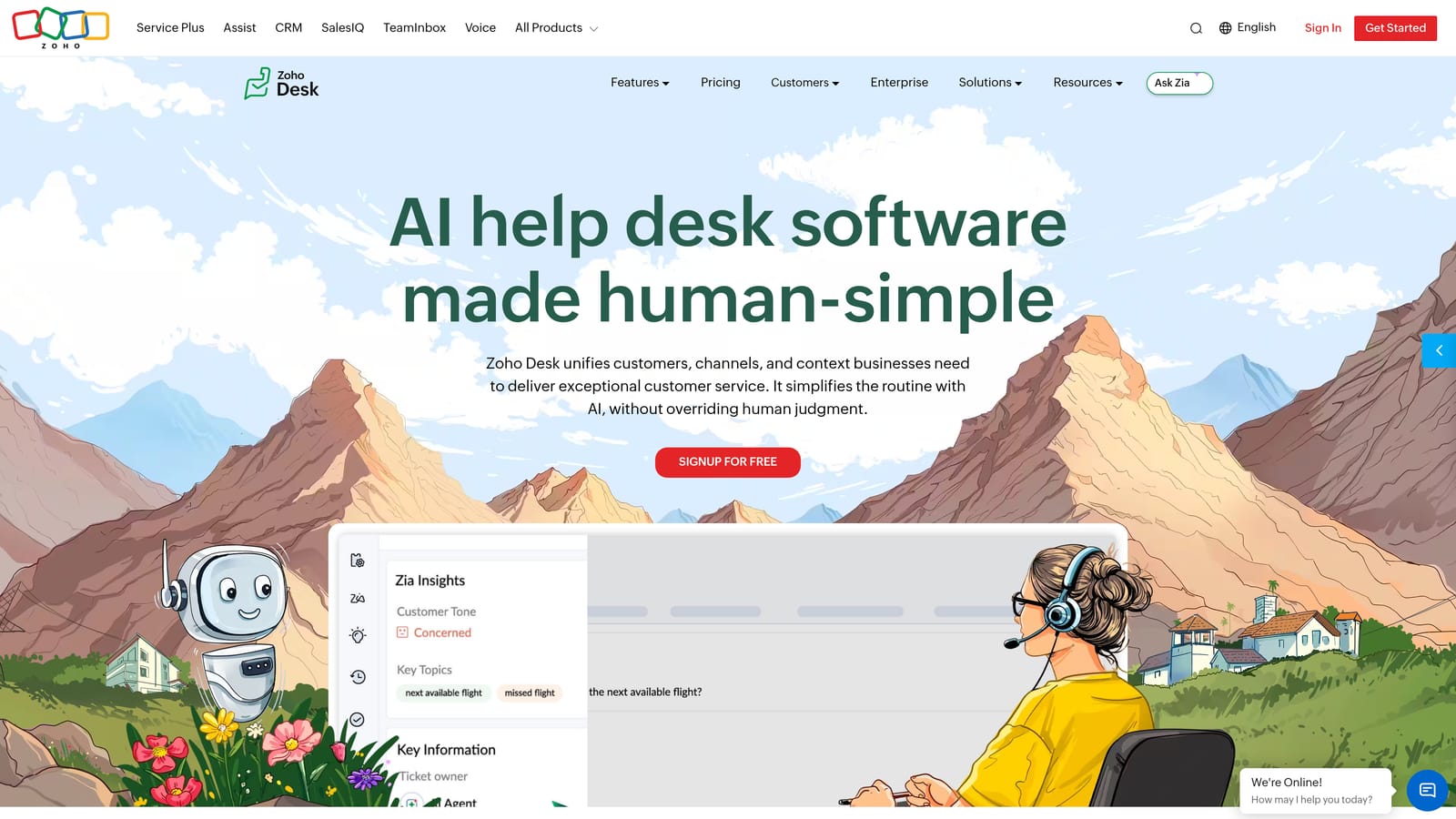
Zoho Desk is a context-aware helpdesk with Zia AI built in, offering sentiment analysis, anomaly detection, and intelligent tagging with deep integration across the Zoho business suite.
Where This Tool Shines
Zia's anomaly detection capability is particularly relevant for overflow management: it flags unusual spikes in ticket volume in real time, giving managers early warning before a surge becomes a crisis. That proactive signal is something most helpdesks don't surface until after the damage is done.
For teams already using Zoho CRM, Zoho Analytics, or other Zoho products, Desk's native integration depth creates a unified customer data layer that most standalone helpdesks can't match. The sentiment analysis on incoming tickets also helps prioritize which conversations need immediate attention during high-volume periods.
Key Features
Zia Sentiment Analysis: Scores incoming tickets by customer sentiment to help agents prioritize the most urgent or at-risk conversations.
Anomaly Detection: Flags unusual ticket volume spikes in real time so managers can respond before backlogs build.
Auto-Tagging and Classification: Reduces manual triage by automatically categorizing and routing tickets based on content.
Zoho Suite Integration: Native connections to Zoho CRM, Zoho Analytics, and 40-plus other Zoho applications.
Free Tier: Available for teams of up to three agents.
Best For
Teams already invested in the Zoho ecosystem, or those that want AI-powered anomaly detection and sentiment analysis without a large per-seat cost. The free tier makes it accessible for very small teams.
Pricing
Free for up to three agents. Paid plans available at competitive rates. Verify current pricing at zoho.com/desk.
8. Gorgias
Best for: E-commerce support teams handling high volumes of order-related tickets
Gorgias is a helpdesk built specifically for e-commerce support teams, with deep order management integrations that automate the most common ticket types before agents need to intervene.
Where This Tool Shines
Gorgias solves a specific overflow problem: the high-volume, low-complexity tickets that dominate e-commerce support queues. Order status inquiries, shipping updates, and return requests are handled automatically through native integrations with Shopify, WooCommerce, Magento, and BigCommerce. When a large portion of your ticket volume is "where is my order," automating that category alone can dramatically reduce queue depth.
The revenue statistics tied to support conversations is a useful feature for e-commerce teams: it connects customer service activity to actual sales impact, helping justify support investment and identify which conversations are most commercially valuable.
Key Features
E-commerce Integrations: Native connections to Shopify, WooCommerce, Magento, and BigCommerce for order data in every conversation.
Automated Order Responses: Handles order status, shipping, and returns queries automatically without agent involvement.
Macros and Rules Engine: High-volume repetitive ticket deflection through configurable automation rules.
Revenue Statistics: Ties support conversations directly to revenue impact for commercial visibility.
Omnichannel: Email, chat, social media, and SMS in a unified inbox.
Best For
E-commerce brands and product-led companies with a commerce component that need to automate order-related support at scale. Less suited for pure B2B SaaS teams without transactional support workflows.
Pricing
Usage-based pricing per ticket. Verify current pricing at gorgias.com, as costs scale directly with ticket volume.
9. Forethought
Best for: Enterprises that need AI deflection and triage on top of an existing helpdesk without replacing it
Forethought is an enterprise AI layer that plugs into existing helpdesks like Zendesk and Salesforce Service Cloud to add intelligent deflection, triage, and agent assistance without replacing the underlying platform.
Where This Tool Shines
Forethought addresses a real enterprise constraint: many large organizations have invested heavily in a helpdesk like Zendesk or Salesforce Service Cloud and cannot realistically replace it. Forethought adds a capable AI layer on top, extending those platforms with deflection, intelligent routing, and agent suggestions without requiring a migration.
The three-module structure maps directly to the three stages of overflow: Solve deflects tickets before they enter the queue, Triage routes what gets through to the right place, and Assist helps agents close tickets faster. That coverage across the full ticket lifecycle makes it a comprehensive augmentation rather than a point solution.
Key Features
Solve Module: AI-powered self-service deflection at the point of ticket submission, reducing inbound volume before it reaches agents.
Triage Module: Intelligent routing and prioritization based on detected intent and urgency, ensuring tickets reach the right team immediately.
Assist Module: Real-time reply suggestions and knowledge surfacing for agents handling tickets in the queue.
Helpdesk Compatibility: Works on top of Zendesk, Salesforce Service Cloud, and ServiceNow without replacing them.
Enterprise Architecture: Designed for organizations with established helpdesk infrastructure and complex support environments.
Best For
Large enterprises with significant existing investment in a major helpdesk platform that want AI capabilities without a platform migration. Not the right fit for teams looking for a standalone solution or those without an existing helpdesk.
Pricing
Enterprise pricing. Contact Forethought directly at forethought.ai for a quote.
Which Tool Is Right for Your Team?
The right tool depends less on feature lists and more on where your overflow problem actually originates. Here's a practical way to think about it.
If you want AI-first, autonomous resolution: Halo AI and Intercom's Fin AI are the strongest options. Halo is the better fit if you need your support layer to connect directly to your product and engineering tooling, with business intelligence surfaced alongside ticket resolution. Intercom is the natural choice if you're already using it for in-product messaging and want to extend it into autonomous support.
If you need a full helpdesk with AI built in: Zendesk for enterprise scale and customization, Freshdesk for a more accessible price point with comparable AI coverage, Zoho Desk if you're embedded in the Zoho ecosystem, and Help Scout if human tone and agent experience are priorities.
If you need AI on top of an existing helpdesk: Forethought is purpose-built for this scenario and the only tool on this list specifically designed as an augmentation layer rather than a standalone platform.
If your overflow is domain-specific: Gorgias for e-commerce order management, Tidio for SMBs that need something lightweight and fast to deploy.
Your support team shouldn't scale linearly with your customer base. Let AI agents handle routine tickets, guide users through your product, and surface business intelligence while your team focuses on complex issues that need a human touch. See Halo in action and discover how continuous learning transforms every interaction into smarter, faster support.