9 Best AI Helpdesk Solutions to Streamline Support in 2026
This comprehensive guide evaluates the top AI helpdesk solutions available in 2026, comparing platforms based on automation depth, integrations, setup complexity, and pricing to help support teams reduce ticket volume, enable 24/7 resolution, and scale operations without proportionally increasing headcount.
 Matt PattoliFounder13 min read
Customer support teams are under more pressure than ever. Ticket volumes keep climbing, customers expect instant answers around the clock, and hiring more agents isn't always feasible. AI helpdesk solutions have emerged as the practical answer: platforms that use artificial intelligence to resolve tickets autonomously, assist human agents, and surface insights that help teams work smarter.
But the market has matured rapidly, and choosing the right platform depends on your team size, tech stack, and how much autonomy you want AI to have. We evaluated dozens of AI helpdesk tools based on automation depth, integration ecosystem, ease of setup, analytics capabilities, and pricing transparency. Here are the top AI helpdesk solutions worth considering in 2026, starting with platforms built AI-first and moving through established players that have added intelligent features to their existing helpdesks.
1. Halo AI
Best for: B2B SaaS teams wanting fully autonomous AI agents that learn continuously
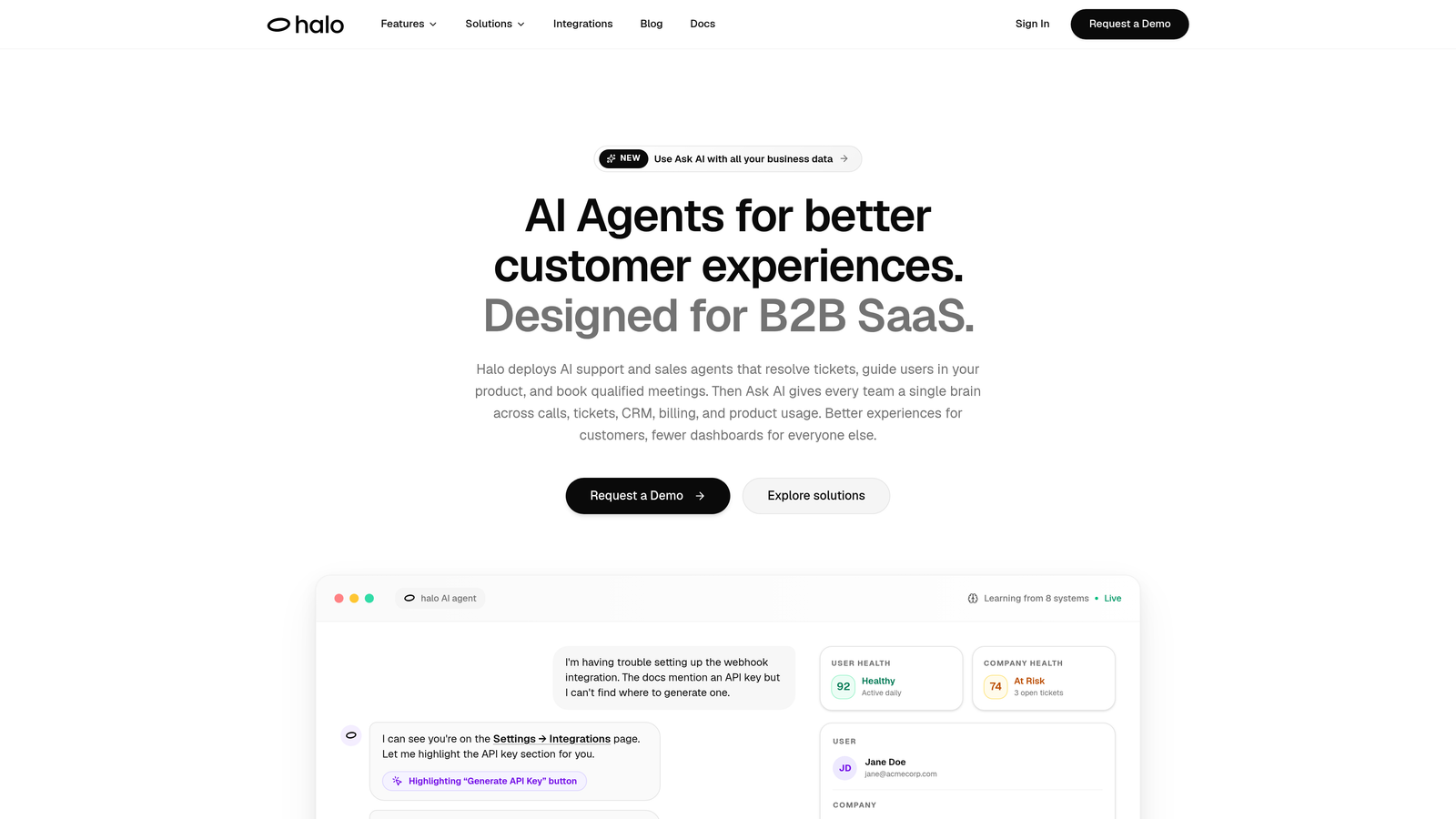
Halo AI is an AI-first customer support platform that deploys autonomous agents to resolve tickets, guide users with page-aware context, and create bug reports — all while learning from every interaction.
Where This Tool Shines
What genuinely sets Halo apart is its page-aware architecture. The AI agent sees exactly what a user sees on screen, which means it can provide visual UI guidance rather than generic text instructions. That's a meaningful difference when your customers are stuck mid-workflow and need contextual help, not a link to a knowledge base article.
Halo also bridges a gap that most helpdesks ignore entirely: the connection between support and engineering. When the AI detects a bug pattern, it automatically creates a bug ticket, routing the right information to your engineering team without a human in the middle. This kind of cross-functional intelligence is rare in the category.
Key Features
Page-Aware Chat Widget: The AI sees the user's current screen context, enabling precise visual UI guidance rather than generic answers.
Autonomous Ticket Resolution: AI agents resolve tickets end-to-end without human intervention, handling routine queries at scale.
Auto Bug Ticket Creation: Automatically identifies and logs bug reports, bridging support and engineering workflows seamlessly.
Smart Inbox with Business Intelligence: Goes beyond ticket metrics to surface customer health signals, revenue intelligence, and anomaly detection.
Deep Integration Ecosystem: Connects with Linear, Slack, HubSpot, Intercom, Stripe, Zoom, PandaDoc, and more for a unified operational picture.
Best For
B2B SaaS companies and product teams that want AI-native support, not a bolt-on feature. Particularly valuable for teams using Zendesk, Freshdesk, or Intercom who want to layer autonomous AI on top of their existing stack, or for growing companies that need to scale support without scaling headcount.
Pricing
Contact for pricing. Halo is designed for B2B SaaS teams scaling support operations and offers custom packages based on team size and ticket volume.
2. Zendesk AI
Best for: Enterprise teams already invested in the Zendesk ecosystem
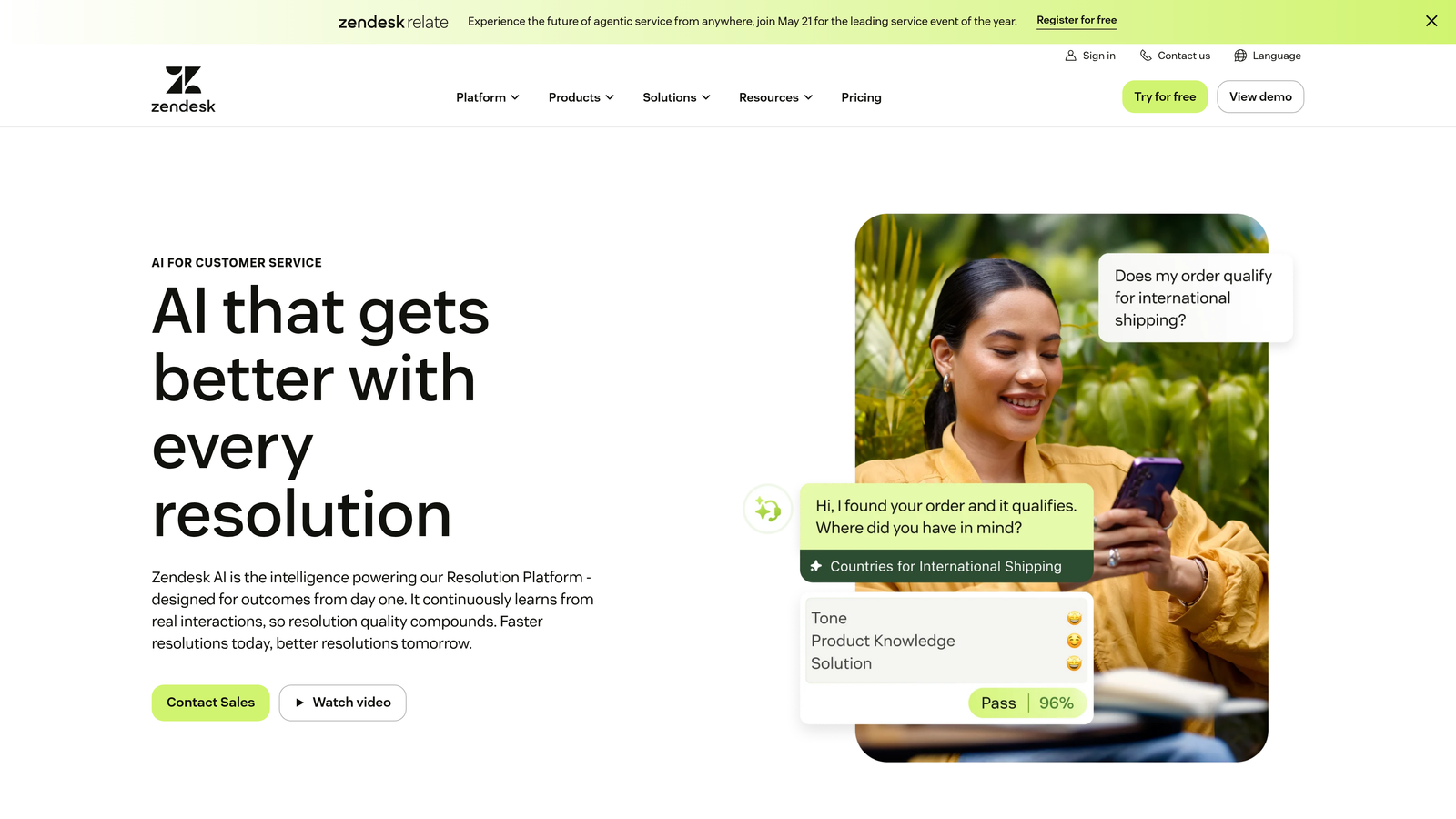
Zendesk AI is an enterprise-grade AI layer built into the Zendesk Suite, offering automated ticket resolution, agent assist, and intelligent triage for teams already on the platform.
Where This Tool Shines
Zendesk AI benefits enormously from the platform's maturity. If your team has spent years building workflows, macros, and a knowledge base inside Zendesk, the AI layer can tap into all of that existing infrastructure immediately. The agent copilot feature is particularly well-developed, surfacing relevant articles and suggesting responses in real time as agents work tickets.
The integration marketplace is also a genuine competitive advantage. With over 1,500 apps available, Zendesk connects to virtually every tool in a modern support stack. The tradeoff is that AI feels like a layer added onto an existing product rather than a foundational design choice.
Key Features
AI Auto-Resolution: Resolves common tickets autonomously by drawing on your existing knowledge base content.
Intelligent Triage: Classifies tickets by intent, language, and sentiment automatically to route them correctly.
Agent Copilot: Provides real-time response suggestions and ticket summarization to speed up human agents.
AI-Powered Workforce Management: Advanced analytics that help forecast staffing needs and optimize team performance.
1,500+ App Marketplace: Broad integration ecosystem covering CRM, e-commerce, engineering, and communication tools.
Best For
Mid-market to enterprise teams already running Zendesk who want to add AI capabilities without migrating to a new platform. Less ideal for teams starting fresh who want AI-native architecture from day one.
Pricing
AI features are included in Suite plans starting around $55/agent/month. An Advanced AI add-on is available for teams needing deeper automation capabilities.
3. Intercom Fin
Best for: Teams wanting conversational AI that handles queries across chat, email, and social
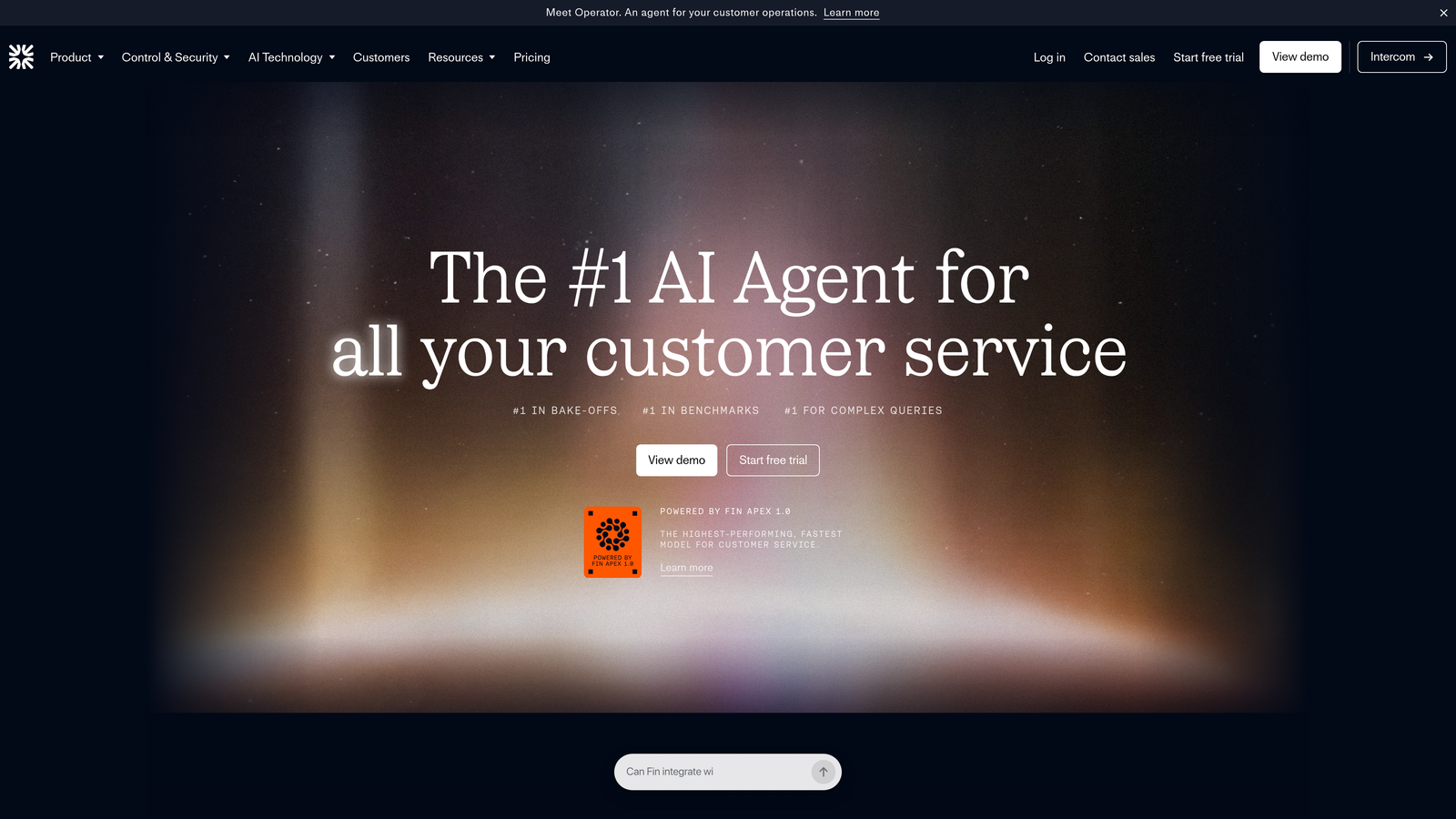
Intercom Fin is a conversational AI agent that resolves customer questions using your help center content, delivering human-quality answers across multiple channels.
Where This Tool Shines
Fin represents Intercom's most significant AI-first pivot, and the quality of its conversational responses is genuinely impressive. Rather than pattern-matching keywords, Fin reasons through questions using your actual documentation, which means it handles nuanced queries better than many rule-based bots. The handoff to human agents is smooth, with full conversation context preserved.
The per-resolution pricing model is worth noting: you only pay when Fin successfully resolves a ticket without human escalation. This aligns incentives well, though costs can become unpredictable at high volumes.
Key Features
Content-Trained AI Agent: Fin learns from your help center, documentation, and past conversations to generate accurate answers.
Multi-Channel Coverage: Handles support across chat, email, SMS, and social channels from a single platform.
Seamless Human Handoff: Transfers conversations to live agents with full context intact, eliminating repetition for customers.
Custom Answers and Workflows: Allows manual overrides for sensitive, complex, or brand-critical topics.
Resolution Rate Reporting: Built-in analytics show AI performance and highlight content gaps in your help center.
Best For
Growth-stage SaaS companies and consumer apps already using Intercom for customer messaging who want to automate a significant portion of inbound queries without a full platform migration.
Pricing
Fin charges per successful resolution starting at $0.99/resolution. Platform plans start at $29/seat/month, making overall costs dependent on your resolution volume.
4. Freshdesk Freddy AI
Best for: Budget-conscious teams wanting AI across email, chat, and phone in one platform
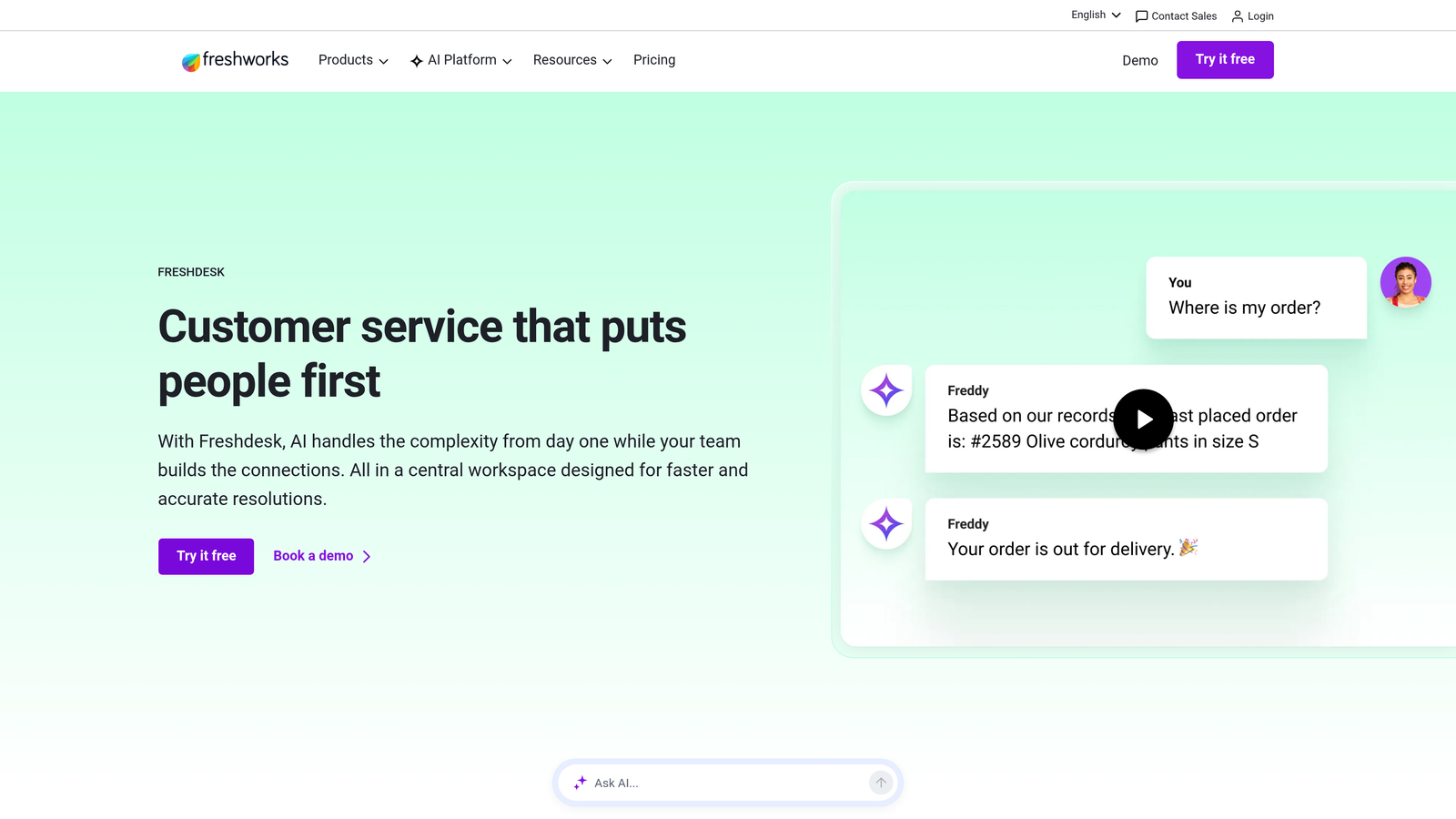
Freshdesk Freddy AI is Freshworks' AI engine embedded across Freshdesk, providing self-service bots, agent assist, and analytics in a competitively priced helpdesk platform.
Where This Tool Shines
Freshdesk's strongest suit is value density. You get omnichannel support, AI automation, and a reasonably capable agent assist tool at price points that undercut most enterprise competitors significantly. For teams managing support across email, chat, phone, and social without a large budget, that combination is hard to beat.
Freddy Copilot's tone adjustment feature is a practical touch: agents can draft a response and ask the AI to make it more empathetic, concise, or formal before sending. It's a small thing that adds up meaningfully in high-volume environments.
Key Features
Freddy AI Agent: Autonomous bot that resolves tickets via chat and email without human intervention.
Freddy Copilot: Provides response suggestions, ticket summarization, and tone adjustment for human agents.
Auto-Triage: AI-powered ticket classification and routing based on content and priority signals.
Knowledge Base AI: Suggests content improvements and surfaces relevant articles during ticket resolution.
Omnichannel Support: Unified inbox covering email, chat, phone, and social media channels.
Best For
Small to mid-sized teams, especially those in e-commerce or SaaS, who need solid AI-assisted support without enterprise-level pricing. Also a strong choice for teams new to AI helpdesks who want a lower-risk entry point.
Pricing
Free tier available. AI features start in the Growth plan at $15/agent/month, with more advanced Freddy AI capabilities available in Pro and Enterprise tiers.
5. Ada
Best for: Enterprise teams needing AI that handles complex, multi-step conversations at scale
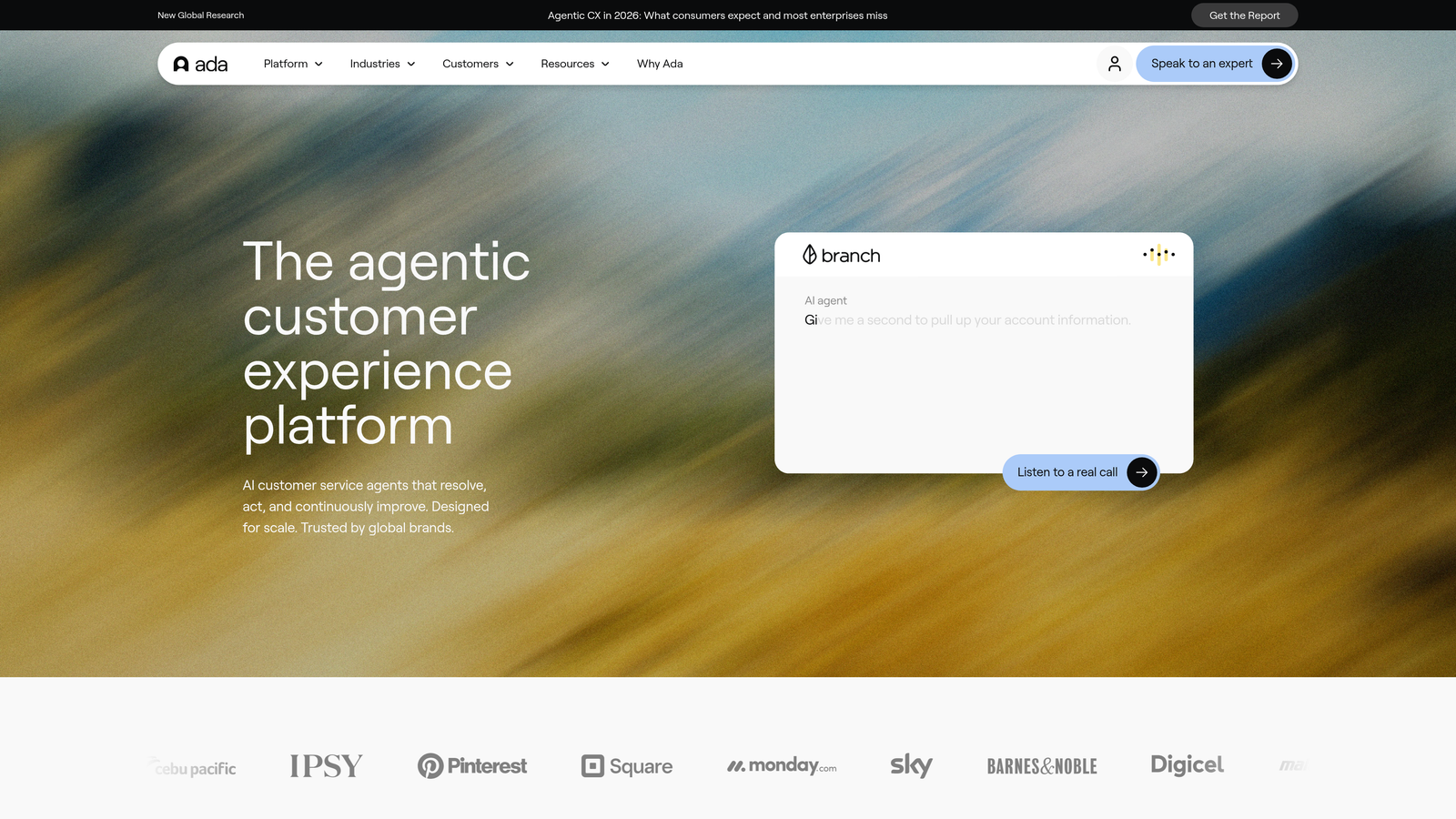
Ada is an enterprise AI agent platform purpose-built for automated customer service, handling complex conversations across channels without relying on scripted decision trees.
Where This Tool Shines
Ada's core differentiator is reasoning capability. Where many chatbots match keywords to canned responses, Ada's AI works through multi-step queries logically, making it effective for support scenarios that involve more than a simple FAQ lookup. This matters for industries like fintech, healthcare tech, or complex SaaS products where customer questions often involve multiple conditions.
The no-code builder also deserves credit. Non-technical support managers can build, test, and adjust AI automation flows without engineering involvement, which shortens the iteration cycle considerably.
Key Features
Reasoning-Based AI Agent: Handles multi-step queries through logical reasoning rather than simple keyword matching.
No-Code Automation Builder: Enables support teams to build and manage AI flows without developer resources.
Omnichannel Deployment: Covers web, mobile, social, and messaging apps from a single platform.
CRM and Helpdesk Integrations: Connects with Salesforce, Zendesk, and other major platforms to pull in customer context.
Containment Analytics: Detailed reporting on resolution rates, containment, and CSAT impact to measure AI ROI.
Best For
Enterprise organizations with complex support needs, particularly those in regulated industries or with product lines that generate nuanced customer queries. Less suited to small teams given the enterprise pricing model.
Pricing
Custom enterprise pricing. Contact Ada directly for a quote based on your conversation volume and deployment requirements.
6. Tidio
Best for: Small businesses and e-commerce teams wanting fast, affordable AI deployment
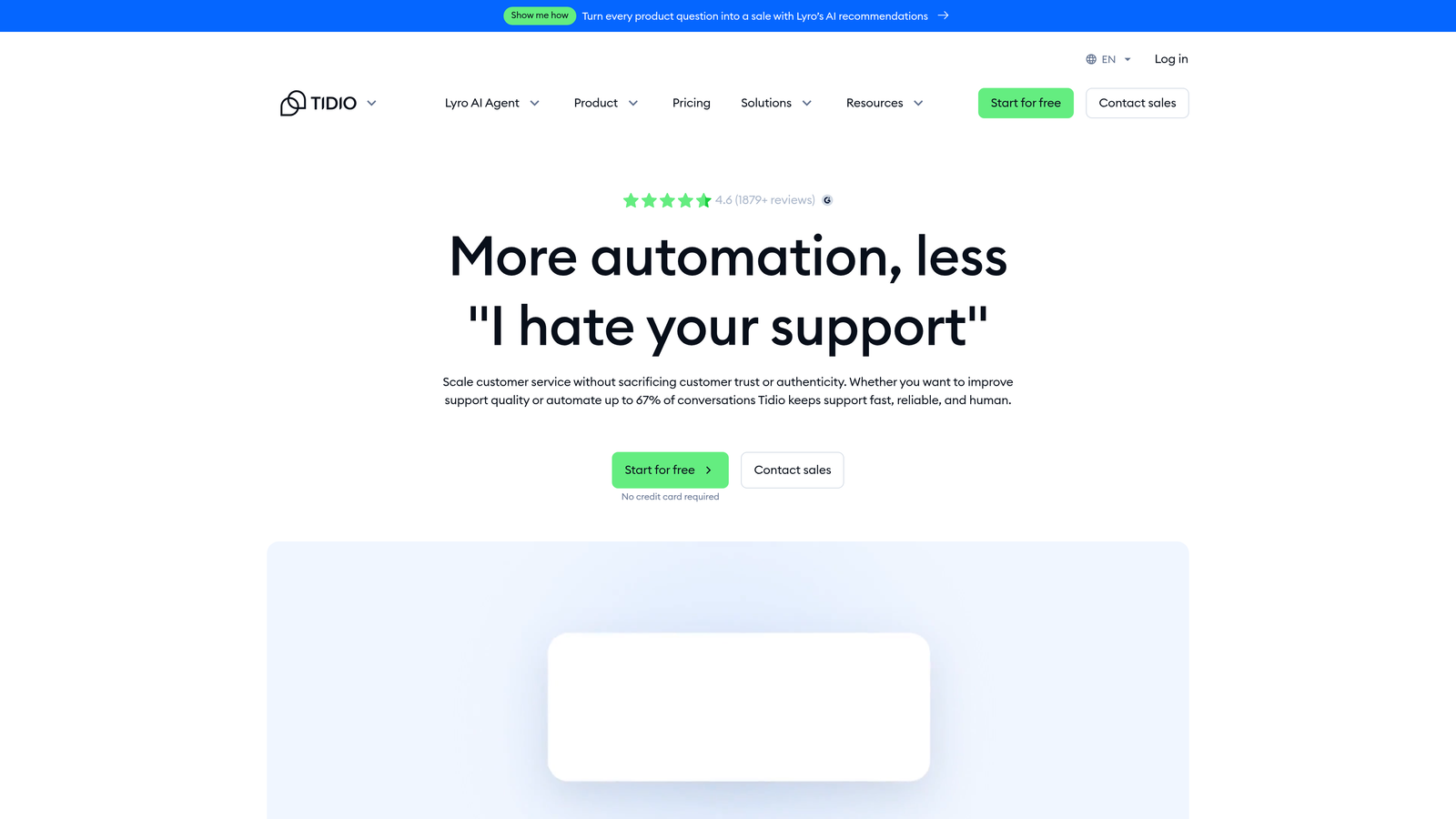
Tidio is an affordable AI-powered live chat and helpdesk platform featuring the Lyro AI chatbot, designed for small businesses needing simple, effective AI without complexity.
Where This Tool Shines
Tidio wins on accessibility. Setup is genuinely fast — teams can go from sign-up to a functioning AI chatbot in hours, not weeks. For small e-commerce stores or bootstrapped SaaS products that can't dedicate engineering time to a complex deployment, that time-to-value is a meaningful advantage.
The native integrations with Shopify, WordPress, and WooCommerce make Tidio particularly practical for online retailers. Lyro AI learns from your FAQ and support content, handling common product, shipping, and return queries without human involvement.
Key Features
Lyro AI Chatbot: Learns from your FAQ and support documentation to answer customer questions autonomously.
Visual Chatbot Builder: Drag-and-drop interface for building automation flows without any coding required.
E-Commerce Integrations: Native connections to Shopify, WordPress, and WooCommerce for seamless store integration.
Unified Dashboard: Combines live chat and helpdesk ticketing in a single interface for small teams.
Proactive Chat Triggers: Visitor tracking that initiates conversations based on browsing behavior and intent signals.
Best For
Small businesses, e-commerce stores, and early-stage startups that need AI-powered chat support without a large budget or technical implementation effort. Not designed for enterprise-scale ticket volumes.
Pricing
Free plan available. The Lyro AI add-on starts at $39/month, with premium plans from $29/month. One of the most affordable entry points in the category.
7. HubSpot Service Hub
Best for: Teams running HubSpot CRM who want support tightly unified with sales and marketing data
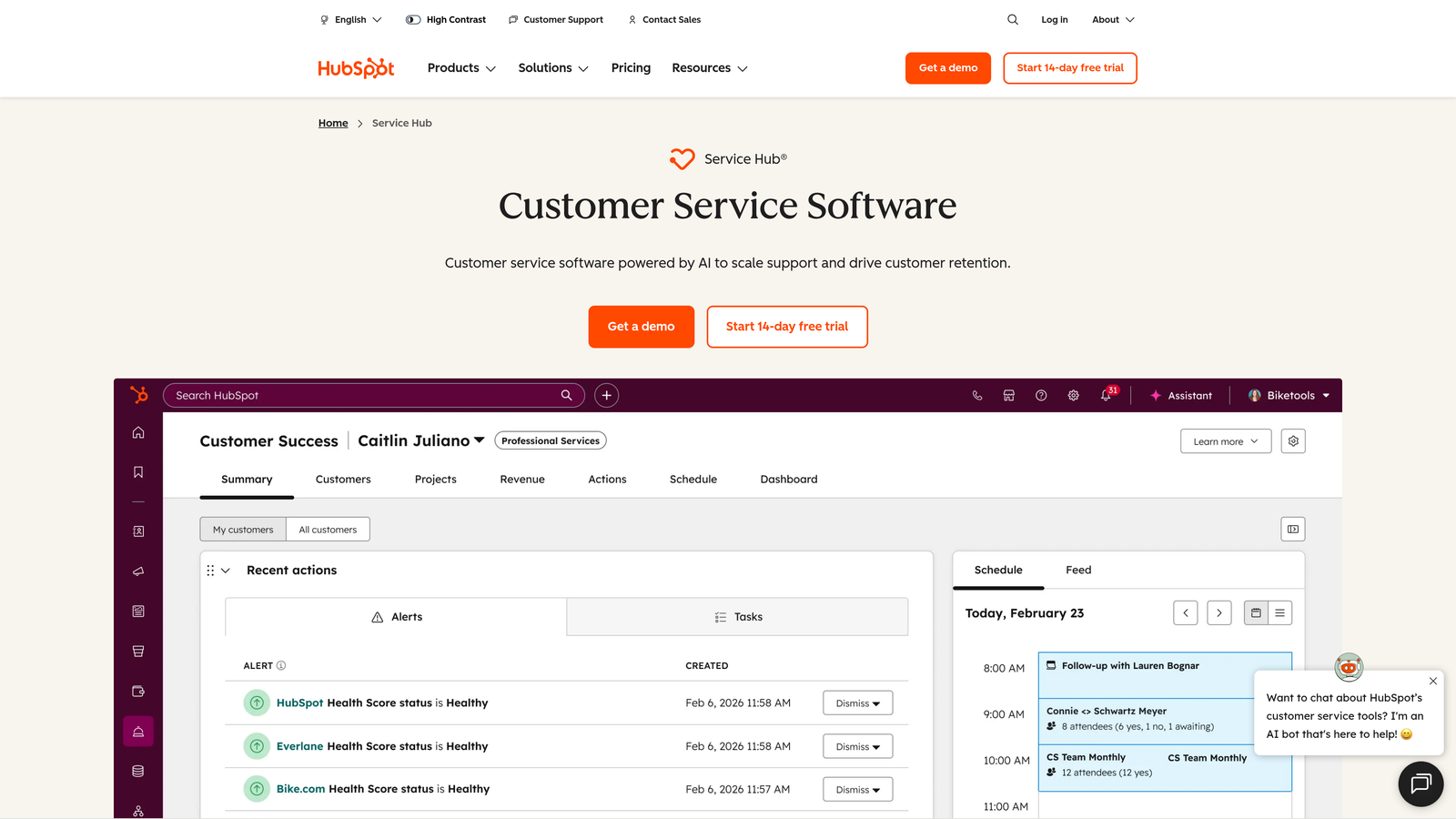
HubSpot Service Hub is an AI-enhanced customer service platform tightly integrated with HubSpot CRM, offering Breeze AI for ticket management, knowledge base, and customer feedback within a unified ecosystem.
Where This Tool Shines
The core value proposition here is context. Because Service Hub sits inside the HubSpot ecosystem, every support ticket arrives with full CRM context attached: deal history, lifecycle stage, past interactions, and revenue data. This gives agents and AI alike a much richer picture of who they're talking to, which can meaningfully change how a ticket is prioritized and handled.
Breeze AI handles the practical automation layer, drafting responses, summarizing long ticket threads, and powering chatbot conversations. It's not the most advanced AI in this list, but for teams already living in HubSpot, the integration depth is unmatched.
Key Features
Breeze AI: Handles ticket summarization, response drafting, and chatbot conversations within the HubSpot interface.
Full CRM Context: Every ticket includes deal history, lifecycle stage, and past interaction data from HubSpot CRM.
Shared Inbox: AI-powered routing and SLA management across all inbound support channels.
Knowledge Base with AI Recommendations: Surfaces relevant articles to customers and agents based on ticket content.
Cross-Hub Integration: Native connection to HubSpot Marketing and Sales Hubs for unified revenue operations.
Best For
Companies already using HubSpot CRM who want to unify support, sales, and marketing data without managing multiple platforms. Less compelling for teams not already in the HubSpot ecosystem.
Pricing
Free tools available. Service Hub Starter starts at $20/month/seat; Professional at $100/month/seat with more advanced AI and automation capabilities.
8. Zoho Desk with Zia
Best for: Budget-conscious teams in the Zoho ecosystem needing AI sentiment and anomaly detection
Zoho Desk is a budget-friendly helpdesk featuring the Zia AI assistant, which provides sentiment analysis, auto-tagging, anomaly detection, and response suggestions within the broader Zoho product suite.
Where This Tool Shines
Zia's anomaly detection is a genuinely useful capability that doesn't get enough attention in this category. When ticket volumes spike unexpectedly or a particular issue type starts trending, Zia flags it before it becomes a crisis. For lean support teams without dedicated analytics resources, that kind of proactive alerting can save considerable time and customer goodwill.
Zoho Desk also offers the deepest integration with the Zoho product family, including Zoho CRM, Zoho Analytics, and 45+ other Zoho apps. If your business already runs on Zoho, the cost efficiency here is hard to argue against.
Key Features
Zia Sentiment Analysis: Reads the emotional tone of incoming tickets to help agents prioritize urgent or frustrated customers.
Anomaly Detection: Flags unusual ticket spikes or patterns before they escalate into larger issues.
Answer Bot: Suggests relevant knowledge base articles to customers before they submit a ticket.
Auto-Tagging and Field Prediction: Automatically categorizes and routes tickets based on content analysis.
Zoho Ecosystem Integration: Deep connectivity with Zoho CRM, Analytics, and 45+ Zoho applications.
Best For
Small to mid-sized businesses already using Zoho products, or teams looking for the most affordable entry point into AI-powered helpdesk with meaningful analytics capabilities.
Pricing
Free plan for up to 3 agents. Standard plan at $14/agent/month. Zia AI features are available on the Professional plan at $23/agent/month and above.
9. Forethought
Best for: Mid-market and enterprise teams wanting AI across the full ticket lifecycle
Forethought is an AI platform covering the full support ticket lifecycle, from intelligent triage and autonomous resolution to real-time agent assist, designed for mid-market and enterprise support operations.
Where This Tool Shines
Forethought's modular architecture is its standout design choice. Rather than a single AI tool, it offers distinct AI products for each stage of the ticket lifecycle: Solve for autonomous resolution, Triage for classification and routing, Assist for agent support, and Discover for identifying automation opportunities. Teams can adopt one module or all four, which makes implementation more manageable for complex organizations.
The Discover module deserves particular attention. It analyzes your existing ticket data to identify which query types are best suited for automation and where your knowledge base has gaps, giving you a data-driven roadmap for expanding AI coverage over time.
Key Features
Solve AI: Autonomous ticket resolution across chat and email channels without human involvement.
Triage AI: Classifies and routes tickets by intent, urgency, and sentiment for accurate queue management.
Assist AI: Provides real-time knowledge suggestions to human agents during live ticket handling.
Discover AI: Identifies automation opportunities and content gaps by analyzing historical ticket data.
Enterprise Integrations: Connects with Zendesk, Salesforce, ServiceNow, and other major helpdesk platforms.
Best For
Mid-market and enterprise support teams with high ticket volumes who want to layer AI onto an existing helpdesk like Zendesk or Salesforce without replacing their core platform. The modular approach suits organizations that want to expand AI coverage incrementally.
Pricing
Custom pricing based on ticket volume. Contact Forethought directly for a quote tailored to your support operation size.
Which AI Helpdesk Is Right for Your Team?
The right choice here comes down to where you're starting from and how much you want AI to own versus assist.
If you're building an AI-first support operation from scratch, particularly at a B2B SaaS company, Halo AI is the strongest choice in this list. Its page-aware context, auto bug ticket creation, and continuous learning architecture are purpose-built for the problems SaaS support teams actually face. It's not a feature bolted onto a legacy helpdesk — it's the foundation.
For teams already deep in Zendesk or Salesforce, Forethought offers the best path to meaningful AI automation without a platform migration. Zendesk AI is the natural choice if you want to stay entirely within the Zendesk ecosystem.
Intercom Fin is compelling for SaaS companies already using Intercom for customer messaging who want to automate resolution without switching platforms. HubSpot Service Hub wins for teams running their entire GTM motion through HubSpot.
On the budget end, Freshdesk Freddy AI offers the best value-to-capability ratio for growing teams, while Tidio is the fastest path to a working AI chatbot for small businesses and e-commerce stores. Zoho Desk with Zia is the smart pick for Zoho-native organizations.
Ada and Forethought both shine for enterprise teams with complex, high-volume support operations that need AI reasoning beyond basic FAQ matching.
Your support team shouldn't scale linearly with your customer base. Let AI agents handle routine tickets, guide users through your product, and surface business intelligence while your team focuses on complex issues that need a human touch. See Halo in action and discover how continuous learning transforms every interaction into smarter, faster support.