Blog
Insights on AI customer support, product updates, and building smarter support experiences.
10 Best Customer Service Automation Tools in 2026
This comprehensive guide evaluates the best customer service automation tools available in 2026, helping B2B and SaaS teams navigate a crowded market by comparing platforms on AI capability, integration ease, and scalability—so you can reduce ticket volume, improve response times, and free your team to focus on complex, high-value customer interactions.
 Grant Cooper
Traditional Helpdesk vs AI Agents: 7 Key Differences That Change How You Support Customers
Comparing traditional helpdesk vs AI agents reveals a fundamental shift in customer support philosophy—moving from ticket organization to active resolution. This breakdown of seven key differences helps B2B teams and product leaders understand how AI agents deliver faster responses, 24/7 availability, and personalized interactions that rule-based, human-dependent systems like Zendesk and Freshdesk simply can't match at scale.
 Matt Pattoli
9 Best AI Helpdesks for Enterprise Software Teams in 2026
Choosing the right AI helpdesk for enterprise software teams requires more than a basic chatbot—it demands autonomous ticket resolution, deep product integrations, and enterprise-grade security. This guide evaluates the nine best AI-native helpdesks purpose-built for complex technical environments, helping enterprise software teams scale support capacity and improve resolution accuracy without growing headcount.
Grant Cooper
How to Measure Support ROI: A Step-by-Step Guide for B2B Teams
B2B support teams facing difficulty measuring support ROI now have a concrete solution: this step-by-step guide walks through establishing cost baselines, uncovering hidden revenue signals in support data, and building a repeatable ROI model that justifies headcount, tooling, and AI investments to leadership across platforms like Zendesk, Freshdesk, and Intercom.
Matt Pattoli
AI Helpdesk Software Features: What to Look For and Why It Matters
Choosing the right AI helpdesk software features is critical for B2B support teams struggling to scale without proportional headcount increases. This guide breaks down which capabilities—from autonomous ticket resolution to intelligent learning—deliver real operational value versus surface-level automation, helping teams evaluate platforms that can genuinely close the gap between rising customer expectations and traditional helpdesk limitations.
Grant Cooper
AI Helpdesk Platform Features: What to Look For and Why It Matters
Evaluating AI helpdesk platform features requires looking beyond vendor claims to understand what capabilities actually deliver long-term value. This guide helps B2B support and product leaders identify the differentiating features that reduce agent workload, eliminate tool fragmentation, and provide genuine automation—rather than keyword matching repackaged as artificial intelligence.
Matt Pattoli
AI Helpdesk Automation Benefits: What Modern Support Teams Actually Gain
AI helpdesk automation benefits B2B support teams far beyond simple cost savings by fundamentally restructuring how tickets are handled, routed, and resolved at scale. As customer volume and product complexity grow faster than headcount budgets allow, AI enables support teams to maintain quality and response times without unsustainable hiring, while also surfacing actionable insights from every customer interaction.
Grant Cooper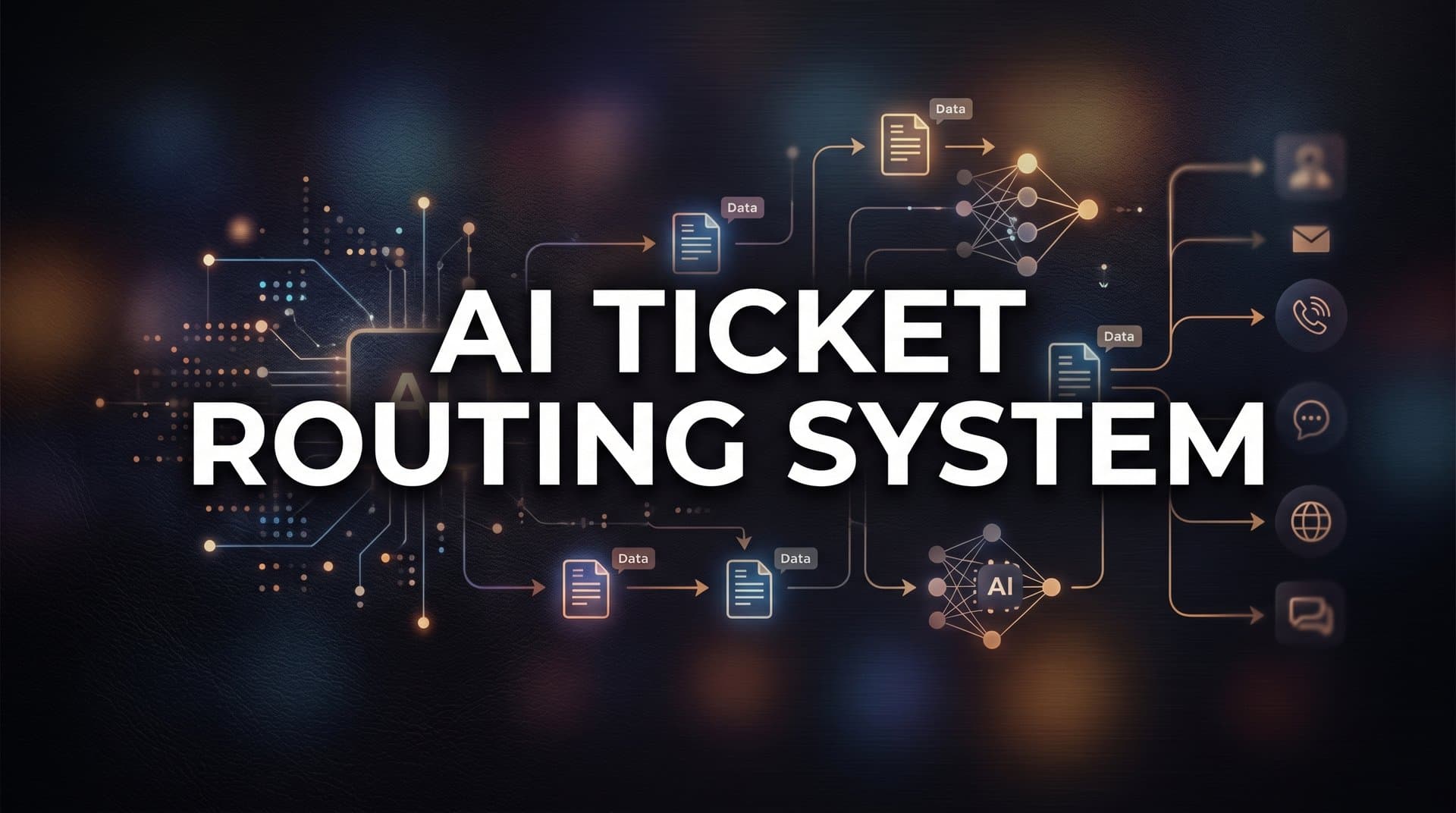
AI Ticket Routing System: How It Works and Why It Matters for Support Teams
An AI ticket routing system eliminates the costly delays and misrouted tickets that plague traditional support operations by intelligently analyzing incoming requests and directing them to the right agent or team instantly. This guide explains how AI-powered routing works, why rules-based systems fall short at scale, and the measurable impact automated ticket distribution has on resolution times and customer satisfaction.
Matt Pattoli
AI Powered Response Suggestions: How They Work and Why Your Support Team Needs Them
AI powered response suggestions help support teams manage high ticket volumes by analyzing context, understanding customer intent, and surfacing accurate reply options in seconds—eliminating the cognitive load of composing from scratch. For B2B SaaS teams handling complex, high-stakes customer issues, this technology reduces handle time, improves consistency, and allows agents to focus on judgment rather than drafting.
Grant Cooper
The Disconnected Support Tools Problem: Why Your Stack Is Working Against You
The disconnected support tools problem occurs when specialized platforms like helpdesks, CRMs, and engineering trackers fail to communicate with each other, forcing support agents to manually piece together customer context across multiple systems. This fragmentation slows resolution times, increases agent frustration, and ultimately damages customer relationships — not because teams lack the right tools, but because those tools work in isolation rather than together.
Matt Pattoli
Predictive Customer Support AI: How It Works and Why It Changes Everything
Predictive customer support AI closes the gap between customer frustration and reactive help desks by analyzing behavioral signals—like repeated failed actions and declining usage—to identify and resolve issues before customers ever submit a ticket, transforming support from a queue-management function into a proactive retention and satisfaction strategy.
Grant Cooper
Why Are Customers Repeating the Same Questions — And What It's Really Costing You
Customers repeating same questions isn't just a support volume problem — it's a signal that something in your product, documentation, or onboarding is broken. This article explores the hidden costs of repetitive support tickets and what they reveal about gaps in the customer experience that, left unaddressed, drain team resources and quietly erode customer satisfaction over time.
Matt Pattoli